Mastering the Margins: Understanding Track Limits at the Portuguese Grand Prix
The highly anticipated Portuguese Grand Prix returns, and with it, the critical discussion surrounding track limits at the challenging Autódromo Internacional do Algarve, Portimão. Following lessons learned from its debut in the Formula 1 calendar, race officials are set to implement a clearer, more streamlined approach to monitoring track boundaries, adopting the less stringent but effective guidelines that concluded last year’s event. This move aims to prevent the confusion and penalty-laden sessions that characterized the initial stages of the 2020 Grand Prix, ensuring a smoother and fairer competition for all participants.
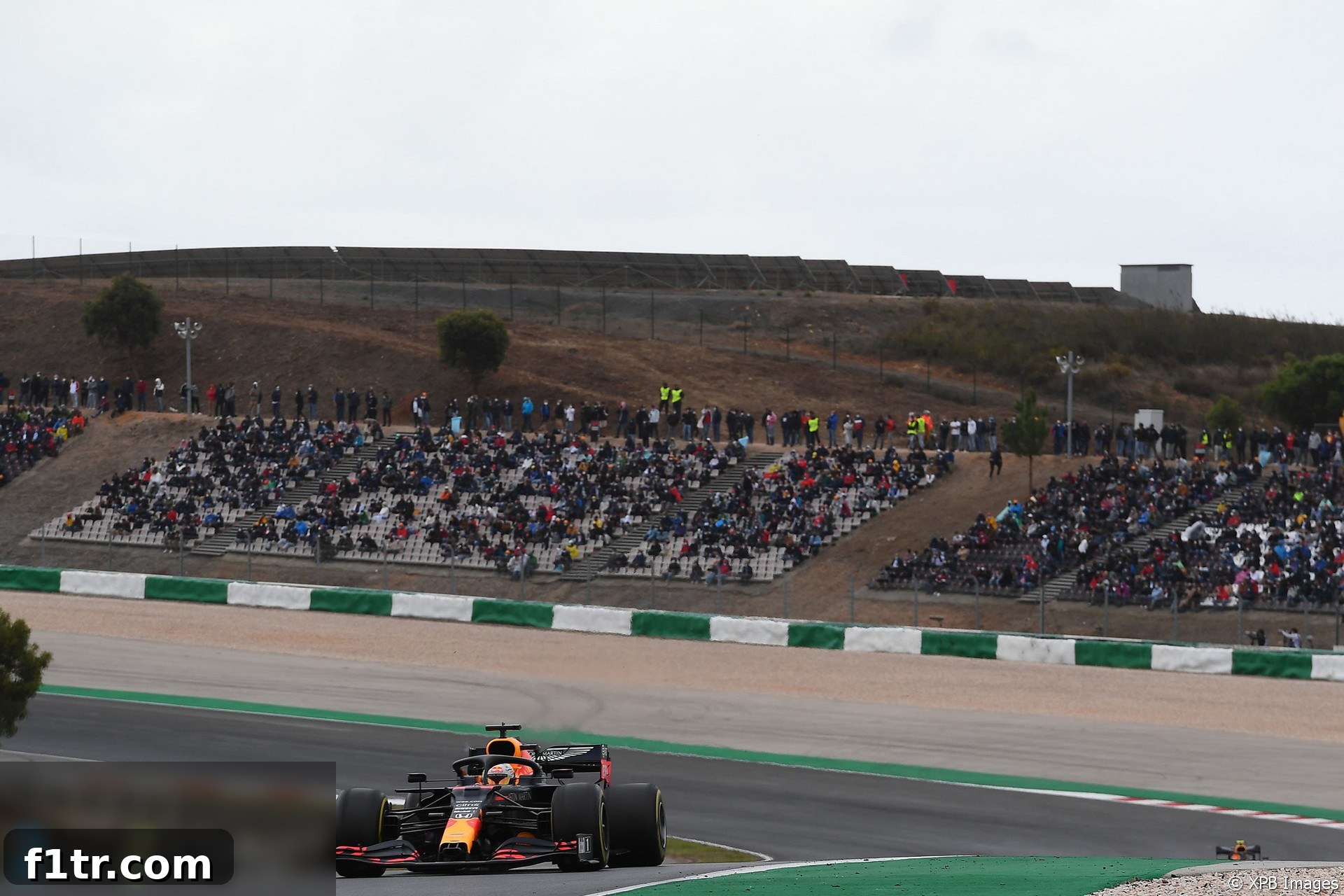
Portimão, renowned for its dramatic undulations and sweeping corners, presents a unique challenge for drivers seeking to extract every ounce of performance. The circuit’s wide, inviting run-off areas, while excellent for safety, can also tempt drivers into exceeding the traditional limits of the track, leading to an ongoing debate about what constitutes a fair advantage versus an illegal shortcut. The forthcoming race will see particular scrutiny at key corners, where drivers will need to demonstrate absolute precision to avoid sanctions.
The Evolution of Track Limits Policing at Portimão
The inaugural Formula 1 event at Portimão in 2020 was memorable for many reasons, not least the significant challenges posed by its track limits. The opening day, in particular, was dominated by discussions and controversies surrounding drivers venturing beyond the white lines. Across the first two practice sessions alone, a staggering 125 lap times were deleted. These infractions primarily occurred at the exit of the demanding Primeira right-hander (Turn 1) at the start of the lap, and the tricky, crested Turn 4.
This initial period highlighted the need for immediate clarification and adjustment. The strict interpretation of “white lines” proved problematic, leading to a frustrating experience for teams and drivers alike. In response, Formula 1 race control quickly adapted its policing methods for the remainder of that weekend. A crucial distinction was introduced: instead of solely focusing on the white lines, drivers were considered to have left the track at these corners only if they cut “behind the red-and-white kerb on the exit.” This revised guideline provided a more tangible and consistent reference point for drivers, and significantly reduced the number of infringements.
Crucially, this refined approach has been retained for the 2021 Portuguese Grand Prix. This means that any lap time a driver sets while leaving the circuit at either the exit of Turn 1 or Turn 4 by going behind the defined kerb will be promptly deleted. This continuity in rule application from the outset of the event is a welcome development, promising greater clarity and less disruption compared to the learning curve experienced last year.
Key Corners Under Scrutiny: Primeira, Turn 4, and Galp (Turn 15)
The Autódromo Internacional do Algarve is a relentless test of driver skill, and certain corners intrinsically encourage drivers to push the boundaries. The aforementioned Primeira (Turn 1) and Turn 4 are prime examples. Turn 1, a long, sweeping right-hander, naturally funnels cars towards its wide exit, where drivers can gain a significant advantage by carrying too much speed and running wide. Similarly, Turn 4, with its challenging crest and blind apex, makes judging the exit perfectly a daunting task, often leading to unintended excursions beyond the track limits. The “behind the red-and-white kerb” rule at these points is designed to define the absolute limit, allowing drivers to use the full width of the kerb without gaining an unfair edge.
Beyond the opening sector, the long downhill right-hander of Galp (Turn 15), which culminates the lap and leads onto the main straight, is another critical point for track limit monitoring. This quick corner features an extensive tarmac run-off area, which, if exploited, could allow drivers to gain momentum heading into the next lap. According to the official race director’s event notes for Portimão, the rule here is specific: “a driver will be judged to have left the track if no part of the car remains in contact with the track” at the exit of Turn 15. This comprehensive definition ensures that even the smallest contact with the track surface is required to validate a lap.
The implications of exceeding track limits at Galp are particularly severe due to its strategic position at the very end of the lap. Any lap time a driver sets while leaving the track at Turn 15 will be deleted. Furthermore, the subsequent lap will also be invalidated. This “double penalty” is enforced because any advantage gained at the exit of Turn 15 directly compromises the start of the following lap, potentially providing an unfair boost to lap time or crucial positioning for a flying lap. This strict measure underscores the importance of precision at this vital circuit juncture.
The Rationale Behind Track Limits and Penalties
Track limits are a fundamental aspect of modern Formula 1, implemented for a confluence of reasons including sporting fairness, safety, and maintaining the integrity of circuit design. Without clearly defined boundaries, drivers could exploit run-off areas to carry more speed through corners, effectively altering the layout of the track and gaining an unfair advantage over competitors who remain within the designated racing surface. While some purists argue for a more lenient approach, allowing drivers to “police themselves” with natural grass or gravel traps, the modern era of expansive tarmac run-offs necessitates clear rules to prevent abuse.
During the race itself, the penalty structure for track limit violations is designed to deter repeated infringements without immediately ruining a driver’s race. If a driver exceeds the track limits at any of the monitored corners a total of three times during the Grand Prix, they will be shown a black-and-white flag. This serves as a final warning, signaling that any further transgression will result in a referral to the stewards. Last year, drivers such as Lance Stroll and Romain Grosjean notably received penalties during the race for accumulating track limits violations, demonstrating the tangible impact these rules can have on race outcomes. Steward-imposed penalties can range from time penalties to even drive-through penalties, significantly affecting a driver’s final position.
The Importance of Consistent Enforcement
A critical lesson from recent Formula 1 seasons has been the paramount importance of consistent application of track limit rules across all sessions. The 2021 season-opening Bahrain Grand Prix served as a stark reminder of the confusion and frustration that can arise when different interpretations of the rules are used in practice, qualifying, and the race. This inconsistency can lead to drivers feeling unfairly treated or unsure of where the actual limits lie, particularly when the advantage gained by exceeding limits is sometimes policed and sometimes overlooked.
In contrast, recent events like the Emilia-Romagna Grand Prix at Imola, and now the Portuguese Grand Prix, are setting a positive precedent. At Imola, for instance, drivers like Yuki Tsunoda and Stroll were penalised for separate track limits offences, but the crucial point was that the limits were policed in the same way in all sessions. This consistency builds trust and allows drivers to establish a clear understanding of what is permissible. By applying the same rigorous monitoring and penalty system from the very first practice session through to the race, Portimão aims to eliminate ambiguity, ensuring that the competitive playing field remains level and fair for every driver on track.
Circuit Challenges and Tyre Demands at Portimão
Beyond track limits, the Autódromo Internacional do Algarve presents numerous technical challenges that test both man and machine. Its unique undulating layout, with significant elevation changes, creates a rollercoaster-like experience for drivers, demanding precise car setup and exceptional driver skill. The blind apexes and high-speed corners place considerable lateral and vertical loads on the tyres, making tyre management a crucial factor in race strategy.
In a specific adjustment for the 2021 Portuguese Grand Prix, Pirelli, Formula 1’s sole tyre supplier, has responded to the circuit’s demanding nature by decreasing the minimum starting pressures for the rear tyres from 20psi to 19psi. This seemingly minor change is significant; lower tyre pressures allow for a larger contact patch with the track, potentially providing more grip and better heat dissipation. This adjustment is directly aimed at accommodating the very different and intense demands placed on the rubber by Portimão’s high-energy corners and undulating topography. Managing tyre degradation and optimizing pressures will be key to unlocking performance and maintaining durability throughout the race weekend, especially in conjunction with navigating the strictly policed track limits.
Ultimately, the 2021 Portuguese Grand Prix promises thrilling racing, underpinned by rigorous and clear regulations. Drivers will not only battle each other and the clock but also the precise margins set by the track limits, making every lap a testament to their skill and discipline within the defined boundaries of this spectacular circuit.
2021 Portuguese Grand Prix Related Articles
- Pirelli’s tyre choice for Portuguese GP wasn’t “too hard”, Hamilton concedes
- Who are the top F1 juniors bidding for a grand prix debut in 2022?
- 2021 Portuguese Grand Prix Star Performers
- Race gains encourage Ricciardo after ‘unacceptable’ qualifying performance
- Sainz says top-five finish was possible after first no-score for Ferrari
Browse all 2021 Portuguese Grand Prix articles