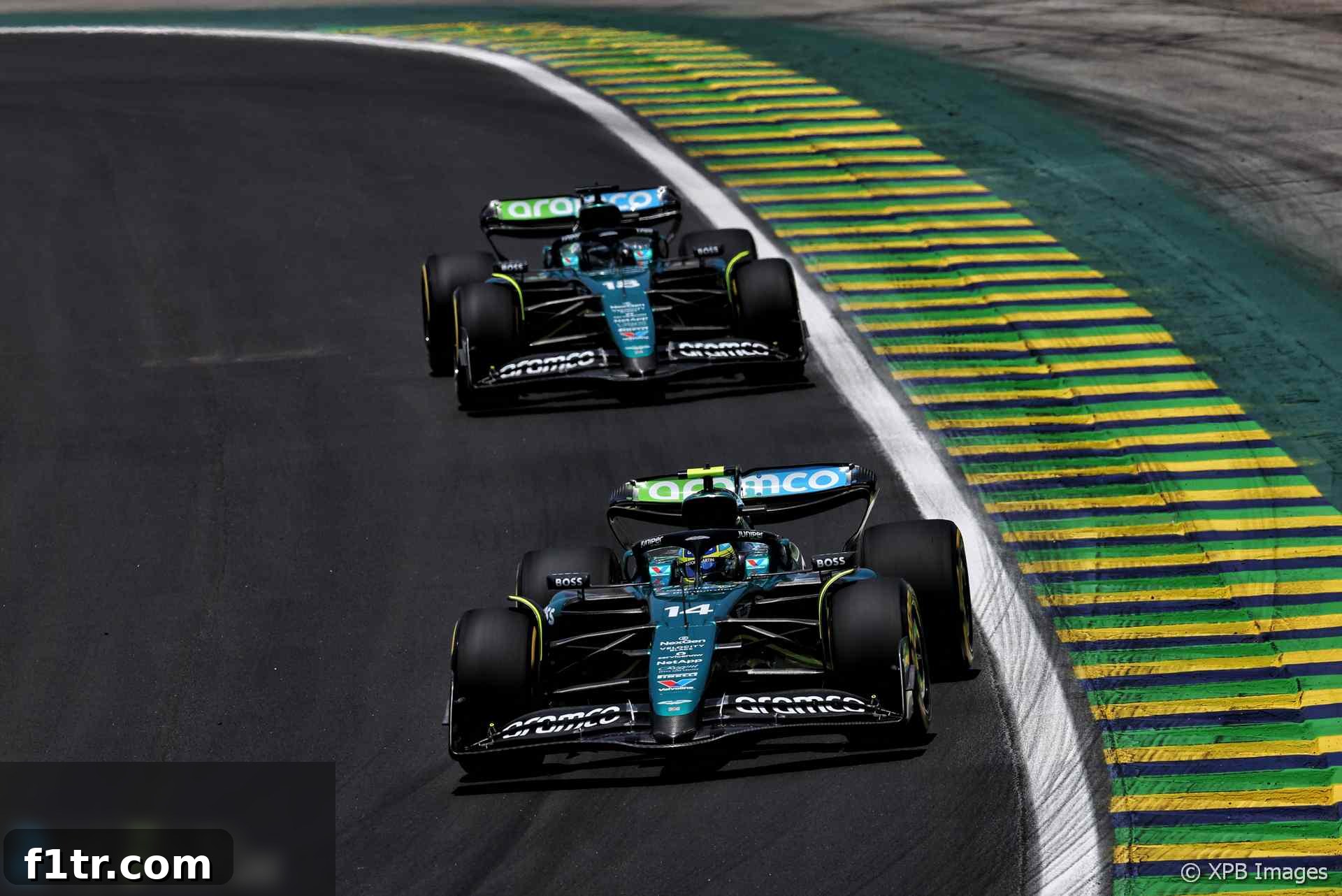
The grid for today’s Formula 1 sprint race will feature an unusually sparse lineup of only 17 cars, as three drivers have made the strategic decision to commence the race from the pit lane. This intriguing development underscores the evolving tactical landscape of F1 sprint weekends, particularly under the sport’s recently revised regulations designed to inject more excitement and variability into the racing calendar.
The trio opting for this unconventional start comprises veteran Fernando Alonso of Aston Martin, his teammate Lance Stroll, and Sauber’s Zhou Guanyu. Their decision is a direct consequence of the opportunity presented by the rule changes, which allow teams to make significant modifications to their car’s setup between sprint qualifying and the sprint race itself, a luxury not afforded in previous iterations of the format.
All three drivers had a challenging sprint qualifying session yesterday, failing to advance beyond the first round (Q1). Alonso was set to start 16th, while Stroll and Zhou found themselves relegated to the very back row of the grid. This poor performance likely played a pivotal role in their teams’ decision to sacrifice grid position in the sprint race for the invaluable chance to gather data and optimize their cars for the more crucial Grand Prix qualifying and main race.
The Strategic Calculus of a Pit Lane Start in F1
The choice to start from the pit lane in a Formula 1 sprint race is far from arbitrary; it represents a calculated gamble, a tactical manoeuvre that highlights the current strategic complexities of the F1 sprint format. Under the updated 2024 regulations, the sprint race now takes place on Saturday morning, preceding the main Grand Prix qualifying session. Crucially, teams are permitted to make significant adjustments to their car’s setup between sprint qualifying and the sprint race, and again before the Grand Prix qualifying, effectively relaxing the stringent parc fermé rules that usually lock in car configurations after qualifying.
This regulatory shift has opened a new avenue for teams, especially those grappling with car performance or handling issues. By starting from the pit lane, a team can implement radical setup changes that would otherwise be risky to commit to without real-world validation. The sprint race, typically a shorter, high-intensity event, transforms into an extended, high-speed test session. While points are awarded for sprint race finishes, the potential gains from a perfectly optimized car for the main Grand Prix, which carries far greater points and prestige, often outweigh the immediate, albeit limited, rewards of the sprint.
For teams struggling to unlock performance or understand persistent handling problems, this opportunity is invaluable. It allows them to experiment with different aerodynamic configurations, suspension settings, and other critical parameters in a live race environment without the direct pressure of Grand Prix qualifying or the main race itself. The data collected from such an exercise can be instrumental in fine-tuning the car, potentially leading to a significant performance uplift for the Grand Prix, thereby justifying the forfeiture of a poor sprint grid position.
Aston Martin’s Quest for Performance Clarity
Aston Martin’s decision to start both Fernando Alonso and Lance Stroll from the pit lane underscores their ongoing struggle to address deep-seated handling problems that have plagued their AMR24 car in recent races. The FIA confirmed that Aston Martin made extensive changes to their drivers’ cars, specifically altering the bodywork specification and suspension setups. More tellingly, the team reverted to an earlier version of its floor this weekend. This move suggests a diagnostic effort to understand if a previous aerodynamic package might offer more stability or predictability compared to their more recent upgrades.
Fernando Alonso, a two-time world champion renowned for his strategic acumen and brutally honest assessments, openly stated yesterday that the team intended to “treat today’s 24-lap race like a practice session.” This candid remark echoes similar sentiments he expressed during the previous sprint event in Austin, highlighting a consistent strategy from Aston Martin when faced with a less-than-optimal starting position in a sprint race. For a team striving to close the gap to the front-runners and battling in the competitive midfield, using a sprint race as a live test bed offers an unparalleled opportunity to validate changes and gather crucial data that simulation tools cannot fully replicate.
Lance Stroll, who has also voiced his frustrations with the car’s handling, joining Alonso in this pit lane strategy provides the team with a dual data stream. Having two cars running different, or at least significantly altered, configurations can provide a more comprehensive understanding of the impact of their modifications. This dual approach maximizes their data collection efforts, aiming to fast-track their understanding of the AMR24 and find a setup that delivers consistent performance and predictability for both drivers for the remainder of the Grand Prix weekend.
Sauber’s Setup Hunt and Zhou’s Qualifying Blunder
Sauber’s decision to also make setup changes to Zhou Guanyu’s car and start him from the pit lane reflects a similar strategic imperative to Aston Martin. For Sauber, a team constantly fighting to move up the grid, any opportunity to optimize their C44 is critical. The team specifically made adjustments to Zhou’s suspension setup, indicating an effort to improve the car’s balance and grip.
Zhou’s unfortunate qualifying session further cemented the rationale for his pit lane start. He was unable to complete his crucial final run in sprint qualifying because his team released him too late from the garage, resulting in the chequered flag falling before he could cross the timing line to begin his flying lap. This operational error, which led to him being eliminated in Q1, meant that even a mediocre grid position was unattainable. Given this setback, combined with the new regulations, converting the sprint race into a valuable testing opportunity became the most logical and beneficial course of action for the team.
In contrast, Zhou’s teammate Valtteri Bottas managed to progress to the second round of sprint qualifying (SQ2) and was slated to start 15th. This disparity in qualifying performance between the two Sauber drivers further emphasizes the unique circumstances that led to Zhou’s pit lane start, suggesting a more targeted approach to his car’s development rather than a blanket strategy across the team.
The Evolving Landscape of F1 Sprint Weekends
The phenomenon of multiple cars choosing to start from the pit lane highlights a significant and perhaps unintended consequence of F1’s evolving sprint race format. Introduced to add more excitement and competitive sessions to a Grand Prix weekend, the sprint format has undergone several revisions since its inception. The most recent and impactful change for 2024 moved the sprint qualifying and sprint race to Saturday morning, crucially allowing teams to adjust their car setups between these two sessions and before the Grand Prix qualifying later that day. This relaxation of parc fermé rules was intended to give teams more flexibility, but it has inadvertently led to a new strategic dimension.
Instead of merely racing for sprint points from a suboptimal grid position, teams are increasingly willing to forfeit any potential sprint race reward in favour of using the session as a crucial development opportunity. This trend raises questions about the fundamental purpose and spectacle of the sprint race itself. If a significant portion of the grid treats it as a glorified practice session, does it undermine the competitive integrity and entertainment value for fans? The fact that today’s race is the fifth of six sprint races this year, and only the first in Shanghai saw all 20 cars take the start from the grid, suggests a clear pattern. This trend indicates that teams are prioritizing long-term car development and Grand Prix performance over the immediate, smaller gains offered by the sprint race.
The regulatory architects of Formula 1 now face a dilemma: maintain the current rules, which provide teams with valuable testing opportunities but potentially dilute the sprint race spectacle, or re-evaluate the regulations to encourage more competitive participation in the sprint. The balance between fostering innovation and ensuring compelling racing is a delicate one, and the current strategic choices by teams like Aston Martin and Sauber are a testament to the complex ecosystem of modern Formula 1.
Impact on Grid Dynamics and Fan Experience
The strategic pit lane starts directly impact the immediate grid dynamics, elevating other drivers. For instance, Esteban Ocon, who was initially behind Alonso, will now move up to 16th on the grid, ahead of Yuki Tsunoda. These promotions offer a marginal advantage to those drivers who maintain their grid positions, giving them a slightly better starting point in a highly competitive field. While the overall effect on the Grand Prix might be minor, it injects a subtle shift in the sprint race’s competitive narrative.
From a fan perspective, the sight of empty grid slots can be a mixed bag. While purists might lament the perceived lack of full-throttle competition, understanding the underlying strategic rationale can add another layer of intrigue. It showcases the relentless pursuit of performance and the tactical depth employed by F1 teams. However, for casual viewers, it might detract from the immediate excitement of the sprint race if they perceive some drivers as not fully engaged in the battle for position.
Ultimately, the strategic use of pit lane starts in sprint races is a fascinating development, underscoring the constant evolution of Formula 1’s regulations and team strategies. It highlights how teams ingeniously adapt to new rules, prioritizing the larger goal of Grand Prix success over smaller sprint race gains. As F1 continues to refine its sprint format, the balance between strategic experimentation and pure racing spectacle will remain a key area of discussion and potential future adjustment.
Related Articles: 2024 Brazilian Grand Prix
- “I didn’t really want to come back” – Hamilton explains cryptic Brazil radio message
- Ocon’s role in Gasly’s Q2 exit was almost another ‘flare-up’ at Alpine – Oakes
- Interlagos must improve “very bad” new track surface for 2025, say F1 drivers
- “That’s how we silence them”: Verstappen’s stunning Brazil win from start to finish
- Verstappen now has as many wins as F1’s first six world champions combined
Browse all 2024 Brazilian Grand Prix articles