Formula 1, often dubbed the pinnacle of motorsport, constantly evolves, not just in car design and sporting regulations, but also in how it presents itself to a global audience. A key element of this presentation, and indeed the racing itself, is the tire. For the 2019 F1 season, a significant shift was anticipated in how Pirelli, the sport’s exclusive tire supplier, would name its tire compounds, a move driven by a desire to enhance fan understanding and engagement.
The proposed change, requested by the FIA (Fédération Internationale de l’Automobile) and Formula One Management (FOM), aimed to simplify the complex world of F1 tire strategy. Previously, fans faced a dizzying array of compound names, each with its own color, making it challenging to grasp tire performance differences across different race weekends. The new system sought to cut through this complexity, promising a more intuitive experience for viewers worldwide.
Streamlining Tire Terminology: Hard, Medium, Soft
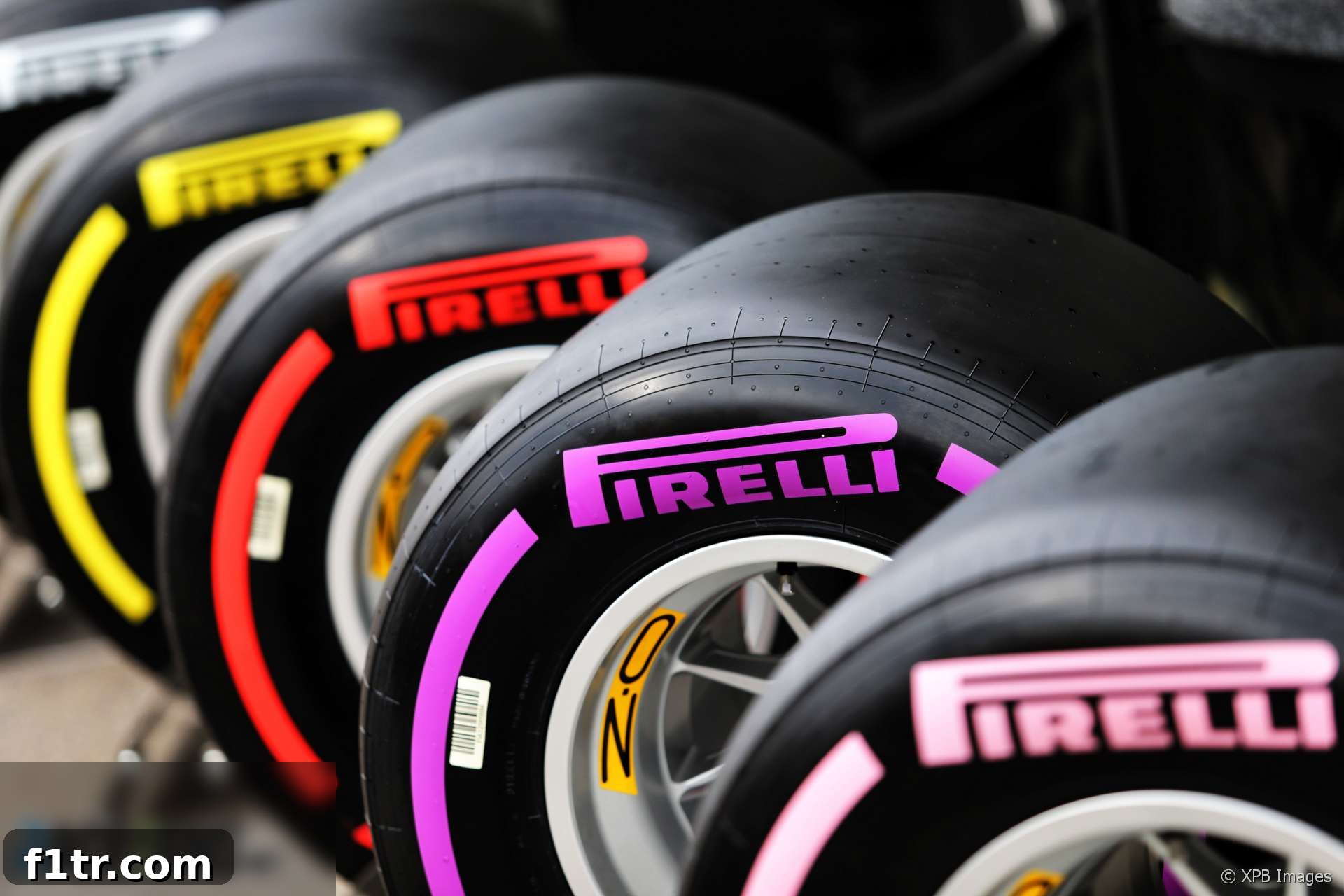
Under the new proposal, the three available tire choices at each Grand Prix event would be universally referred to as ‘hard,’ ‘medium,’ and ‘soft.’ This standardization represented a radical departure from the previous system, which saw up to seven distinct compound names, such as Ultrasoft, Supersoft, Soft, Medium, Hard, and Superhard, each assigned a specific color. The inherent confusion arose because a ‘Soft’ tire at one circuit might, in reality, be a firmer compound than a ‘Medium’ tire designated for a different track, leading to inconsistencies in perception for the uninitiated fan.
Pirelli’s sporting director, Mario Isola, confirmed that a change for 2019 was indeed “possible” and was under serious consideration. He articulated the core request from F1’s governing bodies: “We had a request from FOM and FIA to just call them hard, medium and soft, with three colours, the same colours and same names for all the races.” This straightforward approach was designed to create a consistent narrative around tire strategy, regardless of the circuit characteristics or the actual rubber compound being used.
Despite the simplified public-facing nomenclature, the underlying technical reality would remain sophisticated. Isola clarified, “But obviously different compounds, because you cannot use the same compounds we use in Silverstone in Monaco or Suzuka.” This statement underscores the critical aspect that while the names would be uniform, the actual tire compounds nominated for each race would continue to be tailored to suit the specific demands of the track, including factors like track temperature, abrasive surfaces, and cornering loads. To manage this internally, Pirelli planned to use an alphabetical system for its technical specifications, such as ‘compound A, B, C, D, E, F or whatever,’ which would then be mapped to the ‘hard,’ ‘medium,’ and ‘soft’ designations for public consumption.
For instance, at one race, the ‘hard’ tire might correspond to compound ‘C,’ the ‘medium’ to compound ‘E,’ and the ‘soft’ to compound ‘G.’ At another, more demanding circuit, the ‘hard’ might be compound ‘A,’ the ‘medium’ compound ‘C,’ and the ‘soft’ compound ‘E.’ This ensures that while the fan sees a simplified choice, the teams and Pirelli still work with a precise range of performance characteristics suited to each unique Grand Prix challenge. This dual-layer system aimed to strike a balance between accessibility for viewers and technical depth for the competitors and engineers.
The Rationale: Enhancing Fan Experience and Understanding
The primary objective behind this proposed overhaul was unequivocally to simplify the sport for its vast global fanbase. Formula 1 has always sought ways to make its intricate technical and strategic elements more digestible for casual viewers, who might otherwise be alienated by overly complex jargon. Isola emphasized this point, stating, “For spectators it’s probably more understandable.”
Imagine a new viewer tuning into a Grand Prix. Under the old system, they would hear about Hypersofts, Ultrasofts, and Supersofts, each with a different color. They might struggle to understand if a Supersoft at a street circuit like Monaco was truly ‘softer’ than a Soft at a high-energy track like Silverstone. The new system eliminates this ambiguity. When a commentator refers to a driver on ‘hard’ tires, the viewer immediately grasps the implication: these are the most durable, slowest-to-warm-up, but longest-lasting tires available that weekend. Conversely, ‘soft’ tires convey maximum grip, rapid warm-up, but shorter lifespan, crucial for understanding race strategy unfolds.
This clarity not only aids new fans but also enriches the experience for seasoned enthusiasts. While the surface-level information becomes simpler, Isola assured that the technical details would still be available for those who wish to delve deeper. “You also have the possibility to go deeper in detail for technical information that we will continue to provide,” he affirmed. This commitment means that analysts, strategists, and technically-minded fans can still access the underlying compound information (e.g., that the ‘Soft’ for a specific race is actually Pirelli’s C4 compound), allowing for detailed strategic analysis without burdening the general broadcast with excessive complexity.
The consistent use of three colors – most likely white for hard, yellow for medium, and red for soft – further reinforces this visual simplification. These colors would become instantly recognizable symbols of tire performance, creating a universal language for tire strategy that transcends specific compounds or circuit characteristics. This visual consistency is invaluable for live television broadcasts and online graphics, making it easier for viewers to track tire choices and predict strategic outcomes throughout a race.
Pirelli’s Assessment: Feasibility and Logistics
Pirelli’s internal assessment of this significant change was already underway, as confirmed by Isola. “It’s an ongoing discussion but we said we are available to evaluate this change,” he remarked. The evaluation involved a thorough check of the implications across various departments, especially production and logistics, which are critical for delivering thousands of perfectly manufactured tires to races globally.
From a manufacturing standpoint, Pirelli determined the change to be highly feasible. “I made a check with production and logistics, obviously we need to understand all the implications. It is feasible because we produce a specific batch for each race to be sure that they all come from the same batch of production,” Isola explained. This meticulous process ensures consistency and quality for every tire delivered. The actual production of the rubber compound remains the most complex part of the process. Changing the outer labeling or color for public identification is a comparatively minor adjustment. “So honestly to put a purple label or a yellow label or any other colour is not a big issue. It’s a possibility.” This insight highlights that the core engineering challenge lies in creating the diverse range of compounds, not in how they are branded for spectators.
However, implementing such a significant change could necessitate revisions to the existing sporting and technical regulations. Formula 1’s rulebook is notoriously comprehensive, and any alteration to how tires are designated, allocated, or reported would likely require formal adjustments by the FIA. These revisions would ensure that all teams, officials, and media operate under a clear and unified framework, preventing any ambiguity or potential for competitive disadvantage.
This commitment from Pirelli to adapt their operations underscores their dedication to supporting Formula 1’s broader goals of fan engagement and accessibility. As the sole tire supplier, Pirelli plays a pivotal role in the spectacle of F1, and their willingness to evolve their naming system demonstrates a responsive partnership with the sport’s governing bodies.
Beyond Naming: Reducing Compound Variety
In addition to the naming system overhaul, Pirelli also intended to reduce the total number of available compounds for the upcoming season. For the 2018 F1 season, Pirelli had offered seven distinct dry weather compounds. Isola clarified the reason for this extensive range: “[There are] seven this year is because we wanted to have a back-up.” Having a larger pool of compounds allowed Pirelli greater flexibility in selecting optimal tire choices for a wide variety of circuits and conditions, ensuring they always had a suitable option, even if initial simulations proved slightly off.
However, the intention was to refine this offering, moving towards a more streamlined portfolio. “Six is a good number to have the right flexibility in tyre choices,” Isola suggested. A reduction to six compounds would still provide sufficient versatility for Pirelli to tailor selections to each track, while simultaneously simplifying their internal development and production processes. He even hinted at a further reduction, stating, “Maybe if they are better spaced we can have five instead of six. But the number will be five or six.”
Reducing the number of compounds from seven to five or six offers several advantages. Firstly, it allows Pirelli to focus its development resources more effectively, potentially leading to more robust and consistently performing compounds across the board. Secondly, a more spaced-out range of compounds means that the performance delta between each step (e.g., between the ‘harder’ and ‘softer’ options available at a given race) could be more pronounced and predictable, leading to clearer strategic choices and more dynamic racing. Finally, fewer compound types could simplify logistics and inventory management for Pirelli, reducing the overall complexity of delivering tires to 20+ races around the world each year.
The Broader Impact on Formula 1 Racing
The proposed changes to both the naming system and the number of available compounds were more than just administrative adjustments; they represented a strategic effort to enhance the very essence of Formula 1 racing. By making tire strategy more transparent, the sport aimed to elevate the viewer’s understanding of critical race-defining moments. When a pit stop occurs, and a team opts for ‘Soft’ tires, the implications for pace and longevity become immediately apparent, fueling discussion and excitement.
For the teams themselves, while the public nomenclature simplifies, their internal strategic analyses would continue to be based on the precise technical specifications of the compounds. They would still need to understand the nuances of C1 vs. C2 vs. C3, and how each compound interacts with their car setup and the track conditions. However, the consistent ‘Hard,’ ‘Medium,’ ‘Soft’ labels would provide a common, easily communicable framework for interactions with media, sponsors, and the wider public, without losing any of the underlying technical depth crucial for engineers and strategists.
Ultimately, these adjustments underscore Formula 1’s ongoing commitment to balancing cutting-edge technical innovation with mass appeal. As the sport continues to grow its global footprint, simplifying elements that can be perceived as overly technical or confusing is a vital step in attracting and retaining new fans, ensuring the enduring popularity of the world’s most exciting motorsport series. The evolution of tire regulations, led by Pirelli and guided by the FIA and FOM, is a testament to this proactive approach, promising a clearer, more engaging spectacle for all.
2018 F1 season
- F1 feared “death knell” for Drive to Survive after Ferrari and Mercedes snub
- McLaren staff told us we were “totally crazy” to take Honda engines in 2018 – Tost
- ‘It doesn’t matter if we start last’: How Red Bull’s junior team aided Honda’s leap forward
- Honda’s jet division helped F1 engineers solve power unit problem
- McLaren Racing losses rise after Honda split
Browse all 2018 F1 season articles