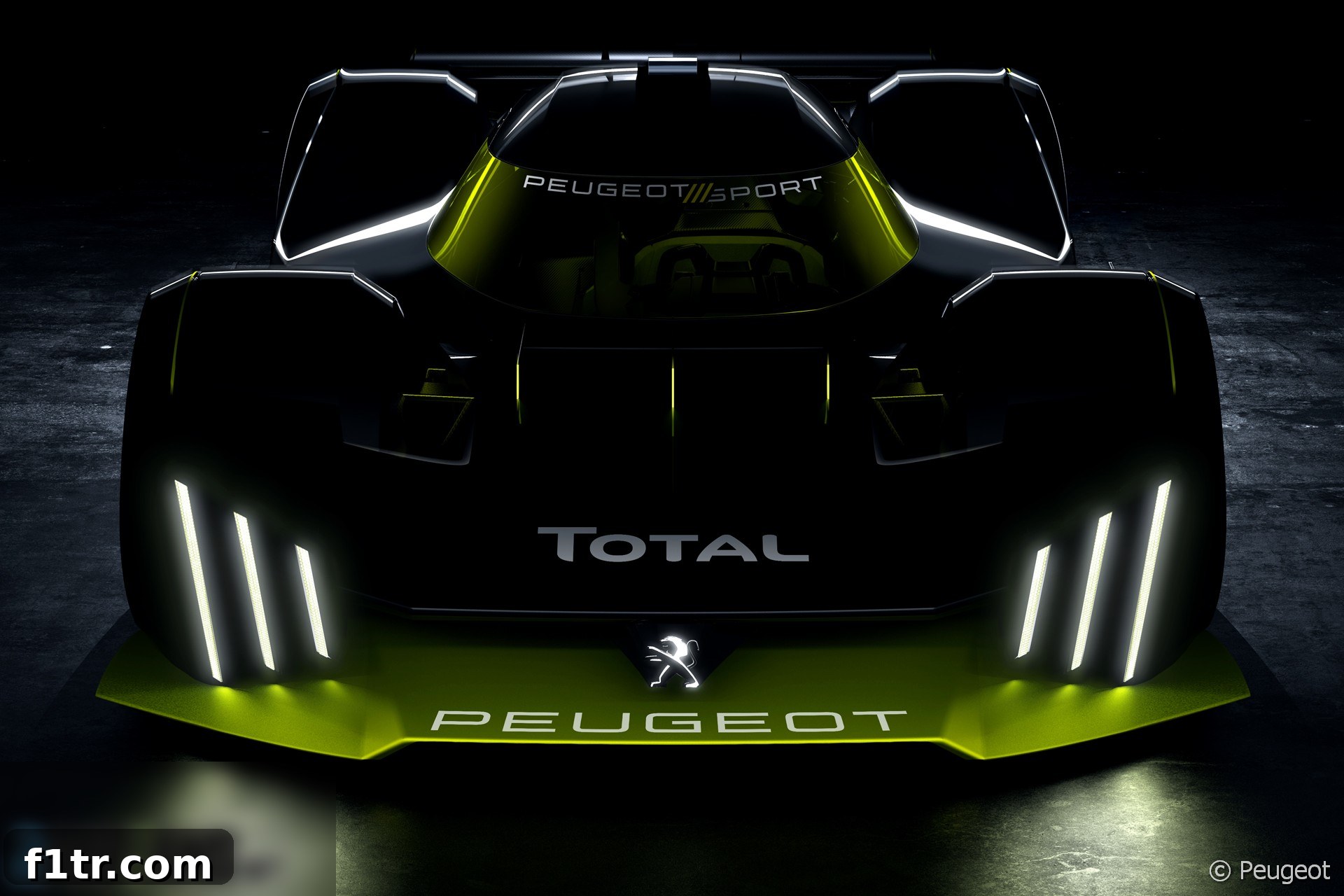
Peugeot has officially lifted the veil on the initial design concepts of its eagerly awaited Le Mans Hypercar, signaling a powerful return to the illustrious 24 Hours of Le Mans race in 2022. This ambitious project marks a significant chapter in the French manufacturer’s storied motorsport history, aiming to compete at the pinnacle of endurance racing with a cutting-edge machine designed for the new era of the World Endurance Championship (WEC).
The Dawn of a New Era: The LMH Class
The introduction of the Le Mans Hypercar (LMH) class represents a pivotal moment for endurance racing, succeeding the long-standing LMP1 category as the premier class. This strategic shift by the FIA and ACO aims to attract more manufacturers by offering greater design freedom, reduced development costs, and a closer connection to road-going hypercars, thus making the sport more sustainable and engaging. Peugeot’s entry into this groundbreaking class underscores its commitment to innovation and high-performance engineering.
Peugeot’s formidable challenger is engineered as a sophisticated four-wheel-drive hybrid, projecting an impressive total power output of approximately 680 brake horsepower (bhp). This blend of traditional internal combustion and advanced electric propulsion is at the heart of the LMH regulations, pushing the boundaries of automotive technology. The new design also presents a more imposing physical presence compared to its LMP1 predecessors, measuring two meters wide (an increase from 1.9m) and stretching approximately five meters in length (up from 4.65m). These expanded dimensions offer designers greater scope for aerodynamic and technical solutions, contributing to both stability and performance on the legendary Circuit de la Sarthe.
Hybrid Power and Engineering Prowess
Olivier Jansonnie, the esteemed Technical Director of Peugeot Sport WEC, shed further light on the technical marvel being developed. “The car will be four-wheel drive, equipped – as required by the regulations – with an electric motor and a maximum power of 200kW [equivalent to 268bhp] on the front axle,” Jansonnie stated. This configuration highlights a critical aspect of the LMH regulations: the mandatory hybrid system, particularly its deployment on the front axle to enhance traction and efficiency during various phases of a race. The integration of this electric power unit alongside a powerful internal combustion engine, expected to drive the rear wheels, creates a complex yet highly optimized powertrain designed for both raw speed and fuel efficiency over long stints.
The hybrid system is not merely an add-on; it is an integral part of the car’s overall performance strategy. It allows for advanced energy recovery during braking, which can then be deployed for acceleration, providing a significant tactical advantage. The 200kW front-axle motor demonstrates Peugeot’s dedication to mastering advanced hybrid technology, showcasing their engineering capabilities and commitment to sustainable high performance in the demanding environment of endurance racing. This system requires precise calibration and sophisticated software management to ensure seamless power delivery and optimal energy utilization across varying race conditions.
Navigating the Balance of Performance (BoP) Landscape
A cornerstone of the new LMH regulations is the implementation of a sophisticated Balance of Performance (BoP) system. This mechanism is designed to level the playing field, ensuring that fierce competition is maintained between different manufacturers and car designs, regardless of their underlying technical philosophies. The BoP adjusts various performance parameters such as weight, power output, and aerodynamic efficiency to prevent any single car from dominating, thereby promoting closer racing and enhancing spectator excitement.
Jansonnie offered a pragmatic view on the BoP, acknowledging its inherent constraints while emphasizing its role in fostering innovation. He noted that the BoP “certainly sets limits, but also allows room for many technical possibilities in our development, specifically on the general shape, as long as a certain overall aerodynamic efficiency is not exceeded.” This statement is crucial, as it suggests that while outright performance might be capped, manufacturers retain significant freedom in conceptual design and engineering solutions to achieve competitive efficiency within those parameters. The challenge, therefore, lies in optimizing every aspect of the car’s performance envelope, from its chassis dynamics to its thermal management, to extract maximum advantage under BoP conditions.
The rigorous process of BoP measurement involves comprehensive testing, including crucial 1:1 scale wind tunnel evaluations. “This will be measured in a 1:1 scale wind tunnel and which will be part of the BoP,” Jansonnie confirmed. Such detailed aerodynamic assessment ensures that each competitor’s aero efficiency is accurately quantified and factored into the BoP calculations. This scientific approach guarantees a fair and transparent system, allowing different design philosophies—be it a high-downforce concept or a low-drag setup—to compete effectively on equal terms, ultimately contributing to the thrilling spectacle of the World Endurance Championship.
From Concept to Reality: The Development Journey
While the initial images provide a tantalizing glimpse into the broad design direction of the Peugeot Le Mans Hypercar, they represent merely the tip of the iceberg in a complex and extensive development cycle. Peugeot Sport’s engineering teams have already made significant strides in finalizing several critical aspects of the car’s intricate specification, moving steadily from conceptualization to tangible engineering solutions. This meticulous process ensures that every component and system is optimized for the rigors of endurance racing.
Jansonnie detailed these foundational achievements: “To this date, we have confirmed part of the aerodynamic concept, the engine framework has been decided and we have chosen the functionality of the hybrid system and its fundamental design.” This illustrates a systematic approach, where core elements like the airflow management around the car, the structural integration of the engine, and the precise operational parameters of the hybrid powertrain are locked down early in the development phase. These decisions are pivotal, as they dictate the subsequent engineering and manufacturing processes.
The journey to the 2022 debut at the 24 Hours of Le Mans is a multi-stage marathon in itself. Jansonnie outlined the forthcoming phases: “We still have several steps left before our debut in endurance in 2022, in studies, the production of prototypes and finally, affirmation on the bench and on the track.” These steps include exhaustive computational fluid dynamics (CFD) simulations and further wind tunnel testing to refine aerodynamic performance, followed by the painstaking construction of prototype vehicles. These prototypes will then undergo extensive ‘bench testing’ – rigorous evaluations of individual components and systems in controlled environments – before the ultimate challenge: real-world track testing. Track testing is where theoretical designs meet the harsh realities of competition, allowing engineers to fine-tune handling, durability, and overall performance under race-like conditions. This comprehensive validation process is essential to ensure the Hypercar is not only fast but also robust enough to withstand the immense stresses of a 24-hour race.
The World Endurance Championship: A New Chapter for Peugeot
Peugeot’s re-entry into the World Endurance Championship, particularly with a Hypercar project, signifies their ambition to not only reclaim past glories at the 24 Hours of Le Mans but also to use the series as a demanding proving ground for future road car technologies. The WEC calendar, featuring iconic circuits worldwide, provides a perfect platform for showcasing advanced hybrid systems, aerodynamic ingenuity, and robust engineering under extreme conditions. The Hypercar class promises an exhilarating era of multi-manufacturer competition, with established giants and ambitious newcomers vying for overall victory.
The decision to return to endurance racing aligns perfectly with Peugeot’s brand strategy, emphasizing performance, efficiency, and innovative design. The challenges posed by races like Le Mans — combining outright speed with strategic fuel management, tire conservation, and driver stamina over 24 hours — demand a holistic approach to car design and team execution. Fans worldwide are eagerly anticipating Peugeot’s official debut, expecting a visually stunning and technologically advanced machine that will add another thrilling dimension to the Hypercar grid. This return is more than just a race; it’s a statement of intent, a commitment to pushing the boundaries of automotive engineering and a rekindling of a legendary rivalry on the global stage of endurance motorsport.