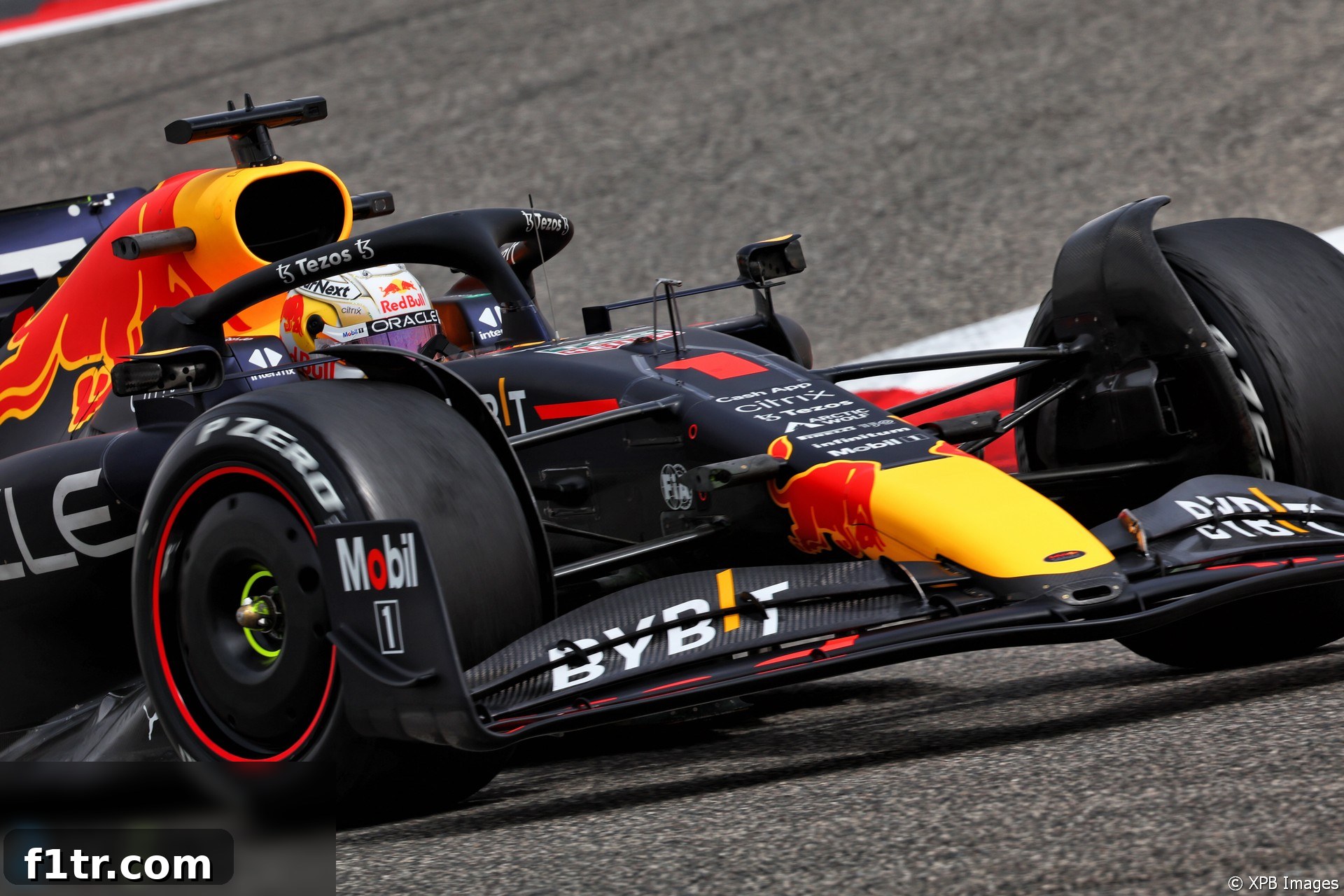
Red Bull RB18 Set for Crucial Final Day Update Ahead of F1 Season Opener
As the highly anticipated 2022 Formula 1 pre-season testing drew to a close in Bahrain, Red Bull Racing confirmed plans for a significant aerodynamic update to its RB18 challenger. This crucial development was revealed by star driver Sergio Perez, signaling the team’s relentless pursuit of performance and its meticulous preparation for the season ahead.
The announcement created a buzz in the paddock, particularly after rivals Mercedes-AMG Petronas F1 Team unveiled a dramatically different “zero sidepod” concept for their W13 car earlier in the test. While Mercedes’ radical design generated considerable discussion, Red Bull’s more measured approach, culminating in a final-day update, highlights a distinct development philosophy.
Sergio Perez Details Red Bull’s Strategic Development Plan
Speaking to the official F1 website, Sergio Perez indicated that Red Bull’s development schedule was unfolding “all according to plan.” This statement underscores a systematic and well-orchestrated approach by the Milton Keynes-based squad, suggesting that the team is not reacting hastily to rival innovations but rather executing a pre-determined development roadmap. Perez confirmed that new components would be fitted to the car on the concluding day of testing, giving the team valuable track time with the latest specification before the competitive action begins.
“I think it’s all visually easy to spot,” Perez added, hinting at tangible external changes to the RB18’s aerodynamics. Such visual updates typically involve revised bodywork, floor elements, or wing configurations, all designed to optimize airflow and generate more downforce under the new ground-effect regulations. The final day of testing therefore served as a critical validation opportunity, allowing Red Bull to collect real-world data on the performance of these crucial new parts and ensure they correlate with simulator data.
Crucially, Perez also addressed speculation regarding Red Bull potentially mimicking Mercedes’ innovative sidepod design. “No, we’re not going that way,” he stated unequivocally. This firm denial reaffirms Red Bull’s confidence in its own design philosophy and aerodynamic package for the RB18. It suggests that while other teams might explore radical new concepts, Red Bull is committed to refining its existing platform, believing it has the fundamental strengths to compete at the very front of the grid. The focus, according to Perez, remained firmly on their own programme. “I think everything should be there tomorrow and we are able to run it for the final day. We have to focus on our stuff for now in this short time period of testing,” he explained, emphasizing the need for inward focus during the limited pre-season track time.
Christian Horner Emphasizes Race Preparation Over Testing Spectacle
Team Principal Christian Horner echoed Perez’s sentiments, highlighting that Red Bull’s primary objective during testing was not to showcase new components but to meticulously prepare for the opening race of the season. The Bahrain Grand Prix, just one week after the final test day, would be held at the very same circuit, making optimal race preparation paramount.
When questioned about significant updates, Horner clarified, “Obviously we’re preparing for the first race so there will be a few little bits and pieces that appear on the car as the week goes on. But the main focus is on next weekend.” This strategic approach suggests that while performance gains from new parts are always welcome, Red Bull’s priority is ensuring reliability, understanding tyre degradation, and fine-tuning the car’s balance for a race distance. Testing is for learning, not winning, and exposing a full package too early can give rivals an edge in understanding and countering strategies.
Horner also provided insights into the challenging conditions faced by teams during the Bahrain test. “It’s been a reasonable test so far today,” he noted at lunchtime. “The morning session is quite tricky because wind, sand, heat, that doesn’t have a great deal of relevance to the conditions we will be racing in next weekend.” These environmental factors can significantly affect aerodynamic performance and tyre behaviour, making it difficult for teams to gather truly representative data. However, Horner stressed the value of the ongoing work: “So there’s a lot of data gathering going on, but it’s been very, very useful and we’re racking up the laps and getting the data that we need.” This collection of data, even in less-than-ideal conditions, is vital for understanding the RB18’s characteristics and for calibrating simulations back at the factory.
The 2022 F1 Regulations: A New Era of Car Design
The context for these developments lies in the revolutionary 2022 Formula 1 technical regulations. Designed to promote closer racing and facilitate overtaking, these rules brought back ground effect aerodynamics and introduced simplified front and rear wings, along with 18-inch wheels. This paradigm shift in car design presented every team with a blank slate, demanding entirely new concepts and engineering solutions.
Red Bull’s RB18, a product of this new era, is an evolution of their successful design philosophy, albeit adapted to the new regulations. Unlike some competitors who opted for more radical interpretations, Red Bull appeared to maintain a more conventional yet aggressive aerodynamic profile. The decision not to pursue a “zero sidepod” concept, for instance, underscores a belief in their current bodywork design’s efficiency and integration with the overall package. This involves complex interactions between the floor, sidepods, and engine cover to manage airflow and maximize downforce, particularly from the underfloor tunnels—the primary source of downforce under the new rules. The final update, therefore, is not merely an addition but a refinement of this intricate system, aiming to extract every last bit of performance.
The final day of testing is always a critical juncture. It’s the last chance for teams to conduct real-world evaluations of components destined for the opening race. For Red Bull, integrating new parts and running them extensively allows engineers to assess their reliability, aerodynamic efficiency, and overall impact on car balance. It’s a delicate balancing act, as introducing new elements can sometimes bring unforeseen issues, but the potential performance gains often outweigh the risks in the high-stakes world of Formula 1.
Anticipation Builds for the Bahrain Grand Prix
With the pre-season testing now concluded and Red Bull’s RB18 having received its final major update, all eyes turn to the Bahrain Grand Prix. The insights gained from the final day’s running will be meticulously analyzed by engineers, feeding into crucial setup decisions for the inaugural race weekend. The performance of the updated RB18 against its rivals, especially Mercedes and a strong-looking Ferrari, will reveal the true pecking order of the 2022 season.
Red Bull’s strategy of a late, significant update is a clear statement of intent: they are bringing their most competitive package to the starting line. The confidence exuded by both Sergio Perez and Christian Horner suggests they are satisfied with their preparation and the direction of their car’s development. While testing times are notoriously unreliable indicators of true performance, the extensive data gathering and the strategic implementation of new components point towards a team ready to challenge for victories and championships from the very first race. The battle for the 2022 Formula 1 season promises to be an exhilarating one, and Red Bull’s RB18, armed with its latest upgrades, is certainly poised to be a frontrunner.
Related Articles: 2022 F1 Season Insights
- Mercedes told me “you’re wrong” about 2022 car’s problems – Hamilton
- FIA confirms all 10 F1 teams complied with 2022 cost cap
- Steiner “not ashamed” of panning “slow” Schumacher in Drive to Survive
- Albon believes year out of F1 improved him as a driver
- Hamilton sees diversity gains in F1 years on from his ‘traumatising’ experience of racism
Browse all 2022 F1 season articles