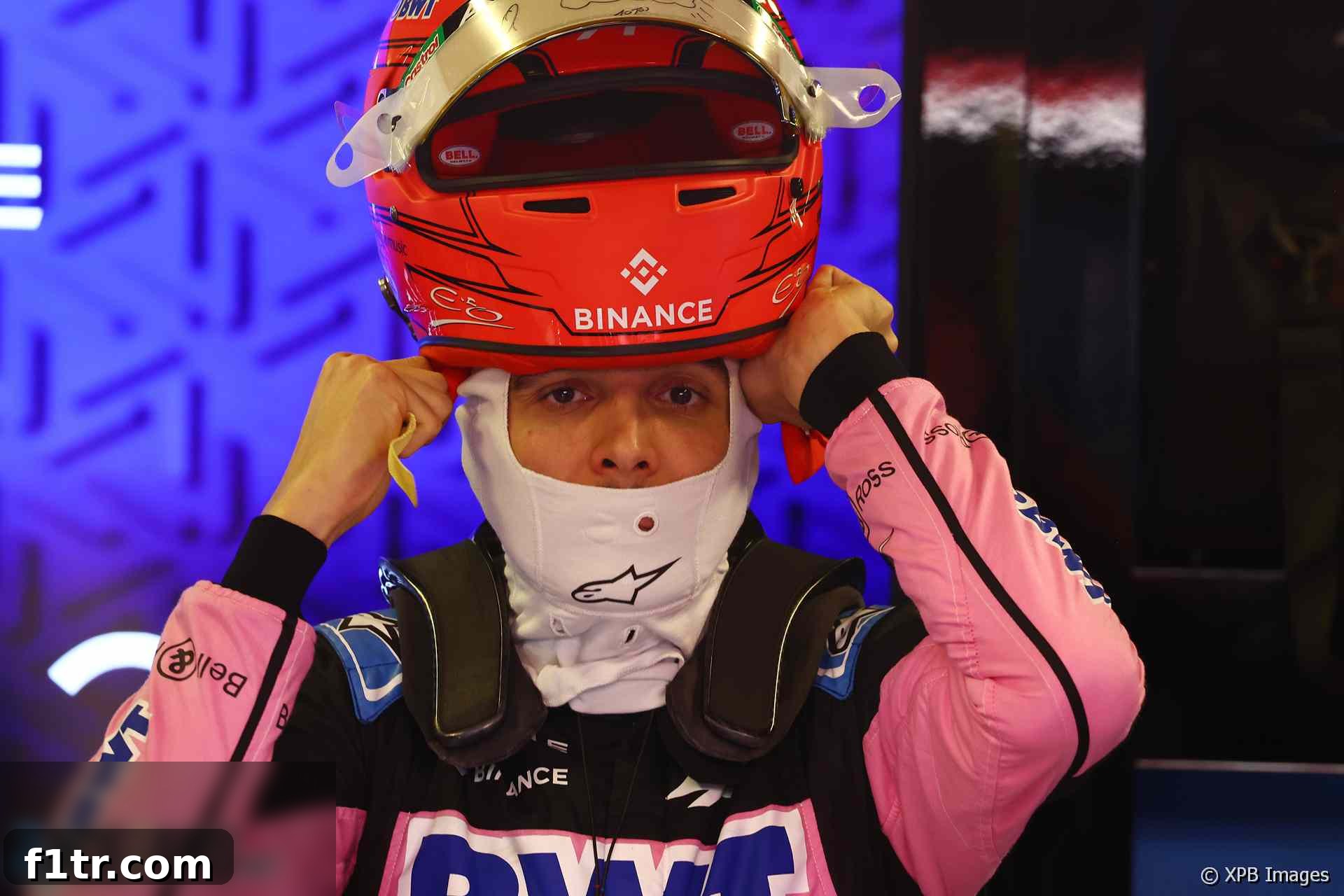
Esteban Ocon’s Health Concerns Highlight Grueling F1 Schedule Strain
Formula 1 driver Esteban Ocon openly attributes the fever he battled during the Abu Dhabi Grand Prix weekend to the relentless and increasingly demanding nature of the Formula 1 calendar. His health struggles have brought to the forefront a growing chorus of concerns from drivers and team personnel alike regarding the physical and mental toll exacted by a rapidly expanding global schedule.
The Unprecedented Strain of Back-to-Back Races
The 2023 season concluded with an especially taxing back-to-back sequence: the inaugural Las Vegas Grand Prix immediately followed by the season-closing Abu Dhabi Grand Prix. This scheduling decision, despite a vast 12-hour time difference between the two iconic locations, placed an immense burden on everyone involved. The challenges were further exacerbated by the unique demands of the Las Vegas event, which, as a night race, drastically altered circadian rhythms and imposed an unconventional working schedule.
Many within the Formula 1 paddock, from star drivers to crucial support staff, have vocalized their apprehension about these logistical nightmares. The extreme time zone shifts, coupled with the immediate requirement to perform at peak levels, left little room for recovery or adaptation. For Ocon, this cumulative strain manifested as illness, impacting his vital preparations for the final race of the year.
Ocon’s Battle with Illness in Abu Dhabi
Arriving in Abu Dhabi already feeling unwell, Ocon’s condition was severe enough to prevent his participation in mandatory media activities on Thursday. He wisely opted for crucial rest, hoping to recuperate sufficiently for the demanding on-track sessions. However, even after Saturday’s qualifying session, the Alpine driver confirmed he was still battling the lingering effects of his fever, a clear indication of the deep impact the travel and racing schedule had taken on his system.
For an elite athlete competing at the pinnacle of motorsport, being anything less than 100% fit can have significant consequences. Ocon’s proactive decision to prioritize rest underscores the seriousness of his condition and highlights the difficult choices drivers sometimes face to manage their well-being amidst an unforgiving schedule. It also emphasizes the narrow margin for error in Formula 1, where physical and mental acuity are paramount.
The Expanding F1 Calendar and Its Human Cost
Ocon firmly believes that the combination of the highly unusual hours dictated by the final two races, coupled with the sheer length of the Formula 1 season, has taken a significant toll on his body. The 2023 season featured 22 events, a number that matched the previous year’s schedule. However, looking ahead, the 2024 F1 calendar is set to break records with an unprecedented 24 rounds, a prospect that instills concern among many in the sport.
Speaking after the qualifying session in Abu Dhabi, Ocon shared his direct experience and broader anxieties with RaceFans. “I’m not sure if it comes from [the Vegas timings] but we didn’t see the sun for four days,” he stated, painting a vivid picture of the unnatural environments drivers are exposed to. He elaborated on the immense pressure placed upon the human body: “There’s a lot of things that is pushing on the human body.”
His reflections extend beyond immediate discomfort to a more fundamental questioning of sustainability. “Usually it’s when you come home from here, when [illness] happens. It’s one more race than last year, or two more races,” Ocon observed. He critically assessed the implications of this relentless expansion: “The body is designed for that and not 24 or 23 races. So let’s see if we can escape from that next year.” This statement encapsulates the growing apprehension that the sport’s rapid growth might be pushing human endurance to its limits.
The Physical and Mental Ramifications for F1 Drivers
The impact of such an intense schedule extends far beyond a simple fever. Frequent, long-haul travel across multiple continents and time zones is a known disruptor of sleep patterns and circadian rhythms, leading to chronic jet lag. This can weaken the immune system, making individuals more susceptible to illnesses, as experienced by Ocon. Moreover, constant fatigue can impair cognitive functions, reducing concentration, reaction times, and decision-making abilities – all critical elements for safe and successful racing at speeds exceeding 200 mph.
Beyond the physical, the mental strain is equally significant. The pressure to perform, the constant travel, and the limited downtime can contribute to mental fatigue, stress, and burnout. Drivers are not just athletes; they are also brand ambassadors, media personalities, and engineers, juggling multiple roles that demand peak mental engagement. The lack of natural light, as Ocon pointed out from his Vegas experience, can also affect mood and overall well-being, disrupting the body’s natural clock and hormone regulation.
Ocon’s Qualifying Performance: A Testament to Resilience
Despite his debilitating condition, Esteban Ocon demonstrated remarkable resilience during the Abu Dhabi Grand Prix qualifying. He secured 12th position on the grid, just two places behind his Alpine teammate. Given the circumstances, Ocon expressed satisfaction with his performance, acknowledging the inherent difficulties of competing whilst unwell.
“It’s obviously not optimal to be in bed for two days before an F1 race,” Ocon candidly admitted. This stark reality underscores the extraordinary mental fortitude required of Formula 1 drivers. Missing FP1 (Free Practice 1) further compounded his challenge, as this session is crucial for familiarizing with the track, fine-tuning car setup, and understanding tire performance on race weekend. Yet, Ocon and his team managed to extract a commendable performance.
Reflecting on the session, Ocon noted, “We started pretty well with qualifying. I think we were straight away in a decent rhythm.” This suggests that even under duress, his natural talent and understanding of the car allowed him to quickly get up to speed. However, the final crucial run in qualifying proved to be his undoing. “It’s just that last run really which wasn’t ideal in terms of pace and how the car felt and picked up quite a lot of understeer with the car,” he explained. Understeer, a condition where the front tires lose grip, makes it harder to turn into corners and can significantly hamper lap times. Had this issue not arisen, Ocon was confident of a Q3 appearance: “Otherwise I think it would have been enough for Q3.”
Looking ahead to the race, Ocon remained optimistic about Alpine’s potential. “So we’ll see tomorrow. I think there’s more pace than what we’ve shown today in the car and if we put everything together, hopefully there will be points on the table,” he declared. His outlook reflects the competitive spirit of an F1 driver, always seeking to maximize performance and convert challenges into opportunities, even when battling personal health issues.
The Future of the F1 Calendar: A Call for Balance
Esteban Ocon’s experience serves as a powerful microcosm of a larger debate within Formula 1: how to balance commercial expansion with the well-being of its most vital assets – the people who make the sport happen. While the allure of new markets and increased revenue drives the expansion of the calendar, there is a growing consensus that the human element cannot be overlooked. The prospect of 24 races in 2024 raises serious questions about the sustainability of the current model and its long-term effects on physical and mental health across the paddock.
As Formula 1 continues to evolve, discussions about optimizing the calendar – perhaps through better geographical grouping of races, longer breaks between events, or increased support for driver and team wellness – will undoubtedly become more prominent. Ocon’s candid remarks underscore the need for a holistic approach that considers not just the spectacle on track, but also the health and longevity of the individuals who deliver it.
2023 Abu Dhabi Grand Prix Related Articles
- Mercedes’ team photo shows we still have a long way to go on diversity – Hamilton
- Why luck was a factor in Perez’s penalty for “joke” comment
- Bottas and Zhou see encouraging signs from overhauled 2024 car
- Only Verstappen got the best from his car every weekend, rival team bosses admit
- How Sainz suffered the worst season finale for a driver since Schumacher in 1997
Browse all 2023 Abu Dhabi Grand Prix articles