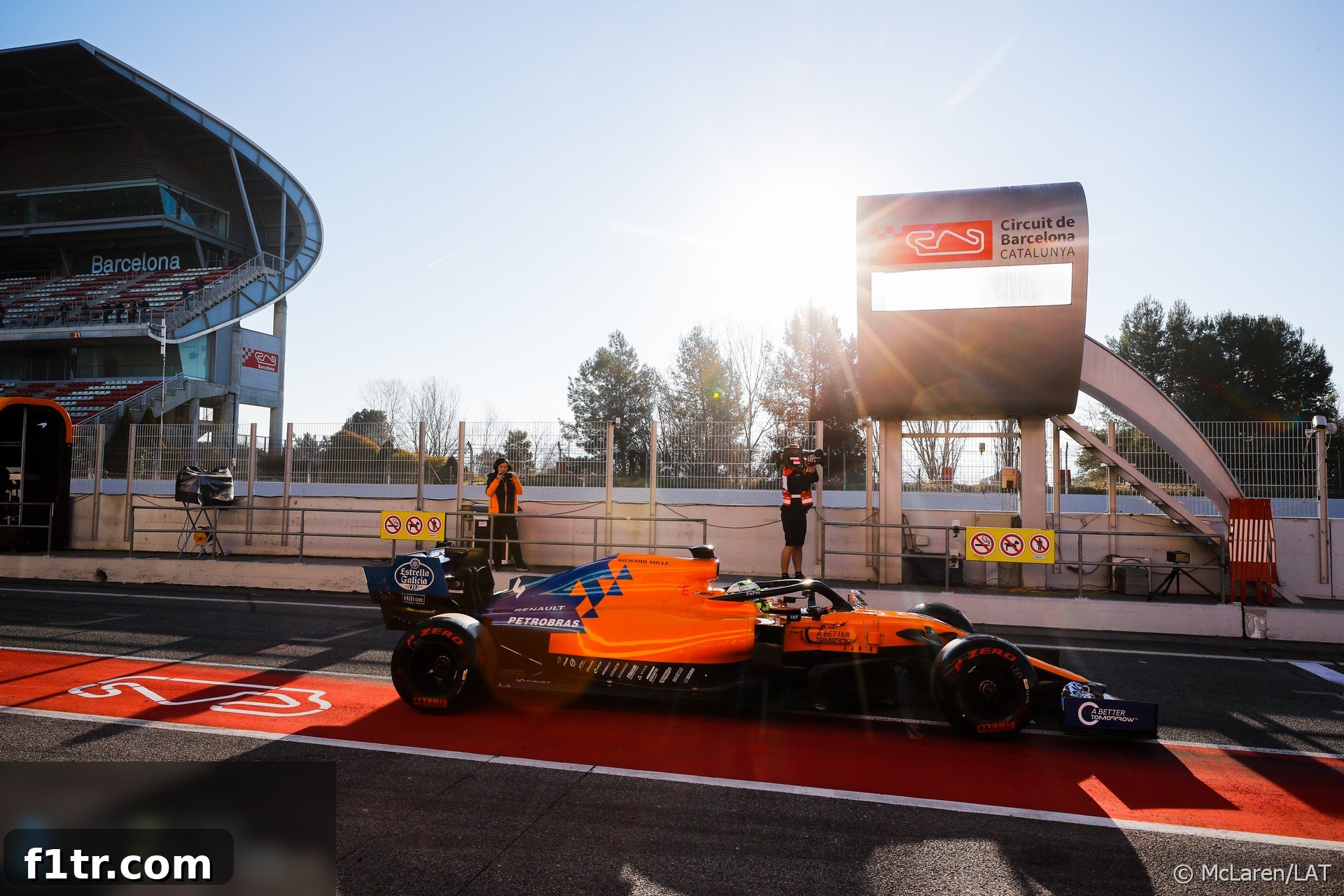
In a significant move impacting future talent, Lando Norris, the McLaren driver, voiced his concerns regarding the scheduled reduction in pre-season testing for the upcoming 2020 F1 season. Norris believes this cutback will disproportionately affect rookie drivers, making their transition into the highly competitive world of Formula 1 even more challenging. His comments highlight a broader debate within the paddock about the balance between cost-saving measures and driver development.
The Impact of Reduced Pre-Season Testing on F1 Rookies
The decision to scale back pre-season testing from eight days to six for the 2020 Formula 1 season has sparked considerable discussion among drivers, teams, and fans. While cost efficiency and calendar congestion are often cited as reasons for such changes, the implications for driver readiness, particularly for those new to the sport, are a major point of contention.
“I think for myself doing four days was good for me: Learning about the longer runs, shorter runs. For a rookie I think it’s more important. Obviously next year I won’t be a rookie so it won’t matter as much but if it’s another rookie coming through it’s only going to make it tougher for them.”
Lando Norris, who made his Formula 1 debut in 2019, speaks from recent experience. His four days of pre-season testing proved invaluable for understanding the intricacies of an F1 car, adapting to various race scenarios, and building crucial confidence. This period allows rookies to familiarise themselves with car dynamics, tyre management, pit stop procedures, and the rigorous demands of an F1 weekend without the pressure of a race event. With two fewer days, incoming drivers will have significantly less track time to prepare, potentially putting them at a disadvantage against more experienced competitors.
The learning curve in Formula 1 is notoriously steep. Beyond just raw speed, drivers need to master complex steering wheel controls, telemetry feedback, and working seamlessly with their engineering teams. Reduced testing means less opportunity for these critical interactions and refinements. Teams might also struggle to fully validate new components and setups, relying more heavily on simulator data, which, while advanced, cannot fully replicate real-world track conditions. This could lead to a more challenging start for both rookies and teams in the early races of the season, potentially impacting the competitive landscape.
Quotes: Dieter Rencken
Advert | Become a RaceFans supporter andgo ad-free
Insights from the Paddock: Social Media Highlights
In the fast-paced world of Formula 1 and wider motorsport, social media platforms serve as vital channels for drivers, teams, and fans to connect, share updates, and engage in real-time discussions. From light-hearted banter to significant announcements, these platforms offer an unfiltered glimpse into the lives of motorsport personalities. Here’s a roundup of notable posts from Twitter and Instagram that recently captured attention, reflecting the vibrant interaction and ongoing narratives within the racing community.
I think you’ll find that if you watch the video, it was you moving down trying to get ole Scotty D’s tow which caused this whole situation. 🤦🏻♂️🤷🏻♂️ #tryagain https://t.co/nc2lP4bFtG
— Alexander Rossi (@AlexanderRossi) August 18, 2019
IndyCar star Alexander Rossi’s witty tweet captured the attention of fans, engaging in playful banter about a racing incident. Such interactions are a staple of driver social media, allowing them to showcase their personalities and connect with fans beyond the track. These exchanges often spark further fan discussion, demonstrating the power of social media to amplify rivalries and camaraderie within the motorsport world.
Message for all you guys, thank you very much for the continuous support😃 #PatoSan pic.twitter.com/moEcswUOjq
— Pato O’Ward (@PatricioOWard) August 19, 2019
Rising talent Pato O’Ward shared a heartfelt message of gratitude, thanking his supporters. These moments of appreciation resonate strongly with fans, building a personal connection and fostering a sense of community around the driver. In an era where driver visibility is key, such posts play a crucial role in cultivating a loyal fan base and showcasing the human side of professional racing. Social media provides an unparalleled platform for drivers to express genuine emotions and keep their followers updated on their journey, both on and off the track.
- For more official F1 accounts and insights, explore the comprehensive F1 Twitter Directory.
Motorsport Headlines: A Comprehensive Roundup of Key Stories
Stay abreast of the latest developments and compelling narratives from across the world of motor racing. This curated selection of links offers in-depth analysis, exclusive interviews, and breaking news that shapes the current landscape of Formula 1 and beyond. From driver market speculation to technical challenges and historical reflections, these stories provide critical insights into the sport’s most pertinent issues.
Advert | Become a Supporter & go ad-free
Schumacher still uncertain of F1 timing (Racer)
“I still need to work a lot on myself. Whether I go to F1 next year or in two years or three years, I don’t know.”
Mick Schumacher, son of the legendary Michael Schumacher, continues to navigate his highly anticipated career path towards Formula 1. The pressure of his surname is immense, and every step of his junior career is scrutinised with great interest. This article delves into Schumacher’s candid reflections on his readiness for the pinnacle of motorsport, highlighting his focus on personal development rather than rushing into an F1 seat. It explores the challenges young drivers face in making the leap to F1, emphasising the need for continuous improvement and consistent performance in feeder series like Formula 2, where he was competing at the time. His thoughtful approach underscores the dedication required to succeed at the highest level, suggesting that timing is paramount over speed of ascent.
Ricciardo: Renault are good enough to get better (Sky)
“A bit like going out so late (onto the track) in Q1, I don’t think we needed to. I think we should have had the confidence in the car to get through.”
Daniel Ricciardo’s move to Renault in 2019 was a major talking point, and his comments here reflect the ongoing journey and challenges faced by the French manufacturer. This piece explores Ricciardo’s perspective on Renault’s potential, despite a season marked by inconsistency and struggles to break into the top tier. His statements often convey a mix of frustration with operational decisions, such as qualifying strategy, and underlying belief in the team’s ultimate capability to improve. The article sheds light on the complex process of team development in F1, where driver feedback, strategic choices, and technical advancements all play a crucial role in determining competitive performance. Ricciardo’s confidence in the car, despite its flaws, is a testament to the belief drivers must maintain even during difficult periods.
‘Lasst uns die Nordschleife fahren’ (Auto Motor und Sport)
Kevin Magnussen says he ‘would be there immediately’ if F1 chose to race on the Nurburgring Nordschleife.
Kevin Magnussen’s enthusiastic call to race on the legendary Nürburgring Nordschleife resonates with many purists and drivers alike. This article delves into the romantic appeal of such historic circuits and the desire among some modern F1 drivers for more challenging, less sanitised tracks. The Nordschleife, often dubbed “The Green Hell,” is renowned for its immense length, diverse corners, and unforgiving nature, a stark contrast to many contemporary F1 venues. The piece explores the theoretical possibility of F1 returning to such a circuit, weighing the immense safety concerns against the undeniable thrill and historical significance. It highlights the eternal debate between driver challenge, fan spectacle, and the paramount need for safety standards in modern motorsport, offering a glimpse into what F1 drivers truly seek in a track layout.
The challenge of designing a Formula 1 car livery (Crash)
“One afternoon I knocked up what the team logo could look like and what the livery could look like, race suits, trailers, couple of other things – you send it off, like any other one, and that one came back: ‘OK, the deal’s signed quickly!’”
Beyond the engineering marvels and high-speed action, Formula 1 cars are also canvases for artistic expression and powerful branding. This feature article explores the intricate and often high-stakes process of designing an F1 car livery. It delves into the creative journey from initial concepts to the final, iconic paint schemes that adorn these machines, highlighting the collaboration between designers, marketing teams, and sponsors. The livery is not merely decorative; it’s a crucial element of a team’s identity, brand visibility, and commercial appeal. The anecdote shared illustrates the rapid decision-making often involved when a design perfectly captures the essence of a new partnership, underscoring the immediate impact a compelling visual identity can have in securing crucial deals and captivating a global audience.
The only boat powered by a Ferrari F1 engine is up for sale (ESPN)
“On October 15, 1953, Castoldi made a new record attempt on Lake Iseo, achieving a two-way average of 150.19mph over a flying kilometre – a record that still stands 66 years later.”
This fascinating story highlights a unique intersection of motorsport and nautical engineering: a speed boat uniquely powered by a Ferrari Formula 1 engine. It’s a testament to the ingenuity and daring spirit of engineers and enthusiasts who push boundaries. The article recounts the historical significance of this vessel, particularly its record-breaking achievement on Lake Iseo in 1953. This feat, which set a speed record that remains unbroken decades later, underscores the raw power and engineering excellence of Ferrari’s early F1 engines, repurposed for an entirely different domain. Such projects are rare collectors’ items, representing a bygone era of experimental vehicle design and a profound appreciation for high-performance engines beyond the track. The sale of such a distinctive piece of history provides a rare opportunity to own a tangible link to both Ferrari’s racing heritage and an extraordinary engineering endeavour.
Bottas or Ocon for Mercedes in 2020? The answer may lie with Hamilton (Motorsport Magazine)
“To throw away a podium after not being able to seriously challenge Max Verstappen in the second half of the race will have irked Wolff and raised the question of whether Ocon would have done a better job.”
The decision regarding Mercedes’ second driver for the 2020 season — whether to retain Valtteri Bottas or promote Esteban Ocon — was one of the most hotly debated topics in Formula 1. This insightful analysis from Motorsport Magazine delves into the complexities of this choice, suggesting that Lewis Hamilton’s preference and impact on team dynamics could play a decisive role. The article scrutinises Bottas’s performance, particularly instances where he struggled to maintain pace or capitalise on opportunities, such as the mentioned scenario against Max Verstappen. It raises the critical question of whether Ocon, a young and hungry talent, might offer a more consistent challenge or provide a different dynamic beneficial to the team. The piece explores the intricate balance team principals like Toto Wolff must strike between driver stability, performance potential, and harmonious team environment, making this driver market saga a compelling study in F1 management.
- For a deeper dive into fan opinion, participate in our poll: Should Bottas or Ocon get the second Mercedes seat?
We always endeavour to credit original sources. If you have a tip for a link to feature in the next RaceFans round-up please send it in via the contact form.
Advert | Become a RaceFans supporter andgo ad-free
Debating DRS: The Future of Moveable Aerodynamics in F1
The Drag Reduction System (DRS) has been a significant, albeit controversial, feature in Formula 1 for nearly a decade, introduced to aid overtaking and enhance race spectacle. As F1 looks towards its 2021 regulations, the future of DRS is a hot topic. Duncan, a discerning observer, offers an interesting perspective on its legacy and potential evolution:
“Assuming the 2021 regulations improve the ability to follow closely then yes, of course, DRS per se should go. However, I think the most interesting thing about the experiment is that it’s shown that ‘moveable aerodynamic devices’ can be used safely in top-level motorsport. With modern technology, the high standard of engineering in today’s F1, and proper oversight, the apparent morbid fear the FIA had of them for forty years has proved to have been unfounded. I’d like to see some kind of driver-trim-able wing retained, without DRS’s arcane restrictions on activation.”
Duncan Snowden
Duncan’s comment cleverly dissects the DRS debate, moving beyond its immediate function to highlight its broader implications for aerodynamic innovation. He suggests that while the specific implementation of DRS might become redundant if the 2021 regulations successfully promote closer racing, the system has proven the safety and viability of “moveable aerodynamic devices” in F1. For decades, the FIA maintained a cautious stance on active aerodynamics, fearing complexity and safety risks. However, DRS has demonstrated that with contemporary engineering standards and stringent oversight, such mechanisms can be integrated without compromising driver safety. This opens the door for future innovations, perhaps leading to more sophisticated, driver-controlled aerodynamic adjustments that enhance strategic depth and skill, rather than simply facilitating ‘push-button’ overtakes. The discussion around DRS continues to evolve, influencing how F1 conceptualises the balance between technological advancement, driver challenge, and exciting racing.
Join in this week’s poll here:
- Should Formula 1 scrap DRS in 2021?
Celebrations in the F1 Community
A special happy birthday shout-out goes to our dedicated RaceFans community members: Woffin, Kozo.Higashi, and Strontium! We hope you have a fantastic day filled with celebration.
If you would like to receive a birthday shout-out on RaceFans, please let us know your birth date via the contact form, or by adding your details to our community list here. We love celebrating with our readers!
Remembering F1 History: On This Day
- Exactly 20 years ago today, Michael Schumacher, the legendary seven-time world champion, made his highly anticipated return to an F1 car for the first time since suffering a broken leg at Silverstone just 40 days prior. The test took place at Mugello, where he began to assess his recovery and the car’s performance, even though he ultimately ruled out competing in the very next race at Spa. This moment marked a critical step in his recovery journey and ignited hope among fans for his eventual return to full competitive form, showcasing his unparalleled dedication to the sport even in recovery.