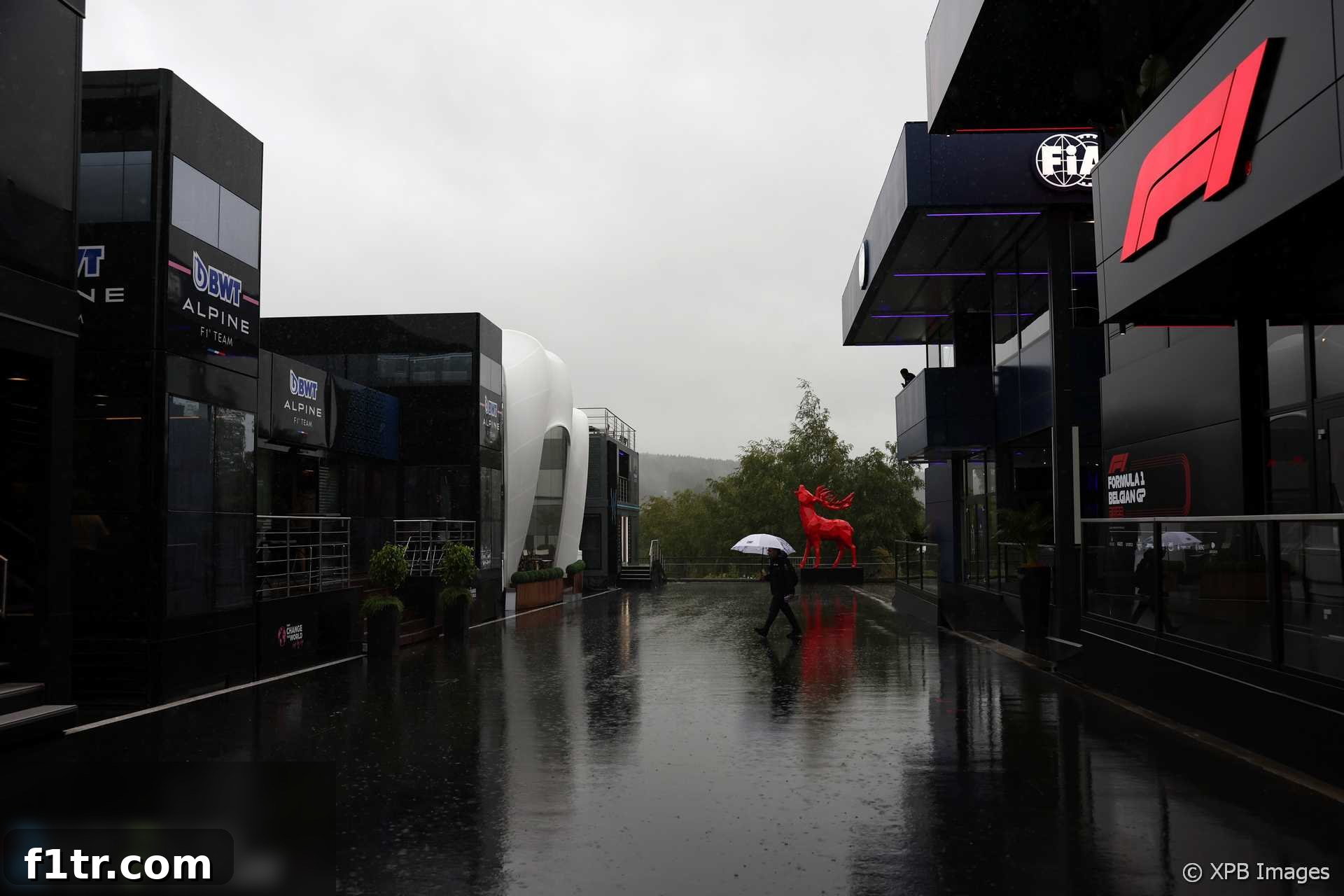
If the Formula 1 field weren’t looking forward to the summer break already, they undoubtedly were after a sodden weekend at Spa-Francorchamps. The iconic Belgian circuit delivered its characteristic blend of breathtaking speed and unpredictable weather, making the 2023 Belgian Grand Prix an unforgettable, albeit challenging, penultimate stop before the much-needed summer shutdown. From torrential rain to high-stakes team shake-ups, and fascinating insights from the sport’s biggest personalities, the paddock diary offers a unique glimpse into the intense world of Formula 1.
Thursday: Paddock Buzz and Driver Insights
My journey to the Belgian Grand Prix began not in Belgium itself, but with an arrival in Luxembourg on Wednesday. After a whirlwind few hours back home following the Hungarian Grand Prix, the exhaustion was palpable, but the excitement for another race weekend quickly took over. The strategic choice of a hotel in a neighbouring country offered a slightly different perspective on the logistical challenges and regional appeal of this prestigious event.
Thursday in the paddock is always a day of anticipation, filled with media engagements and initial insights into the weekend’s mood. My first commitment involved a candid group discussion with Aston Martin’s Mike Krack. He impressed with his unwavering calm and measured approach, a stark contrast to the high-pressure environment of a Formula 1 team principal role. Later, I delved deeper with him for an exclusive feature, exploring the nuances of leadership and strategy within a top-tier racing outfit.
The conversation naturally drifted towards the relentless pace of the Formula 1 calendar. We both acknowledged the collective weariness gripping the paddock after a grueling series of back-to-back races and an exceptionally demanding workload. The summer break wasn’t just a convenience; it was an absolute necessity for everyone involved, a shared sentiment that echoed throughout our discussion.
Following this, the paddock’s atmosphere shifted as Daniel Ricciardo made his appearance, his trademark wide smile instantly lighting up the room. “I thought you would all have forgotten me by now!” he quipped, a playful jab at his recent absence and return to the grid. This marked our second pre-weekend chat with him since his comeback, and his infectious positivity was a welcome change amidst the growing fatigue.
Social media feeds had been buzzing with videos of Ricciardo playfully shouting Pierre Gasly’s name across the paddock. When I brought it up, he threw his head back in a hearty, unrestrained belly laugh. It’s a testament to his vibrant personality that even a simple interaction can lead to such genuine amusement. His presence undoubtedly brings a unique energy to the media scrum.
Next up was Max Verstappen, who was, predictably, swarmed by over thirty journalists. His composure and maturity continue to evolve with each passing race, allowing him to calmly field every question thrown his way. One particular exchange stood out for its intriguing nature: I inquired about McLaren’s recent surge in pace and how he felt about finally having some genuine competition on track.
Verstappen’s response was characteristically blunt: “No, I like solo racing.” This prompted a follow-up question regarding his fundamental motivation as a racing driver, pushing him on the very essence of competitive sport. He merely shrugged it off, declaring it “fine” with a subtle twinkle in his eye. Walking away, I found myself pondering whether his comment was a genuine reflection of his insatiable winning spirit or a cheeky jest.
Friday: Alpine’s Shock Shake-Up and a Damp Qualifying
Friday morning brought with it the familiar, ominous sound of heavy rain lashing down as I departed my hotel. Hopes of seeing significant track action were immediately dampened. Navigating the paddock, I briefly crossed paths with Mercedes team principal Toto Wolff, who, despite his evident rush for the impending practice session, bellowed a friendly ‘hello’ as he sprinted past, embodying the frantic energy of race day preparations.
True to predictions, the rain continued relentlessly, leading to significant interruptions in the practice session. As the chequered flag finally dropped, I stepped out for a quick coffee, only to be greeted by a chiming phone and a bombshell news alert: Alpine had dramatically parted ways with their team principal, Otmar Szafnauer, and sporting director, Alan Permane. This unforeseen development sent shockwaves through the paddock, especially given Szafnauer’s relatively short tenure and Permane’s long-standing loyalty to the team.
In the wake of this seismic shift, CEO Bruno Famin stepped in as the interim team principal. Alpine, recognizing the media’s demand for answers, thoughtfully arranged a small group session with Famin after his official appearance in the FIA press conference. Famin articulated a few core themes, which he reiterated several times as he was pressed for explanations regarding the sudden departure of key personnel. The decision, he explained, was rooted in a clear vision for the team’s future performance and a desire for immediate improvements to meet ambitious targets. The focus was firmly on the pursuit of competitive excellence.
Later in the day, an exhilarating qualifying session for the Belgian Grand Prix unfolded. Max Verstappen once again demonstrated his raw pace, setting the fastest lap by a significant margin. However, a pre-existing grid penalty meant he would start Sunday’s race from sixth position, elevating Charles Leclerc to a well-deserved pole position. Sitting in the press conference, as mediator Tom Clarkson highlighted Verstappen’s impressive eight-tenths advantage over the rest of the field, I caught Leclerc’s eye. With widened eyes and raised eyebrows, he offered a knowing smile, an unspoken acknowledgment of the sheer, formidable speed of the Red Bull machine. It was a moment that perfectly encapsulated the awe and frustration felt by rivals facing Verstappen’s relentless dominance.
Saturday: A Wild Goose Chase and Sprint Race Delays
Saturday began with an early departure from my hotel, aiming to beat the rush to the circuit. My good time, however, was immediately undone upon entering the track perimeter, as marshals inadvertently directed me down the wrong path. What followed was an hour-long detour, winding through various campsites and remote back roads, an unexpected scenic tour of the Spa-Francorchamps hinterland. My journey culminated at the medical centre, where a stern policeman, understandably frustrated by the errant traffic, began shouting instructions.
Politely explaining that I had merely followed the given directions, I noticed other vehicles bore distinctly different accreditation stickers, confirming my unfortunate “wild goose chase.” Despite the building frustration, I managed to maintain my composure and eventually found my way to the correct entrance. Finally arriving at the circuit just in time for the sprint race’s qualifying session, I consciously pushed aside the annoyances of traffic mismanagement, reminding myself of the incredible privilege of being present at a Formula 1 Grand Prix.
As it turned out, my impromptu tour of Spa’s car parks wouldn’t have made much difference, as the sprint qualifying session itself faced significant delays due to persistent heavy rain. When it finally commenced, a collective groan rippled through the media centre as Oscar Piastri’s provisional pole position time was ultimately surpassed by Max Verstappen. This reaction wasn’t born out of any vendetta against Red Bull or Verstappen; rather, it reflected a collective yearning within the media for a fresh narrative, for the opportunity to write about a different driver claiming the top spot, injecting a new dynamic into the championship.
With no opportunity to speak with any of the drivers before the sprint race, I headed directly to the grid. The sprint race grid is a uniquely frantic affair – once cars are in position, there’s a compressed window of activity before the grid must be cleared. As I made my way back to the media centre, the heavens once again opened, leading to yet another delay for the sprint race, extending the suspense and the waiting game.
Following the delayed race, birthday boy Fernando Alonso was among the first drivers to appear for media duties. Drivers have a remarkable ability to be evasive when discussing incidents that led to their retirement, and Alonso was certainly not offering any easy answers, his responses brief and guarded. As most drivers filtered through the media pen, a common theme emerged: a visible weariness. Many looked genuinely exhausted, a clear indication of the physical and mental toll of the intense F1 calendar. Daniel Ricciardo, however, remained an outlier, arriving with his customary broad smile, seemingly impervious to the mounting fatigue. It was a stark reminder that the summer break, now just a day away, truly couldn’t arrive soon enough for the entire paddock.
Sunday: Race Day Drama, Pirelli Debates, and a Familiar Farewell
Sunday, race day, began with an early start for our traditional morning interviews with technical staff. Despite leaving ahead of schedule, the traffic around the circuit was already building to a crawl. What should have been a relatively swift 35-minute journey stretched into an hour-long ordeal, a common challenge at popular F1 venues. Nevertheless, I arrived, albeit a little later than planned, fully primed for the climax of the Belgian Grand Prix weekend.
It was a particularly busy morning of team engagements and crucial technical discussions leading up to the main event. Pirelli added an extra press session with Mario Isola, a direct response to the significant criticism leveled at their wet weather tyres by numerous drivers the day before. George Russell, in particular, had famously branded them “pointless.” Isola, acknowledging the validity of the concerns, conceded that changes were indeed necessary. He outlined that the path forward involved a collaborative effort, partly resting on F1’s ongoing tests of ‘spray guards’ – innovative solutions designed to improve visibility in adverse wet conditions, a critical safety and performance issue.
The grid, as always, was a bustling hive of activity before the race. As the national anthem concluded, I had a brief, unexpected encounter with Toto Wolff. His appearance on BBC’s iconic Desert Island Discs programme had aired that very morning. “I didn’t realise how big it was in the UK!” he admitted, genuinely surprised, as I explained that even my sister, not a typical F1 follower, had tuned in. Among his diverse musical selections, he revealed a personal favourite, a track by Paolo Nutini, which also happened to be a cherished song of mine, creating an unexpected moment of shared taste amidst the pre-race intensity.
The start of the Grand Prix proved dramatic, with Oscar Piastri and Carlos Sainz Jnr colliding, forcing both drivers out of contention. Immediately, I headed down to the media pen, anticipating interviews with both drivers. This often presents a dilemma, as there are no screens in the pen, making it difficult to follow the unfolding race action directly.
Sainz took a considerable time to appear, which allowed me to catch a substantial amount of the live broadcast coverage. I watched Verstappen expertly navigate his way through the field, showcasing his unparalleled skill to ascend to the front. A standout performance, however, came from Lando Norris. He started the race on medium tyres, then switched to hards, which caused him to drop significantly down the order. However, a strategic masterstroke saw him pit for soft tyres just ahead of an anticipated rain shower. This timing proved impeccable, as he began to climb back through the ranks with impressive pace. Despite the softs cooling down towards the end, he managed to secure a commendable seventh-place finish, a testament to his race craft and McLaren’s quick thinking.
The weekend concluded with an extensive drive spanning three countries, culminating at the Channel Tunnel, where significant delays awaited. Yet, for the second consecutive race weekend, I found myself in a bizarrely familiar situation: being followed by a Formula 1 driver. After spotting Carlos Sainz in my mirrors leaving Hungary, this time it was an Aston Martin, with Lance Stroll visible in the passenger seat. These unexpected encounters add a unique, almost surreal touch to the already extraordinary experience of covering Formula 1, making the long journeys a little more memorable.
Related 2023 Belgian Grand Prix Articles
Explore more in-depth analysis and reactions from the 2023 Belgian Grand Prix weekend:
- Haas drivers fear losing battle for seventh after “grim weekend” in Spa
- Mercedes optimistic they’re “in the right place for winter” with development plan
- Ferrari not convinced by call to equalise engines: ‘Renault is not so far away’
- Ferrari staying “calm” amid swings in performance from race to race
- Pirelli proposes new “super-intermediate” to address wet weather tyre problems
Browse all 2023 Belgian Grand Prix articles