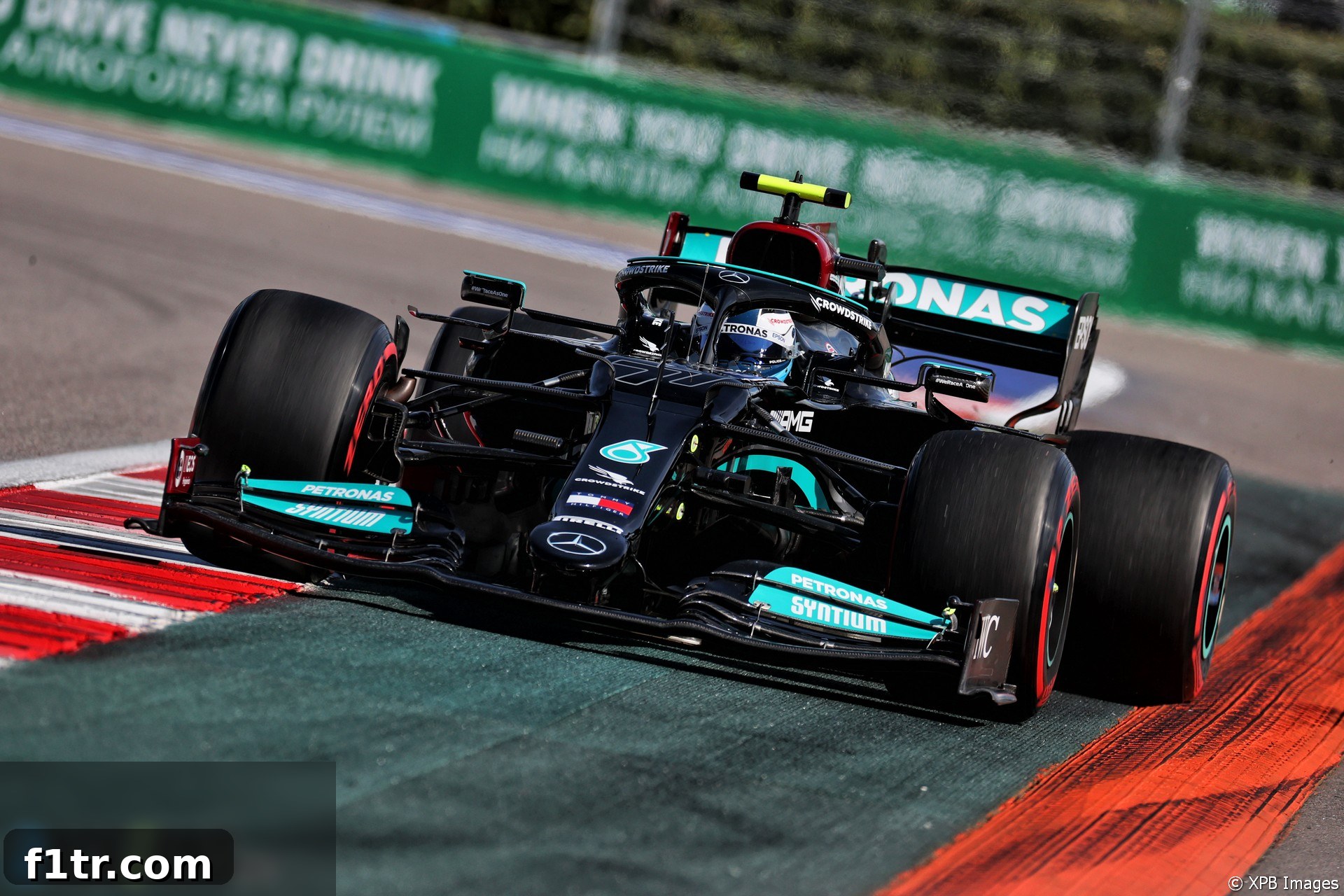
The strategic landscape of Formula 1’s 2021 season was profoundly shaped by every decision, every penalty, and every calculated move by the top teams. Mercedes’ choice to equip Valtteri Bottas’ car with a fresh power unit for the second consecutive race ignited widespread speculation, inevitably drawing connections to its potential impact on teammate Lewis Hamilton’s championship aspirations. This seemingly routine technical adjustment for Bottas transcended mere maintenance, becoming a pivotal moment in the Constructors’ and Drivers’ Championships, a chess move designed to navigate the high-stakes battle against Red Bull Racing and Max Verstappen.
Mercedes officially framed the power unit change for Bottas as a proactive measure to safeguard his season’s reliability. “We are taking the tactical opportunity to put another [power unit] in the pool with [Valtteri Bottas],” the team confirmed, suggesting a pragmatic approach to engine management and component longevity. From Mercedes’ perspective, ensuring Bottas could complete the remaining races without incurring further penalties later in the season was a legitimate concern, given the finite allocation of power unit elements under F1 regulations. This reasoning aimed to deflect any suggestions of favoritism or overt strategic manipulation.
Bottas himself echoed a similar sentiment during the pre-race drivers’ parade, linking the decision directly to his performance in qualifying. “I think it’s tactical because I want to make it to the end of the race, for sure,” he stated, reinforcing the idea of a necessary swap rather than a purely advantageous one. He further elaborated, “Of course you can always sometimes choose where you take it. Having quite unlucky qualifying yesterday, we decided it’s the right thing to do. I still believe I have a chance to come up very high and I want to be on the podium for sure.” His comments underscored the perceived pragmatism behind the move, presenting it as a means to mitigate the impact of a poor starting position and maximize his own race outcome, irrespective of the wider championship implications.
However, the timing of this decision was anything but coincidental. With Lewis Hamilton’s principal championship rival, Max Verstappen, already facing a back-of-grid start due to his own power unit change, Bottas’s penalty suddenly presented a dual opportunity for Mercedes. Beyond mere reliability, the move offered a legitimate avenue to strategically interfere with Verstappen’s recovery drive and protect Hamilton’s front-running position. The situation drew immediate comparisons to past Formula 1 incidents, such as Ferrari’s controversial decision at the 2012 United States Grand Prix. On that occasion, Ferrari deliberately incurred a gearbox change penalty for Felipe Massa, which moved his teammate Fernando Alonso up the grid by one position, crucially placing him on the preferable side of the track for the start. Such historical precedents highlight how teams, under immense championship pressure, have often leveraged penalties and teammate sacrifices for strategic advantage, transforming technical rules into tactical weapons.
Indeed, Mercedes had already hinted at a potential power unit swap in their post-qualifying interviews, fueling speculation even before the official announcement. Prior to this, Red Bull Racing had openly voiced suspicions that Mercedes might use the opportunity presented by Verstappen’s penalty to fit a fresh engine to Hamilton’s car. Red Bull’s concern stemmed from known doubts surrounding Hamilton’s supply of power unit components and perceived reliability issues, suggesting a strategic chess match was already well underway between the two dominant teams. The fact that Bottas, not Hamilton, took the penalty for the second race running – having done the same at Monza – added another layer of intrigue. Bottas’s impressive recovery at Monza, where he charged from the back of the grid to finish on the podium, served as a potent reminder of his capability to overcome such setbacks and potentially play a crucial role in his team’s overarching strategy.
The specifics of Bottas’s penalty were less severe than Verstappen’s, or those incurred by other drivers who had changed elements, such as Charles Leclerc and Nicholas Latifi. Bottas received a new engine, turbocharger, and MGU-H. As this marked the second time Bottas had exceeded the maximum number of power unit elements for the season, his initial 15-place grid drop was somewhat mitigated by how other penalties are applied. Once all other penalties across the grid were accounted for, Bottas ultimately lost a total of 10 positions, falling from his seventh-place qualifying slot to 16th. Crucially, this placed him four positions ahead of Verstappen, who started from the very back of the grid. This difference in starting position was vital, providing Mercedes with a significant strategic buffer and a substantial advantage over their championship rivals.
This calculated grid placement meant that the Mercedes driver was theoretically positioned to maintain a lead over Verstappen at the start of the race. Even if Verstappen managed to make rapid progress through the field, Bottas’s presence ahead of him would force the Red Bull driver to expend more tires and energy, potentially compromising his overall race strategy. Bottas could act as a strategic ‘roadblock,’ disrupting Verstappen’s rhythm and forcing him into suboptimal pit stop windows or aggressive overtaking maneuvers. By covering Verstappen’s pit stop strategy, Bottas could also ensure that any tactical gambit by Red Bull to undercut or overcut their rivals would be neutralized. This legitimate interference was a classic example of how a ‘wingman’ role is executed in modern Formula 1, with Bottas tasked to hinder Verstappen’s progress to the front and protect Hamilton’s path to victory.
However, such aggressive strategic decisions are not without significant risks. By dropping Bottas nine places on the grid, Mercedes effectively placed him well behind the Red Bull of Sergio Perez, but critically, also within the reachable range of a charging Verstappen. If Bottas were to struggle with overtaking, get caught in midfield traffic, or fail to maintain a sufficient gap to Verstappen, the entire strategy could backfire spectacularly. This scenario would leave Hamilton exposed at the front without a buffer, and potentially allow Verstappen to gain ground more easily than anticipated. It was difficult to ignore the underlying impression that Hamilton’s individual position in the Drivers’ Championship weighed more heavily in this intricate calculation than Mercedes’ slender lead in the Constructors’ Championship. While both titles are paramount, securing the Drivers’ title often carries immense prestige and marketing value for the manufacturer.
Ultimately, the success or failure of this gambit hinged on Bottas’s performance. If this power unit change was not strictly essential for Bottas’s reliability, and if he subsequently failed to stay ahead of Verstappen during the race, or worse, failed to impede his progress significantly, Mercedes might well come to regret their decision to sacrifice nine valuable grid places. The unpredictable nature of Formula 1 racing means that even the most meticulously planned strategies can unravel due to unforeseen circumstances, track incidents, or simply a driver’s inability to execute the plan perfectly. The Russian Grand Prix thus became a crucial test of Mercedes’ strategic acumen and Bottas’s capacity to fulfill his pivotal role in the championship battle. The outcome would not only dictate the points distribution for that specific race but would also send a clear message about the lengths to which teams were willing to go in their pursuit of the ultimate prize in motorsport.
2021 Russian Grand Prix
- Norris says he missed few chances to win in 110-race wait for first F1 victory
- Sochi disappointment will make Norris and McLaren stronger, says Seidl
- F1 race start times could be brought forward to avoid Spa-style wash-outs
- New technology in Ferrari’s power unit update vital for 2022 – Binotto
- Mercedes have left too many points on the table, admits Wolff
Browse all 2021 Russian Grand Prix articles