2019 Australian Grand Prix: A Thrilling Start to the Formula 1 Season
The 2019 Formula 1 season kicked off with an exhilarating Australian Grand Prix in Melbourne, setting the stage for what promised to be a captivating championship battle. With new aerodynamic regulations in play, anticipation was high for an unpredictable opener, and the race certainly delivered its share of surprises and standout performances. From the dominant victory of an unexpected contender to the dramatic struggles of seasoned drivers, Albert Park provided a comprehensive display of triumph and tribulation. This detailed review delves into the key moments, star drivers, and those who faced an uphill battle, offering an in-depth look at every significant development from the first race weekend of the year.
Stars of the Race: Exceptional Drives in Melbourne
While the roar of the engines signalled the start of another F1 season, it was the exceptional skill and strategic brilliance of certain drivers that truly captivated audiences. Here’s a closer look at those who shone brightest at the 2019 Australian Grand Prix.
Max Verstappen: Red Bull-Honda’s Promising Debut
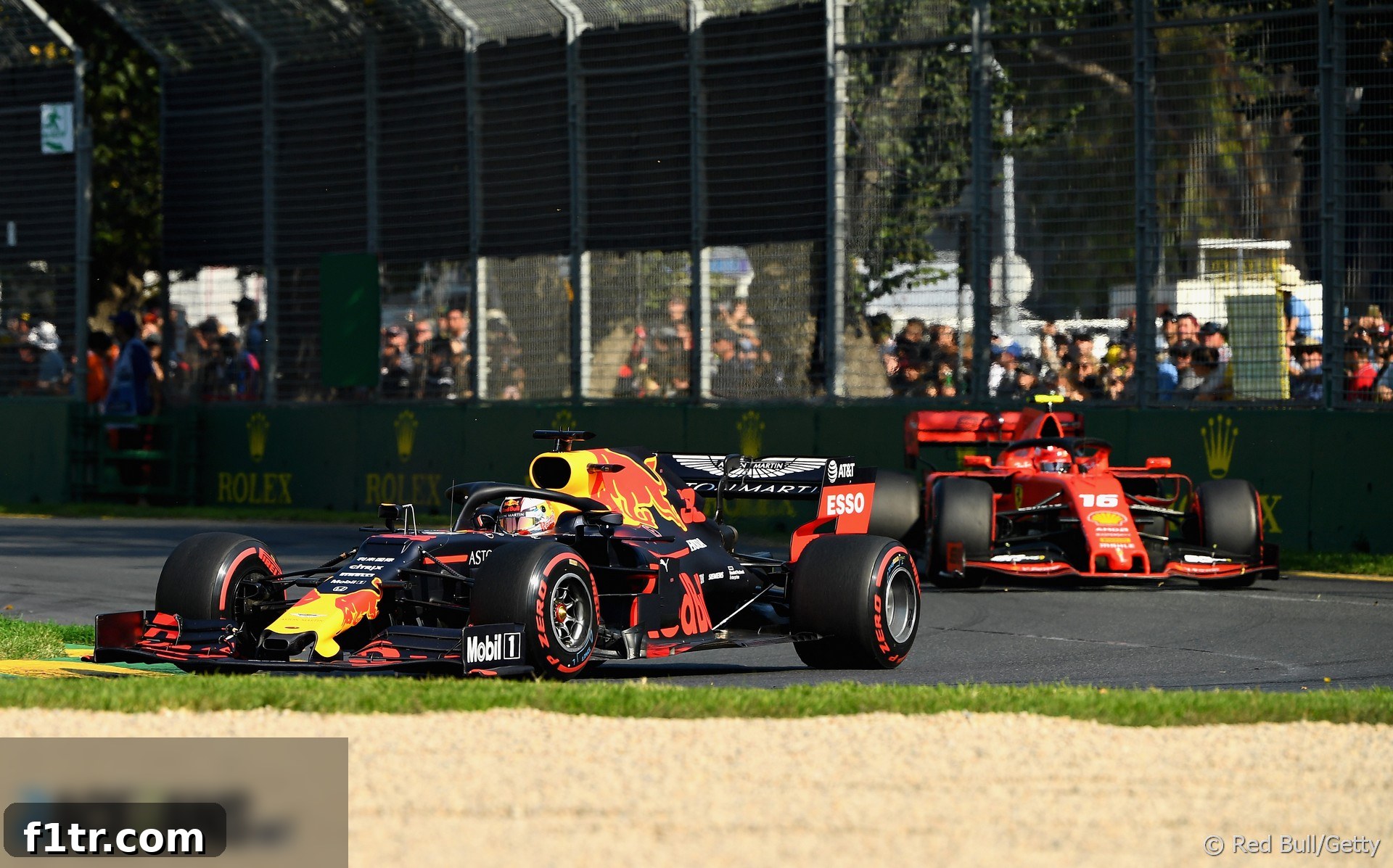
All eyes were on Max Verstappen and the new Red Bull-Honda partnership, and they certainly did not disappoint. Verstappen delivered a superb Q3 lap, skillfully splitting the Ferraris to secure a prominent spot on the second row, starting alongside Sebastian Vettel. Despite an inability to overtake the Ferrari into Turn One at the start, Verstappen demonstrated remarkable tenacity, remaining glued to Vettel’s gearbox throughout the demanding first stint of the race.
Red Bull’s strategic masterstroke saw Verstappen run a significantly longer first stint compared to his rivals, allowing him to emerge from his eventual pit stop just three seconds adrift of Vettel. Armed with fresher tires, Verstappen showcased his characteristic aggression and precision, sweeping around the outside into Turn Three to decisively claim the final podium position from Vettel. This impressive manoeuvre underscored not only his driving prowess but also the competitive potential of the Red Bull-Honda package. He even managed to close within striking distance of Lewis Hamilton’s Mercedes at one point, although a pass never materialized. Nevertheless, it was an incredibly encouraging start for Red Bull Racing and their new engine supplier, signaling a strong contender for the season ahead.
Lance Stroll: A Remarkable Climb for Racing Point
Lance Stroll’s debut for Racing Point began with a dose of disappointment, as he was impeded by Romain Grosjean during Q1, preventing him from advancing while his teammate reached Q3. Starting from a challenging 16th position on the grid, Stroll wasted no time in initiating his recovery, showcasing impressive race craft by gaining three crucial places on the very first lap alone. This early surge set the tone for a determined and well-executed drive.
Opting for a medium-compound tire to start, Stroll ran an extended first stint until Lap 27, demonstrating excellent tire management and strategic flexibility. By the time he pitted for soft tires, he was remarkably running in sixth place. Emerging from the pit lane in 10th, his fresher, softer rubber allowed him to maintain strong pace and make one final push. He successfully gained another position before the checkered flag, ultimately finishing ninth. His seven-place climb from his starting position was the best of any driver on the grid, a testament to his maturity and skill, and a highly promising start to his tenure with Racing Point.
Valtteri Bottas: Dominance from Lights Out to Checkered Flag
Valtteri Bottas delivered a flawless performance when it mattered most, initially holding provisional pole position during qualifying until Lewis Hamilton snatched it from him in the final moments. However, it was his race day execution that truly stood out, proving to be the making of his triumphant weekend.
A superb start saw Bottas expertly edge past Hamilton before they even reached Turn One, seizing the lead with decisive action. By the time DRS was enabled, he had already opened up a significant gap of nearly two seconds. This early advantage allowed him to dictate the pace and manage the race from the front, a strategy he executed with precision.
Throughout the remainder of the first stint, Bottas’s lead continued to grow steadily, demonstrating superior pace and tire management. He maintained his position at the front until Lap 23, running longer than every other front-runner except Max Verstappen. Upon rejoining the track after his stop, Bottas had built a commanding 11-second buffer over Hamilton, a lead he further extended on fresher medium-compound tires, solidifying his control over the race.
In the closing laps, Bottas found clean air between the backmarkers, enabling him to push for the fastest lap. He ultimately claimed the bonus point for the fastest lap, snatching it from Verstappen, on his way to the top step of the podium. His perfect 26-point haul, including the fastest lap, marked a phenomenal start to his 2019 season, establishing him as a serious contender and sending a clear message to the rest of the grid.
Challenges and Disappointments: Drivers Who Faced an Uphill Battle
While some drivers celebrated significant achievements, others faced immense challenges and frustrating setbacks in Melbourne. The demanding nature of the Albert Park circuit and the inherent unpredictability of the season opener led to tough weekends for several competitors.
Robert Kubica: A Tough Return for Williams
Robert Kubica’s highly anticipated return to Formula 1 was unfortunately overshadowed by a profoundly challenging weekend for him and the Williams team. Heading into the Australian Grand Prix, Williams knew their car’s performance would likely place their drivers at the back of the grid. However, Kubica found himself struggling even more than his rookie teammate, George Russell.
His difficulties began early, with incidents in both practice and qualifying, including contact with the wall. These mishaps contributed significantly to a substantial 1.7-second gap between him and Russell in qualifying, a concerning margin for any seasoned driver. Kubica’s predicament only worsened during the race itself. An unfortunate collision with Pierre Gasly at Turn One on the opening lap resulted in significant front wing damage, forcing him into an immediate pit stop. Battling with various other damages throughout the Grand Prix, he was compelled to make two more unscheduled pit stops before the race concluded, ultimately finishing a disheartening three laps down. It was a stark and difficult start to his F1 comeback, highlighting the immense challenges he faced with the struggling Williams FW42.
Pierre Gasly: Missed Opportunities for Red Bull
Pierre Gasly’s first race weekend as a Red Bull Racing driver was fraught with missed opportunities and frustrating circumstances. His initial run in Q1 was not as quick as his teammate Verstappen’s, but the team believed it was sufficient to advance. However, the rapid track evolution towards the end of Q1 caught Red Bull off guard, leading to Gasly’s unexpected elimination while he remained in the garage, a significant strategic miscalculation.
Starting from a lowly 17th position, Gasly opted for a long first stint on medium tires in the race, aiming to make up ground. This strategy eventually allowed him to jump ahead of Daniil Kvyat, who had just had a brief excursion off track. However, Gasly was unable to defend his newly gained position on cold tires into Turn Three, allowing Kvyat to retake the spot. For the remainder of the race, Gasly valiantly attempted to find a way past Kvyat to break into the points-paying positions, but the Toro Rosso driver defended superbly, thwarting all of Gasly’s efforts. It was a baptism of fire for Gasly at Red Bull, marred by qualifying error and a challenging race where points remained tantalizingly out of reach.
Daniel Ricciardo: A Disastrous Home Debut for Renault
Returning to his home race in Australia with a new team, Renault, Daniel Ricciardo was undoubtedly keen to impress. Unfortunately, his weekend was marred by a series of unfortunate events, starting with a narrow qualifying defeat to his teammate Nico Hülkenberg by a mere eight thousandths of a second. This set a tense tone for what was hoped to be a celebratory debut.
Ricciardo’s race was effectively over before he even reached Turn One. In an attempt to gain positions off the line, he put one wheel off the track, resulting in a sudden drop onto the grass verge. This impact caused his front wing to be ripped off his car in a dramatic fashion. The incident inflicted significant damage to the left side of his Renault RS19, forcing him into an early pit stop for repairs. The damage proved to be too extensive and detrimental to the car’s performance, leading Renault to ultimately retire the car on Lap 28. It was a heartbreaking and premature end to his home Grand Prix, a cruel blow for a driver with such high hopes for his new chapter with the French manufacturer.
Beyond the Podium: Analyzing the Midfield and Frontrunners
Beyond the primary narratives of stars and strugglers, the 2019 Australian Grand Prix offered a multitude of stories from across the grid, highlighting mixed fortunes and crucial early insights into the season’s pecking order.
Lewis Hamilton: Pole Position to P2 with Underlying Issues
Lewis Hamilton appeared poised to continue his dominant form from previous seasons, topping every practice session and brilliantly securing pole position. However, his race start, while not terrible, was simply not good enough to maintain the lead against his teammate Valtteri Bottas, an outcome that would define his afternoon. Once he lost the initial advantage, he never had another genuine opportunity to challenge for the win.
Hamilton later reported struggling significantly with the balance of his car throughout the race, attributing his uncharacteristic lack of pace to damage on the left-rear side of the floor. This underlying issue limited his ability to push and fight for victory, leaving him to settle for second place. While a Mercedes 1-2 finish was a strong team result, for Hamilton, it was a somewhat frustrating start to his championship defence, revealing that even the most dominant driver can face unexpected challenges.
Ferrari: A Disappointing Start for the Scuderia
Ferrari entered the 2019 season with considerable optimism following strong pre-season testing, but the Australian Grand Prix proved to be a significant reality check. The Scuderia struggled notably with overall pace throughout the weekend, failing to match the dominant Mercedes. Sebastian Vettel was just able to hold off the charging Max Verstappen in the first stint, but on slightly fresher tires, the Red Bull driver decisively sailed past him as Vettel grappled with severe tire degradation.
The situation further complicated when he was eventually caught by his new teammate, Charles Leclerc. In a move that highlighted Ferrari’s struggles and a focus on damage limitation, Leclerc was controversially ordered to hold position behind Vettel to secure a four-five finish for the Scuderia. This decision raised questions about team dynamics and underlined the surprising performance deficit that Ferrari faced in the season opener, leaving many to wonder if their pre-season promise was an illusion.
Haas F1 Team: Best of the Rest, But Not Without Drama
The Haas F1 Team undoubtedly emerged as the ‘best of the rest’ in qualifying, showcasing impressive pace to secure sixth and seventh positions on Saturday’s grid. Kevin Magnussen capitalized on this strong starting position, getting past Romain Grosjean into Turn One and subsequently enjoying a relatively solitary race, comfortably positioned between the midfield pack and the leading cars, ultimately converting his excellent qualifying into a solid points finish.
However, Romain Grosjean’s race did not unfold as smoothly. An unfortunate problem with his front-left wheel during his pit stop caused a significant delay, sending him tumbling down the pecking order. His day eventually came to a premature end when he was forced to retire 14 laps after his problematic stop, suffering from an issue with his front-left suspension. This frustrating mechanical failure underscored the mixed fortunes for the Haas team, celebrating one strong result while lamenting another lost opportunity.
McLaren: Glimmers of Hope and Frustrating Setbacks
The 2019 Australian Grand Prix presented a mixed bag for McLaren, showcasing both promising signs and frustrating mechanical failures. Lando Norris, in his F1 debut, proved that McLaren possessed the raw speed to make it into Q3, securing a stellar eighth starting position on the grid – a clear highlight for the team. Unfortunately, his teammate Carlos Sainz was eliminated in Q1, indicating an inconsistent performance across the garage.
Sainz’s race was cut short on Lap 11 due to a problem with his MGU-K unit, forcing him into an early retirement. Norris, despite his strong qualifying, suffered from a poor start and subsequently got caught in heavy traffic following his pit stop, which ultimately prevented him from rejoining the top ten and securing points. While Norris’s qualifying demonstrated potential, the race itself highlighted areas for improvement in execution and reliability for the Woking-based outfit.
Alfa Romeo Racing: Consistent Points for Raikkonen
Alfa Romeo Racing experienced a relatively uneventful but consistently productive weekend, particularly on Kimi Raikkonen’s side of the garage. The veteran Finnish driver was the quicker Alfa Romeo driver throughout the weekend, qualifying ninth and translating that strong grid position into a solid eighth-place finish, securing valuable points for the team. His performance was a testament to his characteristic calm and consistent approach.
His teammate, Antonio Giovinazzi, went out in Q2 and attempted an alternate strategy during the race. This tactical decision, however, resulted in him forming a ‘train’ in the midfield, where he inadvertently held up several faster cars behind him, complicating the race for a number of competitors. Despite Giovinazzi’s struggles, Raikkonen’s points finish was a positive start for Alfa Romeo, demonstrating their potential to be regular midfield contenders.
Racing Point: Perez’s Solid Yet Unspectacular Race
Sergio Perez delivered an impressive qualifying performance relative to his teammate Lance Stroll, but his race proved to be less spectacular. While Stroll climbed significantly through the field, Perez’s Sunday was sub-par. He finished 13th, spending much of the race struggling to make progress through midfield traffic. It was a race where he couldn’t quite unlock the pace needed to challenge for points, highlighting the differing fortunes within the Racing Point garage on race day.
Toro Rosso: Kvyat’s Resilient Return to Points
Daniil Kvyat made a spirited return to Formula 1, enduring a busy race in Melbourne. His eventful afternoon saw him take a brief trip through the gravel, demonstrating the fine margins of aggressive driving. Crucially, he then engaged in a superb defensive battle, holding off the quicker Pierre Gasly in the Red Bull for an extended period, ultimately securing his first point of the season with a tenth-place finish – a remarkable achievement for his comeback race. His rookie teammate, Alexander Albon, out-qualified Kvyat after a somewhat scruffy day of practice but finished well outside the points in 14th, experiencing the typical learning curve of an F1 debut.
Williams Racing: Russell’s Steady Debut Amidst Challenges
George Russell made his Formula 1 debut in an ill-handling Williams car, navigating the challenges with commendable poise. He stayed out of trouble throughout the race, demonstrating a clean and controlled drive. While the car’s performance limitations meant he never truly had anyone to race against other than his teammate Robert Kubica, Russell comfortably outperformed the experienced Pole. His steady performance, though not yielding points, was a solid start to his F1 career in extremely difficult circumstances, showcasing his potential for the future.
Race Highlights and Fan Interaction
To fully grasp the dynamics and key moments of the 2019 Australian Grand Prix, watching the race review offers an excellent recap of all the action.
Relive the Action: 2019 Australian Grand Prix Race Review
For those who wish to relive the excitement or catch up on any missed moments, this comprehensive review covers every F1 driver’s journey through the Albert Park circuit.
Your Voice Matters: Vote for the Driver of the Weekend
We invite you to share your perspective! Vote for the driver who impressed you most last weekend and see how your opinion stacks up against other Formula 1 enthusiasts.
- Vote for your 2019 Australian Grand Prix Driver of the Weekend
Explore More: 2019 Australian Grand Prix Coverage
For a deeper dive into the events of the season opener, including news, analysis, and images, explore our full coverage of the 2019 Australian Grand Prix.
Browse all 2019 Australian Grand Prix articles
The 2019 Australian Grand Prix served as a thrilling and often unpredictable start to the Formula 1 season. Valtteri Bottas’s dominant victory sent a clear message, while Max Verstappen’s podium finish underscored Red Bull-Honda’s potential. Lance Stroll’s impressive recovery drive was a highlight for the midfield, contrasting sharply with the challenging weekends faced by Robert Kubica, Pierre Gasly, and Daniel Ricciardo. With Mercedes showing strong form, Ferrari struggling, and the midfield battle already fierce, the race set an exciting precedent for what promises to be an enthralling season of Formula 1 racing. The action from Melbourne has certainly whetted the appetite for the next Grand Prix, leaving fans eager for more high-octane drama.