Ferrari Slapped with €50,000 Fine After Dangerous Pit Stop at 2018 Bahrain Grand Prix
In the high-octane environment of Formula 1, where every millisecond counts and the pursuit of victory is relentless, the demand for precision and flawless execution is paramount. However, even the most formidable and experienced teams can falter, leading to grave consequences. Such an incident unfolded dramatically at the 2018 Bahrain Grand Prix, when Scuderia Ferrari was sanctioned with a substantial €50,000 fine for releasing Kimi Raikkonen’s car from the pits in an unsafe condition. This critical error not only cost Raikkonen a strong race finish but, more tragically, resulted in a severe injury to one of the team’s dedicated mechanics, casting a stark spotlight on the inherent dangers within the sport’s high-pressure pit lane operations.
The Critical Moment: Unsecured Wheel and Mechanic’s Injury
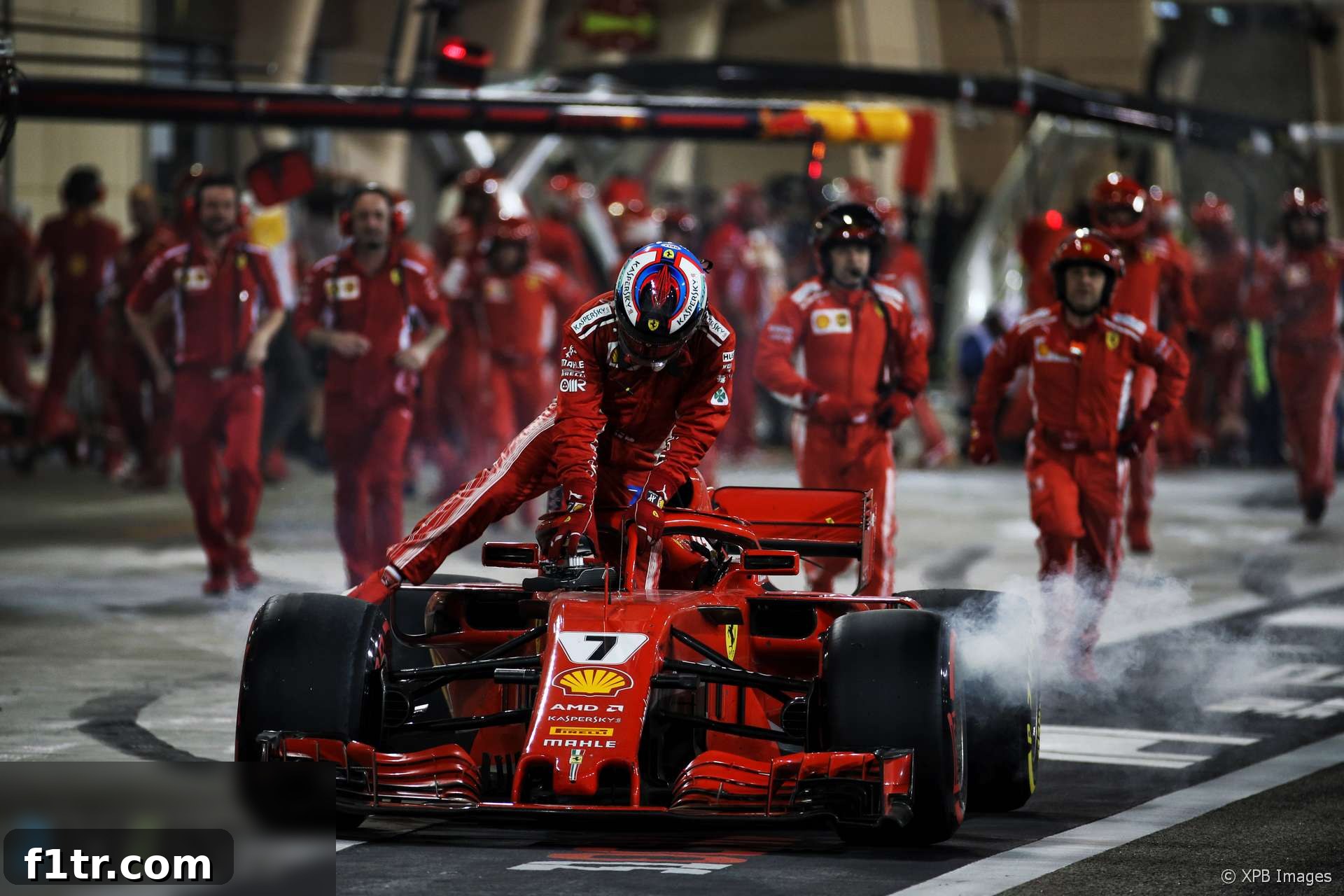
The incident occurred during Kimi Raikkonen’s second scheduled pit stop of the race. As the “Iceman” brought his Ferrari SF71H into the pit box, the highly trained pit crew sprang into action, aiming for another sub-three-second turnaround. However, amidst the flurry of activity, a critical error transpired. The rear-left wheel was not fully secured when the automated system signaled a “green light” for Raikkonen to exit the pit box. As the Finn accelerated, the car unfortunately made contact with mechanic Francesco Cigarini, who was still positioned at the rear of the vehicle, tending to the problematic wheel. The impact was immediate and devastating, causing Cigarini to suffer severe fractures to his leg.
Unaware of the full extent of the calamity unfolding behind him, Raikkonen proceeded to accelerate down the pit lane. It was only moments later that he was instructed via team radio to stop the car, as the unsecured wheel became evident. This unfortunate sequence of events not only led to Raikkonen’s immediate retirement from the race, depriving him and Ferrari of crucial championship points, but also underscored the immense physical risks faced by pit crew members in their quest for peak performance. The spectacle of Formula 1 often masks the hidden dangers that lurk even in seemingly routine procedures.
Stewards’ Ruling and Ferrari’s Official Response
The race stewards, after a thorough examination of all available video footage of the 19:10 pit stop and detailed discussions with Ferrari team representatives, swiftly issued their verdict. Their statement was unequivocal: “The stewards determined that the car was released unsafely in breach of Art. 28.13 a). The team released the car in a manner endangering team personnel and causing injury.” This ruling clearly placed the responsibility squarely on the Scuderia Ferrari team for failing to ensure a safe release, a fundamental tenet of Formula 1 safety regulations.
The resulting penalty was a hefty €50,000 fine, reflecting the gravity of the safety breach and the severe consequences it entailed. Beyond the financial penalty, the human cost was significant. Ferrari promptly confirmed that mechanic Francesco Cigarini had sustained leg fractures and was immediately transported to a local hospital for urgent medical attention. In a gesture of solidarity and respect, then-team principal Maurizio Arrivabene stated, “We chose to take one of our mechanics up onto the podium as a mark of respect to our colleague Francesco who was injured during the pit stop. The whole team hopes he recovers quickly.” While a commendable show of unity, it couldn’t overshadow the serious nature of the incident itself.
A Precursor: The Troubling Practice Session Incident
Adding a layer of concern to the Bahrain race day incident was the fact that it was not an isolated occurrence during that particular Grand Prix weekend. Kimi Raikkonen had also experienced an unsafe release involving an unsecured wheel during the second practice session on Friday. While that earlier incident fortunately did not result in injury, Raikkonen himself highlighted the unsettling similarity between the two events. He commented, “I was told to stop because obviously the rear tyre wasn’t on properly. It’s pretty similar what happened earlier, on Friday, but obviously we stopped much earlier.” This pattern raised serious questions about the consistency and reliability of Ferrari’s pit stop procedures and equipment checks, suggesting a deeper underlying issue that warranted immediate attention and correction.
The Evolution of Formula 1 Pit Stops: Speed vs. Safety
The modern Formula 1 pit stop is a breathtaking display of engineering, athleticism, and synchronized teamwork. What was once a relatively relaxed affair, involving leisurely refueling and tyre changes that could take over ten seconds, has transformed into a meticulously choreographed ballet of speed, often completed in under two seconds. This incredible advancement in efficiency is a testament to sophisticated hydraulic systems, lightweight wheel guns, optimized tyre compounds, and countless hours of rigorous training for pit crews. Yet, this relentless pursuit of minimal pit stop times inherently introduces magnified risks.
Each pit stop involves upwards of twenty highly specialized individuals working in extremely close proximity to a live, powerful racing machine. The margins for error are infinitesimal. A fraction of a second’s delay, a mechanical glitch, or a human misjudgment can have catastrophic repercussions. To counter these dangers, Formula 1 has implemented stringent regulations, such as Article 28.13 a), which specifically govern safe car releases. These rules dictate protocols for everything from equipment functionality to clear signaling systems, all designed to safeguard personnel and ensure fair competition. The Bahrain incident served as a potent reminder that even with these advanced measures, the human element and the extreme pressure can sometimes override safety protocols.
Broader Implications for Formula 1 Safety Standards
The 2018 Bahrain pit stop incident, tragically involving Francesco Cigarini, served as a powerful reminder that despite decades of relentless safety advancements, Formula 1 remains a sport with inherent dangers that extend beyond the cockpit. While much of the safety focus rightly centers on driver protection in high-speed collisions, the well-being of every participant, including the vital but often unsung heroes of the pit lane, is equally critical. Incidents of this nature typically trigger immediate and often long-term comprehensive reviews of safety protocols, not just within the affected team but across the entire sport, spearheaded by the FIA.
Historically, F1 has consistently demonstrated a commitment to learning from its mistakes. Major safety innovations, from the HANS device and advanced carbon-fiber chassis to the controversial but ultimately life-saving Halo cockpit protection system, have all emerged from lessons learned during challenging or tragic incidents. The Ferrari pit stop reignited crucial discussions about balancing the drive for ever-faster pit stop times with the absolute paramountcy of personnel safety. It highlighted the complexities of managing automation alongside human intervention and the continuous need to refine equipment design and operational procedures to mitigate risk in a sport defined by speed and intensity.
Ferrari’s 2018 Campaign: Pressure and Performance
The 2018 Formula 1 season was a pivotal one for Ferrari, as Sebastian Vettel mounted a strong challenge against Lewis Hamilton and Mercedes for both the Drivers’ and Constructors’ World Championships. In such a tightly contested season, operational perfection was not merely desired but absolutely essential. Errors like an unsafe pit stop could prove incredibly costly, not just in terms of financial penalties and lost championship points, but also in terms of team morale, momentum, and public perception. Such high-profile incidents invariably trigger intense internal investigations and procedural overhauls aimed at preventing any recurrence, reinforcing a team’s unwavering commitment to excellence and, crucially, to safety.
The €50,000 fine imposed on Ferrari for this incident was one of the largest handed down for an unsafe release in recent memory, echoing similar penalties such as the €60,000 fine levied against Williams in 2013 for a comparable pit lane infraction. These penalties serve a dual purpose: to act as a significant deterrent and to underscore the FIA’s unwavering commitment to upholding the highest safety standards across all facets of Grand Prix racing. For Ferrari, the incident at the 2018 Bahrain Grand Prix undoubtedly served as a painful, albeit necessary, lesson, emphasizing to them and to the entire F1 paddock that in the relentless pursuit of ultimate performance, the safety and well-being of every individual involved must always remain the foremost priority.
Conclusion: The Unyielding Quest for Perfection and Safety in F1
The unsafe pit stop incident at the 2018 Bahrain Grand Prix, involving Kimi Raikkonen and the subsequent injury to mechanic Francesco Cigarini, stands as a poignant moment in recent Formula 1 history. It serves as a powerful testament to the fine margins that define success and failure within the sport, and the ever-present, sometimes hidden, risks faced by every individual involved. While the immediate repercussions included a significant financial penalty for Ferrari and a disappointing retirement for Raikkonen, the most critical outcome was the severe injury to a dedicated team member, which rightfully prompted a moment of profound reflection and introspection for the entire F1 community.
Formula 1’s defining characteristic is its relentless pursuit of speed, innovation, and perfection. However, this pursuit must always be meticulously balanced with an equally unwavering and continuous commitment to safety. This incident, much like many others throughout F1’s rich and often challenging history, contributes significantly to the ongoing evolution of safety protocols, ensuring that vital lessons are learned and rigorously applied to protect all those who contribute to the thrilling spectacle of Grand Prix racing. The health, security, and well-being of every participant, from the star drivers battling on track to the essential pit crew members orchestrating lightning-fast stops, must forever remain the ultimate and non-negotiable priority in this most demanding and exhilarating of sports.
More from the 2018 F1 Season
- F1 feared “death knell” for Drive to Survive after Ferrari and Mercedes snub
- McLaren staff told us we were “totally crazy” to take Honda engines in 2018 – Tost
- ‘It doesn’t matter if we start last’: How Red Bull’s junior team aided Honda’s leap forward
- Honda’s jet division helped F1 engineers solve power unit problem
- McLaren Racing losses rise after Honda split
Browse all 2018 F1 season articles