Nikita Mazepin’s Tumultuous Formula 1 Debut: Analyzing the Bahrain Grand Prix Incident
The highly anticipated Nikita Mazepin made a disheartening start to his Formula 1 career, spinning out of the Bahrain Grand Prix just two corners into his maiden race. The Haas F1 Team rookie expressed profound disappointment in himself following the early exit, an incident that underscored the immense pressures and unforgiving nature of top-tier motorsport.
A Grand Prix Debut Cut Short: The Bahrain Nightmare
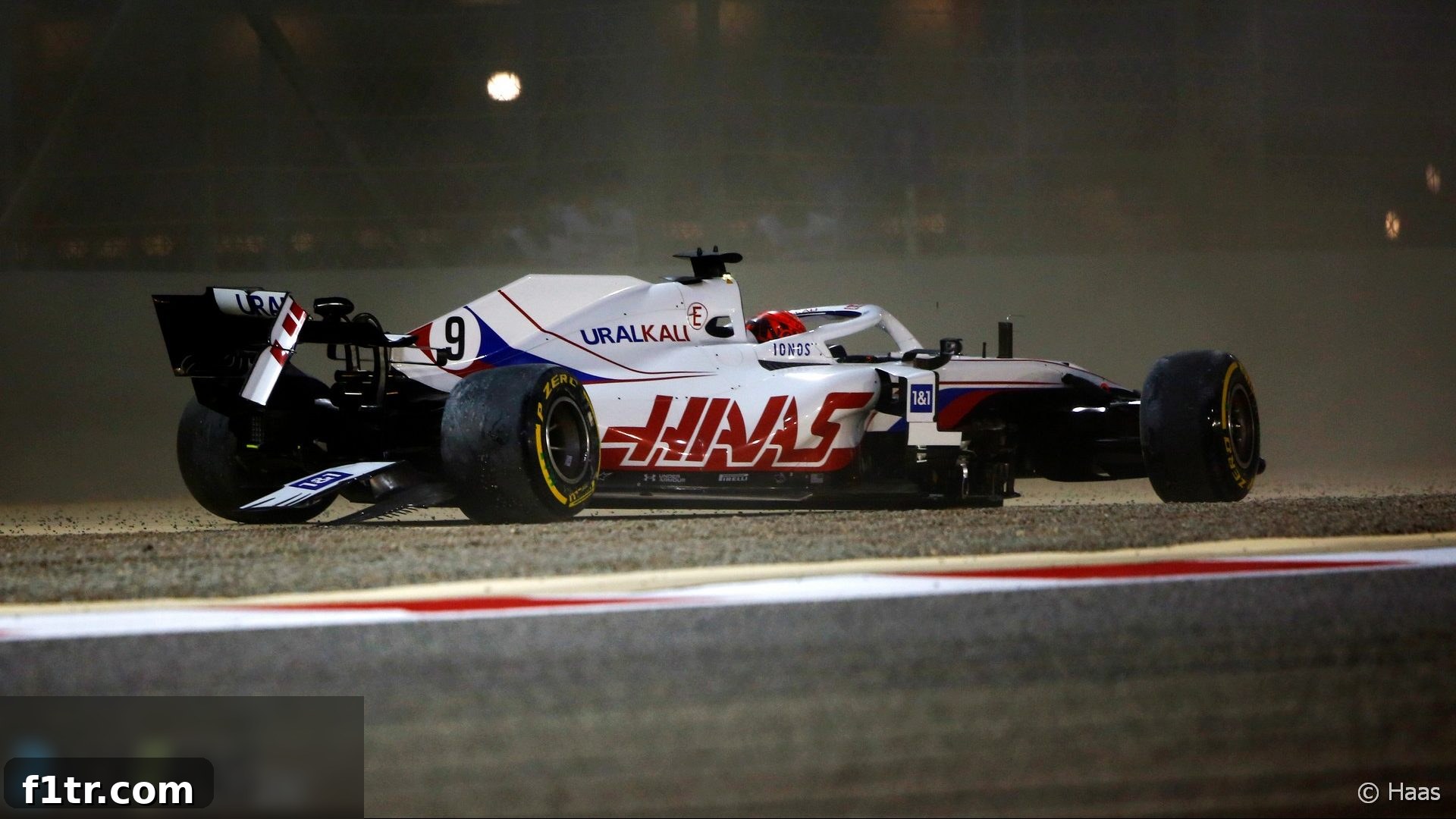
Mazepin’s grand prix debut was unfortunately brief. The Russian driver lost control of his VF-21 on the exit of Turn 3 during the opening lap of the Bahrain Grand Prix, sending his car into the barriers. Replays of the incident confirmed that there was no contact with any other competitor, clarifying that the spin was a self-inflicted error. This swift departure from the race was a stark reminder of how quickly a rookie’s dreams can be dashed in the crucible of Formula 1 racing, especially on a demanding circuit like Bahrain International Circuit.
The Unfortunate Incident: Turn 3’s Early Exit
The moment of impact came swiftly. As the field jostled for position in the opening stages of the race, Mazepin’s Haas pitched sideways, damaging the right-hand side of his car and bringing his debut to an immediate halt. His initial radio communication to the team conveyed a mix of apology and explanation for the unexpected spin. He reportedly attempted to avoid his new teammate, Mick Schumacher, an unfortunate misjudgment that led directly to his car encountering the kerb and subsequently losing traction. Such incidents are not uncommon in the chaotic opening laps, but for a debutant, the timing was particularly cruel.
Mazepin’s Raw Reaction: “Very Angry with Myself”
Speaking to the media while the race continued around him, a visibly frustrated Mazepin did not shy away from taking full responsibility for the incident. “It was very simple,” he stated candidly. “I made a mistake. The tyres were cold, I got on the kerb, took too much throttle and spun. Totally my mistake.” His words conveyed a genuine sense of remorse and self-reproach. He further added, “I’m very sorry to the team, because they deserve to do much better than that. I’m very angry with myself and very sorry for the team.” This honest assessment, though painful, is often the first step in a rookie’s journey towards understanding and improvement in Formula 1.
Dissecting the Error: Cold Tyres and the Kerb
Mazepin’s explanation sheds light on common challenges faced by drivers, particularly at the beginning of a race. Cold tyres offer significantly less grip, making the car much more challenging to control. Combining this with an aggressive application of throttle and running over a kerb – specifically designed to deter drivers from exceeding track limits, but which can also unsettle a car – created a perfect storm for a loss of control. For a rookie still familiarizing himself with the raw power and sensitive aerodynamics of an F1 car, managing these variables under race conditions, with adrenaline high and competitors close, is an extremely demanding task. It highlights the fine margins that separate success from failure in Formula 1.
A Weekend Plagued by Spins: Pressure on the Young Russian
The race-ending collision was, unfortunately, the culmination of a difficult debut weekend for Mazepin. His struggles began even before the main event, as he also experienced spins during practice sessions and twice during the initial qualifying session (Q1). While testing the limits is part of a driver’s job, a series of unforced errors can accumulate, eroding confidence and increasing pressure. This pattern of incidents meant that Mazepin arrived at the starting grid of his first Grand Prix already facing a steep uphill battle, mentally as well as physically. The intense scrutiny from fans and media only amplified the pressure, making every moment behind the wheel a significant test of character and skill.
The Steep Learning Curve of Formula 1
Formula 1 is arguably the pinnacle of motorsport, demanding an unparalleled combination of driving talent, technical understanding, and mental fortitude. For rookies stepping up from junior categories, the transition is immense. They must adapt to significantly faster cars, complex steering wheel controls, sophisticated strategies, and the relentless speed of pit stops. Moreover, the F1 calendar presents diverse circuits with varying characteristics, each requiring unique approaches to setup and driving style. Mazepin’s experience in Bahrain served as a harsh but ultimately valuable lesson in the sheer complexity and unforgiving nature of this elite racing series. Every driver, no matter how talented, faces this steep learning curve at the outset of their F1 career.
Haas F1 Team’s Perspective: Supporting Their New Drivers
For the Haas F1 Team, the 2021 season was always anticipated to be a challenging one. With an entirely new driver lineup featuring two rookies – Mazepin and Schumacher – and a strategic decision to focus development efforts on the significant rule changes for 2022, expectations for immediate results were tempered. The team’s primary objective for this season was to provide their young drivers with crucial experience and allow them to develop in a high-pressure environment. Mazepin’s early incident, while disappointing, will undoubtedly be analyzed by the team as part of this learning process. Haas’s role now is to offer unwavering support, detailed feedback, and a stable environment to help Mazepin build his confidence and minimize future errors.
The Weight of a Formula 1 Debut
A Formula 1 debut is a monumental occasion for any driver, marking the realization of a lifelong dream. It brings with it not just the thrill of competing at the highest level but also immense pressure from sponsors, media, and personal expectations. The first race is often seen as a benchmark, a chance to prove one’s mettle. For Nikita Mazepin, having such a brief and eventful debut was undoubtedly a blow, but it also provides a unique opportunity for introspection and growth. The initial stumble, though public, can serve as a powerful motivator for rigorous self-improvement and a deeper understanding of the demands of Grand Prix racing. Every F1 legend has faced their own challenges, and how a driver recovers from early setbacks often defines their career trajectory.
Looking Ahead: Mazepin’s Path to Redemption and Growth
Despite the challenging start, Mazepin insisted he has learned a lot from his grand prix debut. “Obviously there are always positives to take,” he reflected. “My days on track are very low. The learning experiences are there. Obviously, you learn a lot through the days but you have your ups and downs and today is one of the biggest downs.” This resilience and a focus on extracting lessons from setbacks are crucial traits for any aspiring F1 driver. The road ahead for Mazepin will involve meticulous analysis of his driving, constant communication with his engineers, and a concerted effort to adapt more quickly to the car’s nuances and the unique demands of each circuit. His next races will be critical in demonstrating his ability to bounce back and prove his worth on the world stage.
Lessons Learned: Finding Positives Amidst Setbacks
Even in the face of a significant disappointment, the mantra of “always positives to take” resonates deeply within motorsport. For Mazepin, the positive is the raw, unfiltered experience of an F1 race start, the unforgiving nature of cold tyres, and the immediate consequence of a minor error. These are lessons that simulation and testing can only partially replicate. The physical act of crashing, and the subsequent mental processing, can accelerate a rookie’s learning curve in ways that an uneventful race might not. Embracing this tough lesson and converting it into future performance will be the true test of Mazepin’s character and his long-term potential in Formula 1. It’s about turning a “biggest down” into a foundation for future “ups.”
The Road Ahead for Haas and its Rookie Pair
For the Haas F1 Team, nurturing both Nikita Mazepin and Mick Schumacher will be a season-long project. Providing them with a reliable car, consistent feedback, and a supportive environment where they can make mistakes and learn from them is paramount. The team understands that progress won’t be linear and that patience will be key. Mazepin’s debut, while short, highlights the need for intense focus on fundamental driving skills under pressure, tyre management, and track awareness. As the season progresses, both drivers will be expected to show steady improvement, gradually closing the gap to more experienced competitors and building a solid foundation for Haas’s future ambitions in Formula 1.
Related Reads: Exploring the 2021 Bahrain Grand Prix and Beyond
- Why one driver says there’s no easy solution to F1’s ‘messy’ track limits problem
- Verstappen: Lost win in Bahrain “is not going to matter” if we have fastest car
- The classic rivalry for ‘best of the rest’ and six more Imola talking points
- Ocon: We need to extract the maximum from the car to score points
- Vettel feeling “not at home in the car yet” after tough weekend
Browse all 2021 Bahrain Grand Prix articles