Formula 1’s Enduring Reign: Why Electric Racing Isn’t Poised to Overtake the Pinnacle of Motorsport
The exhilarating world of motorsport is constantly evolving, with innovation driving both performance and sustainability. Amidst this dynamic landscape, a significant debate has emerged regarding the future of racing’s highest echelon: Will electric racing, exemplified by Formula E, ultimately supersede Formula 1 as the pinnacle of global motorsport? According to Greg Maffei, President and CEO of Liberty Media Corporation, the commercial rights holder for Formula 1, the answer is a resounding no. Maffei’s recent remarks suggest a firm belief in F1’s enduring dominance, even as he acknowledges the potential for electric series to coexist.
Speaking at a recent investor meeting, Maffei articulated his skepticism about an all-electric championship rivalling the established might of Formula 1. While he expressed an openness to potentially integrate an electric series into Liberty Media’s portfolio in the future, his vision clearly positions such ventures as complementary rather than competitive replacements for F1. “Would we like an electric series at some point? Sure,” Maffei stated, drawing parallels with the established support series like F2 and F3, which frequently run alongside F1 Grand Prix events. This indicates a strategic interest in diversifying motorsport offerings, but strictly within the framework of F1 maintaining its premier status.
Formula 1’s Commitment to Sustainable Innovation: Beyond Electric
Maffei’s conviction stems from a deep understanding of Formula 1’s unique identity and its proactive approach to future challenges. He firmly believes that “the pinnacle of motorsport is unlikely to change from Formula 1.” Instead of a wholesale shift to electric powertrains, F1 is charting an alternative, equally ambitious course toward sustainability. The sport recently unveiled a groundbreaking sustainability strategy, committing to achieving carbon neutrality by 2030. This isn’t just an environmental pledge; it’s a technological frontier that seeks to redefine high-performance racing.
Central to this strategy is the development of what F1 terms the “world’s first net zero-carbon hybrid internal combustion engine.” This pioneering engine concept will leverage advanced, sustainably produced fuels to drastically slash emissions, ensuring that the roar and spectacle synonymous with F1 continue, but with a drastically reduced environmental footprint. This approach highlights F1’s commitment to pushing the boundaries of internal combustion technology, proving that extreme performance can indeed align with environmental responsibility. Maffei explicitly endorsed this direction, remarking, “Could we see over time new forms of fuels? I think it’s more likely that’s what you see than, frankly, electric.” This underscores a strategic divergence from Formula E’s all-electric paradigm, positioning F1 as a leader in sustainable fuel development for the broader automotive industry.
Navigating the “EV Hype”: A Pragmatic View of Electric Vehicles
Maffei also weighed in on the broader societal enthusiasm surrounding electric vehicles, labeling it as “EV hype.” While acknowledging the significant utility and benefits of EVs in certain contexts – as a Tesla driver himself, he understands their practical applications – he cautions against the perception that electric technology will universally solve every transportation challenge or displace every other form of combustion. “I do not believe they’re going to solve every situation,” he noted, implicitly suggesting that the unique demands of top-tier motorsport present distinct hurdles for current electric vehicle technology.
The inherent characteristics of electric vehicles, such as battery weight and the complexities of rapid, high-power recharging during a competitive race, currently pose formidable challenges for a series like Formula 1, which demands sustained, extreme performance over extended periods. F1’s chosen path of advanced biofuels and synthetic fuels offers a distinct advantage, allowing the sport to retain its high-speed, high-energy spectacle while achieving its carbon-neutral goals. Maffei emphasized this point, stating, “And I don’t think they’re going to displace other forms of combustion. Maybe different biofuels, but I don’t think it’s going to replace that kind of engine anytime soon.” This perspective highlights a pragmatic recognition of technological limitations and a preference for a solution that aligns more closely with F1’s core identity and engineering ethos.
Formula E’s Business Model: Promotion vs. Profitability
Beyond the technological debate, Maffei also offered a critical assessment of Formula E’s commercial viability. While acknowledging its role and appeal, he characterized the electric championship more as a “great promotion for certain sponsors” and a “nice testing ground for certain OEMs” rather than a fully matured and profitable “great business” in its own right. His comments suggest that while Formula E has successfully attracted significant investment and brand exposure for its participants, its long-term financial model and ability to generate substantial returns comparable to F1 remain unproven.
This nuanced view reflects Liberty Media’s deep experience in managing a global sports enterprise. Creating a “great business” in motorsport involves robust broadcast deals, widespread fan engagement, diverse revenue streams, and consistent profitability – metrics that Maffei implies Formula E has yet to fully demonstrate. While Liberty Media remains open to integrating electric racing, any such move would require a clear and compelling business case. “Would we love to integrate all these series? Sure, at the right price. So far, it’s not clear that’s a real business yet,” he clarified, emphasizing that strategic alignment and financial soundness are paramount for any new venture.
The Shifting Manufacturer Landscape in Motorsport
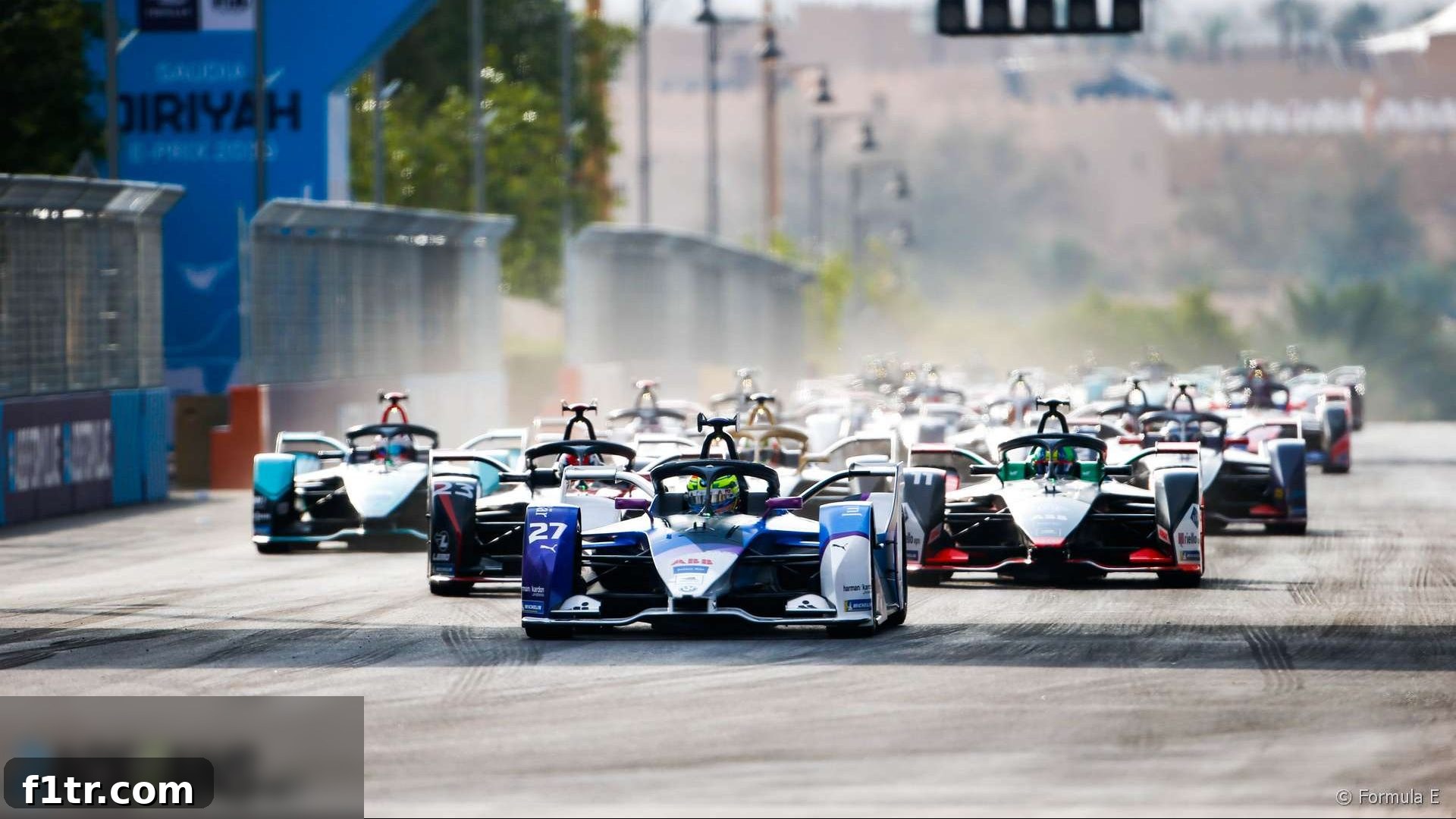
The competitive dynamics between Formula 1 and Formula E are further complicated by the allegiance of major automotive manufacturers. Formula E, which commenced its 2019-2020 season last weekend, has seen a significant influx of factory teams, including established luxury brands like Mercedes and Porsche making their debut this year, joining Audi, BMW, Nissan, Jaguar, and DS. This robust manufacturer presence highlights Formula E’s appeal as a platform for electric vehicle development and marketing, directly aligning with the shift towards electrification in the automotive industry.
In contrast, Formula 1’s manufacturer contingent currently stands at just four. This disparity raises questions about the long-term commitment of some brands to F1’s hybrid internal combustion future. Notably, Renault has recently initiated a review of its future in F1. Maffei acknowledged these challenges, attributing Renault’s reconsideration to a combination of factors, including “less on-track success than they would have liked” and broader “corporate-level issues unrelated to Formula 1.” He viewed their strategic review as a “logical” response to these internal and external pressures. This situation underscores the constant balancing act for motorsport series to attract and retain manufacturer involvement, a critical component of their technological prowess and financial stability.
Coexistence and the Future of Motorsport
Ultimately, the discussion around Formula 1 and Formula E is not necessarily about one replacing the other, but rather about their distinct roles in the broader motorsport ecosystem. While Formula E, owned by Liberty Global (a separate entity from Liberty Media, though with shared director John Malone), continues to grow and carve out its niche in urban circuits with all-electric racing, Formula 1 is steadfast in its identity as the pinnacle of global engineering and high-performance racing, fueled by cutting-edge hybrid internal combustion technology and sustainable fuels.
Liberty Media’s stance, as articulated by Greg Maffei, reinforces the idea that the future of motorsport is diverse. There is room for both the established traditions of Formula 1, evolving through sustainable fuel innovation, and the pioneering spirit of electric racing series. F1’s commitment to a net zero-carbon hybrid engine by 2030 positions it as a leader in advanced fuel technology, ensuring that its unparalleled blend of speed, strategy, and spectacle continues to captivate audiences worldwide, far from being eclipsed by its electric counterparts.
Related Articles from the 2019 F1 Season
- Crying in the Melbourne car park at 2019 grand prix was my career low – Ocon
- McLaren Racing reports reduced £71 million loss in 2019
- Kvyat: Hockenheim podium last year was “my biggest achievement” so far
- How the FIA’s new encrypted fuel flow meter targets Ferrari’s suspected ‘aliasing’ trick
- “He smashed my office door”: 23 must-see moments from ‘Drive to Survive’ season two
Browse all 2019 F1 season articles