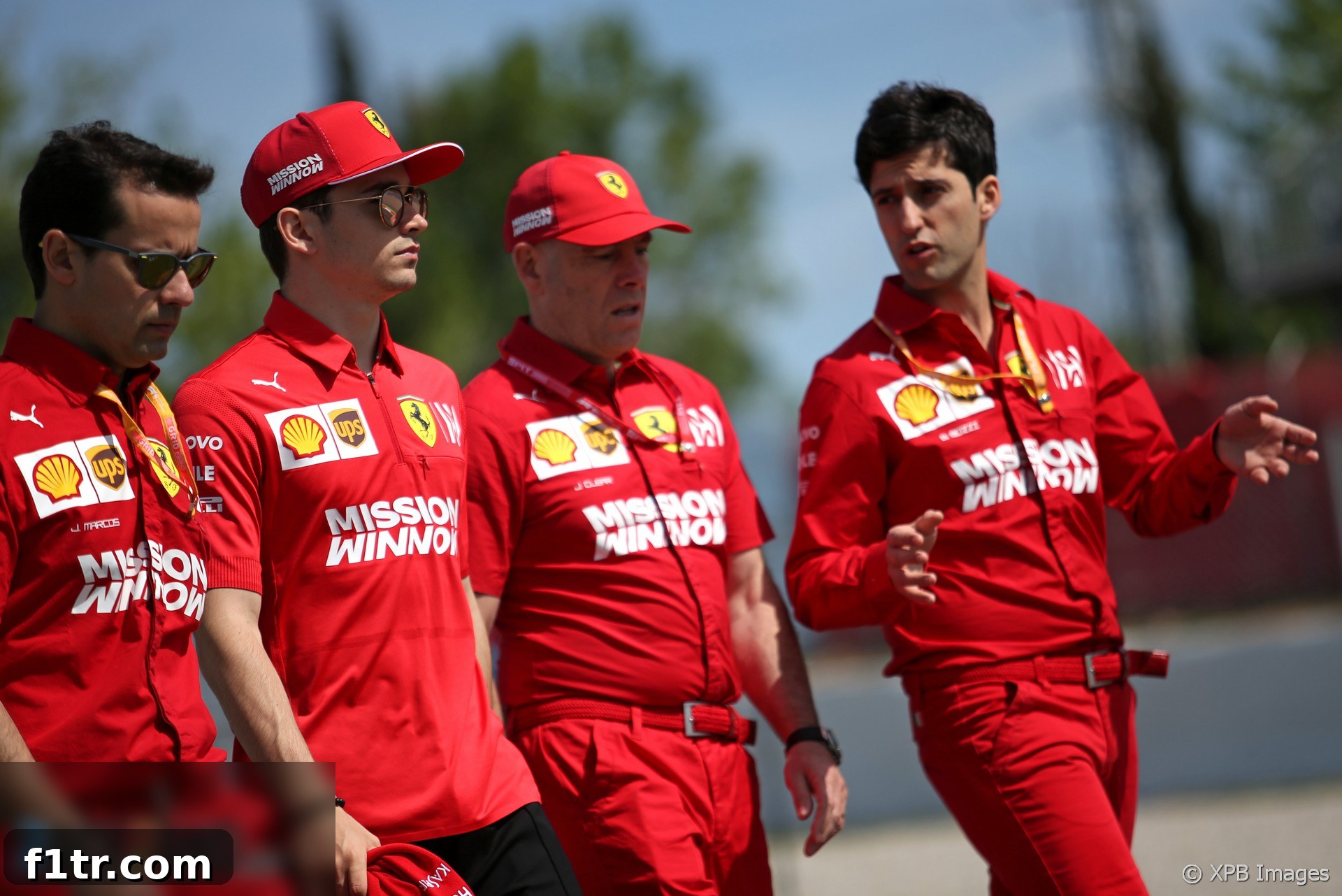
Charles Leclerc Remains Defiant: Ferrari’s True Potential Greater Than Early 2019 F1 Results Show
Despite a challenging start to the 2019 Formula 1 season, Charles Leclerc, the young prodigy at the helm of a Ferrari, firmly believes that the Scuderia’s performance capability is significantly stronger than what the initial four races have suggested. The Monegasque driver’s unwavering optimism comes amidst a period where the iconic Italian team found themselves trailing their dominant rivals, Mercedes-AMG F1, by a substantial margin in the Constructors’ Championship standings.
The opening quartet of races painted a stark picture for Ferrari. Mercedes had remarkably secured four consecutive one-two finishes, a testament to their formidable package and flawless execution. This early season dominance left Ferrari a staggering 74 points adrift in the constructors’ battle, creating immense pressure and raising questions about their championship aspirations. However, Leclerc, ever the racer, views these results not as an accurate reflection of their pace, but as a series of missed opportunities. He asserts, “performance-wise, there is more to come,” signaling a deep-seated confidence in the SF90’s underlying speed and the team’s development trajectory.
Unlocking Ferrari’s Untapped Pace: Leclerc’s View on Early Season Missteps
Leclerc’s perspective offers crucial insight into the internal mood at Maranello. He maintains that the championship standings don’t fully encapsulate the team’s true competitive position. “I don’t think it is as bad as the championship looks,” he stated, reflecting on what could have been. He candidly acknowledged two pivotal moments where Ferrari could have scored significantly more points. One instance, he admitted, was a personal error, alluding perhaps to his qualifying crash in Baku for the Azerbaijan Grand Prix, which compromised his race weekend. The other was a technical issue that “cost us a better result,” likely referencing the engine problem he suffered while leading comfortably in Bahrain, which robbed him of a maiden F1 victory.
These incidents, while costly, also underscore Leclerc’s belief in the car’s inherent pace. The Bahrain Grand Prix, in particular, showcased the SF90’s potential to outpace Mercedes when everything aligned, at least until the power unit issue struck. For Leclerc, these were isolated events rather than symptoms of fundamental performance deficits. “But overall I think the performance is there,” he emphasized, highlighting the team’s primary challenge: “we just need to try to put everything together in most of the occasions to be using our full potential.” This sentiment resonates deeply within Formula 1, where optimizing every aspect of a race weekend – from qualifying to race strategy, pit stops, and driver execution – is paramount for success.
The pressure on Charles Leclerc in 2019 was immense. As a relatively young driver in his first year with Ferrari, tasked with challenging the four-time world champion Sebastian Vettel, he carried the hopes of millions of Tifosi. His ability to maintain a positive outlook and articulate the team’s potential despite the early setbacks was a testament to his mental fortitude and leadership qualities, qualities vital for any driver aspiring to championship glory with a team steeped in F1 history like Ferrari.
Debunking the Pre-Season Hype: Mercedes’ Latent Speed at Barcelona Testing
Ferrari’s strong showing during pre-season testing at the Circuit de Catalunya in Barcelona had initially fueled widespread optimism within the F1 community. The SF90 appeared remarkably quick and reliable, leading many to predict Ferrari as the clear front-runners for the 2019 season. However, Leclerc offers a more nuanced interpretation of those tests, suggesting that Ferrari’s perceived advantage over Mercedes was likely overstated. Pre-season testing is notoriously difficult to read, with teams often running different fuel loads, engine modes, and tire compounds to mask their true pace, a practice commonly referred to as ‘sandbagging’.
Leclerc believes Mercedes were never as far behind as some analyses suggested. “I think Mercedes were not that far [behind] even in testing in Barcelona,” he clarified. He specifically recalled the final day of testing, noting, “The last day [was] the only day where they actually pushed a little bit and in the last laps they did a very similar lap time to ours.” This observation is critical because it highlights Mercedes’ characteristic approach of revealing their full hand only when necessary. Their ability to deliver strong lap times even during what seemed like a ‘soft’ push indicated a deeper reserve of performance.
The Monegasque driver’s cautious assessment serves as a reminder of the strategic game played during pre-season. Teams are constantly monitoring each other, but ultimately focus on their own development programs. “So I don’t think they were ever very far away, and we don’t even know how much they pushed in the last day of testing. It’s not right to say that we were a lot for ahead after testing,” Leclerc concluded. His comments underscore the reality that while Ferrari certainly had a competitive package, the gap to Mercedes was always likely to be much smaller, if not negligible, once the actual racing began.
The Spanish Grand Prix: A Litmus Test for Ferrari’s 2019 Campaign
The return to the Circuit de Catalunya for the Spanish Grand Prix held particular significance for Ferrari. Barcelona is renowned for being a highly representative track, offering a comprehensive test of a car’s aerodynamic efficiency, mechanical grip, and overall balance across a variety of corners. Its demanding layout, featuring high-speed sweeps, technical sections, and a long main straight, makes it an ideal venue for assessing a car’s strengths and weaknesses. Crucially, teams often bring their first major upgrade packages of the season to Barcelona, making the Spanish GP a critical benchmark for the development direction of each contender.
For Ferrari, the Spanish Grand Prix was an opportunity to validate their off-track improvements and translate them into on-track results. “Hopefully the improvements we’ve brought here put us a step forward and then we’ll see for the rest of the season,” Leclerc expressed, acknowledging the importance of these upgrades. The team was under pressure to demonstrate that their development path was correct and that they could begin to close the gap to Mercedes. The hope was that these new components would enhance the SF90’s performance characteristics, particularly in areas where it might have been lacking compared to its rivals.
The saying “what works in Barcelona, works everywhere” often holds true in F1, highlighting the track’s ability to expose any fundamental flaws in a car’s design. Therefore, a strong performance in Spain would not only provide a much-needed morale boost but also confirm Ferrari’s potential to challenge consistently throughout the remainder of the 2019 F1 calendar. Leclerc’s sentiment, “Normally Barcelona is quite representative track for the performance of the car so hopefully we’re strong here,” encapsulated the team’s cautious optimism and the high stakes associated with the race weekend.
The Road Ahead: Ferrari’s Relentless Pursuit of Excellence in the 2019 F1 Season
The 2019 F1 season was shaping up to be a test of endurance and development for Ferrari. The championship is not won in the first four races, but a significant deficit can set a challenging tone. Leclerc’s perspective was vital in maintaining team morale and focusing on the long game. His belief in the inherent performance of the SF90, despite the early misfortunes and the perceived exaggeration of their pre-season advantage, underscored a crucial aspect of top-tier motorsport: the battle for the championship is as much psychological as it is technical.
The commitment to continuous improvement and agile development is paramount in Formula 1. Ferrari, with its rich history and immense resources, was expected to redouble its efforts to bring further upgrades throughout the season. The insights gained from races like the Spanish Grand Prix would directly feed into their development cycles, aiming to unlock the “full potential” that Leclerc spoke of. The narrative of the 2019 F1 season for Ferrari became one of chasing perfection, eliminating errors, and consistently executing flawless race weekends to challenge the formidable Mercedes squad.
Ultimately, Leclerc’s statements reflected a core truth in motorsport: raw speed is only one part of the equation. Consistency, reliability, and strategic prowess are equally vital. His unwavering belief in Ferrari’s competitive edge, even when the points table told a different story, was a beacon of hope for the Scuderia and its global fanbase. The 2019 season promised to be a fascinating journey of development, resilience, and the relentless pursuit of championship glory for Charles Leclerc and Ferrari.
Further Reading: The 2019 F1 Season
- Crying in the Melbourne car park at 2019 grand prix was my career low – Ocon
- McLaren Racing reports reduced £71 million loss in 2019
- Kvyat: Hockenheim podium last year was “my biggest achievement” so far
- How the FIA’s new encrypted fuel flow meter targets Ferrari’s suspected ‘aliasing’ trick
- “He smashed my office door”: 23 must-see moments from ‘Drive to Survive’ season two
Browse all 2019 F1 season articles