Advert | Become a Supporter & go ad-free
Charles Leclerc’s Strategic Patience in Baku: A Masterclass in Race Management
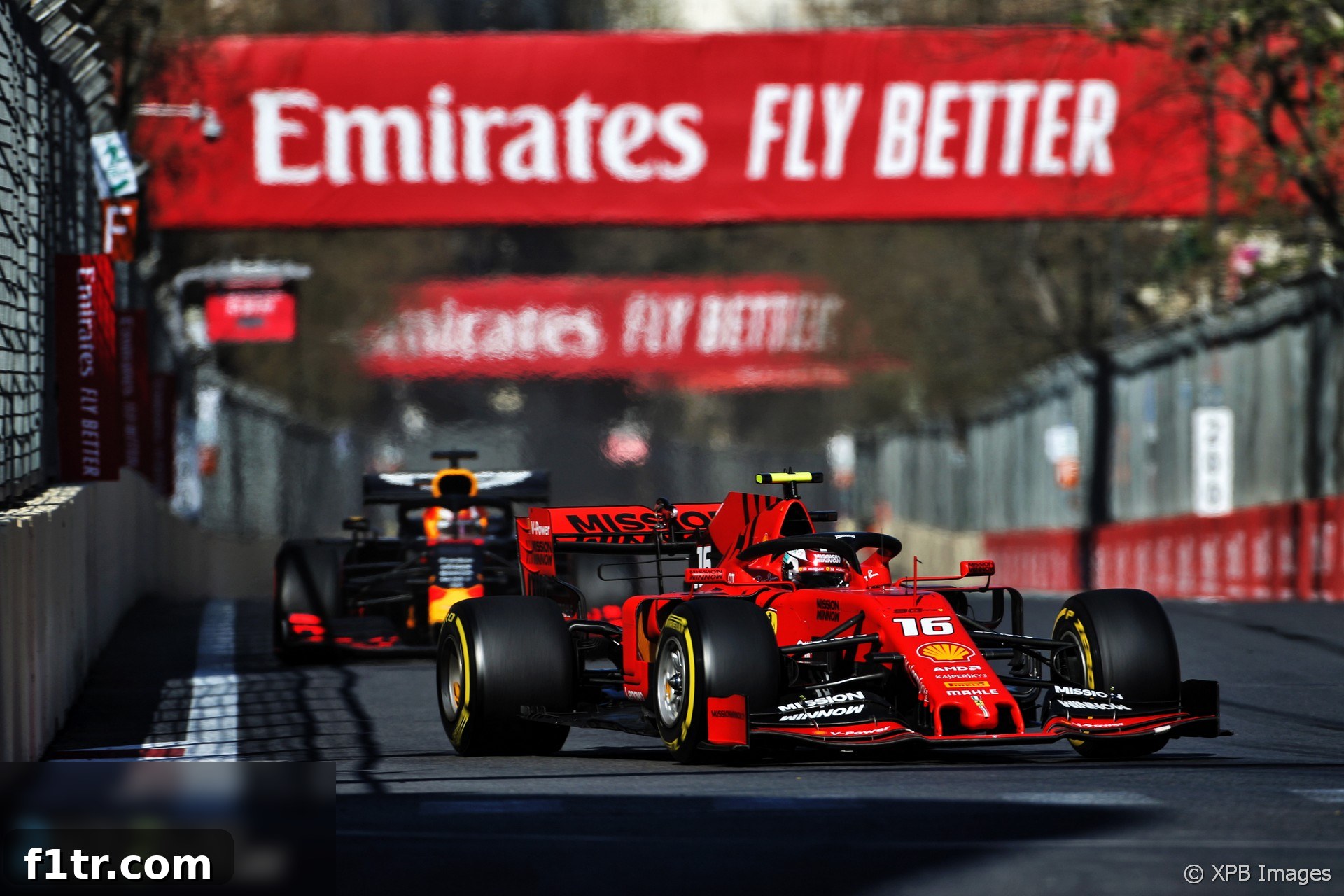
The 2019 Formula 1 season saw Charles Leclerc embark on his highly anticipated debut with Scuderia Ferrari, a move that placed immense pressure and expectation on the young Monégasque driver. In the dynamic setting of the 2019 Azerbaijan Grand Prix, Leclerc found himself at the heart of a pivotal strategic decision. Despite leading the race at one point and possessing fresh, softer tires, he consciously chose to reduce his pace following his first pit stop. This seemingly counter-intuitive move was a direct result of his team’s calculated assessment: the gap to the front-runners was deemed insurmountable, prompting a shift from an aggressive charge to a more measured, points-focused drive. This incident underscored Leclerc’s evolving maturity and Ferrari’s pragmatic approach to race strategy in the demanding world of Formula 1.
The Baku City Circuit: A Stage for Unpredictability
The Baku City Circuit has rapidly established itself as a staple on the Formula 1 calendar, renowned for its dramatic races and unpredictable outcomes. Weaving through the historic streets of Azerbaijan’s capital, the circuit presents a unique dichotomy: immensely long straights that reward power and aerodynamic efficiency, contrasted with tight, intricate sections, most notably around the UNESCO World Heritage-listed Old City walls. This combination demands a precise balance from both car and driver, often leading to unforeseen incidents, safety car interventions, and complex strategic dilemmas. The 2019 Azerbaijan Grand Prix was no exception, promising high-stakes action and compelling narratives, especially concerning Ferrari’s promising young talent.
From Qualifying Dominance to Race Day Recovery: Leclerc’s Turn 8 Error
Charles Leclerc arrived in Baku in scintillating form, quickly asserting his authority over the challenging street circuit. He demonstrated superior pace by topping all three free practice sessions (FP1, FP2, and FP3), fueling widespread speculation that pole position for the Grand Prix was firmly within his grasp. His confidence in the Ferrari SF90 was evident, hinting at a potentially dominant weekend. However, the unforgiving nature of a street circuit came to bear during the crucial qualifying session. Pushing the limits in Q2, Leclerc made a costly error, clipping the barrier at the infamous Turn 8. This moment of overexuberance brought his qualifying efforts to an abrupt halt, resulting in a ninth-place start for the race – a significant blow to his aspirations after such a promising build-up.
Reflecting on the incident after the race, Leclerc displayed commendable candour. “Even though obviously FP1, FP2 and FP3 is not very representative, I am disappointed because I felt great in the car,” he stated. “I completely agree with Mattia [Binotto, team principal], I think in the car there was definitely the potential to do pole position. I threw all our chances away by touching the wall yesterday. So it’s my mistake, I take responsibility, and today basically it was the best we could do from there.” His willingness to take full responsibility highlighted a growing maturity and self-awareness crucial for any top-tier racing driver.
The Strategic Masterstroke: Ferrari’s Extended First Stint on Mediums
Despite the setback of a compromised grid position, Ferrari and Leclerc meticulously planned a strategic recovery. Opting to start on the more durable medium compound tyres, Leclerc embarked on an impressively long first stint. This strategy was designed to capitalize on the mediums’ longevity, allowing him to stay out on track longer than many of his direct rivals who started on the softer, faster-degrading compounds. Leclerc expertly managed his tyres, maintaining a consistent and competitive pace, steadily climbing the order as other drivers pitted earlier. His extended run saw him eventually lead the Azerbaijan Grand Prix, showcasing not only his exceptional tire management skills but also Ferrari’s strategic acumen in turning a difficult starting position into a provisional lead.
This patient approach set the stage for the latter half of the race, with the hope that a switch to fresh, softer tires would provide the necessary boost to challenge for a podium finish. Leclerc’s ability to extract performance from older rubber while protecting them was a clear indicator of his talent and a testament to the team’s flexible tactical planning, which was vital in maximizing their potential points haul.
The Pragmatic Call: Why the Charge Was Halted
Following his successful extended first stint, Leclerc finally pitted for a fresh set of soft tyres, rejoining the track behind Pierre Gasly, whom he quickly dispatched. With newer, faster rubber at his disposal, the expectation was that Leclerc would unleash his pace and aggressively pursue the race leaders. However, Ferrari’s strategic pit wall, having crunched the numbers, conveyed a stark, pragmatic message to their driver. Leclerc’s direct query, “Have I got any chances to catch up the front?” was met with a resolute “No, negative. Slippery track.”
This radio exchange represented a defining moment in Leclerc’s race. The team’s analysis revealed that despite the advantage of fresher, softer tyres, the substantial time gap to the Mercedes duo and his own teammate, Sebastian Vettel, coupled with the inherent challenges and “slippery” conditions of the Baku circuit, made a genuine challenge for victory or a podium position highly improbable. An all-out assault would risk excessive tire degradation, increased fuel consumption, and crucially, a higher probability of another costly error, thereby jeopardizing the valuable points already within reach. It was a strategic decision rooted in pragmatism, prioritizing a secure and optimized finish over a heroic but ultimately unrealistic pursuit.
“I just didn’t push to try and close the gap because I asked on the radio pretty early in this run whether there was any possibility to come back to the guys in front and the answer was no because the gap was too big,” Leclerc elaborated to media after the race. His willingness to accept and adapt to this strategic limitation, rather than pushing vainly, underscored a growing maturity that went beyond pure speed, showcasing his ability to understand and execute complex team directives.
The Bonus Point Gambit: Pursuing the Fastest Lap
With the instruction to consolidate his position and no viable path to challenge for a higher finish, Leclerc’s focus meticulously shifted. The revised objective was clear: manage the race to ensure a safe finish and, crucially, secure the bonus point for the fastest lap. This strategy entailed a carefully timed late second pit stop, providing Leclerc with another fresh set of soft tyres, specifically calibrated for a single, maximum-effort flying lap towards the very end of the Grand Prix. This tactical move was a direct response to the introduction of a championship point for the fastest lap in 2019, making every single point a valuable commodity.
“From that moment onwards it was just about trying to keep the tyres and trying to push for the fastest lap when I had the opportunity to do so,” Leclerc explained. “So don’t look at the pace from when we put the softs, it’s not our real pace, we were just trying to do the best lap.” This calculated gamble paid dividends, as Leclerc successfully logged the fastest lap of the race, adding a crucial extra point to his championship tally. It was a small but significant consolation, transforming a weekend of potential into a tangible, if somewhat subdued, result.
Post-Race Reflections: Disappointment and Positive Outlook
Despite the effective recovery drive, culminating in a fifth-place finish and the fastest lap point, Leclerc’s disappointment remained palpable. The weekend had served as a stark dichotomy between his immense raw talent and the harsh, unforgiving realities of Formula 1. His commanding performance in practice suggested a very real chance for pole position and a race victory, making the ultimate fifth-place result a challenging pill to swallow for a driver of his ambition.
Yet, amidst the frustration, Leclerc and the Ferrari team identified several critical positives. “On the other hand I think there are some positives to take away from the weekend. I think quali pace was definitely stronger than China and race pace was also very close to Mercedes,” he observed. This indicated a tangible step forward for both the Scuderia and Leclerc himself, suggesting that the SF90 package possessed genuine competitiveness, even if its full potential wasn’t realized in Baku due to external factors and an internal error.
The lessons gleaned from the 2019 Azerbaijan Grand Prix were invaluable for Leclerc’s burgeoning career. It served as a powerful reminder of the razor-thin margins in Formula 1 and the paramount importance of flawless execution at every stage of a race weekend. For Ferrari, it provided crucial data on their car’s performance characteristics in varying conditions and underscored the necessity of impeccable strategy to effectively contend with the formidable Mercedes team.
Towards Barcelona: Glimmers of Hope for Ferrari
With the Baku race concluded, Charles Leclerc and Ferrari immediately redirected their focus to the upcoming Spanish Grand Prix in Barcelona. The confidence derived from the SF90’s underlying pace, particularly the marked improvements in both qualifying and race trim compared to earlier rounds, instilled a renewed sense of optimism for the remainder of the season. Leclerc articulated his unwavering determination to bounce back stronger, vowing to internalize the lessons from Baku, minimize future errors, and maximize performance in the races to come.
“Now we look forward and I’m pretty sure we’ll come back even stronger in Barcelona,” he declared, embodying the resilient and competitive spirit that defines elite Formula 1 drivers. The 2019 season was undoubtedly a steep learning curve for Leclerc in his inaugural year with the legendary Italian racing team. The Azerbaijan Grand Prix stood as a significant chapter in his development – a race that commenced with the promise of pole, took a detour through a self-inflicted error, and ultimately concluded with a pragmatic, points-scoring recovery drive. It solidified his reputation not merely as a fast driver, but as a thoughtful strategist, capable of internalizing team wisdom and adapting his approach to secure the best possible outcome under challenging, high-pressure circumstances.
Advert | Become a RaceFans supporter andgo ad-free
2019 F1 Season Overview
Browse all 2019 F1 season articles