FIA Extends DRS Zones at Key F1 Venues to Boost Overtaking Spectacle
In a move designed to intensify competition and provide more thrilling overtaking opportunities, the FIA has confirmed the expansion of Drag Reduction System (DRS) zones at five critical venues remaining on this year’s Formula 1 calendar. This strategic adjustment aims to provide drivers with a greater advantage in their pursuit of rivals, promising more dynamic races for fans worldwide. The changes are set to be implemented immediately, beginning with the highly anticipated Italian Grand Prix at Monza this weekend.
The tracks slated for these significant DRS zone extensions include the historic Monza circuit in Italy, the modern Sochi Autodrom in Russia, the undulating Circuit of the Americas (COTA) in the USA, the legendary Autódromo José Carlos Pace (Interlagos) in Brazil, and the glittering Yas Marina Circuit in Abu Dhabi. These modifications underscore the FIA’s continuous efforts to fine-tune the sporting regulations and ensure the pinnacle of motorsport remains as exciting and unpredictable as possible.
Advert | Become a Supporter & go ad-free
Enhanced Overtaking Opportunities: A Track-by-Track Breakdown
Monza: The Temple of Speed Gets Longer DRS
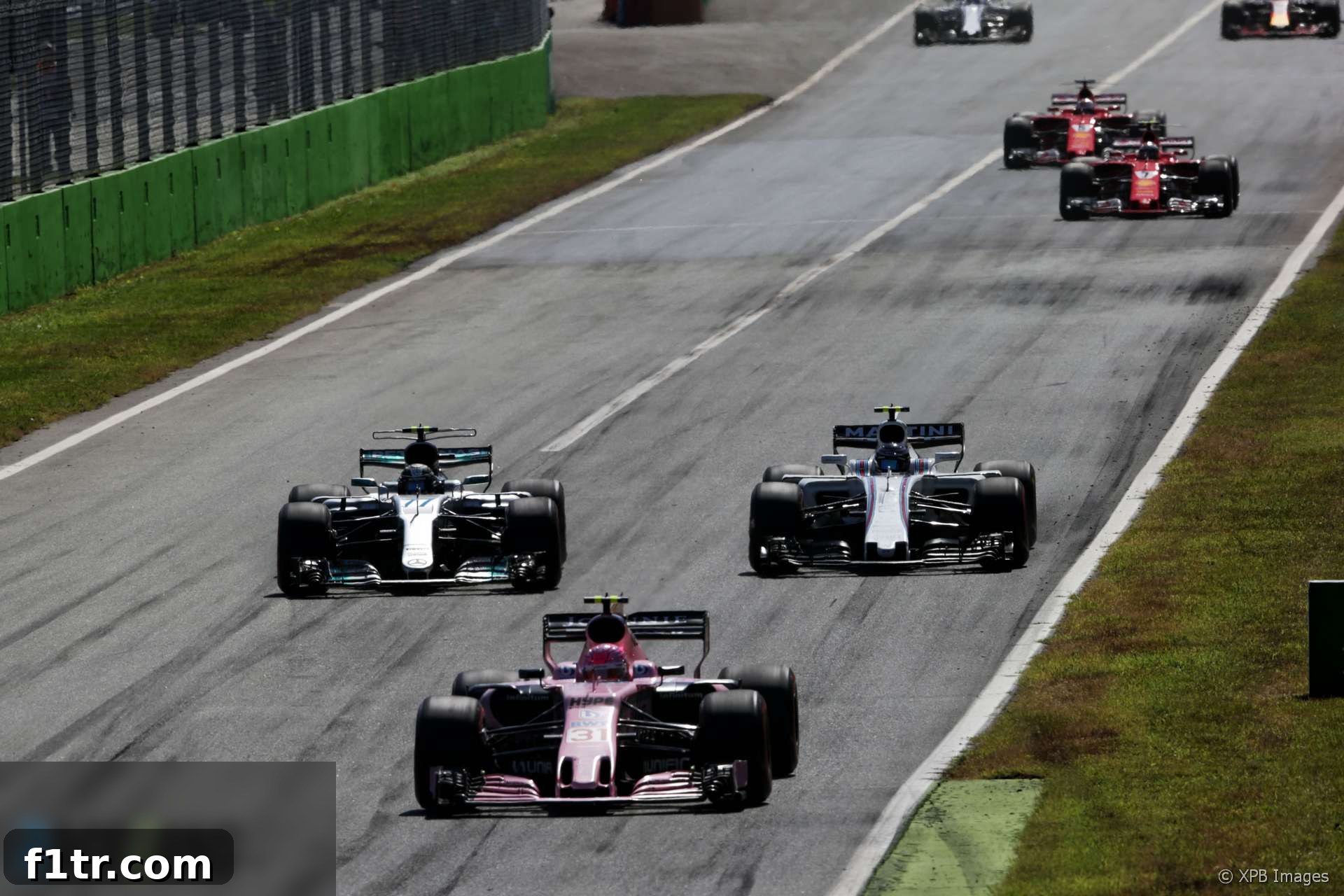
At the iconic Monza circuit, famously known as the “Temple of Speed,” the DRS zone leading from Lesmo 2 towards the Ascari chicane will see a considerable extension. FIA Race Director Charlie Whiting elaborated on the rationale, stating, “The DRS zone leading from Lesmo 2 to the Ascari chicane at Monza will be extended to aid overtaking at the Italian track.” This particular section, characterized by its high-speed approach and technical braking point, is already a prime location for overtakes. By extending the DRS activation, the FIA hopes to give drivers a more substantial slipstream effect, encouraging bolder moves and closer wheel-to-wheel action into one of Monza’s most challenging corners. This change is particularly relevant for Monza, where powerful engines and aerodynamic efficiency are paramount, and even a small advantage can make a significant difference in a closely contested race.
Sochi Autodrom: Bolstering the Main Straight Battle
Following Monza, the focus shifts to the Sochi Autodrom in Russia. “In Russia we’re extending the main DRS which starts on the pit straight going to turn one,” Whiting confirmed. The long run down to Turn 1 at Sochi has historically been a critical overtaking spot, often witnessing aggressive maneuvers right after the start or Safety Car restarts. Lengthening this primary DRS zone is expected to make defending positions even more challenging for drivers, potentially leading to more lead changes and strategic plays on what can sometimes be a processional circuit. This adjustment aims to inject more dynamism into a track that has occasionally been criticized for a lack of thrilling on-track action.
Circuit of the Americas: More Action on the Back Straight
The Circuit of the Americas (COTA) in Austin, USA, with its unique blend of high-speed sections and technical corners, will also benefit from an extended DRS zone. Whiting detailed, “At Austin we’ll extend one, which is on the back straight between turns 11 and 12.” While the DRS zone on COTA’s main pit straight is already optimized to its maximum length, this extension on the back straight provides a secondary, yet crucial, opportunity for drivers to gain an advantage. The segment between turns 11 and 12 often sees cars bunch up before the complex final sector, making it an ideal place for an enhanced overtaking aid. This change promises to add another layer of strategic depth and excitement to the American Grand Prix.
Interlagos: A Century More for Brazilian Battles
Brazil’s legendary Interlagos circuit, renowned for its undulating layout and passionate atmosphere, will also see a modification. “In Brazil we will extend the main one on the straight, about another 100 metres, just after turn 14,” Whiting stated. The main straight at Interlagos, which flows into the challenging Senna ‘S’ complex, is a hallmark of the circuit. Adding another 100 meters to the DRS activation point after Turn 14 (the final corner) gives drivers a longer run to exploit the drag reduction, increasing the likelihood of successful overtakes into one of F1’s most iconic corner sequences. This slight but significant change is anticipated to heighten the already thrilling racing characteristic of the Brazilian Grand Prix.
Yas Marina Circuit: Double the DRS Advantage
Finally, the season-ending Abu Dhabi Grand Prix at the Yas Marina Circuit will feature extensions to both of its DRS zones. “And both of them will be lengthened in Abu Dhabi,” Whiting concluded. Yas Marina has, at times, faced criticism for being difficult to overtake on, despite its long straights. By extending both DRS zones, the FIA is clearly making a concerted effort to mitigate this issue, aiming to provide a more dramatic and action-packed finale to the championship. This double extension could unlock more strategic battles and wheel-to-wheel racing under the floodlights, potentially leading to a more memorable conclusion to the Formula 1 season.
Where DRS Zones Remain Unchanged: Strategic Considerations
While five circuits will benefit from these DRS zone expansions, not all venues on the remaining calendar are receiving similar adjustments. Charlie Whiting indicated there is “no real hope” for a longer DRS zone at the challenging Singapore street circuit. The unique, tight, and twisting nature of the Marina Bay Street Circuit, with its numerous slow corners and lack of genuinely long straights suitable for extended DRS activation, makes such a modification impractical and potentially unsafe. The circuit’s design inherently limits the feasibility of significant DRS expansions without fundamentally altering its character or compromising safety.
Similarly, the technically demanding Suzuka International Racing Course in Japan and the high-altitude Autódromo Hermanos Rodríguez in Mexico will also see no changes to their existing DRS configurations. Suzuka, with its iconic high-speed esses and flowing corners, prioritizes driver skill and car balance over outright straight-line speed advantages. The current DRS zone on its main straight is deemed sufficient for its purpose without artificial enhancements. In Mexico, the unique challenge of racing at over 2,200 meters above sea level already impacts aerodynamic performance significantly. The current DRS zones are considered optimized for the unique atmospheric conditions and the circuit’s relatively short main straight, where the slipstream effect is already pronounced.
The Spa Precedent: Debating the Impact of DRS
The FIA’s decision to extend DRS zones across multiple venues comes in the wake of recent discussions regarding the system’s effectiveness and potential impact on the purity of overtaking. Following the Belgian Grand Prix at Spa-Francorchamps, where the longer DRS zone was perceived by some to have made overtaking “too easy,” Whiting offered his perspective.
“Spa’s different,” he asserted. “You saw in a lot of cases… Seb got past Lewis without DRS. It’ll be different on other circuits.” Whiting’s comments highlight the nuanced view within the FIA regarding DRS. While the system is designed to facilitate overtaking, the ultimate success of a move still depends on driver skill, car performance, and the specific characteristics of each circuit. Spa, with its vast run-off areas and exceptionally long Kemmel Straight leading into Les Combes, offers unique dynamics that might make DRS more potent than at tighter, more technical tracks. The example of Sebastian Vettel overtaking Lewis Hamilton without DRS underscores that while the system aids, it does not necessarily guarantee a pass, nor does it diminish the talent required for successful wheel-to-wheel racing.
The FIA’s overarching goal with these adjustments is to strike a delicate balance: enhancing the spectacle of racing by providing more genuine overtaking opportunities, without making the process feel overly artificial. By carefully selecting which zones to extend and considering the unique characteristics of each track, the governing body aims to maximize the entertainment value for fans while preserving the competitive integrity of Formula 1. These extended DRS zones are expected to play a crucial role in the outcome of the remaining Grands Prix, adding an exciting dimension to the strategic battles and driver duels that define F1 racing.
Advert | Become a RaceFans supporter andgo ad-free
Related F1 Articles
- F1 feared “death knell” for Drive to Survive after Ferrari and Mercedes snub
- McLaren staff told us we were “totally crazy” to take Honda engines in 2018 – Tost
- ‘It doesn’t matter if we start last’: How Red Bull’s junior team aided Honda’s leap forward
- Honda’s jet division helped F1 engineers solve power unit problem
- McLaren Racing losses rise after Honda split
Browse all 2018 F1 season articles