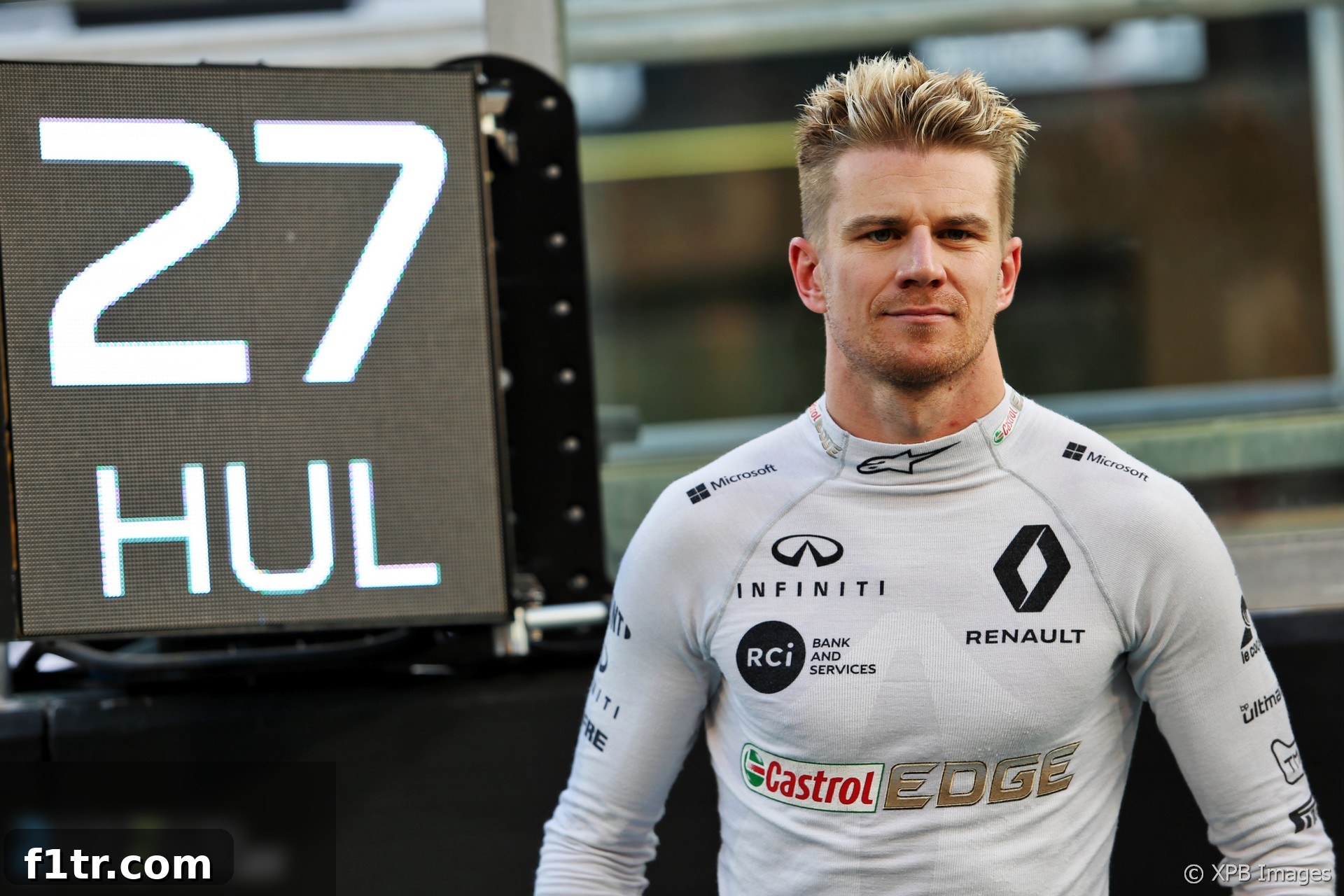
Nico Hulkenberg’s 2019 Formula 1 season marked a pivotal, and ultimately temporary, end to his long and esteemed career in the sport. While his natural talent and consistent performance were undeniable, his final year with Renault was plagued by a myriad of challenges, preventing him from fully showcasing his capabilities. The season, which he described as far from smooth, reflected a broader struggle within the Renault team to consolidate its position in the competitive midfield.
Advert | Become a Supporter & go ad-free
The Renault R.S.19 proved to be an inconsistent machine throughout the season. On certain circuits, the car displayed commendable pace, hinting at its underlying potential. However, these flashes of brilliance were often overshadowed by significant struggles at other venues, indicating a fundamental lack of adaptability or a narrow operating window. Adding to these performance fluctuations were persistent reliability issues, a recurring problem that had hampered the team in previous seasons and continued to derail promising weekends in 2019. The team’s ambitious development program, designed to push them further up the grid, also failed to deliver the anticipated improvements, leaving both drivers battling an unpredictable package.
Hulkenberg, a driver known for his acute car feedback, openly expressed his dissatisfaction with the car’s balance for a considerable period during the season. This crucial aspect of a racing car, dictating how a driver can attack corners and manage tire wear, directly impacted his ability to extract maximum performance. This period coincided with the arrival of a highly accomplished new teammate, Daniel Ricciardo, who, with his proven race-winning pedigree, was exceptionally well-placed to capitalize on any advantage the car offered or any discomfort Hulkenberg felt. The internal dynamic and the car’s characteristics combined to create a challenging environment for the German.
Reflecting on his 2019 campaign, Hulkenberg candidly admitted that consistency was its most elusive quality. “We always had potential,” he mused, “but then things happen all the time. Whether it’s reliability or human error or strategy, there were many things that kind of held us back this year. And, sometimes, our own mistakes.” This honest appraisal highlights the multifaceted nature of their struggles, where technical shortcomings, strategic missteps, and occasional driver errors all contributed to a season that fell short of expectations. The cumulative effect of these issues created a constant “headwind,” making it difficult for the team to build momentum and deliver consecutive strong results.
“We’d have a good result, keep on rolling it but then something always prevents another good one and another good one,” Hulkenberg elaborated, painting a clear picture of the stop-start nature of their season. This inability to string together a series of successful races was particularly frustrating for a driver of his caliber and for a team with Renault’s aspirations. Comparing their season to rivals, he noted, “It was not the easiest kind of season and definitely not the smoothest, especially if you compare it and look with McLaren. I think they also had problems, but not as much as us.” McLaren, Renault’s direct competitor for the ‘best of the rest’ title, enjoyed a remarkably more consistent and successful year, underscoring Renault’s relative stagnation and the magnitude of the challenges they faced.
Qualifying Performance: A Deep Dive into Lap Times
The lower the lines, the better the driver performed, reflecting lap time difference to the fastest car or teammate.
The qualifying battle within the Renault garage provided a fascinating subplot to the 2019 season. Daniel Ricciardo, settling into his new team, seized the early initiative, often outpacing Hulkenberg on Saturdays. However, the margins between the two seasoned campaigners were frequently razor-thin in the initial races, indicating a closely matched pair operating near the car’s limits. A significant turning point arrived in France, where Renault introduced a major car upgrade package. Unfortunately, this development did not produce the desired performance gains, and critically, Hulkenberg seemed to find himself less at ease with the revised car’s characteristics. This period coincided with a dip in his qualifying form, as he struggled to extract the maximum single-lap pace.
As the season progressed, Hulkenberg’s resilience and engineering insight came to the fore. He worked diligently with his engineers to adapt the car’s setup, gradually bringing its handling characteristics more to his liking. This perseverance paid dividends, as he began to qualify closer to his true potential. In a testament to his enduring skill, he even managed to out-qualify Ricciardo for an impressive three consecutive Saturdays at one point, demonstrating his ability to overcome initial hurdles and regain his competitive edge. When asked about the turnaround, Hulkenberg attributed it to a combination of factors. “These things are hard to describe,” he admitted, highlighting the nuanced nature of top-tier motorsport. “It’s a little bit related with set-up and that we found a happier place for me. But also it’s a feeling thing.”
This “feeling thing” is paramount for Formula 1 drivers. It refers to the intuitive connection a driver has with their car, the ability to sense its limits, and predict its behavior at high speeds. “If you don’t feel right in the car and you know the car, you just don’t feel that connected with it,” Hulkenberg explained. This disconnect can prevent a driver from pushing the car to its absolute maximum. “That’s when you can’t find the last like one, two tenths, for example. I had a period in the middle of the year where that was the case. Then it became more together again and better.” His honest reflection underscores the psychological and technical interplay required for optimal performance, and his eventual recovery in qualifying demonstrated his adaptability and deep understanding of vehicle dynamics, even when faced with a challenging and evolving car package.
Advert | Become a RaceFans supporter andgo ad-free
Race Day Dynamics: Start Versus Finish Positions
Hulkenberg’s race performances often reflected a strategic conundrum for Renault. He frequently found himself on the precipice of breaking into Q3, the final qualifying session for the top ten. If he succeeded in reaching Q3, he would typically start in the lower half of the top ten, often on used tires. While this offered a better grid position, it also meant he was vulnerable to drivers starting just behind him on fresh tires, who could often make up positions early in the race. Conversely, if he narrowly missed Q3, starting eleventh or twelfth, he would have the strategic advantage of choosing new tires for the race start. This often allowed him to move forwards through the field, capitalizing on better grip and tire life, and ultimately, moving into the coveted points-scoring positions. This dynamic highlighted the fine margins in midfield F1 racing and the impact of qualifying strategy on race outcomes.
Undoubtedly, the biggest disappointment of Hulkenberg’s season, and perhaps one of the most poignant moments of his entire F1 career, occurred at the German Grand Prix. In a chaotic, rain-affected race at Hockenheim, he found himself in a truly remarkable position, actively hunting for a podium finish – a result that had famously eluded him throughout his extensive Formula 1 tenure. The opportunity for a coveted rostrum appearance was tangible, but in a cruel twist of fate, he crashed out of contention while running in a strong position, shattering hopes of a fairytale ending. This incident was a bitter pill to swallow, particularly given his relentless pursuit of a podium. Just weeks later, following the subsequent race, Renault delivered the news that Esteban Ocon would replace him for the 2020 season, bringing his chapter with the French manufacturer to a close.
Despite this heartbreaking near-miss and the many other missed chances for a podium finish, Hulkenberg expressed a profound sense of peace regarding his Formula 1 career. He asserted that it “doesn’t feel like unfinished business.” This perspective is a testament to his professionalism and self-awareness. “I’ve done my business, I’ve really performed well over the years, very consistently,” he explained, reflecting on a career characterized by strong, dependable performances even in challenging machinery. He pointed to the fact that he consistently remained a sought-after driver: “[There were] many times when it was on the verge or other people didn’t get hired or get a job. I still was wanted and then hired and paid to drive. So that also speaks for some quality.”
Hulkenberg openly acknowledged his desire for a different statistical record, one adorned with more points, podiums, or even victories. Yet, he also possesses a deep understanding of the intricate factors that shaped his career trajectory. “But I know why, the reasons and why things maybe didn’t go that way. But I’m at peace with myself. I sleep well at night with my eyes closed. I’d love to continue racing but if not then life goes on.” This philosophical outlook underscores his maturity and acceptance of the sport’s often brutal realities. While his F1 career may have paused without a podium, his legacy as a consistently fast, intelligent, and respected driver remains firmly intact, earning him the affectionate moniker “The Hulk” among fans and peers alike. His journey in Formula 1 is a narrative of unwavering dedication and quiet resilience, even in the face of unfulfilled aspirations.
Advert | Become a RaceFans supporter andgo ad-free
Team Performance Analysis: Share of Points and Driver Contributions
Race Results: Benchmarking Against Other Drivers
Nico Hulkenberg played a crucial role in contributing a significant portion of Renault’s overall points tally during the 2019 season. Despite the myriad of challenges, his consistent ability to score points helped keep Renault in contention in the constructors’ championship. However, both he and Daniel Ricciardo undoubtedly lost out on further potential scores due to the team’s ongoing reliability issues, which led to premature retirements, and occasional strategic or operational errors. While Hulkenberg certainly held his own, over the course of the season, Daniel Ricciardo occasionally managed to break out of the highly competitive midfield pack more frequently and successfully, particularly in the latter half of the year, often leveraging his aggressive race craft and the team’s evolving understanding of the car.
Renault’s fourth season since their full return to Formula 1 was supposed to be a year of significant progression, building on the foundations laid in previous campaigns. However, instead of moving closer to the top three teams, their progress visibly stalled. This lack of advancement raised serious questions about the team’s technical direction, development capabilities, and overall operational efficiency. While the decision to replace Hulkenberg with Esteban Ocon was a significant driver change, it is highly doubtful that a mere alteration in their driver line-up was the primary missing piece in Renault’s puzzle during the 2019 season. The underlying issues seemed far more deeply rooted in the car’s performance and the team’s infrastructure, suggesting that a driver change alone would not magically solve their competitive woes.
Hulkenberg himself recognized the immense undertaking ahead for his former team. “Obviously they still have a big, big challenge on their hands,” he stated, acknowledging the scale of the task to elevate Renault’s performance. The looming changes for the 2021 regulations were also a significant consideration, as teams began to shift resources towards developing cars for the radical new rules. “With ’21 in mind, a lot of things change. Obviously, they want to progress and get further off the grid.” He correctly identified that 2019 was not merely a plateau but a genuine setback in their long-term ambitions. “[Last] year was kind of a not a setback, but not the year that we that we wanted and needed. So they have that challenge on their hands to bounce back from that and do better next year. So definitely interesting and challenging time for them. I wish them good luck and all the best.” His parting words were a blend of frank assessment and genuine well wishes for the team he had dedicated three seasons to, encapsulating the complex emotions of leaving a project still striving for its ultimate goals.
Go ad-free for just £1 per month>> Find out more and sign up
Race Retirements: A Closer Look at DNFs
| Race | Retirement |
|---|---|
| China | Power unit failure |
| Germany | Accident (while running strong) |
| Japan | Disqualified (brake infringement post-race) |
Related 2019 F1 Season Articles
- Crying in the Melbourne car park at 2019 grand prix was my career low – Ocon
- McLaren Racing reports reduced £71 million loss in 2019
- Kvyat: Hockenheim podium last year was “my biggest achievement” so far
- How the FIA’s new encrypted fuel flow meter targets Ferrari’s suspected ‘aliasing’ trick
- “He smashed my office door”: 23 must-see moments from ‘Drive to Survive’ season two
Browse all 2019 F1 season articles