F1 Jeddah Upgrades: A Deep Dive into Team Strategies and the Relentless Pursuit of Performance
The exhilarating world of Formula 1 is a perpetual race for innovation, where fractions of a second can dictate victory or defeat. As the paddock descends upon Jeddah for the second consecutive race weekend, three of the sport’s leading contenders – Ferrari, McLaren, and Red Bull – are once again showcasing their commitment to relentless development by introducing critical car upgrades. This strategic arms race underscores the competitive intensity of F1, particularly on demanding circuits like Jeddah, which necessitate a finely tuned balance of outright speed and aerodynamic efficiency.
In stark contrast to the continuous evolution seen among their rivals, Mercedes stands as an outlier, having introduced no new parts for their W16 since the season commenced a month ago in Australia. This divergence in development philosophy highlights the varying approaches teams take to navigating the complex technical regulations and the immense pressure of securing performance gains in a championship battle.
Red Bull’s Unwavering Development Push: Precision for Jeddah’s High Speeds
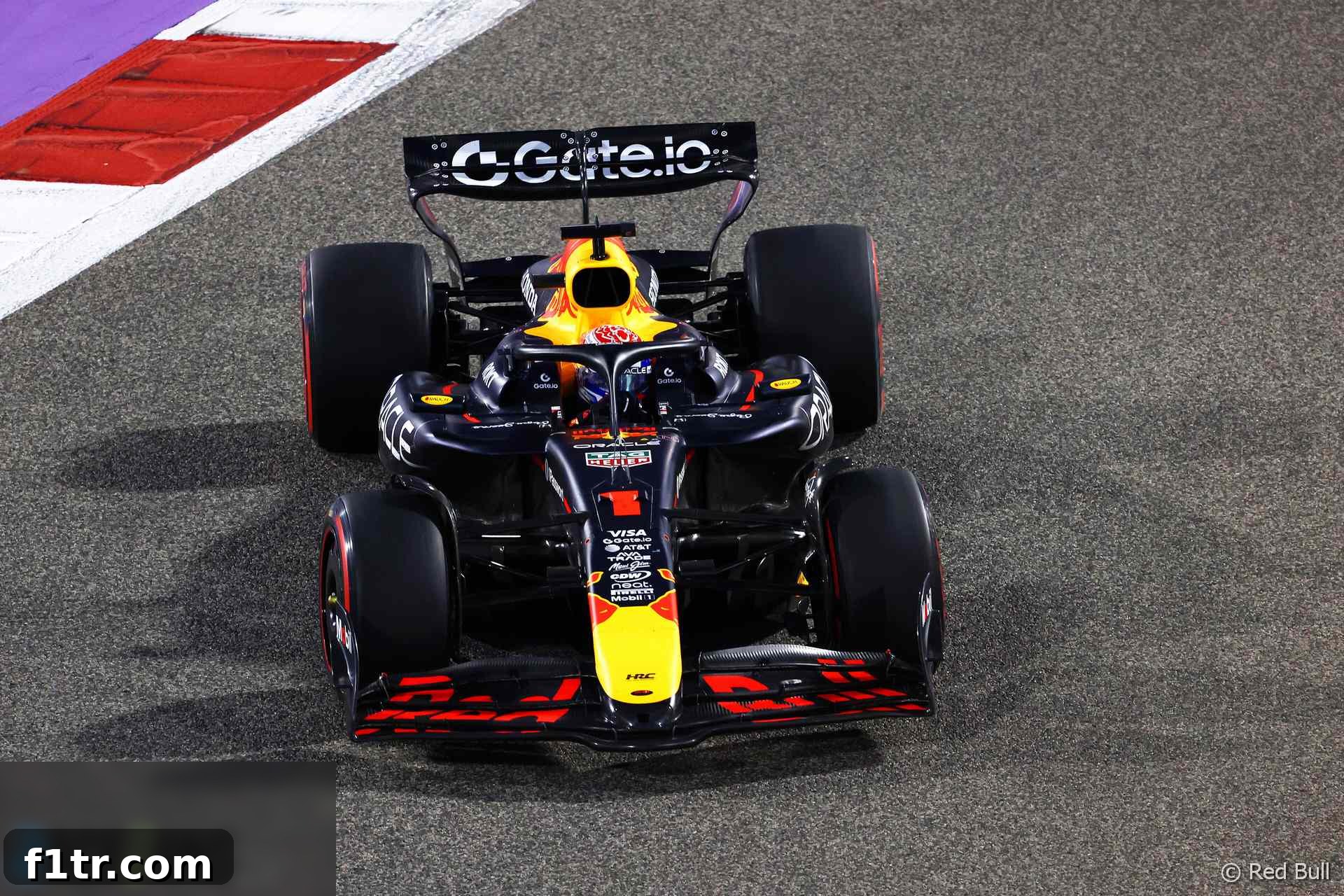
Red Bull Racing, a team synonymous with aggressive development and consistent performance, continues its impressive streak by bringing upgrades to each of the last three consecutive Grand Prix weekends. This consistent flow of enhancements reflects a robust engineering pipeline and a clear strategy to continuously refine their RB21 challenger. For the high-speed Jeddah Corniche Circuit, where aerodynamic efficiency often trumps outright peak downforce due to the long flat-out sections, Red Bull’s modifications are meticulously tailored to meet these specific demands.
Their primary focus for Jeddah involves two key aerodynamic changes. Firstly, a **slimmer rear beam wing** has been introduced. The beam wing, an often-underestimated aerodynamic element positioned beneath the main rear wing, plays a crucial role in managing airflow over the diffuser. By reducing its chord and overall profile, Red Bull aims to significantly decrease drag. This reduction in aerodynamic resistance is paramount on a circuit characterized by its blend of long straights and sweeping, high-speed corners, allowing the car to achieve higher top speeds and maintain momentum more effectively. This modification speaks directly to maximizing straight-line velocity without overly compromising rear-end stability in the rapid changes of direction that define Jeddah.
Secondly, Red Bull has opted for **larger engine cover vents**. While seemingly a minor aesthetic change, this modification addresses a critical performance and reliability factor: cooling. Jeddah is anticipated to be one of the hottest races of the year, and efficient heat management is vital for power unit reliability and sustained performance throughout the race distance. Increased venting allows for better dissipation of heat generated by the intricate hybrid power unit, preventing overheating issues that could lead to power derating or, in severe cases, mechanical failures. This careful balance between aerodynamic efficiency and thermal management is a testament to the intricate engineering challenges faced by F1 teams, especially when adapting to specific environmental conditions that push components to their limits.
These targeted updates indicate Red Bull’s ongoing efforts to fine-tune the RB21, which, despite its impressive pace, has perhaps displayed certain problematic characteristics the team is diligently working to address. The combination of reduced drag and enhanced cooling is designed to unlock the car’s full potential on Jeddah’s unique layout, ensuring optimal performance throughout the demanding race weekend.
Ferrari’s Strategic Rear Wing Optimisation for Drag Reduction
Scuderia Ferrari arrives in Jeddah with a clear aerodynamic objective: to optimize their rear wing configuration specifically for the circuit’s high-speed demands. Understanding that efficient straight-line speed is a significant advantage here, the Italian team has focused its development efforts on reducing drag while maintaining sufficient stability for the quick corners.
Central to their upgrade package is a **shorter-chord top rear wing flap**. In aerodynamic terms, the ‘chord’ refers to the length of the wing element from its leading edge to its trailing edge. A shorter chord typically translates to less surface area presented to the oncoming air, thereby reducing both downforce and drag. By introducing this shorter-chord flap, Ferrari gains an additional setup option, allowing them to precisely calibrate the car’s drag levels. This flexibility is invaluable in finding the sweet spot between outright top speed on the straights and the necessary grip for Jeddah’s numerous fast and medium-speed corners, ensuring the car remains competitive across all sectors of the track.
Furthermore, Ferrari has strategically re-introduced the **top wing and lower beam wings that were successfully utilized at low-downforce tracks last season**. This strategic move provides the team with an even lower-drag option compared to their current new design, offering maximum straight-line performance. The ability to revert to proven, ultra-low-drag components from previous years underscores the importance of having a diverse toolkit of aerodynamic elements. It allows the engineers to meticulously fine-tune the car’s aerodynamic profile, ensuring they can extract every ounce of performance relevant to Jeddah’s unique characteristics. This focused approach on the rear wing assembly is a direct response to the circuit’s layout, aiming to maximize velocity on the long, flat-out sections while still providing the drivers with the confidence to attack the high-speed bends.
McLaren’s Holistic Approach: General Car Improvements for Overall Performance
Unlike some of their rivals who have introduced circuit-specific adjustments, McLaren, currently among the championship leaders, has opted for a more general approach to car improvement. Their focus is on enhancing the overall performance envelope of the MCL39, suggesting a push for more fundamental gains that can translate across a wider range of circuits rather than just optimizing for Jeddah, thereby bolstering their championship aspirations.
The primary upgrade from McLaren is a **new version of the MCL39’s diffuser**. The diffuser is one of the most critical aerodynamic components on a modern Formula 1 car, responsible for accelerating airflow beneath the car and creating a low-pressure area that generates a significant portion of the car’s total downforce. A revised diffuser design can lead to substantial improvements in aerodynamic efficiency, increasing overall downforce without necessarily incurring a proportional increase in drag. This upgrade is designed to enhance the car’s stability and grip through all phases of a corner, from entry to exit, providing a more planted and responsive feel for the drivers. It represents a significant investment in core aerodynamic performance, hinting at a broader philosophy of improving the car’s ground effect capabilities.
Additionally, McLaren has introduced **revisions to their rear brake duct winglets**. While primarily serving the crucial function of cooling the brake assemblies – a vital aspect given the intense braking zones and high temperatures – these winglets are also sophisticated aerodynamic devices. They are strategically shaped to manage airflow around the rear wheels, influencing the wake turbulence and, consequently, the efficiency of the car’s rear aerodynamics. By revising these winglets, McLaren aims to aid overall aerodynamic efficiency, potentially by reducing drag, improving local airflow to the diffuser, or better managing the ‘dirty air’ generated by the rear tyres. This dual-purpose improvement highlights the intricate interconnectedness of F1 car design, where even seemingly minor components play a crucial role in overall performance and contribute to the car’s holistic aerodynamic package.
Sauber’s Ambitious Overhaul: A Comprehensive Package for Downforce and Drag Reduction
Sauber arrives in Jeddah with arguably the most extensive package of new parts among all teams, indicating a significant push to elevate the performance of their C45. Their upgrades go beyond superficial aerodynamic tweaks, delving into more fundamental areas of car design, particularly the critical underfloor components, suggesting a more aggressive development curve.
Crucially, Sauber has implemented **revisions to the floor**. In the current ground effect era of Formula 1, the floor generates the vast majority of a car’s downforce. Any changes to its design, from the intricate tunnels beneath to the edge winglets, can unlock substantial performance gains, directly impacting cornering speeds and overall grip. Sauber’s expectation is that these revisions will deliver significantly more downforce, allowing the car to carry more speed through fast corners and improving overall stability. Developing a new floor is a complex and resource-intensive undertaking, often indicative of a team addressing core aerodynamic principles and aiming for a major step forward in performance, rather than incremental gains.
In conjunction with the floor updates, the team has also brought **front and rear wing changes on the C45, specifically aimed at reducing drag**. While increasing downforce is key to cornering performance, maintaining a competitive top speed on circuits like Jeddah is equally vital. These wing modifications are designed to complement the enhanced downforce from the floor, ensuring the car remains aerodynamically balanced while achieving better straight-line performance. This comprehensive approach suggests Sauber is targeting a holistic improvement, addressing both cornering capability and straight-line efficiency in one significant upgrade push. Such an extensive package often requires significant simulation and wind tunnel validation, representing a substantial investment in performance and a statement of intent for their season.
Midfield Maneuvers: Aston Martin and Haas Fine-Tune for Jeddah
The intensity of development isn’t limited to the front-runners; midfield teams are equally engaged in the constant battle for every tenth of a second, as these small margins can significantly impact championship points and standings. Aston Martin and Haas have also brought targeted upgrades to Jeddah, primarily focusing on drag reduction to optimize their cars for the circuit’s high-speed nature.
Both teams have introduced **lower-drag rear wing flaps**. Similar to Ferrari’s approach, these modifications aim to reduce aerodynamic resistance, allowing their cars to achieve higher top speeds on Jeddah’s long straights. For midfield teams, gaining a few extra kilometers per hour can make a significant difference in overtaking opportunities and defending positions, which are crucial for scoring valuable championship points and battling their immediate competitors.
Haas, in particular, has also implemented an **accompanying tweak to the front wing**. This is a classic example of how interconnected aerodynamic design is in Formula 1. When changes are made to the rear of the car, especially those affecting downforce and drag, it often necessitates a corresponding adjustment at the front to maintain the car’s aerodynamic balance. Without such a compensatory change, the car could become either too oversteery (rear too loose) or too understeery (front lacking grip), leading to instability and making it difficult for the driver to extract maximum performance. This meticulous attention to balance ensures that the car remains predictable and responsive, instilling confidence in the driver to push to the absolute limit and extract maximum potential from the updated package.
The Static Contingent: Mercedes, Williams, and Alpine Await Their Moment
While many teams are actively introducing new components and pursuing iterative performance gains, a notable segment of the paddock, including Mercedes, Williams, and Alpine, have opted to run their current specifications without any significant upgrades for the Jeddah Grand Prix. This approach, particularly from a powerhouse like Mercedes, warrants closer examination and generates much speculation among fans and pundits.
For Mercedes, the absence of new parts for their W16 since the Australian Grand Prix suggests a potential shift in their development strategy. It could indicate that the team is either: 1) still thoroughly analyzing data from the opening races to define a more effective, larger-scale upgrade package for later in the season, believing that a more integrated solution will yield greater returns; 2) focusing significant resources on understanding the fundamental characteristics and limitations of their current car before committing to a specific development direction; or 3) perhaps even redirecting some development focus towards their next-generation car, prioritizing long-term gains over immediate, smaller updates. Whatever the reason, standing still while rivals forge ahead poses a significant challenge in the fiercely competitive F1 landscape. The Silver Arrows will be hoping their current package is strong enough to contend, or that their future, more substantial upgrades, will deliver a decisive performance leap when they eventually arrive.
Similarly, Williams and Alpine have arrived in Jeddah with no visible modifications. For these teams, factors such as resource constraints, a desire to fully understand and optimize their current car’s setup, or a plan to introduce more substantial upgrade packages at later, more suitable events could be at play. In Formula 1, development is not just about bringing new parts, but also about the timing, efficacy, and integration of those parts. Sometimes, it’s more beneficial to ensure a package works as intended before throwing more variables into the mix, especially if resources are finite. However, the risk remains that their rivals will pull ahead with each passing weekend of development, making the competitive landscape even tougher.
The Unending Cycle of Innovation and Its Impact on the F1 Season
The flurry of upgrades observed at the Jeddah Grand Prix serves as a powerful reminder of the Formula 1 ethos: constant innovation and the relentless pursuit of peak performance. Each team’s chosen strategy – from Red Bull’s consistent, targeted refinements to Sauber’s comprehensive overhaul and Mercedes’ patient approach – reflects their unique circumstances, resources, and engineering philosophies. These varying strategies illustrate the multifaceted challenge of F1 car development, where every decision has profound implications for performance.
These modifications, no matter how subtle, are designed to shift the delicate balance of power, influencing lap times, race strategies, and ultimately, championship standings. The Jeddah circuit, with its high-speed character and demand for aerodynamic efficiency, acts as a crucial testing ground for these new components, allowing teams to gather vital real-world data. As the season progresses, the cumulative effect of these upgrades will undoubtedly shape the competitive landscape, making every race weekend a fascinating chapter in the ongoing story of Formula 1 development. The ultimate goal remains the same for every team: to find that elusive extra fraction of a second that can separate victory from defeat, pushing the boundaries of engineering and human endeavor in the process, and ensuring the spectacle of Formula 1 remains at its thrilling best.