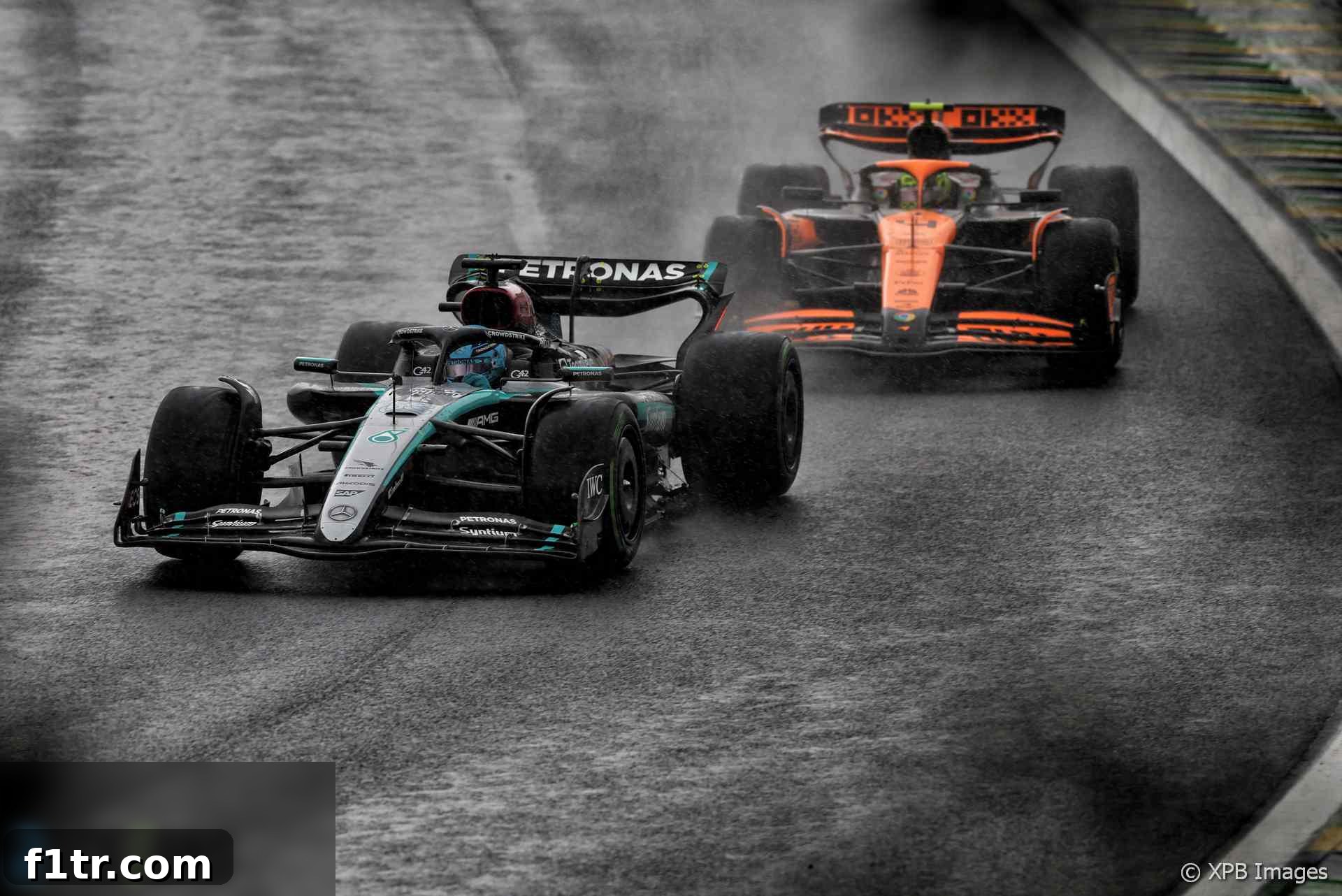
The 2024 Brazilian Grand Prix unfolded into a strategic masterpiece and a high-stakes gamble, largely dictated by the capricious Interlagos weather. As heavy rain descended midway through the race, teams and drivers faced a monumental decision: to pit for fresh intermediate tires, or to brave the deteriorating conditions on their existing rubber. This pivotal choice ultimately reshaped the front of the field, highlighting the razor-thin margins and the critical importance of seamless communication between driver and race engineer in the unpredictable world of Formula 1. The outcome was a dramatic test of nerve, foresight, and adaptability, with some drivers seizing unexpected opportunities while others saw their carefully laid plans unravel.
The sudden and intense downpour caught many by surprise, transforming the Interlagos circuit into a treacherous expanse of standing water. Race control initially deployed a Virtual Safety Car (VSC) in response to incidents, followed by a full Safety Car, but even these interventions struggled to contain the chaos. Several drivers, notably George Russell, had already voiced grave concerns about the track conditions, warning of impending crashes due to aquaplaning. The subsequent red flag, triggered by a significant incident, ultimately froze the race order, cementing the positions of those who had gambled by staying out on track. This article delves into the crucial radio exchanges of four front-running drivers – Russell, Lando Norris, Esteban Ocon, and Max Verstappen – revealing the pressure, the insights, and the frustrations that shaped their Brazilian Grand Prix.
George Russell: The Prophet of Peril
From the moment the rain intensified, George Russell was vocal about the perilous track conditions. His Mercedes race engineer, Dudley, initially communicated a gap of 0.8 seconds to the car ahead and warned of heavier rain. Russell’s immediate response underscored the severity: “Yeah, it’s already raining heavily now. If it keeps going like this, not too sure how long the inter will go for. Struggling on this tyre now, mate.” This early feedback set the tone for a race where driver experience on the ground proved vital, often contrasting with the team’s radar forecasts.
As conditions worsened, Russell’s calls grew more urgent. After Dudley confirmed a double yellow at Turn 1 due to Nico Hulkenberg’s crash, Russell interrupted his engineer’s rain intensity update with a stark warning: “Starting to aquaplane. Struggle to keep this thing on the road, mate, it’s really bad.” This direct report from the cockpit painted a grim picture, emphasizing the loss of grip and control. The VSC was then deployed, but Russell had already passed the pit lane entrance, forcing Mercedes to consider their options for the next lap.
Russell, acutely aware of the danger, believed the situation warranted an immediate race suspension. “I think this is almost red flag conditions now, mate. So much rain,” he asserted, a sentiment echoed by his engineer, Dudley, who confirmed the rain was intensifying. Russell’s description of “absolutely chucking it down now, aquaplaning on the straights” further solidified his plea for an intervention. As Mercedes prepared to box him for intermediate tyres under the VSC, Russell’s apprehension grew. He foresaw major incidents and even predicted a crash at Turn 13, where Franco Colapinto later spun out. “I think it’s going to go red, mate. This should go red. We can’t keep the car on the road like this. There is going to be big crashes. Big puddle through 13. There will be a crash there. I think stay out. It should go red. Struggling to keep it on the road under VSC conditions, mate.”
Despite his conviction, Mercedes proceeded with the pit stop. As Russell approached his pit box, he made a last-minute, desperate suggestion: “This is X-wets now, guys. This is X-wets. X-wets.” He was arguing for full wet weather tires, sensing the intermediates wouldn’t suffice. However, the team stuck to their original plan, believing the peak intensity wouldn’t last. The VSC period then unexpectedly ended just as Russell rejoined the track, robbing him of much of the strategic advantage of pitting under caution. He found himself behind Lando Norris. The subsequent deployment of the Safety Car, something Russell had explicitly predicted, only deepened his frustration: “Guys, I told you, we need to stay out. This will go Safety Car or red flag.” His final, exasperated radio call vividly captured his predicament: “Fuck, I don’t know why… I’m floating on these straights. Literally every corner the tyres are not on the ground. I’m like a boat.” Russell’s experience underscored the fine line between proactive strategy and being caught out by rapidly changing race control decisions.
Lando Norris: Hopes Dashed by Unpredictability
Lando Norris, running closely behind Russell, also grappled with the evolving conditions and strategic dilemmas. Before the VSC, Norris considered an aggressive “undercut” pit stop under green flag conditions to gain on Russell. However, the earlier experience of Charles Leclerc, who pitted into heavy traffic, served as a cautionary tale. McLaren’s engineer, Joseph, advised against it: “For what reason? Don’t do as a box to overtake, too much traffic.” Norris conceded, recognizing the increasing rain: “No, it’s just starting to rain along. If you don’t want me to box I’ll stay out.” The team believed his current intermediates would hold up for a while longer.
When the VSC was deployed following Hulkenberg’s incident, Norris, like Russell, had already passed the pit lane entry. Joseph informed him, “Virtual Safety Car deployed. Virtual Safety Car deployed.” Norris quickly relayed the track conditions: “It’s getting very, very wet. I’m struggling to see a little bit.” McLaren decided to pit him on the next lap, planning for new intermediates and a front wing adjustment. Norris, however, was already contemplating full wet tyres: “Yeah, what are you thinking about, the wet [weather tyre]? Or too much? I mean, it’s more than ever at the minute. I think it’s too wet, mate, it needs to stop.”
The strategic gamble proved ill-fated. As Norris was on his pit entry, the VSC period was abruptly cancelled. McLaren remained committed to intermediate tires, with Joseph stating, “Okay we don’t think the rain is going to last long enough to put a wet on. So we’re going to box this lap. Everyone’s fitting inters.” Norris’s concerns about safety persisted: “It’s just aquaplaning, though. It’s too dangerous.” Despite the difficulties, Norris rejoined the track and managed to overtake Russell, positioning himself fourth behind Ocon, Verstappen, and Gasly. He quickly closed the gap to the leaders, hoping to capitalize on their older tires. However, his aspirations were shattered by the subsequent deployment of the Safety Car and then the red flag, triggered by Colapinto’s crash.
The red flag allowed the front-running trio, who had stayed out, to switch to fresh tyres without any time loss, effectively neutralizing Norris’s hard-won track position and the advantage he had hoped to gain. His resigned radio exchange with Joseph highlighted the injustice of the situation: “I guess everyone can just change tyres for free now? They can. Ah. I’m going to get out.” Norris’s race was a testament to how quickly fortune can turn in unpredictable conditions, with strategic calls often at the mercy of race control’s timing.
Esteban Ocon: The Resolute Gambler
Esteban Ocon’s race was a masterclass in conviction and reading the conditions. Running fourth behind Yuki Tsunoda when the rain intensified, Ocon remained remarkably calm and resolute. His engineer, Peckett, asked about his current intermediates: “Do you think this tyre would be okay in heavier rain, question?” Ocon’s emphatic “Yes” set the stage for his unwavering strategy. He confidently informed his team of his pace: “I’ve got a lot more pace than that, for info.”
When the VSC was deployed for Hulkenberg’s incident, Ocon quickly moved past Tsunoda. Despite the worsening conditions and his own assessment of “a lot of water now,” his stance on tyres remained firm. Peckett pressed him: “Do you feel you need a new set of intermediates question?” Ocon’s response was an unequivocal “No!” This decisive communication instilled confidence in his team, who confirmed, “That’s fine. That’s fine. Just making sure we’re all clear. So Esteban we’re staying out, unless you disagree.” Ocon reiterated, “Yes staying out. Again. Too much water for the tyres.”
Crucially, the VSC ended before Ocon reached the pit lane, allowing him to stay out and inherit the race lead. He remained convinced that a red flag was inevitable and therefore saw no benefit in pitting. “They should red flag that,” he declared. Even when Peckett asked if he needed full wet tyres, Ocon was steadfast: “Yes but they will red flag…” His conviction in a looming red flag informed his entire strategy. He continued to grapple with the conditions, describing having to use “half-throttle down the straight” because “We can’t keep it on-track, guys.”
During the subsequent Safety Car period, Ocon continued to lobby the FIA through his team, emphasizing the dangerous amount of water on track: “Yeah that’s unbelievable the amount of water, guys, like crazy.” He acknowledged the potential for rain to decrease but consistently highlighted the sheer volume of standing water. His persistence paid off when the red flag was finally thrown after Colapinto’s crash. Ocon, along with Verstappen and Gasly, who also stayed out, benefited immensely, effectively getting a “free” pit stop for fresh tires and maintaining their hard-earned track positions. Ocon’s ability to trust his instincts and communicate them clearly proved to be a critical factor in his exceptional performance.
Max Verstappen: Calculated Caution and Forceful Opinion
Max Verstappen, ever the pragmatist, was another driver who navigated the perilous conditions by largely sticking to his existing tyres. Having moved up to fifth after Leclerc’s pit stop, his race engineer, Gianpiero Lambiase, initially tried to keep communication succinct, providing updates on rain intensity and traffic. Verstappen quickly reported, “Getting very heavy here,” and queried, “How long is this going to last?” He relied on Lambiase for crucial radar information, as the conditions from the cockpit were extreme: “A lot of water coming now, mate.” Lambiase’s instruction highlighted their strategy: “Okay, let me know when you think it’s extremes. That’s all I need to know, mate.”
The VSC was deployed after Verstappen had already passed the pit lane entrance. Lambiase initially misinformed him, stating, “So, Max, we have Safety Car deployed, Safety Car deployed.” Verstappen, focused on the rain’s duration, asked: “Does it keep raining or not? Now it’s still extreme.” Lambiase indicated the rain would last “only for another four minutes.” This was a crucial piece of information for Verstappen, who declared, “Okay. Er… fuck. And after that, it’s dry or no rain? If it’s only four minutes, I’ll stay out. You need to advise with the radar, I don’t know that.” His decision to stay out was a calculated risk, dependent on the accuracy of the rain forecast.
By the time Verstappen reached the pit lane entrance, the VSC had been withdrawn, confirming his decision to stay out. He was now P2 behind Ocon. Lambiase urged extreme caution, reminding him of his championship rivals: “Stay out. Recharge on. Just be very careful, please, Max. Very careful. So Max, Russell and Norris have pitted for inters. They are behind you. You are effective P2 on track. Just keep it on track. Keep it on track.”
Verstappen soon began lobbying for a red flag, convinced the conditions were un-raceable. “Mate this is a red. It needs to be red, this,” he stated emphatically. Even after the Safety Car was deployed, his frustration grew: “Yeah it’s ridiculous, this.” He painted a vivid picture of the track: “The track is filling up with water, like massive rivers. This is un-driveable.” Lambiase, agreeing with his driver, drew a powerful comparison: “Well we didn’t qualify yesterday in conditions better than this. So I’m not sure what’s going on, Max.” Like Ocon, Verstappen’s strong, consistent feedback to race control, relayed through his team, underscored the severe safety concerns. When the red flag finally came, his leading position was secured, allowing for a tyre change without consequence – a testament to his strong read of the race and his team’s trust in his judgment.
The 2024 Brazilian Grand Prix served as a potent reminder of Formula 1’s inherent unpredictability and the vital role of instantaneous, accurate communication. While some drivers, like Russell and Norris, made what appeared to be sound strategic decisions based on available information, they were ultimately undone by the capricious timing of race control and meteorological shifts. Conversely, Ocon and Verstappen, by trusting their instincts and vehemently communicating the extreme conditions from the cockpit, positioned themselves perfectly to capitalize on the red flag. This race was not just a battle for position, but a high-pressure strategic chess match played out in torrents of rain, where a single radio call could be the difference between victory and despair.