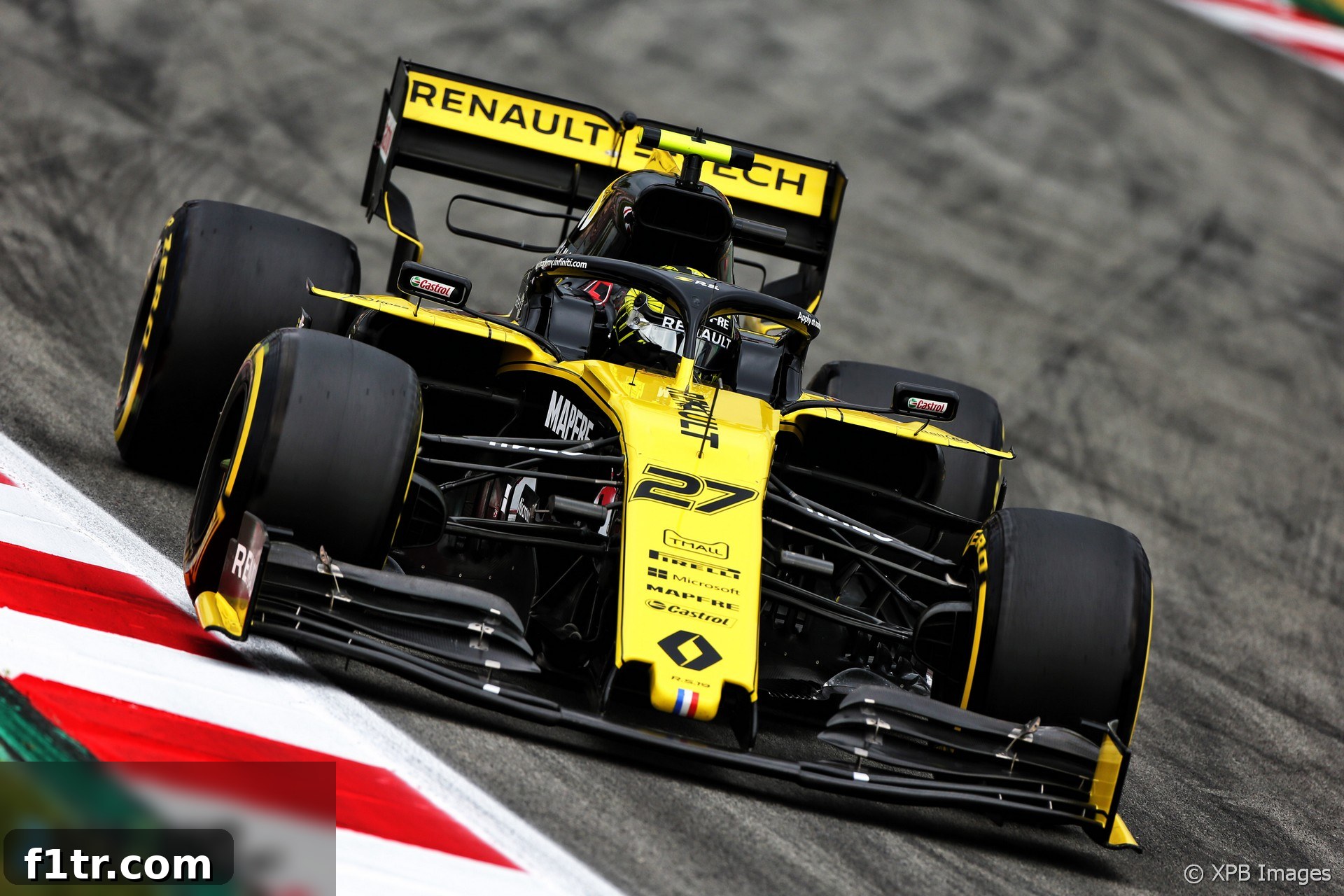
Nico Hulkenberg’s Costly Qualifying Crash at the 2019 Spanish Grand Prix
The exhilarating world of Formula 1 is often a delicate balance between pushing the absolute limits and maintaining control. For Nico Hulkenberg, this balance dramatically tipped during the crucial first stage of qualifying for the 2019 Spanish Grand Prix. The incident, which saw his Renault R.S.19 skid into a barrier, was an immediate blow to his weekend aspirations and, by his own admission, “definitely not one of my finest moments.” This article delves into the specifics of the crash, its repercussions, and the broader context of Hulkenberg’s challenging qualifying session.
The Incident Unfolds: Q1 Drama at Circuit de Barcelona-Catalunya
The 2019 Spanish Grand Prix, held at the iconic Circuit de Barcelona-Catalunya, marked a significant point in the early European leg of the F1 season. Known for its demanding technical sections and high-speed corners, the track serves as a crucial testbed for car development and driver skill. As drivers headed out for Q1, the pressure to secure a clean lap and progress to the next stage was palpable. Unfortunately for Hulkenberg, his qualifying efforts were cut short almost as soon as they began.
Early in the session, as the Renault driver was pushing hard to find the limits, a misjudgment occurred at Turn 4. This particular corner, a sweeping right-hander, demands precision and confidence. Hulkenberg experienced what he described as a “little lock-up,” a common but often critical error when drivers are pushing too aggressively on cold tyres or early in a run. “Probably was a bit too much too soon,” he candidly explained, acknowledging his role in the unfortunate turn of events.
Once the car lost traction off the racing line at Turn 4, the situation quickly deteriorated. The run-off area at this part of the circuit offers minimal grip, making recovery exceedingly difficult. “No one to blame but myself,” Hulkenberg stated, taking full responsibility. The gravel trap, designed to slow errant cars, ultimately served its purpose but propelled the R.S.19 towards the unforgiving barriers. The impact, though not catastrophic, was enough to inflict considerable damage, particularly to the front of the car.
Hulkenberg’s Candid Admission and the Immediate Aftermath
Returning to the pits, the severity of the situation became clear. While the front wing was an obvious casualty, the hidden consequences of such an impact often extend far deeper. Hulkenberg, a seasoned veteran known for his straightforward demeanor, made no excuses. “And then obviously it’s the one corner where you really can’t recover off-line, there’s no grip. And then the gravel, and the barrier just comes to you. So unfortunately I went off and damaged the front wing and some stuff on the car and then after that it was difficult to recover from there.”
His honesty highlighted the inherent risks of qualifying, where drivers must extract every ounce of performance from their machinery right from the first flying lap. The incident served as a stark reminder that even the most experienced drivers can fall victim to the fine margins that define Formula 1 racing. The team immediately sprang into action, assessing the damage and working against the clock to repair the car, a common sight in the fast-paced environment of F1 qualifying.
Beyond the Front Wing: Hidden Damage and Performance Impact
While the visual evidence of a broken front wing is striking, Hulkenberg revealed that the damage extended beyond this easily replaceable component. As the car was driven back to the garage, the extent of the impact became more apparent. “It was more the damage we had to the bargeboards and stuff,” he elaborated. “We changed the front wing, but the whole car was kind of stone-blasted, there was quite a lot of bits and bobs missing.”
This insight underscores the intricate aerodynamic complexity of modern Formula 1 cars. Bargeboards, located on the side of the car, are critical aerodynamic elements that manage airflow around the car’s sides, influencing everything from front wing performance to the efficiency of the diffuser. Damage to these components, even seemingly minor, can drastically alter the car’s aerodynamic balance, stability, and overall downforce. A “stone-blasted” car implies not just visible damage, but a multitude of small impacts and scrapes that can degrade aerodynamic surfaces, leading to a measurable loss in performance.
The Aerodynamic Ripple Effect: How Minor Damage Becomes Major
In Formula 1, where hundredths of a second separate success from failure, any degradation in aerodynamic integrity is catastrophic. A compromised front wing and damaged bargeboards would have led to a significant reduction in downforce and an imbalance in the car’s handling characteristics. This makes an already challenging qualifying session even more arduous, forcing the driver to contend with a car that is no longer performing optimally or predictably.
The mechanics worked feverishly to replace the front wing and patch up other areas, but fully restoring the car’s peak aerodynamic efficiency in such a short timeframe is often impossible. The subtle changes in airflow, the loss of downforce, and the inherent instability would have made it incredibly difficult for Hulkenberg to extract the required pace, adding a layer of frustration to an already disappointing start to qualifying.
A Glimpse of Resilience: Nearly Beating Ricciardo Despite Adversity
Despite the extensive damage and the rushed repairs, Hulkenberg demonstrated remarkable resilience and skill. Against the odds, he came within a mere two-hundredths of a second of beating his highly-rated teammate, Daniel Ricciardo, for the final spot in Q2. This incredibly narrow margin speaks volumes about Hulkenberg’s ability to adapt and push a compromised car, even under immense pressure.
While ultimately failing to progress, his performance in a damaged car highlighted his raw talent and determination. It also served as a bittersweet reminder of what might have been, had the initial lock-up not occurred. The comparison with Ricciardo, who was driving a fully functioning car, only amplified the impressive nature of Hulkenberg’s effort, even if the result was not what he or the Renault team had hoped for.
The Broader Context: Renault’s 2019 Season and Hulkenberg’s Standing
The 2019 season was a pivotal one for the Renault F1 Team. Having made significant investments and ambitions to climb the constructor’s standings, the team had brought in Daniel Ricciardo to partner Hulkenberg, forming a formidable driver lineup. However, the season proved to be challenging, with the R.S.19 struggling for consistent performance against rivals like McLaren and Racing Point.
Qualifying incidents like Hulkenberg’s in Spain put additional pressure on the team, particularly when trying to maximize grid positions for race points. Hulkenberg, often dubbed “The Hulk” for his strength and consistency, was a respected figure within the paddock. This incident, while a personal error, reflected the intense competitive environment and the fine line between triumph and tribulation in Formula 1.
The Circuit de Barcelona-Catalunya: A Demanding Proving Ground
The Circuit de Barcelona-Catalunya is a legendary track that has hosted the Spanish Grand Prix for decades. Its blend of high-speed corners, technical chicanes, and a long main straight makes it a comprehensive test for both car and driver. Teams frequently use this circuit for pre-season testing due to its varied characteristics, which provide valuable data on aerodynamic efficiency, tyre degradation, and chassis balance.
Turn 4, where Hulkenberg crashed, is part of a fast sequence of corners that demand precise steering inputs and throttle control. Drivers must carry significant speed through this section to optimize their lap times. Pushing too hard, too early, or with slightly less tyre temperature can easily lead to a lock-up, as Hulkenberg experienced. The lack of grip offline further compounds any error, quickly turning a minor slide into a significant incident.
The Aftermath: Race Implications and Lessons Learned
Starting further down the grid significantly hampered Hulkenberg’s chances for points in the Spanish Grand Prix. F1 cars are notoriously difficult to overtake, especially on tracks like Barcelona, making grid position paramount. A challenging qualifying often translates into a difficult race, forcing drivers to employ aggressive strategies or rely on unexpected events like safety cars to make progress.
For Hulkenberg, this incident served as a potent reminder of the razor-thin margins in F1. While a mistake, it was one from which he would undoubtedly learn. The ability to compartmentalize such disappointments and refocus for the race is a hallmark of top-tier athletes, and Hulkenberg’s effort to nearly match Ricciardo despite the damage showcased his professional resilience. Ultimately, incidents like these are part of the relentless pursuit of speed that defines Formula 1, constantly pushing drivers to the very edge of human and mechanical capability.
Conclusion: A Moment of Truth for the Hulk
Nico Hulkenberg’s qualifying crash at the 2019 Spanish Grand Prix was a moment of stark reality. His honest assessment of the “little mistake” and the subsequent damage highlighted the brutal demands of Formula 1. While a setback, it also underscored his fighting spirit and ability to extract performance from a compromised car, nearly matching his teammate despite significant adversity. This incident remains a memorable chapter in a season filled with challenges for both Hulkenberg and the Renault team, showcasing the unpredictable nature and unforgiving competitive landscape of Grand Prix racing.
Explore More F1 Content
Follow the latest updates and discussions from the world of Formula 1:
- Join RaceFans on Facebook
- Follow RaceFans on Twitter
- Get daily email updates from RaceFans
Related Articles: The 2019 F1 Season
Dive deeper into key moments and stories from the 2019 Formula 1 season:
- Crying in the Melbourne car park at 2019 grand prix was my career low – Ocon
- McLaren Racing reports reduced £71 million loss in 2019
- Kvyat: Hockenheim podium last year was “my biggest achievement” so far
- How the FIA’s new encrypted fuel flow meter targets Ferrari’s suspected ‘aliasing’ trick
- “He smashed my office door”: 23 must-see moments from ‘Drive to Survive’ season two
Browse all 2019 F1 season articles