Red Bull Ring’s Unforgiving Limits: Drivers Embrace the Price of Error
The high-stakes world of Formula 1 consistently pushes drivers and their machines to the absolute limit. At the challenging Red Bull Ring, a circuit known for its undulating topography and rapid corners, these limits were fiercely tested during recent practice sessions. Despite incurring significant car damage, both Nico Hulkenberg and Valtteri Bottas voiced their support for the circuit’s aggressive run-off arrangements. Their shared sentiment underscores a broader philosophical debate in motorsport: should drivers be penalized for their mistakes, even when those penalties come at a considerable financial and competitive cost?
The “Hülk” Pays the Price: Acknowledging Driver Error
Nico Hulkenberg, a seasoned F1 campaigner, found himself an early casualty of the Red Bull Ring’s demanding characteristics. His Renault suffered a broken front wing during the first practice session, an incident that briefly brought proceedings to a halt. The damage was a direct result of running wide at speed, a common challenge at circuits designed to punish inaccuracy. Yet, rather than criticizing the circuit, Hulkenberg took full responsibility for his lapse in judgment.
“It was a mistake from my side, just running a bit too fast into that corner and running wide,” explained the German driver. His candid admission highlights a professional ethos prevalent among top-tier racers. Hulkenberg acknowledged the distinct nature of the “sausage kerbs” – prominent, raised sections designed to deter drivers from exceeding track limits. He fully understood the risks associated with these elements, particularly at high speeds where the impact forces are multiplied. “I know at high speed these sausage kerbs do a lot of damage. It is the track limit and we know we need to stay within those limits and obey them.”
Hulkenberg’s stance is clear: accountability is paramount. “I made a mistake, I paid the price, this is how it should be,” he declared. While conceding that the resulting car damage was “a bit extreme,” he recognized the immediate impossibility of altering the track for the current race weekend. His perspective champions the integrity of racing, where exceeding the boundaries should inherently carry a consequence. This aligns with a traditional view of motorsport, where challenging circuits separate the truly exceptional drivers from the rest, rewarding precision and penalizing errors.
Advert | Become a Supporter & go ad-free
Bottas’s Heavier Impact: Reinforcing the Consequence Culture
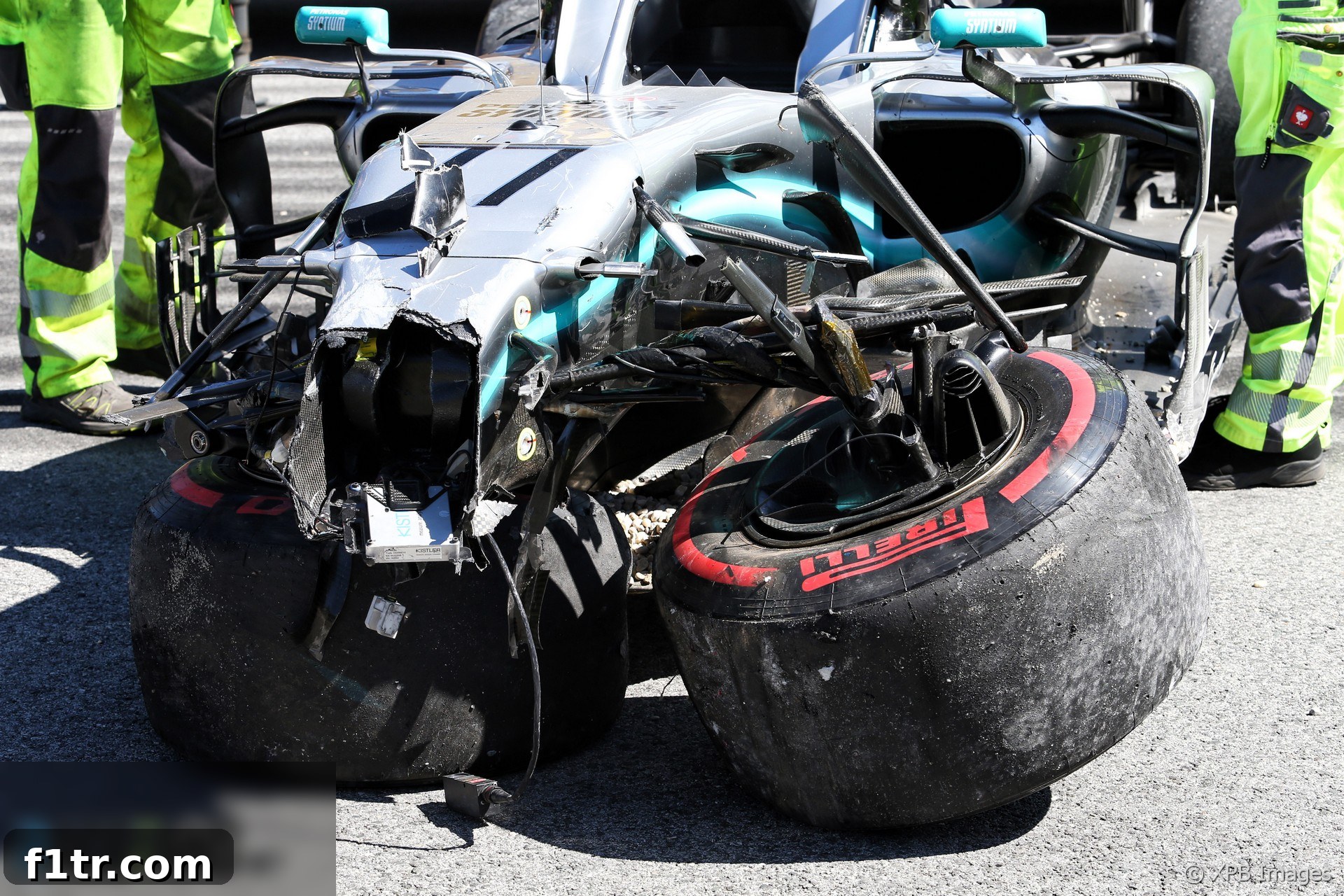
Valtteri Bottas, driving for Mercedes, experienced an even more dramatic incident. His car famously snapped sideways at Turn 6, veered across a gravel trap, and made nose-first contact with a barrier. The spectacle of a front-running F1 car suffering such a significant mishap underscores the fine margins at play. Yet, despite the severity of his crash and the subsequent repair work required, Bottas echoed Hulkenberg’s sentiment regarding the Red Bull Ring’s challenging nature and the necessity of penalizing mistakes.
“I have to say even though I crashed I would prefer to be penalised for your mistakes,” Bottas affirmed. This statement from a driver who had just experienced the tangible repercussions of an error speaks volumes. It suggests that the integrity and excitement of the sport are enhanced when drivers face genuine consequences for pushing too hard or making an error in judgment. “It makes it a bit more exciting. I think that’s how it should be.”
Bottas further elaborated on the unforgiving nature of the Austrian circuit: “Definitely the tiniest error will cost a lot here with the aggressive kerbs and the run-offs and everything. So I think that’s the way to go.” His words highlight how such circuit designs elevate the challenge, forcing drivers to maintain unwavering focus and precision throughout every lap. This ethos is fundamental to F1, where the pinnacle of motorsport demands absolute perfection and rewards those who can consistently deliver it under immense pressure.
The Broader Debate: Track Limits and the Spirit of Racing
The incidents involving Hulkenberg and Bottas, coupled with the drivers’ surprisingly consistent viewpoints, reignite a long-standing debate within Formula 1: how should track limits be enforced, and what role should circuit design play in policing them? Historically, circuits featured natural boundaries like grass and gravel traps, which inherently deterred drivers from straying off the racing line. Exceeding these limits often meant a loss of time, significant car damage, or even retirement.
In recent decades, however, there has been a noticeable shift towards extensive asphalt run-off areas, primarily driven by safety considerations. While these vast expanses of tarmac provide a safer environment for drivers losing control, they inadvertently create an incentive for some to exploit these areas to gain a competitive edge by running wider than the designated track limits. This has led to contentious debates, inconsistent penalties, and a perceived dilution of driver skill tests at certain venues.
The Role of Aggressive Kerbs and Run-off Materials
The Red Bull Ring’s design, particularly its strategically placed aggressive kerbs and limited asphalt run-offs, represents a conscious effort to swing the pendulum back towards a more “old-school” approach to track limits. These high, often multi-stage kerbs, colloquially known as ‘sausage kerbs’ or ‘speed bumps’, are engineered to be uncompromising. They are too high to be driven over comfortably and too destructive to be ignored, making it physically and mechanically costly for drivers to cross them. The presence of gravel traps, as Bottas experienced, further amplifies this deterrent, bringing racing back to a point where every millimetre counts.
Team principals, as mentioned in the original report, have occasionally voiced concerns over the substantial repair costs incurred due to these aggressive track limit solutions. Damage figures, sometimes reaching hundreds of thousands of pounds for a single incident, understandably create financial headaches, especially for smaller teams operating on tighter budgets. However, from a sporting integrity perspective, many argue that these costs are a necessary evil to maintain the challenge and authenticity of top-tier racing.
Balancing Safety, Spectacle, and Cost
The core challenge for F1 and circuit designers lies in finding the optimal balance between driver safety, race excitement, and the economic viability for teams. While asphalt run-offs offer maximum safety by providing ample space for recovery, they can reduce the spectacle by making errors less punishing. Conversely, unforgiving kerbs and gravel traps heighten the drama and test driver skill more rigorously, but at the potential expense of increased car damage and, in some rare cases, slightly elevated risk (though modern F1 cars are incredibly safe). The Red Bull Ring, by design, leans heavily towards the latter, prioritising the sporting consequence of errors.
From a fan’s perspective, the consensus often leans towards circuits that penalize mistakes. The sight of a driver seamlessly cutting a corner and rejoining without consequence can be anticlimactic. The inherent drama of seeing a driver push too hard, either spinning into a gravel trap or damaging their car on a kerb, adds to the thrill and unpredictability of a Grand Prix weekend. It underscores the incredible skill required to drive an F1 car at the absolute limit without stepping over the line.
Advert | Become a RaceFans supporter andgo ad-free
The Driver’s Mentality: Embracing the Challenge
The unified stance of Hulkenberg and Bottas is particularly insightful because it comes directly from those who face the immediate risks and consequences. Their comments suggest that, for true competitors, a demanding circuit that punishes errors is not merely accepted but is actively preferred. It elevates the challenge, separates the best, and ultimately makes the achievement of a clean, fast lap all the more satisfying.
This mentality reinforces the idea that Formula 1 should remain a stringent test of skill, precision, and courage. While advancements in safety technology are always welcome and crucial, the essence of racing often lies in the unforgiving nature of the track itself. The Red Bull Ring, with its distinctive approach to track limits, seems to resonate well with this purist view of motorsport, ensuring that every tenth of a second and every inch of tarmac is hard-fought and earned.
Conclusion: A Welcome Return to Sporting Consequence
The incidents at the Red Bull Ring involving Nico Hulkenberg and Valtteri Bottas, far from being controversial, have instead highlighted a refreshing driver consensus regarding track limits. Both drivers, despite incurring significant damage to their highly sophisticated racing machines, affirmed the importance of penalizing errors. Their willingness to accept the consequences of running wide – whether through a broken front wing or a more substantial crash – underscores a fundamental principle of motorsport: pushing beyond the absolute limit should come at a cost. The Red Bull Ring’s design, with its aggressive kerbs and strategically placed run-offs, effectively enforces this principle, ensuring that driver precision and discipline remain paramount. As Formula 1 continues to evolve, the balance between safety, spectacle, and sporting integrity will always be under scrutiny, but the shared perspective of these two drivers offers a compelling argument for maintaining circuits that truly test the limits of both car and competitor.
2019 F1 season
- Crying in the Melbourne car park at 2019 grand prix was my career low – Ocon
- McLaren Racing reports reduced £71 million loss in 2019
- Kvyat: Hockenheim podium last year was “my biggest achievement” so far
- How the FIA’s new encrypted fuel flow meter targets Ferrari’s suspected ‘aliasing’ trick
- “He smashed my office door”: 23 must-see moments from ‘Drive to Survive’ season two
Browse all 2019 F1 season articles