Max Verstappen’s US Grand Prix Victory: Horner’s Last-Lap Fears and Red Bull’s Strategic Masterclass
The 2021 Formula 1 season was a truly captivating spectacle, defined by an intense and often dramatic championship battle between Max Verstappen and Lewis Hamilton. As the season moved into its critical final stages, every race became a potential turning point. The United States Grand Prix at the Circuit of the Americas (COTA) in Austin, Texas, was no exception. Known for its challenging layout, high-speed sections, and dramatic elevation changes, COTA has historically been a stronghold for Mercedes in the hybrid era. Therefore, a victory for Red Bull Racing at this circuit would not only be a significant morale boost but also a crucial stride in their quest for the constructors’ and drivers’ titles.
The race weekend set the stage for another thrilling encounter. Max Verstappen, driving the formidable Red Bull RB16B, had showcased exceptional pace throughout qualifying, securing pole position. However, his closest rival, Lewis Hamilton, was right on his tail, promising a fierce contest from the moment the lights went out. The atmosphere at COTA was electric, with a massive, enthusiastic crowd eager to witness one of the most exciting championship fights in recent memory unfold.
The Battle Commences: Pole Position and the First Lap Drama
From the outset, the United States Grand Prix delivered on its promise of high-octane drama. As the five red lights extinguished, Max Verstappen, starting from pole position, was immediately challenged by Lewis Hamilton. The Mercedes driver launched an incredibly strong start, using the slipstream and superior traction to surge past Verstappen into Turn 1, seizing the lead. This early move put Hamilton in control, immediately shifting the strategic dynamics of the race. While Verstappen settled into second, it was clear that Red Bull would need to be aggressive to reclaim the top spot.
The initial laps saw both drivers pushing their cars to the absolute limit. Verstappen, despite losing the lead, quickly reported that he felt the Red Bull was quicker on the medium compound tyres, a sentiment echoed by Hamilton who acknowledged his Mercedes was “sliding around a lot.” This feedback was crucial for Red Bull team principal Christian Horner and his strategists. Being stuck behind Hamilton not only cost Verstappen valuable time but also risked overheating his tyres, potentially compromising their performance for later stints. The strategic chess match had begun, and Red Bull knew they had to make a decisive move to turn the tide.
Red Bull’s Bold Gamble: The Aggressive Undercut Strategy
Recognizing the urgency and the potential for their tyres to degrade if they remained in Hamilton’s dirty air, Red Bull made a bold and aggressive decision: an early pit stop for Max Verstappen. This maneuver, commonly known as an ‘undercut,’ involves pitting a driver before their rival, allowing them to benefit from fresh tyres and push hard in “free air” – clear track ahead without traffic. The aim is to build a sufficient advantage to emerge ahead of the rival once they eventually make their own pit stop. It was a risky call, as it committed Verstappen to a longer second stint on the hard compound tyres, raising concerns about tyre longevity towards the end of the race.
Horner’s Rationale: Breaking Free and Banking Pace
Christian Horner elaborated on the rationale behind this crucial strategic call: “I think we were quicker on the medium tyre and Max could see that Lewis was sliding around a lot and we were in danger of overheating our own tyres by just being stuck.” The decision to pit early was a calculated gamble, designed to exploit their perceived pace advantage on fresher tyres and put pressure back on Mercedes. “So we decided to take the gamble and bank some free air. It was then going to put us under pressure, for sure, at the end of the race,” Horner admitted. This foresight highlighted the intricate balance between immediate gain and long-term risk that defines top-tier Formula 1 strategy. By pitting Verstappen first, Red Bull aimed to dictate the race pace and force Mercedes to react, rather than allowing Hamilton to control the race from the front.
Perez’s Crucial Role: A Two-Pronged Attack
The strategic brilliance of Red Bull wasn’t limited to Verstappen’s early stop alone. They masterfully utilized Sergio Perez, Verstappen’s teammate, as a key strategic pawn to exert maximum pressure on Mercedes. By bringing Perez in for his first pit stop just a few laps after Verstappen, Red Bull created a strategic dilemma for their rivals. Horner explained, “Because Mercedes had run long, we were able to push them to change early on in the first stint by getting Checo in as well.” This move effectively prevented Hamilton from extending his first stint significantly longer than Verstappen’s. If Mercedes had allowed Hamilton to run too many extra laps, he would have risked losing track position to a rapidly advancing Perez, who was now on fresh tyres. Forced to cover off the threat of the second Red Bull, Mercedes brought Hamilton in earlier than they might have preferred, minimizing his potential tire advantage. This strategic brilliance demonstrated Red Bull’s ability to execute a multi-faceted approach, transforming a single-car battle into a team effort that ultimately gave Verstappen a fighting chance.
However, this also meant that Mercedes, having reacted to Red Bull’s strategy, then had the flexibility to go longer in the middle stint with Hamilton, effectively gaining a significant tire age advantage – an eight-lap differential – for the closing stages of the race. This set the scene for a thrilling conclusion, where tire management and defensive driving would become paramount.
The Nail-Biting Climax: Backmarkers and the Final Lap Scramble
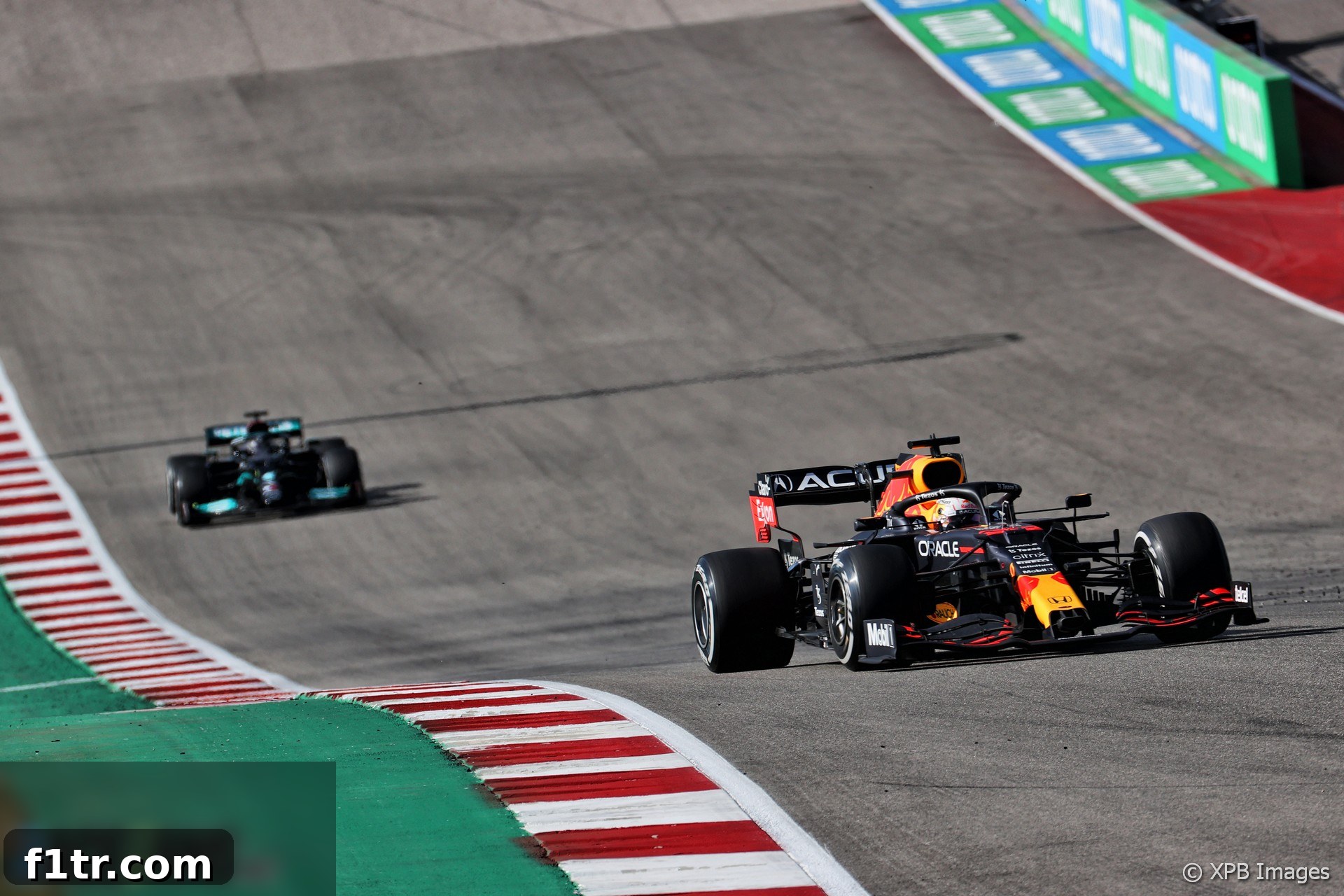
As the race entered its final laps, the tension became palpable. Lewis Hamilton, with his younger, fresher tyres, was rapidly closing the gap to Max Verstappen. The battle for victory was set to go down to the wire, with every tenth of a second counting. It was during this critical phase that the unpredictable element of backmarkers came into play, adding another layer of stress and complexity to an already high-stakes situation.
The Mick Schumacher Incident: A Moment of High Stress
Christian Horner vividly recalled the anguish on the pit wall when Verstappen encountered Mick Schumacher’s Haas in the closing stages. “It’s very difficult to factor into your strategy the backmarkers,” Horner lamented. “We lost a lot of time behind Yuki [Tsunoda] and then Mick Schumacher was quite costly on the last couple of laps.” Verstappen, while attempting to lap Schumacher, lost precious time – approximately three-tenths of a second – allowing Hamilton to draw ominously close, well within DRS (Drag Reduction System) range. This incident threatened to undo all of Red Bull’s strategic hard work and Verstappen’s stellar driving. Horner admitted, “I thought that was going to cost us the victory because he held Max through the whole sector.” The sight of Hamilton closing in so dramatically due to an unavoidable traffic situation was undoubtedly a moment of extreme anxiety for the entire Red Bull team.
Yet, amidst the chaos, fortune momentarily favored Verstappen. Despite losing time behind Schumacher, the timing of the encounter meant that Verstappen himself gained the benefit of DRS on the start/finish straight from the Haas car he was lapping. This crucial advantage gave him “a little bit of breathing room into turn one,” as Horner noted, preventing Hamilton from immediately launching a full-scale attack. Hamilton, although now within range of Verstappen, wasn’t quite close enough to Schumacher to benefit from DRS himself, inadvertently giving his rival a momentary reprieve. “But it certainly added to the stress on the pit wall,” Horner concluded, underscoring just how close the margin of victory truly was.
Managing the Tire Delta: Verstappen’s “Phenomenal Performance”
The final five laps were a testament to Max Verstappen’s exceptional race craft and mental fortitude. With Hamilton breathing down his neck, armed with tyres that were eight laps fresher, the pressure was immense. Verstappen had to manage his older tyres, maintaining enough pace to stay ahead while simultaneously defending against a relentless Hamilton. This required a delicate balance of pushing the car to its limit without overstressing the worn rubber.
Horner was full of praise for his driver’s composure under fire, calling Verstappen’s management of those “crucial, final five laps” a “phenomenal performance” and potentially one of Verstappen’s best ever. It was a masterclass in defensive driving, tire preservation, and strategic awareness, ensuring that despite Hamilton’s superior grip, Verstappen held on to the lead. The Dutchman’s ability to consistently hit his marks and keep Hamilton at bay, lap after agonizing lap, was the defining characteristic of his victory.
Breaking the Mercedes Hegemony at COTA
Verstappen’s hard-fought victory at the Circuit of the Americas was more than just another race win; it was a significant statement. Since 2013, Mercedes had established a remarkable dominance at COTA, clinching five victories in the hybrid era. This circuit had become a hunting ground for Hamilton and his team, making Red Bull’s triumph even sweeter. Christian Horner highlighted the significance of breaking this streak, stating, “It’s a big win for us at a circuit which obviously Lewis and Mercedes have been so strong at in the hybrid era.”
This victory not only underscored Red Bull’s strategic prowess and Verstappen’s undeniable talent but also demonstrated their progress in challenging Mercedes’ long-standing supremacy. Securing this win at a traditionally Mercedes-dominated track was a powerful psychological blow in the fierce championship battle, proving that Red Bull could beat their rivals on any circuit and under immense pressure. It fueled their championship aspirations and galvanized the team for the remaining races of the season.
Conclusion: A Defining Win in a Title-Deciding Season
The 2021 United States Grand Prix will forever be remembered as a classic, a race that encapsulated the intensity and strategic depth of the championship battle. Max Verstappen’s victory, born from an aggressive pit strategy and executed with phenomenal driving under immense pressure, marked a pivotal moment in the season. From the early strategic gamble to the nerve-wracking final laps complicated by backmarkers, the race showcased the brilliance of both driver and team.
Christian Horner’s fears on the pit wall, the “stress” induced by Hamilton’s relentless pursuit, and the ultimate relief of victory underscored the monumental effort required to secure this win. It was a defining moment not just for Max Verstappen, adding another jewel to his crown of exceptional performances, but also for Red Bull Racing, who proved their strategic acumen and unwavering determination against a formidable opponent. This triumph at COTA not only netted crucial points but also sent a clear message: Red Bull was fully committed to fighting for the championship until the very last lap of the season.
Related Articles: 2021 United States Grand Prix
- Mercedes encouraged despite ‘toughest race for a long time’ in Austin
- For the sake of the title fight, F1 must get a grip on its track limits problem
- Pit stop problems costing Ferrari “quite a lot of points” – Sainz
- Sold-out crowd of 380,000 at COTA shows F1 can add third US race – Brawn
- While the pressure’s off I can “push myself” more – Russell
Browse all 2021 United States Grand Prix articles