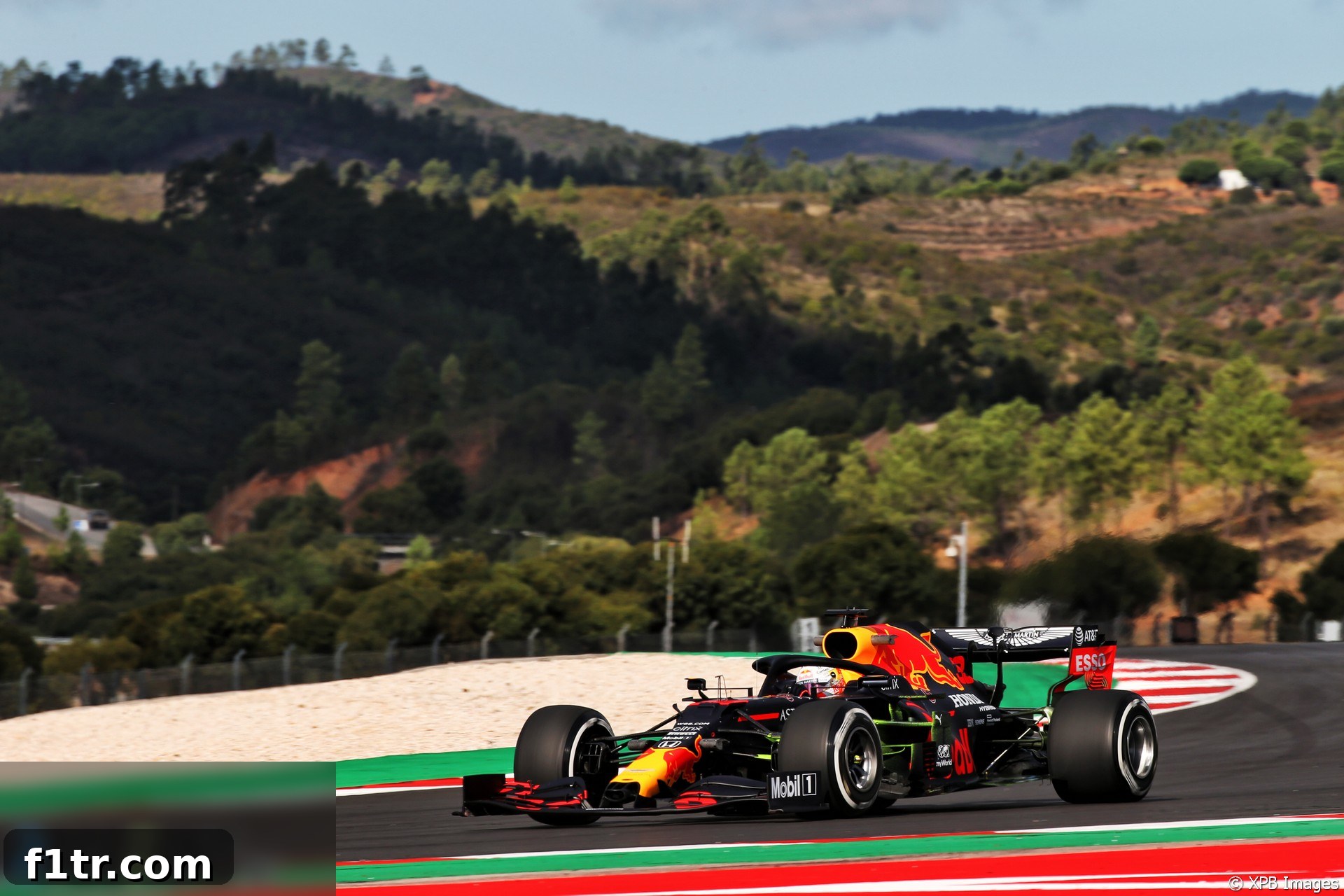
The high-stakes world of Formula 1 racing is often a crucible of raw emotion, where the thin line between intense passion and outright frustration can be crossed in an instant. This was vividly demonstrated during a recent Grand Prix practice session when Red Bull Racing’s star driver, Max Verstappen, found himself embroiled in a contentious on-track incident with Lance Stroll. The aftermath saw Verstappen unleash a torrent of expletives over team radio, a reaction his team principal, Christian Horner, later described as an “emotional” outburst from a highly competitive individual.
The incident unfolded during the crucial second practice session, a period where teams and drivers fine-tune their setups and push the limits of their machinery. As Verstappen and Lance Stroll navigated Turn 1 side-by-side, what appeared to be a misunderstanding quickly escalated into contact. Verstappen, renowned for his aggressive yet precise driving style, was under the mistaken impression that Stroll, driving for Racing Point at the time, was slowing down and would not embark on another fast lap. Conversely, Stroll was reportedly unaware that the rapidly approaching Red Bull driver had drawn alongside him, creating a recipe for an avoidable collision.
The contact, though minor in terms of car damage for Verstappen, was enough to ignite a furious reaction from the Dutchman. Over the team radio, broadcast globally, Verstappen launched into a string of profanities directed at Stroll. His language was not only colourful but included highly offensive and derogatory terms that quickly sparked debate across the F1 community. This type of verbal outburst, while perhaps understandable in the heat of the moment during intense competition, rarely goes unnoticed, especially in a sport with such a massive global audience and stringent codes of conduct.
When questioned about his driver’s fiery response, Christian Horner offered a nuanced perspective, characterizing it as a quintessential Max Verstappen moment. “I think emotion gets in there, he’s that kind of character,” Horner explained. This observation speaks volumes about Verstappen’s persona within Formula 1 – a driver who wears his heart on his sleeve, whose unyielding desire to win often translates into visible frustration when things don’t go his way. Horner’s defense sought to contextualize the outburst, framing it as a natural, albeit regrettable, consequence of the immense pressure and adrenaline that defines a Grand Prix weekend. It underscores the understanding within teams that these elite athletes operate at such a high intensity that emotional responses are, at times, inevitable.
Horner further elaborated on the communication breakdown that led to the collision, highlighting the differing expectations of the two drivers. “His expectation was very different to the outcome,” he stated, emphasizing how quickly misunderstandings can arise on track, even among the most experienced drivers. In the complex ballet of F1 practice, where drivers navigate traffic at blistering speeds, reading other drivers’ intentions and anticipating their moves is paramount. The Red Bull principal also candidly touched upon the dynamics between drivers, noting, “What you have to remember, these drivers, there’s stuff going with them through all of the session. Some drivers work together and some drivers don’t. And sometimes if Max is coming up behind Lance or Ocon it can get colourful.” This insight reveals the unspoken rules and personal rivalries that often simmer beneath the surface, occasionally boiling over into public view through verbal exchanges or on-track incidents.
The collision itself had immediate consequences. While Verstappen’s Red Bull sustained only minor “bargeboard damage,” which Horner confirmed was “relatively quickly repaired,” the impact was more significant for Stroll, whose session was prematurely ended. Losing valuable track time during practice can be a major setback, as it limits a team’s ability to gather data, test different setups, and prepare for qualifying and the race. This asymmetry in immediate impact likely further fueled Verstappen’s frustration, believing his session was unduly disrupted by what he perceived as Stroll’s error.
Adding another layer to the controversy was Verstappen’s unapologetic stance when asked if he was concerned about potential objections to his choice of words. His curt response, “Not my problem,” resonated widely, reinforcing his image as a fiercely independent and single-minded competitor. This dismissive reply, while perhaps seen by some as a reflection of arrogance, is also interpreted by others as a testament to his laser-like focus on performance and an unwillingness to be distracted by external criticism. It highlights a common trait among top athletes who prioritize their immediate goal – winning – above almost everything else, including public relations nuances in the heat of the moment.
The incident inevitably opened a broader discussion about driver conduct, sportsmanship, and the role of emotions in professional sports. While fans are often drawn to the raw passion and rivalries that define F1, there’s also an expectation of professionalism, especially given the sport’s global reach and the role drivers play as ambassadors. The use of highly derogatory language, irrespective of the provocation, always raises questions about appropriate behavior in the public eye. Stewards regularly investigate on-track incidents for racing offenses, but verbal misconduct, especially when it involves such terms, also falls under the scrutiny of governing bodies and potentially ethics committees, albeit often handled internally by teams or with a less formal admonishment.
Historically, Formula 1 has seen its fair share of heated exchanges and passionate outbursts. From legendary rivalries that led to dramatic collisions to intense verbal sparring, emotion has always been an integral part of the sport’s narrative. However, in an increasingly scrutinized and media-savvy era, the balance between authentic passion and maintaining a professional image is more delicate than ever. Incidents like the one involving Verstappen and Stroll serve as a potent reminder of this ongoing tension, showcasing the human element behind the technological marvels of F1 cars.
In conclusion, Max Verstappen’s “emotional” reaction to his collision with Lance Stroll was far more than just a fleeting moment of anger. It was a potent microcosm of Formula 1 itself: a sport defined by extraordinary talent, immense pressure, razor-thin margins, and the raw, often unfiltered, emotions of its competitors. Christian Horner’s explanation provides valuable insight into the mindset of a driver like Verstappen and the unique environment in which these athletes operate. While the incident resulted in minimal physical damage to the Red Bull car, it left a significant impression on the narrative of the season, sparking discussions about driver temperament, on-track etiquette, and the very human drama that makes Formula 1 so compelling. It underscored that even the most controlled and precise drivers can, in the crucible of competition, reveal a more passionate and, at times, volatile side.
2020 F1 season
- Grosjean to make F1 test return tomorrow for first time since Bahrain horror crash
- Pictures: Wrecked chassis from Grosjean’s Bahrain fireball crash to go on display
- Bottas vs Rosberg: Hamilton’s Mercedes team mates compared after 78 races each
- F1 revenues fell by $877 million in Covid-struck 2020 season
- Hamilton and Mercedes finally announce new deal for 2021 season
Browse all 2020 F1 season articles