Verstappen’s Austrian GP “Checkmate”: Horner on the Decisive Leclerc Overtake
The 2019 Formula 1 Austrian Grand Prix delivered a truly unforgettable spectacle, culminating in a thrilling, contact-laden battle between two of the sport’s brightest young stars: Max Verstappen of Red Bull Racing and Charles Leclerc of Ferrari. The pivotal moment arrived in the closing stages of the race when Verstappen executed a daring overtake on Leclerc for the lead, a move that immediately ignited controversy and sent shockwaves through the paddock. Following an intense post-race investigation by the stewards, Verstappen was ultimately confirmed as the race winner. Red Bull team principal Christian Horner, reflecting on the high-stakes maneuver, famously declared that Verstappen had put Leclerc in “checkmate” with his decisive, race-winning pass.
The Daring Move: How Verstappen “Won the Corner”
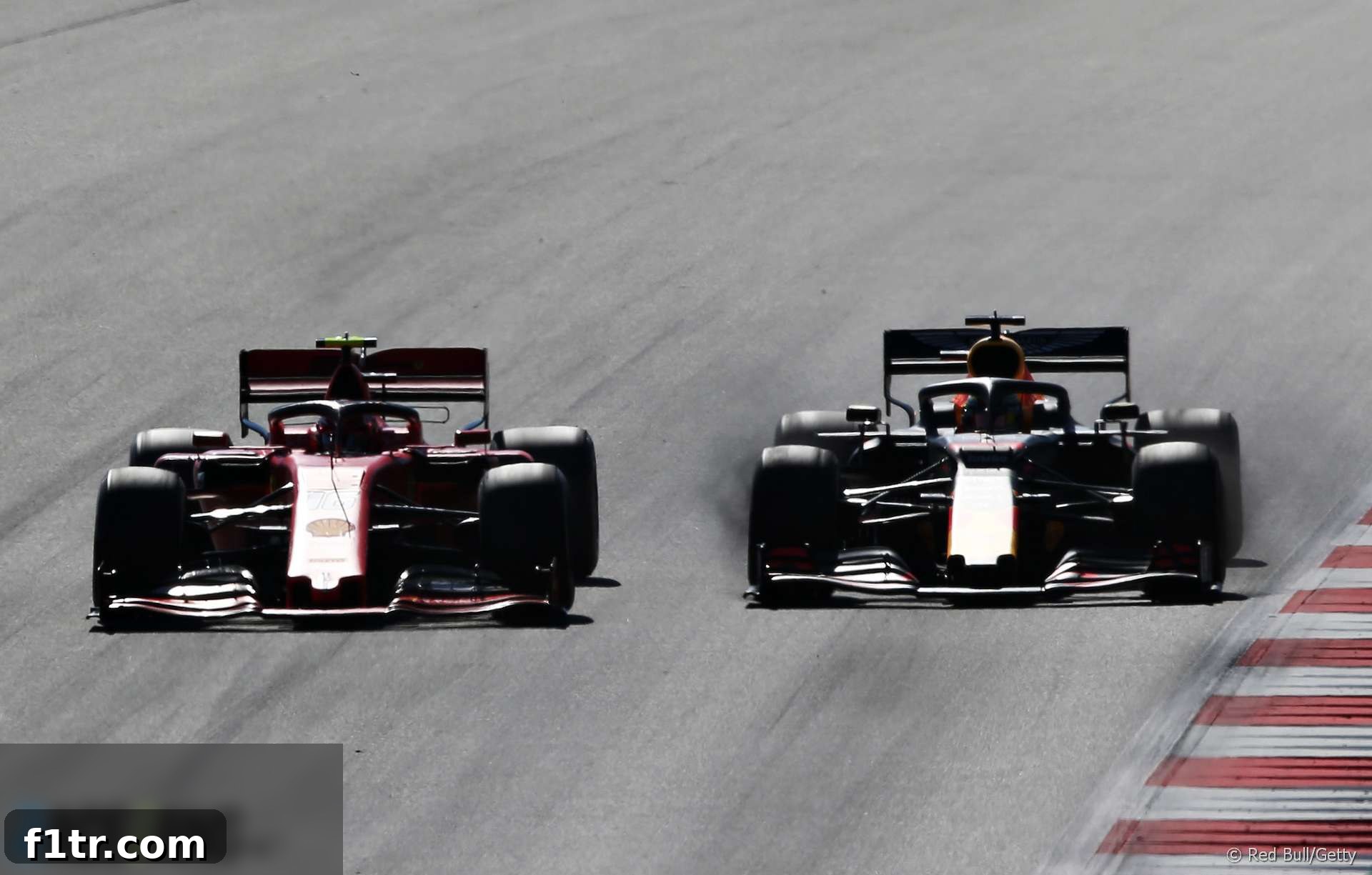
The incident occurred on Lap 69 of 71 at Turn 3, a critical corner where Verstappen, charging hard in his Red Bull, launched an audacious attack on race leader Charles Leclerc. The Dutchman, known for his aggressive and uncompromising driving style, positioned his car expertly, braking significantly later than Leclerc. This commitment allowed him to gain a crucial advantage, as Horner vividly explained the team’s perspective. “He came from further back, he out-braked him,” Horner stated, emphasizing the calculated risk Verstappen took. “If you look, he was ahead at the apex, and at that point, he’s won the corner. It’s the other guy to back out of it and try the undercut.”
Horner’s analysis highlights a fundamental principle in wheel-to-wheel racing: once a driver has established a commanding position at the apex of a corner, effectively securing the racing line, the onus shifts to the defending driver to yield or risk contact. “Otherwise, at that point, it’s slam-dunk, it’s checkmate, he’s got the corner,” Horner affirmed, underscoring the finality and strategic brilliance of Verstappen’s move. This tactical interpretation was crucial for Red Bull’s defense of their driver’s actions and ultimately aligned with the stewards’ subsequent ruling, which cleared Verstappen of any wrongdoing, confirming his Austrian Grand Prix victory.
The Stewards’ Verdict: Upholding Hard Racing
Verstappen has been confirmed as the race winner following a thorough stewards’ investigation into the incident. Despite the immediate elation of victory, an anxious wait followed for the Red Bull garage. The contact between the two cars, and Leclerc’s vocal frustration over the team radio, meant a stewards’ investigation was inevitable. For several hours, the outcome of the race hung in the balance, with the possibility of a time penalty for Verstappen potentially altering the results. However, Christian Horner revealed that the team harbored no doubts about the legality of Verstappen’s pass. “We were completely convinced that it was OK,” he shared, reflecting the unwavering confidence within the Red Bull camp during the tense post-race period.
The team’s conviction was rooted in their understanding of Verstappen’s execution and their interpretation of racing regulations. Horner further lauded the decision-makers, specifically mentioning Tom Kristensen, the legendary nine-time Le Mans winner and one of the race stewards for the Austrian Grand Prix. “I think Tom Kristensen and the stewards who were up there today have made exactly the right choice,” Horner praised. This endorsement was not merely celebratory but a significant statement about the desired direction of Formula 1 racing. “One day it’ll go against us, but I think it was fair racing, it was hard racing, it’s what Formula 1 should be.” This sentiment resonated with many fans and pundits who advocate for more aggressive, less penalized racing, believing it adds to the spectacle and purity of the sport, fostering thrilling on-track battles.
Strategic Pace Management: Denying Leclerc DRS
Beyond the controversial overtake itself, Verstappen’s actions immediately following the incident also showcased his astute racecraft and strategic thinking. There was speculation that Red Bull might have instructed him to push harder to build a five-second gap, a common strategy employed by teams to mitigate a potential penalty. However, Horner clarified that no such direct instruction was given. “He got his head down,” Horner explained, emphasizing Verstappen’s intrinsic drive to maintain his advantage through sheer pace and focus. The Ferrari, with its strong straight-line speed, posed a significant threat, especially if Leclerc could activate his Drag Reduction System (DRS) and close the gap on the straights.
Verstappen’s immediate focus was to deny Leclerc any opportunity to launch a counter-attack. “The Ferrari’s very quick in a straight line, and he didn’t want to be in a position where Charles could get the DRS on him,” Horner elaborated. This strategic awareness, coupled with his blistering pace in the final laps, not only solidified his lead but also demonstrated a comprehensive understanding of race dynamics. It underscored his ability to not only execute a high-risk overtake but also to manage the subsequent phase of the race with intelligence and precision, ensuring his hard-won lead remained unassailable until the chequered flag, securing a memorable victory in Austria.
A Defining Moment for Formula 1’s Racing Philosophy
The Austrian Grand Prix of 2019, and specifically the ruling on the Verstappen-Leclerc incident, became a significant talking point in the ongoing debate surrounding Formula 1’s approach to wheel-to-wheel combat. For years, fans and drivers alike had voiced concerns about what some perceived as an overly prescriptive and penalty-happy stewarding system, stifling genuine racing action. Christian Horner’s impassioned defense of “hard racing” echoed the desires of many who wished to see drivers given more latitude to battle fiercely on track, even if it occasionally led to minor contact.
The stewards’ decision to uphold Verstappen’s victory was widely interpreted as a positive step towards a “let them race” philosophy. It sent a clear message that aggressive, decisive overtakes, even those involving slight contact, would be tolerated and even encouraged, provided they were executed with a degree of control and did not result in an unfair advantage or dangerous driving. This ruling allowed for a more visceral and exciting form of motorsport, where drivers could truly push the limits of their machinery and their opponents, without the immediate fear of retrospective penalties dampening the spectacle. It added another layer of intrigue and excitement to the championship narrative, setting the stage for future thrilling encounters between these two generational talents and influencing how on-track battles would be judged moving forward in Formula 1.
In conclusion, Christian Horner’s characterization of Max Verstappen’s move on Charles Leclerc as “checkmate” perfectly encapsulated the brilliance and decisive nature of the overtake at the 2019 Austrian Grand Prix. It was a move that showcased Verstappen’s raw talent and uncompromising drive, defended robustly by his team principal, and ultimately vindicated by the race stewards. This incident remains a landmark moment, not just for Verstappen’s career but for Formula 1 as a whole, reaffirming the sport’s commitment to exhilarating, hard-fought racing battles that capture the imagination of fans worldwide. It set a precedent for future on-track duels, promising more edge-of-the-seat action for years to come.
Enjoy ad-free browsing and support independent F1 journalism by becoming a RaceFans Supporter.
More from the 2019 F1 Season
- Crying in the Melbourne car park at 2019 grand prix was my career low – Ocon
- McLaren Racing reports reduced £71 million loss in 2019
- Kvyat: Hockenheim podium last year was “my biggest achievement” so far
- How the FIA’s new encrypted fuel flow meter targets Ferrari’s suspected ‘aliasing’ trick
- “He smashed my office door”: 23 must-see moments from ‘Drive to Survive’ season two
Browse all 2019 F1 season articles