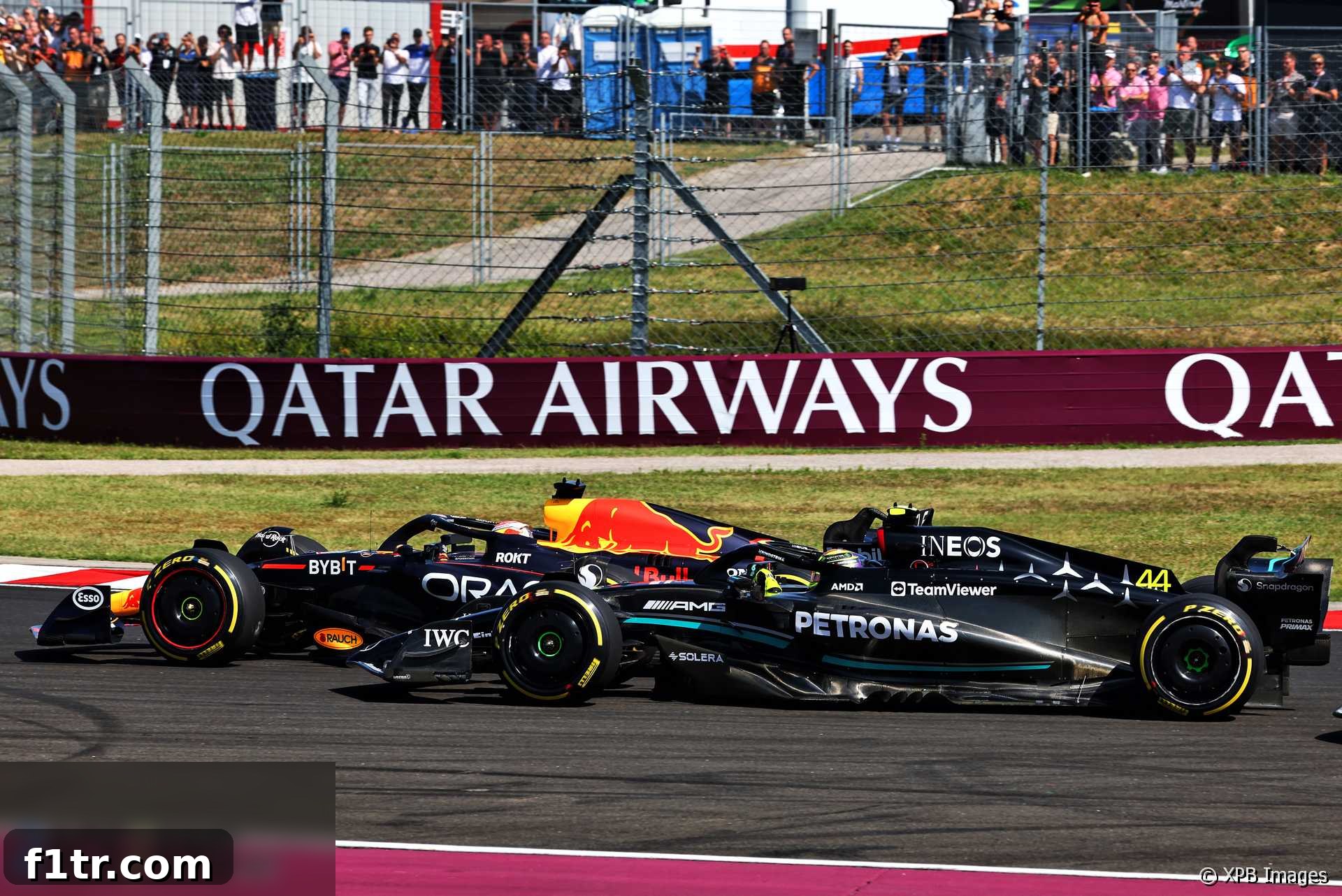
In a weekend that offered a glimmer of his championship-winning form, Lewis Hamilton declared himself “back to being my best” at the Hungarian Grand Prix. While securing a sensational pole position, his first since 2021, the seven-time world champion admitted that despite his personal resurgence, a second-place finish in Hungary was ultimately out of reach for his Mercedes team.
Hamilton’s declaration marked a significant moment for the British driver, who has openly spoken about his struggles with the W13 and early iterations of the W14 cars since the dramatic conclusion of the 2021 season. The past year and a half has been a challenging period for Mercedes-AMG Petronas F1 Team, grappling with the new ground effect regulations that saw them fall behind the dominant Red Bull Racing. For Hamilton to feel a renewed connection with his car, especially after recent upgrades, signaled a turning point in his personal performance and confidence.
The weekend at the Hungaroring began with immense promise. On Saturday, Hamilton delivered a masterclass in qualifying, snatching pole position from Max Verstappen by a mere three-thousandths of a second. It was a performance that not only ignited hopes for Mercedes but also reminded the paddock of Hamilton’s enduring speed and precision. He credited a more comfortable feeling in Mercedes’ revised car, which allowed him to drive with the confidence that had been elusive for so long. “I haven’t been at my best for over a year,” Hamilton reflected after qualifying. “So I think yesterday felt like I was back to being my best.” This statement underscored the personal journey Hamilton had undertaken to regain his competitive edge, aligning his driving style with the evolving characteristics of the Mercedes challenger.
Hungarian Grand Prix: A Race of Realities
However, the euphoria of pole position quickly dissipated on Sunday as the reality of race pace set in. The start of the Hungarian Grand Prix proved to be a critical moment that dictated Hamilton’s trajectory. As the lights went out, Hamilton lost his meticulously earned lead to Max Verstappen almost immediately. Compounding the challenge, both McLaren drivers, Lando Norris and Oscar Piastri, swiftly navigated past the Mercedes, relegating Hamilton to fourth place before the first corner was even complete.
Hamilton attributed his compromised start to wheelspin, a common yet frustrating issue that can cost crucial positions in the opening moments of a race. “Max got a better start than me. I just got a bit of wheelspin and a bit compromised after that,” he explained. This minor misstep had significant repercussions, pushing him into a battle he hadn’t anticipated and forcing him to play catch-up against cars that demonstrated superior race pace. While he managed to regain one position from Oscar Piastri later in the race, he was subsequently unable to fend off a charging Sergio Perez in the second Red Bull, ultimately missing out on a coveted podium finish.
Strategic Outlook vs. On-Track Performance
The Mercedes team’s pre-race strategy briefing had already painted a sobering picture, tempering expectations for the grand prix. Hamilton revealed that the team had anticipated a significant pace deficit to their rivals. “They already told me in strategy this morning I would be at least five tenths [per lap] slower than the Red Bull,” Hamilton stated, highlighting the stark gap between Red Bull’s raw speed and Mercedes’. This foreknowledge meant that the primary battle wasn’t with Verstappen for the win, but rather an optimistic hope to contend with the rapidly improving McLarens.
However, even this adjusted aspiration proved challenging to fulfill. The race ultimately showcased McLaren’s formidable progress, as their cars, particularly Lando Norris’s, demonstrated a pace that outmatched Mercedes. “We were hoping that we could fight the McLarens, but the second McLaren was too quick for us also,” Hamilton admitted, underscoring the surprising emergence of McLaren as a genuine threat, not just to Mercedes but to the front of the grid.
This stark reality check emphasized the ongoing development race in Formula 1. While Mercedes had brought significant upgrades to the W14, which undoubtedly contributed to Hamilton’s improved qualifying form and confidence, the Hungarian Grand Prix served as a clear indicator that there was still a considerable journey ahead to consistently challenge Red Bull and now, surprisingly, McLaren, on Sundays.
Unlocking the Car’s Potential: A Race of Stints
Hamilton’s analysis of his car’s performance throughout the race revealed a story of fluctuating balance and pace. He candidly spoke about the difficulties experienced in the earlier phases of the Grand Prix. “We were just too slow in the first two stints,” he lamented. “The balance was not good, the car was just slow.” This initial struggle with the car’s setup and its interaction with the tires meant Hamilton couldn’t extract the necessary performance to maintain position or launch an effective offensive. The lack of optimal balance directly impacted his ability to push the car to its limits, resulting in a pace that was simply not competitive enough against his nearest rivals.
However, as the race progressed and tire strategies unfolded, a shift occurred. Hamilton noted a significant improvement in the latter stages: “Then the balance picked up a lot at the end, and all of a sudden I was able to apply the pressure.” This late-race surge showcased the W14’s potential when the conditions and car balance aligned. Hamilton found a rhythm, allowing him to push hard and close the gap to Sergio Perez. Yet, despite his renewed pace and tenacious driving, the improvement came too late to alter the outcome. He finished a mere one-and-a-half seconds adrift of Perez, illustrating both the car’s capacity for speed and the frustration of not being able to harness it earlier.
This pattern of inconsistent performance within a race has been a recurring theme for Mercedes throughout the season. While flashes of brilliance, particularly in qualifying, suggest strong underlying potential, converting that into consistent race-day performance remains their primary challenge. The team continues to work tirelessly on understanding and optimizing the W14, aiming to deliver a car that is both quick over a single lap and robust over a full race distance.
The Evolving Competitive Landscape
The Hungarian Grand Prix provided a vivid snapshot of the current Formula 1 pecking order. Red Bull, with Max Verstappen at the helm, continues to operate in a league of their own, demonstrating unparalleled consistency and pace. Verstappen’s effortless victory from second on the grid underscored the formidable package he commands, reinforcing Red Bull’s seemingly unassailable position at the pinnacle of the sport.
More notably, the weekend heralded the dramatic resurgence of McLaren. After a challenging start to the season, significant upgrades transformed their car into a genuine contender. Their performance in Hungary, with both cars outperforming Mercedes on race pace, indicated a paradigm shift. McLaren’s sudden leap forward means Mercedes now faces a three-way fight at the front of the grid when they had primarily focused on closing the gap to Red Bull. This unexpected challenger adds another layer of complexity to Mercedes’ strategic planning and development priorities for the remainder of the season.
For Mercedes and Lewis Hamilton, the Hungarian Grand Prix was a race of mixed emotions. While the pole position was a powerful affirmation of Hamilton’s individual skill and Mercedes’ upgrade potential, the race itself served as a stark reminder of the work that still lies ahead. “I think it’s obvious that we’re not the quickest,” Hamilton concluded with his trademark candor. “We don’t have the quickest car and I’m really proud of myself and the job that we did yesterday to get pole position, to outperform the world champion and the other two cars that were quicker than us. Today, it’s reality. The reality is we’re not fast enough.”
Despite the challenges, Hamilton’s resilience and fighting spirit remain undiminished. His ability to extract the maximum from the car, even when it’s not the outright fastest, is a testament to his enduring talent. Mercedes will now turn their attention to further refining the W14, hoping to unlock greater race pace and consistency. The ultimate goal remains clear: to close the performance gap to Red Bull and reclaim their position as consistent front-runners, a task made even more intriguing by the rapid ascent of McLaren.
Bringing the F1 news from the source
RaceFans strives to bring its readers news directly from the key players in Formula 1. We are able to do this thanks in part to the generous backing of our RaceFans Supporters.
By contributing £1 per month or £12 per year (or the equivalent in other currencies) you can help cover the costs involved in producing original journalism: Travelling, writing, creating, hosting, contacting and developing.
We have been proudly supported by our readers for over 10 years. If you enjoy our independent coverage, please consider becoming a RaceFans Supporter today. As a bonus, all our Supporters can also browse the site ad-free. Sign up or find out more via the links below:
- Become a RaceFans Supporter
- RaceFans Supporter FAQ
Advert | Become a RaceFans supporter andgo ad-free
2023 Hungarian Grand Prix
- Was F1’s Alternative Tyre Allocation test successful? Drivers and teams have their say
- How far can McLaren climb with car rivals now say is the second-fastest in F1?
- Why Ricciardo says McLaren’s car “speaks Lando’s language” – but Norris disagrees
- Mercedes reveal cooling error behind loss of pace in Hungarian GP
- Perez answered critics in Hungary but needs to qualify better – Horner
Browse all 2023 Hungarian Grand Prix articles