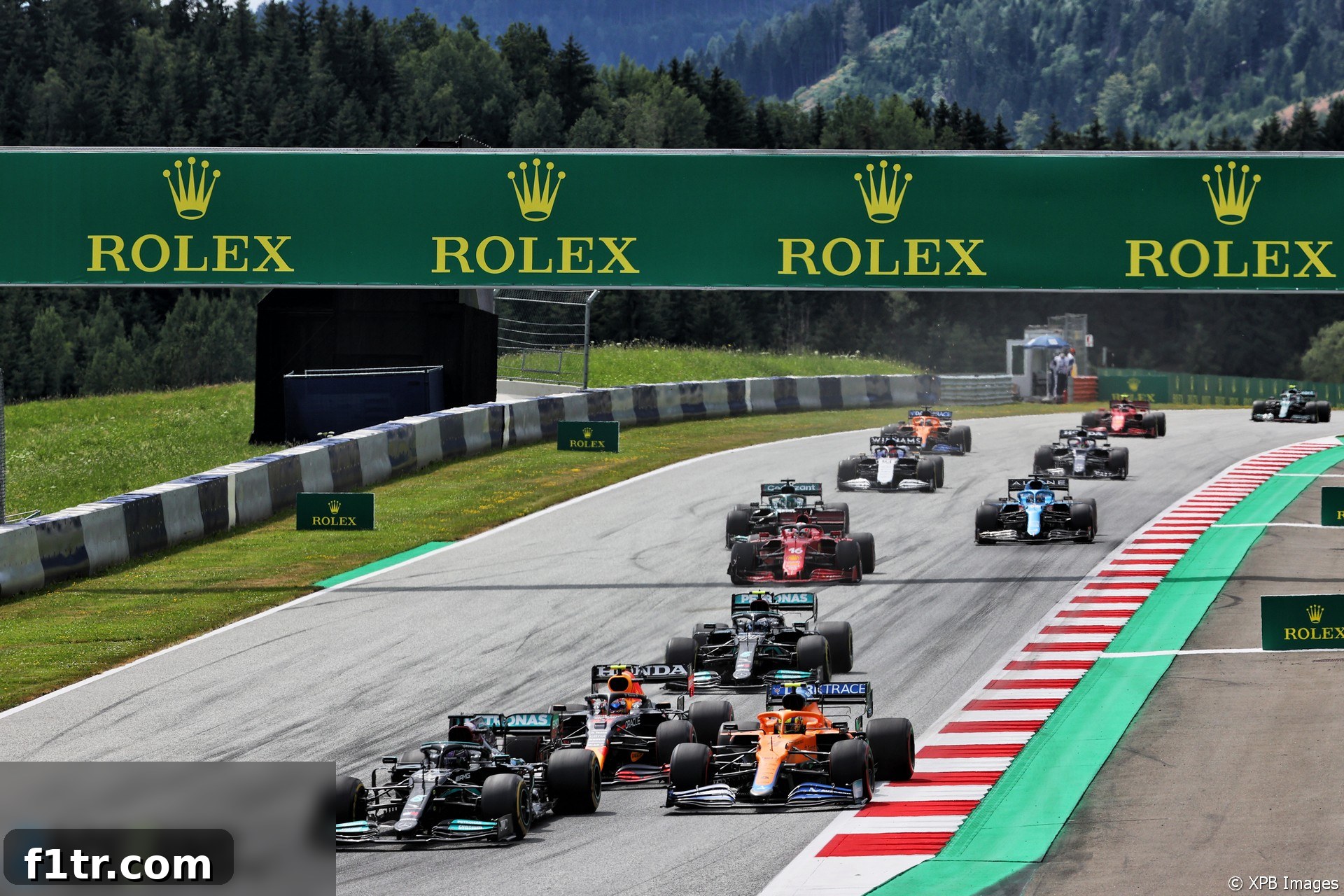
Formula 1 is set for its second consecutive weekend at the spectacular Red Bull Ring, but the Austrian Grand Prix is poised to deliver a narrative distinct from the Styrian Grand Prix. While Max Verstappen and Red Bull Racing enjoyed a dominant performance just days prior, a cocktail of factors – from softer Pirelli tyres and crucial technical updates to a potential shift in weather conditions – could entirely reshape the competitive landscape. This weekend offers a unique opportunity for teams to fine-tune their strategies and for drivers to seek redemption or consolidate their form on familiar asphalt. As the F1 circus prepares for another thrilling instalment in Spielberg, here are the key talking points that will define the Austrian Grand Prix.
Will Softer Tyres Spark a Strategic Battle?
The unprecedented situation of holding back-to-back races at the same venue, a consequence of the global pandemic, has become a recurring theme in recent Formula 1 seasons. While it offers logistical advantages, Pirelli often introduces varying tyre compounds to inject strategic diversity. For the Austrian Grand Prix, a softer range of tyres will be available, specifically the C5, C4, and C3 compounds, shifting from the harder selection used in the Styrian Grand Prix. This change typically promises faster single-lap pace but also presents a significant challenge for tyre management over a full race distance, especially on a circuit known for its high energy demands.
In 2020, similar compound changes were implemented at Silverstone between the British Grand Prix and the F1 70th Anniversary Grand Prix. While the softer tyres contributed to spectacular blowouts for Mercedes drivers in the initial race due to punishing temperatures, the subsequent event with softer rubber didn’t drastically alter the top-tier battle. However, the Red Bull Ring’s characteristics differ, and the tighter compound selection means greater degradation potential. Last weekend’s Styrian Grand Prix was a relatively processional affair at the front, with the top two positions remaining unchallenged. The introduction of the C5 compound, Pirelli’s softest, could force teams like Red Bull and Mercedes to reconsider their preferred one-stop strategies, potentially making a two-stop approach more viable.
This strategic dilemma could introduce an element of unpredictability, particularly if the faster C5 compound degrades rapidly. For Mercedes, who are keen to break Red Bull’s four-race winning streak, a more complex tyre strategy could be precisely what they need to create opportunities. Managing the C5’s delicate balance of speed and longevity will be paramount, and any miscalculation could see drivers battling traffic after pit stops, a scenario that rarely troubles the dominant front-runners. The team that best masters the nuances of these softer compounds – balancing outright pace with strategic foresight – will undoubtedly hold a significant advantage in the quest for victory.
Williams’ Quest for Points Continues
The Styrian Grand Prix offered a tantalizing glimpse of what could be for Williams, with George Russell putting in a truly stellar performance in qualifying and the early stages of the race. For the first third of the Grand Prix, Russell held a points-scoring position, a rare and highly anticipated feat for the struggling British team. His 24-lap opening stint in eighth place marked the longest period a Williams car had spent in the points since the 2020 Tuscan Grand Prix, where Russell also demonstrated impressive pace. However, the dream was cruelly snatched away by a power unit issue, forcing him into a lengthy pit stop and ultimately retirement.
Despite the heartbreaking outcome, the team’s improved competitiveness at the Red Bull Ring was undeniable. Williams showed their strongest performance at the circuit since 2016, with Russell qualifying a mere 1.30% off the pole time, matching his best qualifying result for the team in 11th. The raw pace demonstrated by the FW43B suggests that the car genuinely suits the circuit’s characteristics. Psychologically, Russell is a driver known for his resilience, and there’s little doubt he’ll be mentally prepared to bounce back and push for points once more.
However, the switch to softer tyre compounds for the Austrian Grand Prix could present a new hurdle. Williams has historically struggled with Pirelli’s softest C5 compound, which was also deployed at street circuits like Monaco and Baku, where their performance wasn’t as strong. If the Austrian Grand Prix evolves into a two-stop race, effective management of the C5 will be critical. Fernando Alonso, who found himself in close quarters with Russell last weekend, acknowledged Williams’ strong pace: “He was also really fast on Friday in the Williams,” Alonso noted. “So it seems that they are generally fast in this circuit. So I was expecting a strong race from them. Unfortunately, he had to retire. But next weekend I expect Williams again to be very close to us.” This endorsement from a two-time world champion underscores the potential, but Williams must now convert that potential into tangible championship points.
Pirelli’s New Rear Tyres and Friday Practice Puzzles
Following the dramatic tyre failures experienced by several drivers during the Azerbaijan Grand Prix, Pirelli has been proactive in addressing safety concerns. While immediate technical directives were issued to prevent a recurrence, for the Austrian Grand Prix, Pirelli is introducing a revised construction for the rear tyres. Each team will receive two sets of these prototype tyres to test during the first two practice sessions on Friday.
This decision, as Pirelli stated, has been taken in conjunction with recent technical directives and starting parameters, acknowledging the current limitations in real-time monitoring of running conditions. The implications for teams are significant. Firstly, it reduces their precious track time on the C5 compound, which has only been used on street circuits so far this season and is the likely starting tyre for many midfield teams aiming to progress beyond Q2. With Friday practice sessions condensed to just one hour each this year, gathering comprehensive data on the race-spec C5 will be a challenge.
The performance differential of this revised construction, if any, remains an unknown. Teams will have to quickly adapt and understand its characteristics, further complicating their setup processes. This data deficit from Friday could lead to a highly unpredictable Saturday practice session and potentially a mixed-up qualifying order. Furthermore, the minimum tyre pressures for this event are yet to be confirmed, adding another layer of complexity to tyre strategy and setup. If the trial of these new rear tyres proves successful at the demanding Red Bull Ring, Pirelli plans to introduce this revised construction, alongside unchanged front tyres, at the British Grand Prix at Silverstone – a circuit notoriously challenging for tyre integrity and the scene of many past failures. This proactive approach aims to enhance safety while maintaining the performance spectacle of F1.
Second Chances for Styrian Grand Prix Strugglers
One of the most valuable aspects of consecutive races at the same circuit is the unparalleled opportunity for teams and drivers to analyze problems, implement solutions, and immediately test them on identical asphalt. For those who underperformed at the Styrian Grand Prix, this weekend offers a crucial chance for redemption and improvement.
Esteban Ocon, who mysteriously failed to progress past Q1 last time out, and Daniel Ricciardo, who continued to grapple with performance issues at McLaren, are two drivers under immense pressure but also presented with a golden opportunity. Ocon’s Q1 exit was particularly baffling given Alpine’s overall pace, highlighted by Fernando Alonso’s strong race performance. Ocon will need to provide precise feedback to his team, especially as Alpine teammate Fernando Alonso hands over his car to F2 points leader Guanyu Zhou for his F1 practice debut. Alonso, despite finishing ninth in the Styrian GP, felt he “could have done much better” and hinted at “something in our head to improve the performance of the car” for this weekend, which could be a significant boost for Ocon.
Daniel Ricciardo’s Styrian Grand Prix was hampered by traffic and a power unit glitch, but his ongoing struggles to adapt to the McLaren’s driving style remain a primary concern. His inability to consistently reach Q3, unlike teammate Lando Norris, compromises both his race strategies and the setup work he can do for single-lap pace. The extra time at the Red Bull Ring will be invaluable for Ricciardo to focus on overcoming these fundamental driving problems, especially given that his race pace last weekend clearly merited a better result.
Rookies like Yuki Tsunoda (AlphaTauri), Nikita Mazepin, and Mick Schumacher (Haas) will also greatly appreciate the chance to measure their rate of improvement over two consecutive race weekends on the same track. This repetition provides an accelerated learning curve that is typically unavailable in a standard F1 season. Furthermore, Guanyu Zhou won’t be the only practice stand-in, with 2020 F2 runner-up Callum Ilott driving for Alfa Romeo and Roy Nissany again at Williams, adding to the intrigue of Friday’s sessions.
Cool Runnings: The Impact of Weather
The Red Bull Ring has seen its fair share of unpredictable weather, with rain often forecast but not always materializing. After a warm mid-week, forecasts indicate significantly cooler air moving into Spielberg later this week. This shift in temperature could have a profound impact on car performance and race strategy for the Austrian Grand Prix.
Cooler ambient temperatures mean denser air, which has several critical implications for Formula 1 cars. Firstly, it enhances engine performance by providing more oxygen for combustion and improving intercooler efficiency, leading to greater horsepower. Secondly, denser air generates more aerodynamic downforce, meaning increased grip and faster cornering speeds. Thirdly, and perhaps most crucially, cooler conditions drastically alter tyre dynamics. While it might take longer to bring tyres up to their optimal operating temperature, cooler track surfaces generally lead to reduced thermal degradation over a race stint. More grip and less sliding mean better tyre management, potentially allowing drivers to push harder for longer and extend the life of faster compounds.
In the Styrian Grand Prix, on the C3 medium tyre, drivers like Daniel Ricciardo and Carlos Sainz Jnr managed impressive 41-lap stints before pitting. While such lengthy stints might be considered by more drivers for the Austrian Grand Prix, the cooler conditions could instead incentivize longer runs on the faster C5 soft tyre, potentially unlocking new strategic avenues. The team that best adapts their car setup to these changing conditions – particularly concerning cooling, balance, and tyre warm-up – could find a crucial performance edge. This weather variable adds another layer of intrigue to an already complex strategic puzzle, making the Austrian Grand Prix a truly fascinating prospect.
Join the Conversation: Your Austrian Grand Prix Insights
Are you among the passionate fans heading to Austria for this weekend’s Formula 1 race at the Red Bull Ring? Share your experiences and excitement:
- Forum: Going to the Austrian Grand Prix at Red Bull Ring
Who do you believe will emerge victorious in the Austrian Grand Prix? Will Max Verstappen continue his dominant form, or can Mercedes and Lewis Hamilton mount a comeback? Share your predictions and insights in the comments section below. And remember to cast your predictions for this weekend’s race in our championship; you can modify your choices right up until the start of qualifying!
- RaceFans Predictions Championship
Explore More on the 2021 Austrian Grand Prix
- Vasseur on Alfa’s “huge step forward” and why he’s vexed by technical directives
- How Ricciardo “got some enjoyment back” after “really low” first race in Austria
- F1’s penalty points are not “harsh” and won’t be reviewed this year – Masi
- Austrian double showed Sainz found his feet faster than 2021’s other big-name moves
- 2021 Austrian Grand Prix Star Performers
Browse all 2021 Austrian Grand Prix articles