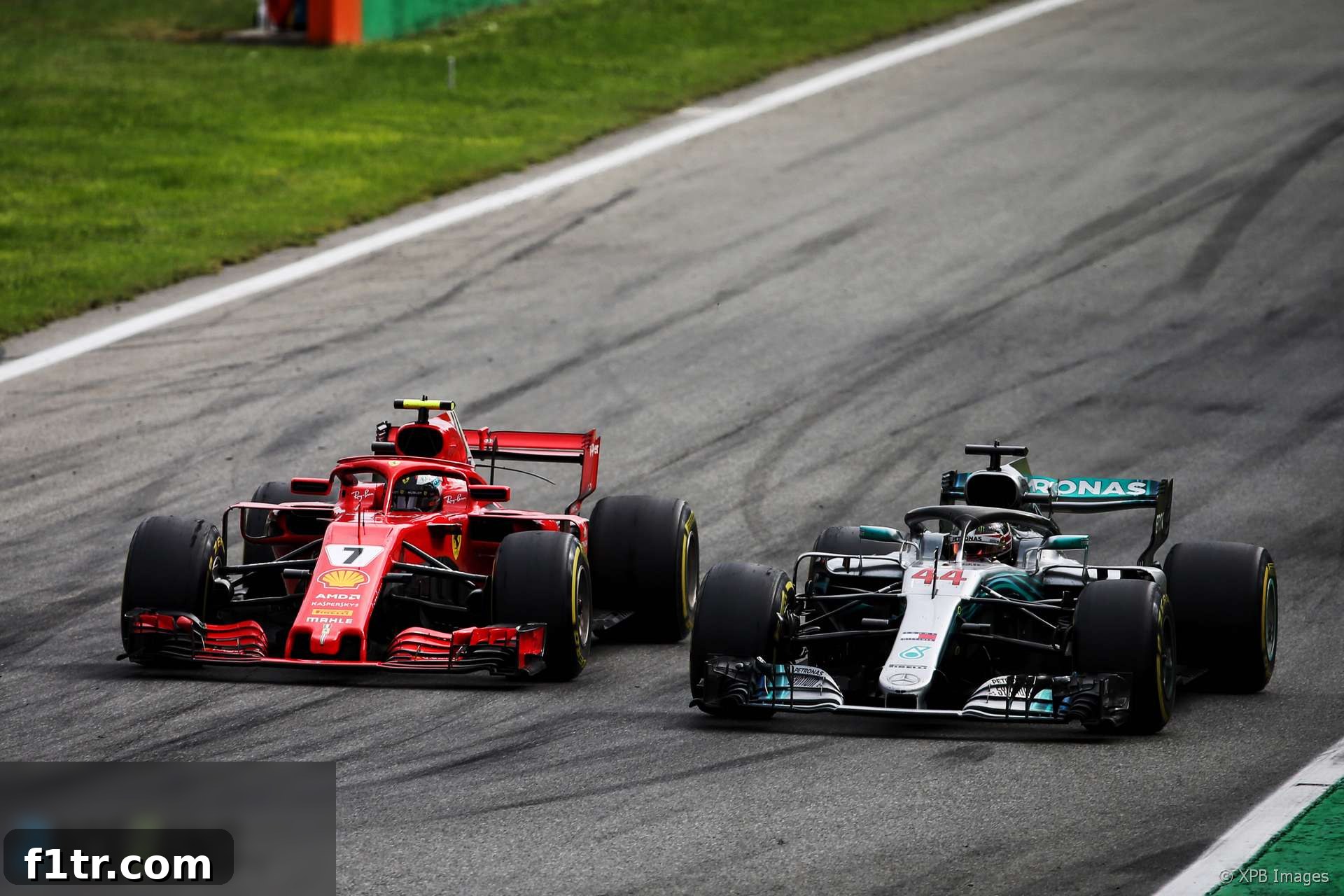
In the high-octane world of Formula 1, where every millisecond counts, dominance is often the ultimate goal. Yet, for five-time world champion Lewis Hamilton, the pursuit of victory is deeply intertwined with a profound desire for genuine, race-long battles, particularly those against the formidable Ferrari Scuderia. As he neared the culmination of his fifth championship title in the 2018 season, Hamilton found himself in an enviable position, with Mercedes often outpacing their closest rivals. However, this comfortable margin, while ensuring points and trophies, left him yearning for the intense, wheel-to-wheel duels that truly define the sport’s greatest legends.
The Italian Grand Prix at Monza stood out as a prime example of the kind of racing Hamilton craves. It was a race that encapsulated the raw essence of F1 competition, a relentless strategic and driving challenge that pushed both man and machine to their absolute limits. Speaking on his preference for such contests, Hamilton passionately declared, “When we were having a race like Monza, for me, I loved that race and I would have been happy to have that every race following that.” This sentiment underlines a fundamental truth about top-tier athletes: while winning is paramount, the manner of victory, especially one hard-fought against a worthy adversary, elevates the achievement to a different plane. Monza that year was a spectacle of tactical prowess, daring overtakes, and unwavering mental fortitude, precisely the ingredients Hamilton thrives on.
The 2018 season had witnessed Ferrari present a strong challenge, particularly in the earlier phases, leading many to believe a fierce championship battle was set to continue throughout. Hamilton himself had anticipated this intensity, reflecting, “And I thought that was how it was going to be, being that they were so strong in the previous two races.” However, as the season progressed, Ferrari’s performance appeared to waver, making it increasingly difficult for them to consistently match Mercedes’ pace. This fluctuation in competitive parity, while beneficial for Mercedes’ championship aspirations, tempered Hamilton’s desire for those nail-biting, decisive moments. He acknowledged the shift, noting, “They’ve just lost a lot of performance and then it’s obviously been a little bit difficult for them.” This observation wasn’t a slight but a recognition of the unfortunate reality that denied both drivers and fans more epic showdowns.
Despite the occasional dip in direct competition, Hamilton’s hunger for intense racing remained undiminished. He articulated a clear vision for what makes Formula 1 truly exhilarating: “Of course I would love to have a race right to the end. Every single race I want battles like Monza and other ones that have been like that, those are the races that I love and welcome them more and more.” This statement is a testament to his competitive spirit and his understanding of what captivates the global F1 audience. The thrill of a championship leader being pushed to the brink, corner after corner, lap after lap, is an irreplaceable element of the sport. Such races test not only a driver’s raw speed but also their tyre management, fuel conservation, strategic thinking, and psychological resilience. They are the narratives that become etched into the annals of F1 history, remembered long after the confetti settles.
The dynamic between Hamilton and his championship rival, often Sebastian Vettel in the Ferrari, transcended mere statistics; it was a psychological warfare played out at incredible speeds. Hamilton describes these wheel-to-wheel encounters as the “ultimate challenge.” It’s in these moments, where two of the world’s most skilled drivers are side-by-side, inches from disaster, that their true character and nerve are revealed. “Always being able to go head-to-head with the guy you’re competing with and see who brakes earliest and who falters is the ultimate challenge, really, of your mental stability under that pressure,” he elaborated. This isn’t just about physical prowess; it’s about maintaining composure, making split-second decisions, and trusting one’s instincts when the stakes are at their highest. The mental fortitude required to consistently perform under such immense pressure is what separates the good from the truly great.
The Russian Grand Prix provided another instance, albeit with a different outcome, where Hamilton experienced the intensity of direct confrontation. Although the strategy might not have played out perfectly for his rival, it offered Hamilton the opportunity to showcase his exceptional abilities in close combat. “I always welcome them and I’m grateful that we’ve had some of those moments like in the last race which the strategy didn’t work out well but it gave me the opportunity to show my ability at those precious moments,” he reflected. This highlights a crucial aspect of Hamilton’s approach: he doesn’t shy away from adversity or complex scenarios. Instead, he views them as chances to refine his craft, to demonstrate why he stands among the sport’s all-time greats. Every challenging moment is a learning curve, an experience that sharpens his instincts and enhances his legendary racecraft.
While Hamilton acknowledges and appreciates his team’s incredible work and the strong performance of his Mercedes car, his underlying desire remains for more direct, unadulterated racing. He understands that absolute dominance, while impressive, can sometimes diminish the spectacle for fans and the personal satisfaction for drivers who thrive on being tested. The ideal Formula 1 season, from his perspective, is one replete with unpredictable outcomes, strategic gambles, and exhilarating battles that push every competitor to their absolute limit. These are the races that create legends, forge rivalries, and provide the unforgettable moments that resonate with millions worldwide. His longing for more Monzas is a testament to a champion who, even at the pinnacle of his career, continuously seeks the ultimate challenge and the pure joy of competitive racing.
Ultimately, Hamilton’s reflections underscore a broader truth about Formula 1: while technological advancement and team strategy are vital, the human element of direct competition remains the heart and soul of the sport. The spectacle of two exceptional drivers battling wheel-to-wheel, pushing each other to the very edge of their capabilities, is what truly defines Grand Prix racing. As the 2018 season progressed, culminating in his fifth world title, Lewis Hamilton had much to celebrate. Yet, his voice carried a longing for even more of those gripping, all-out confrontations, a clear indication that for true champions, the journey of fierce competition is as rewarding as the destination of victory itself.
2018 F1 season: Further Reading & Analysis
Delve deeper into the events and narratives that shaped the thrilling 2018 Formula 1 season, a year marked by intense championship battles and pivotal moments for many teams and drivers.
- F1 feared “death knell” for Drive to Survive after Ferrari and Mercedes snub
- McLaren staff told us we were “totally crazy” to take Honda engines in 2018 – Tost
- ‘It doesn’t matter if we start last’: How Red Bull’s junior team aided Honda’s leap forward
- Honda’s jet division helped F1 engineers solve power unit problem
- McLaren Racing losses rise after Honda split
Browse all 2018 F1 season articles