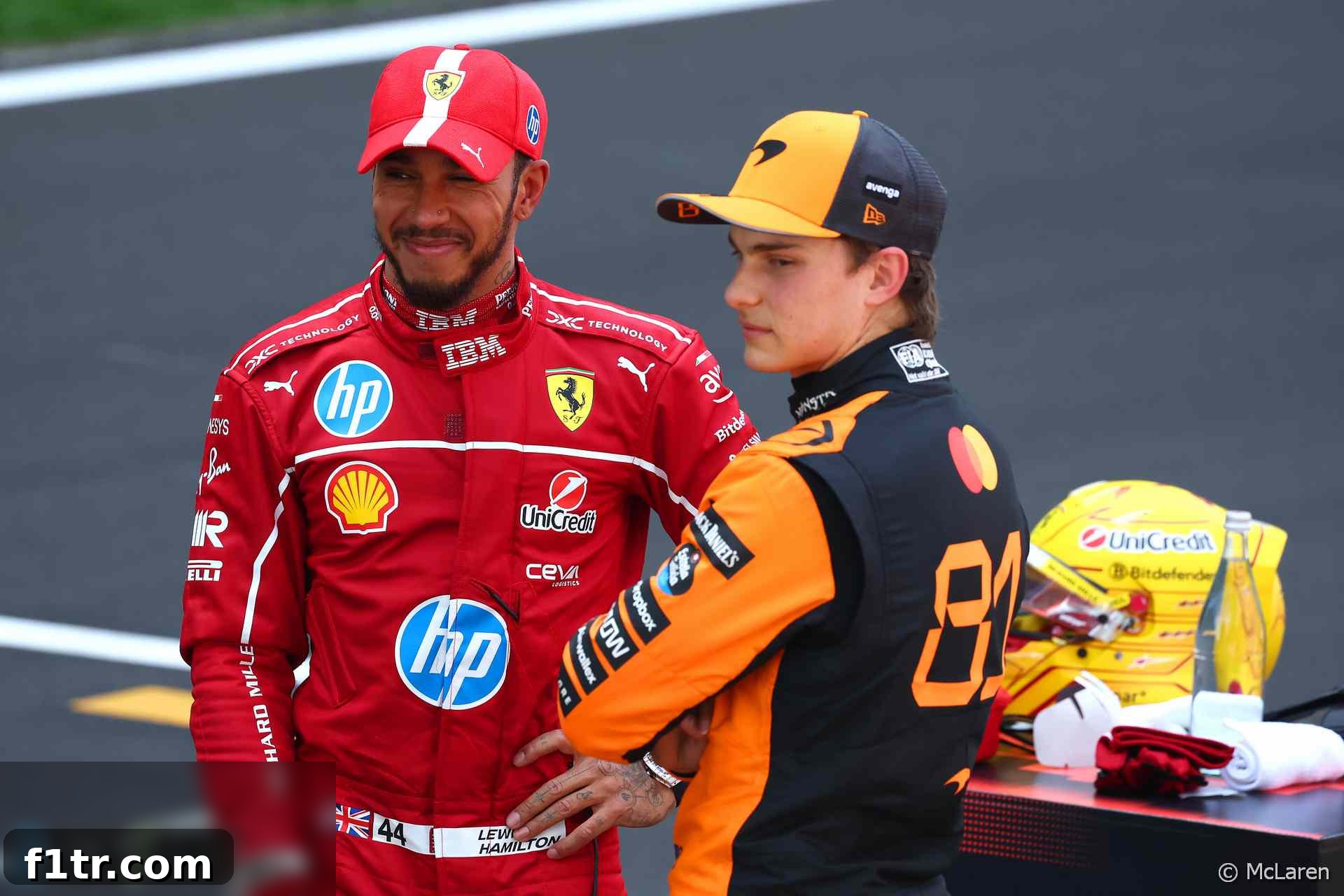
Lewis Hamilton delivered a resounding statement in Shanghai, clinching a dominant sprint race victory that served as the perfect rebuttal to the criticism that had followed his challenging Ferrari debut. The seven-time world champion’s performance in China showcased his unparalleled skill and determination, providing a much-needed morale boost for himself and the Scuderia Ferrari team.
The Melbourne Misstep: A Challenging Ferrari Debut
Hamilton’s highly anticipated debut for Ferrari in Melbourne had proven to be a baptism by fire. A 10th-place finish marked the worst start for a newcomer at the Italian team in 16 years, instantly sparking a wave of speculation and critique. The F1 paddock and media were quick to scrutinize his performance, particularly focusing on radio exchanges with his race engineer, Riccardo Adami, snippets of which were broadcast globally.
The initial disappointment in Australia cast a shadow over what was meant to be a landmark moment in Hamilton’s illustrious career. Adapting to a completely new car concept, a different engineering philosophy, and an unfamiliar team environment presented a steeper learning curve than many, including potentially Hamilton himself, had anticipated. The nuances of a new chassis, power unit characteristics, and specific control systems demand intricate understanding and seamless communication—elements that are often refined over several race weekends, not just one.
Hamilton later acknowledged the significant hurdle of integrating into a new setup. “The first race was difficult,” he admitted. “I really do feel a lot of people underestimated the steep climb it is to get into a new team, to become acclimatised within a team, understanding and communication and all sorts of things.” This candid reflection highlighted the immense pressure and intricate challenges that lie beneath the surface of a seemingly simple driver change.
Responding on Track: Lewis Hamilton’s Dominant Shanghai Sprint Victory
Just one week later, the narrative shifted dramatically. Arriving in Shanghai, Hamilton exuded a renewed sense of purpose and comfort. From the very first laps of the weekend, a palpable change in his demeanor and car performance was evident. He secured pole position for the sprint race, a testament to his immediate adaptability and the team’s relentless effort in fine-tuning the car to his preferences.
The sprint race itself was a masterclass from Hamilton. Leading every single lap from start to finish, he crossed the line to claim his first victory in the sprint format with Ferrari. This commanding performance was not merely a win; it was a powerful statement of intent. It showcased his ability to extract maximum performance from the car under pressure and served as a categorical answer to those who had questioned his form and decision to move teams.
The feeling of redemption was palpable. “In Melbourne I really didn’t feel comfortable in the car. From lap one here this weekend [I was] really feeling on it,” Hamilton explained. “We’ve done a great job, the engineers have done a great job, mechanics have done a great job to really fine-tune the car and it felt great today.” This immediate turnaround underscored the importance of driver comfort and confidence, both of which were clearly restored in Shanghai.
Navigating the Onslaught of Criticism and Team Adaptation
The intensity of the criticism following Melbourne particularly stung Hamilton, who expressed surprise at the “negativity” surrounding his early communications with Adami. He pointed out that many critics, especially former drivers, often lack the full insight into the complex dynamics within an active Formula 1 team.
“The amount of critics and people I’ve heard yapping along the way, just clearly not understanding maybe because they never had the experience or are just unaware,” he stated, highlighting a common disconnect between outside commentary and internal realities. Hamilton emphasized that adapting to a new team, especially one with a distinct operational philosophy and car characteristics like Ferrari, is a monumental task that transcends mere driving talent.
He referenced the transitions of other F1 legends to underscore his point. “If you look at Seb [Vettel], you look at Fernando [Alonso], they did a great job when they joined the team in their early phases, but to build long-term success with the team takes time. And that’s what I’m trying to do. I’m not trying to jump-start it, get ahead of myself. I’m just taking my time to build with this great team.” This perspective offers a crucial reminder that sustained success in Formula 1 is a collaborative effort requiring patience, meticulous development, and profound mutual understanding between driver and team.
Hamilton’s candid remarks about “people that I’ve admired for years just talking out of turn” and “making uneducated guesses” reflect a broader sentiment regarding the often-superficial nature of public criticism in elite sports. His focus remains on the internal process, emphasizing that “it’s not easy moving to a new team that works completely differently, [has] completely different characteristic of car. You don’t just jump in and it’s good.”
Mastering Tire Management on Shanghai’s New Tarmac
A crucial element of Hamilton’s Shanghai sprint success was his exceptional tire management. The race itself was dominated by concerns over tire degradation, with many drivers encountering significant problems with “graining”—a phenomenon where rubber pieces tear off the tire surface, leading to a loss of grip. The newly resurfaced Tarmac in Shanghai was particularly abrasive, exacerbating these challenges.
Hamilton’s race engineer, Riccardo Adami, lauded his driver’s performance in preserving his tires throughout the sprint. This was significantly aided by Hamilton’s ability to run in “clear air” for the entire race, free from the turbulent aerodynamic wake of other cars. Running in clear air minimizes tire overheating and allows for more consistent performance, a luxury not afforded to drivers battling in the pack.
“I got a good start,” Hamilton acknowledged. “There’s so much grip on this new Tarmac, it’s really hard to look after these tyres, but I think everyone was struggling the same.” His ability to manage the delicate balance between pushing for pace and conserving tire life demonstrated his seasoned experience and innate understanding of race craft, turning a potential weakness into a significant advantage.
The collective effort of the team—engineers providing crucial data and mechanics ensuring optimal car setup—combined with Hamilton’s driving prowess, resulted in a car that felt finely tuned and capable of handling the demanding conditions. This synergy is fundamental to achieving success in the competitive world of Formula 1.
A Measured Outlook: The Marathon Ahead for Ferrari
Despite the elation of his sprint victory, Hamilton maintained a remarkably grounded perspective on Ferrari’s potential for the season ahead. He cautioned against premature excitement and stressed the importance of a step-by-step approach.
“I said the other day, Rome wasn’t built in one day. One step at a time. We’re not going to get ahead of ourselves. We cannot,” he asserted. This philosophy underscores a mature understanding of championship campaigns, which are ultimately long-distance races, not individual sprints. The immediate focus needed to be on continuous improvement, detailed analysis, and unwavering commitment.
“We’ve got to continue to push. We’ve got to be diligent and just remain focused, stay calm. Most importantly, stay calm, because these moments get us all excited,” Hamilton added. This emphasis on composure and sustained effort is vital for any team aspiring to challenge at the very top of Formula 1. The emotional highs of a victory must quickly give way to the methodical work required for the next challenge.
His concluding remarks summarized this long-term vision perfectly: “We’ll be back at our desks after this and focused on qualifying this afternoon. It’s a long, long way. It’s a marathon, not a sprint, so we’ve just got to take our time.” The Shanghai sprint race served as a powerful reminder of Hamilton’s enduring talent and Ferrari’s potential, but also of the extensive journey that lies ahead in their quest for ultimate success.
Miss nothing from RaceFans
Get a daily email with all our latest stories – and nothing else. No marketing, no ads. Sign up here:
2025 Chinese Grand Prix – Related Articles
- Norris names China and Canada as biggest missed opportunities this year
- Red Bull reassure Verstappen over ‘when we’ll have a winning car again’ in meeting
- Mercedes explain impact of Antonelli’s floor damage on his Chinese GP performance
- “I gave a lot of lap time away in that first stint”: Verstappen’s full Chinese GP radio
- Stats: Chinese Grand Prix saw most disqualifications in an F1 race for 21 years
Browse all 2025 Chinese Grand Prix articles