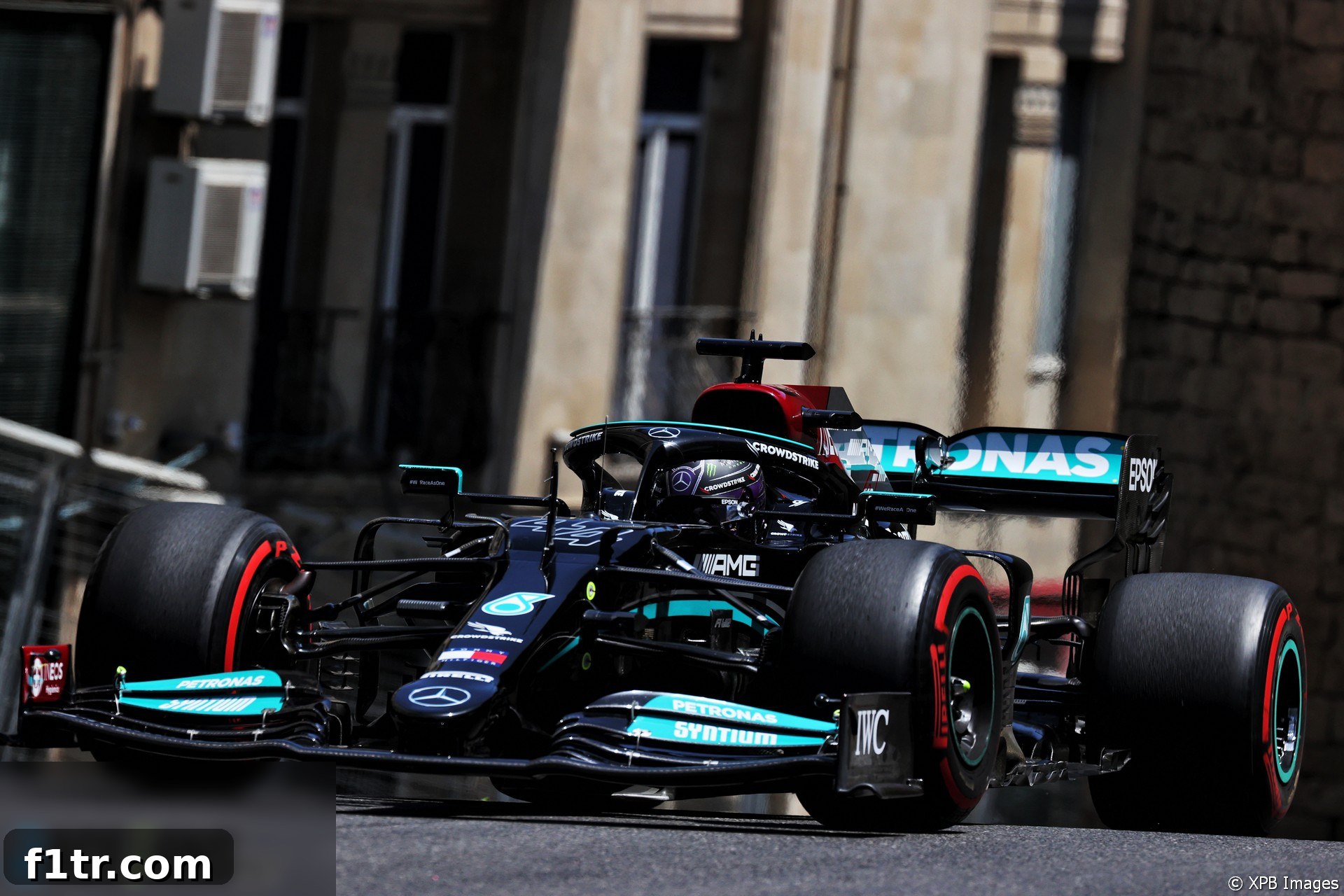
In a remarkable display of resilience and strategic brilliance, seven-time world champion Lewis Hamilton secured an unexpected second place on the grid for the Azerbaijan Grand Prix. This monumental qualifying result at the challenging Baku City Circuit came after a weekend start that saw the Mercedes-AMG Petronas F1 Team grappling with significant performance issues, leaving many pundits and fans questioning their competitive edge.
Advert | Become a Supporter & go ad-free
The journey to the front row was anything but straightforward for Hamilton and his team. Friday practice sessions proved particularly arduous for Mercedes, with both cars struggling to find a comfortable balance and adequate pace. They concluded Friday outside the top 10, a position highly uncharacteristic for the reigning constructor champions. The narrow, high-speed street circuit of Baku, known for its unforgiving walls and unique demands on car setup, seemed to expose a fundamental instability in the W12 chassis. Engineers and drivers alike were confronted with a complex puzzle, as the car demonstrated a distinct lack of harmony, making it incredibly difficult to extract competitive lap times.
Hamilton himself admitted the team was “struggling like you wouldn’t believe all weekend.” The initial data suggested a deficit of over a second to their main rivals, Red Bull Racing, painting a grim picture for the weekend ahead. Such a gap on a single-lap pace is an eternity in Formula 1, and it necessitated an intense period of introspection and adjustment from the entire Mercedes outfit. The overnight work between Friday and Saturday, and then again between Saturday’s free practice and qualifying, became crucial. The team engaged in what Hamilton described as “difficult conversations in the background,” challenging every assumption and pushing the boundaries of their understanding of the car. This relentless pursuit of perfection, a hallmark of Mercedes’ dominance, was tested to its limits in Baku.
From Struggle to Surge: The Qualifying Turnaround
The final practice session on Saturday morning offered a glimmer of hope, with Hamilton posting the third-fastest time. However, this performance was partially aided by the strategic use of a slipstream from another car, a common tactic on Baku’s long straights, which artificially boosted the lap time. It was clear that the underlying issues were far from resolved, yet the team was making progress. The qualifying session itself was a spectacle of high drama and unpredictable events, characteristic of the Azerbaijan Grand Prix. Multiple red flags punctuated the session, caused by crashes from various drivers, including Lance Stroll and Antonio Giovinazzi in Q1, and Daniel Ricciardo and Yuki Tsunoda later on. These interruptions fragmented the flow, making it challenging for drivers to build rhythm and for teams to execute their strategies.
Under immense pressure, with track conditions constantly evolving and windows for flying laps narrowing, Hamilton delivered a sensational performance. His final qualifying lap, while “okay” in his humble assessment, was executed with precision and bravery, allowing him to snatch second place on the grid. This front-row start was a stark contrast to the team’s earlier struggles and provided a much-needed morale boost. “We definitely weren’t expecting that,” Hamilton confessed, his relief palpable. “This is such a monumental result for us because we’ve been struggling like you wouldn’t believe all weekend. You can see it. We kept our composure.” His words underscored the collective effort and mental fortitude required to turn around such a challenging situation. The team’s ability to remain positive and united despite adversity was a testament to their championship-winning pedigree.
Unlocking the W12: A Deep Dive into Car Dynamics
Hamilton shed further light on the technical complexities faced by Mercedes in Baku. “Trying to find the envelope for this car, it’s the biggest challenge we’ve had in a long time,” he explained. The “envelope” refers to the car’s performance limits and the optimal window for its setup. For much of the weekend, the W12 had been temperamental, with Hamilton lamenting, “she’s not been happy all weekend, it’s been a bit of a disaster.” This candid assessment highlighted the profound difficulties in understanding and taming the car’s behavior around the unique Baku layout, which demands both high downforce for its technical inner-city sections and low drag for its epic main straight.
The intense analytical work performed by the engineers and strategists between sessions involved dissecting telemetry, simulating changes, and making bold adjustments to the car’s configuration. One notable difference emerged between the two Mercedes cars: Hamilton and his teammate, Valtteri Bottas, opted for divergent rear wing specifications. Hamilton’s choice was geared towards optimizing a specific balance, while Bottas, who qualified tenth, pursued a different approach, perhaps reflecting the team’s ongoing struggle to find a universal sweet spot for the W12. The fact that Bottas managed to scrape into the top 10 was also seen as a “massive relief” for the team, demonstrating the incremental progress being made across both sides of the garage. This collaborative and iterative process, involving continuous feedback loops between drivers and engineers, exemplifies the high-performance culture at Mercedes.
Championship Implications: Hamilton vs. Verstappen
The qualifying result held significant implications for the fiercely contested drivers’ championship. By securing second place, Lewis Hamilton started one position ahead of his main rival, championship leader Max Verstappen of Red Bull Racing, who qualified third. This psychological advantage, however minor, could prove crucial in the high-stakes battle for the title. Overtaking opportunities are plentiful at Baku, but track position, especially at the start, remains paramount. Having a Red Bull in his mirrors rather than ahead provided Hamilton with a strategic upper hand, potentially allowing him to control the pace or dictate the strategy more effectively in the initial stages of the race.
The championship narrative throughout the season had been one of ebb and flow, with both Hamilton and Verstappen pushing the limits of their machinery and their own capabilities. Baku presented another chapter in this epic rivalry. The ability of Mercedes to pull a qualifying performance out of the bag when it seemed unlikely not only demonstrated their competitive spirit but also sent a strong message to Red Bull that they would not concede easily. Hamilton’s determination to fight for every single point, coupled with Mercedes’ relentless development, ensures that this championship battle will remain captivating until the very end.
Race Day Outlook: A Glimmer of Hope for Pace
Looking ahead to the race, Hamilton expressed cautious optimism regarding Mercedes’ potential performance. He revealed a critical insight: “Our race pace is a lot better than our single lap. We’re miles off in single lap and we’re a lot closer in race pace. We don’t understand why.” This disparity, while puzzling to the engineers, suggested that the W12 might be more competitive over a long stint on race fuel than it appeared during qualifying. This phenomenon can often be attributed to how a car manages its tires over a full race distance, or how its aerodynamic efficiency translates at higher fuel loads. If Mercedes could indeed unlock superior race pace, Hamilton would be well-positioned to challenge for victory against the formidable Red Bulls of Verstappen and Sergio Perez, who qualified on pole position.
The Baku City Circuit’s layout, with its long main straight and numerous DRS zones, offers ample opportunities for overtaking. This characteristic, combined with the potential for Safety Cars or red flags, means that strategy and tire management will play a pivotal role. Hamilton’s experience and strategic acumen could be decisive. He articulated his hope simply: “I’d like to think hopefully we’re in the same position so we can take the fight to these guys tomorrow.” This fighting spirit, coupled with the team’s ability to adapt and refine their package, set the stage for a thrilling Azerbaijan Grand Prix, promising another dramatic chapter in the 2021 Formula 1 season.
Advert | Become a RaceFans supporter andgo ad-free
2021 Azerbaijan Grand Prix Related Content
- Aston Martin also confirms it followed Pirelli’s tyre restrictions before crash
- Pirelli confirm teams not to blame for Baku tyre failures following investigation
- “Tyres should not explode like that” says Villeneuve as Pirelli prepares to reveal findings
- Why Alonso is able to enjoy F1 more now than when he left
- Penalty for Safety Car error was just one of Latifi’s frustrations in Baku
Browse all 2021 Azerbaijan Grand Prix articles