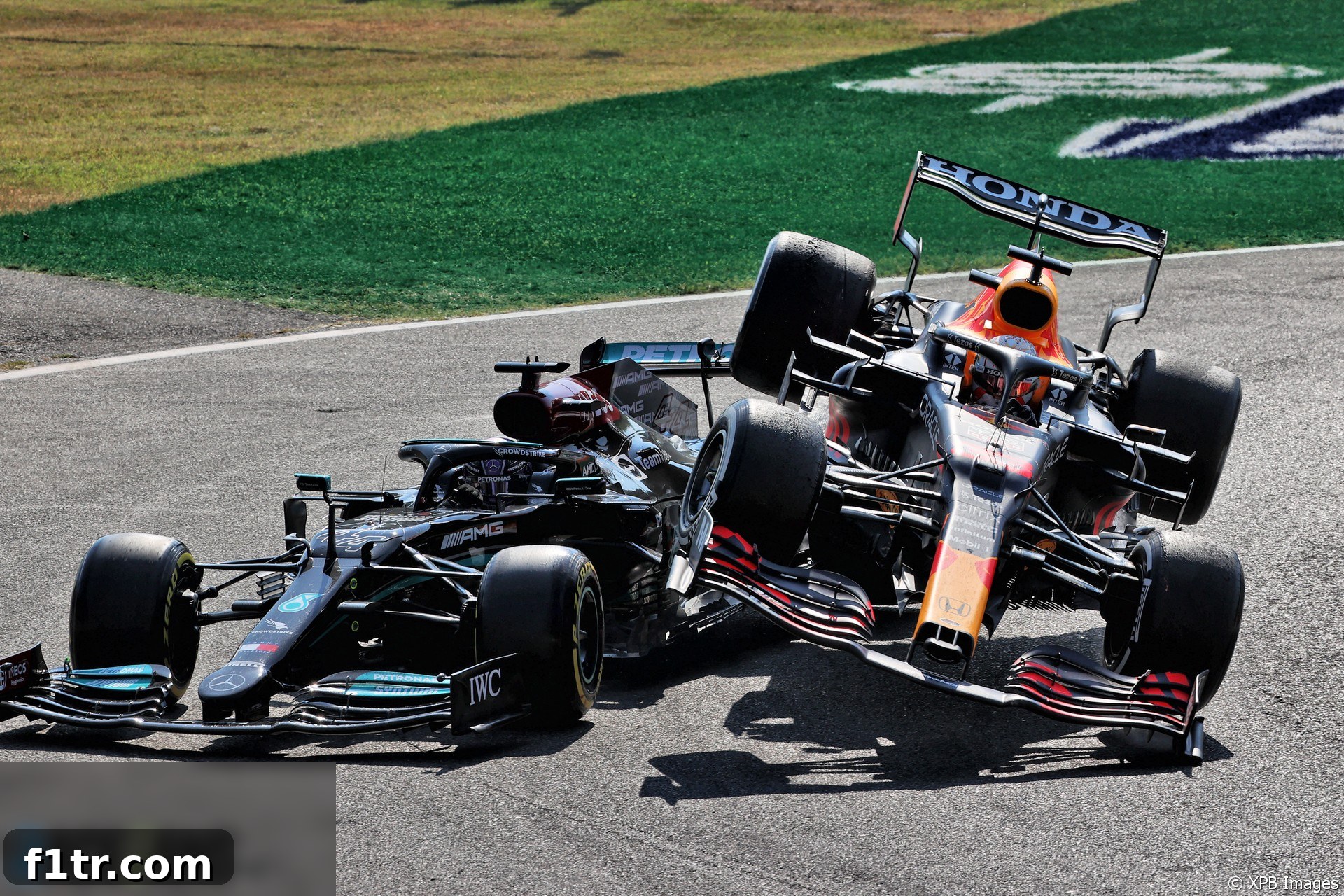
Lewis Hamilton, a titan in the world of Formula 1, has often reflected on the nuanced art of high-stakes racing. In the wake of several intense on-track clashes with championship rival Max Verstappen, Hamilton emphasized the invaluable lessons gleaned from years of experience – particularly knowing precisely when to back out of an overtaking maneuver that carries too much risk and too little chance of success.
Advert | Become a Supporter & go ad-free
The Boiling Point: Monza and Silverstone Clashes Ignite Title Battle
The 2021 Formula 1 season was characterized by an electrifying, often acrimonious, championship battle between two formidable talents: Lewis Hamilton and Max Verstappen. Their rivalry reached a critical juncture with two significant collisions that drew global attention and intensified the title fight. The most recent incident occurred at the Italian Grand Prix in Monza, a high-speed temple of motorsport. During a critical phase of the race, Verstappen attempted an ambitious overtake on Hamilton, leading to contact that saw both cars dramatically forced out of contention. This was not their first coming-together of the season; an earlier, equally dramatic incident had unfolded at the British Grand Prix at Silverstone, igniting a fierce debate about racing ethics and driver conduct.
Following the Monza clash, the race stewards swiftly investigated the incident, concluding their review with a decisive ruling. Their findings placed primary blame on Verstappen, leading to a three-place grid penalty for the subsequent race weekend. These decisions, while providing a formal resolution to the individual incidents, did little to quell the underlying tension between the two championship contenders and their respective teams. Instead, they served to further highlight the high stakes and uncompromising nature of their pursuit for the ultimate prize in motorsport.
Experience vs. Eagerness: Hamilton’s Seasoned Perspective on Verstappen’s Approach
With an unparalleled seven world titles to his name, Lewis Hamilton offers a unique perspective shaped by countless championship battles and years at the pinnacle of Formula 1. He subtly suggested that Verstappen’s comparative lack of experience in such high-pressure title fights might be influencing his decision-making on track. “I remember what it was like battling for my first championship,” Hamilton reflected, drawing a stark contrast with his own “tenth battle” for the ultimate prize in motorsport. This veteran insight hints at a fundamental difference in approach: the seasoned wisdom of a multi-champion versus the raw, unbridled ambition of a driver chasing his maiden title.
Hamilton’s remarks underscore a widely acknowledged dynamic in elite sport: the fine line between calculated aggression and impetuous risk-taking. While aggression is an undeniable prerequisite for any top racing driver, the ability to temper that aggression with strategic thinking, especially when a championship is on the line, is often cultivated over years of triumphs and setbacks. This distinction, Hamilton implies, might be at the heart of their on-track disputes. A driver with extensive championship experience learns when to push the limits and, crucially, when to exercise caution to preserve vital points and maintain their position in the long game of a season-long contest.
The Philosophy of a Champion: Racing Hard, Racing Fair, and Strategic Patience
Despite the intense rivalry and the heated nature of their on-track encounters, Hamilton consistently advocates for a philosophy of racing that balances fierce competition with unwavering respect and fairness. “I think what’s important is that we continue to race hard but fair,” he stated, articulating a principle that he believes should govern all top-level motorsport. He expressed confidence that both drivers, despite their differences and the escalating tension, possess the professionalism to learn from past incidents and move forward, focusing on the integrity of the competition.
This approach isn’t merely about avoiding penalties; it’s about safeguarding the integrity of the sport and ensuring that championships are won through genuine skill, consistent performance, and strategic acumen, rather than through avoidable contact or excessive risk. Hamilton’s call for professional conduct suggests a desire for a cleaner, albeit still intense, conclusion to the championship. For a driver who has seen nearly two decades of Formula 1 evolution, the notion of “fair play” remains a cornerstone of what makes the sport truly great and ensures that victories are earned through superior driving, not through unnecessary skirmishes.
The Art of Discretion: Knowing When to Concede a Battle to Win the War
A crucial element of Hamilton’s enduring racing philosophy revolves around strategic discretion – the wisdom to know when to fight for every inch of tarmac and when to temporarily yield. “I never expect a driver to back down,” he asserted, clarifying that his perspective isn’t about passive driving or lacking competitive spirit. Instead, it’s about intelligent risk assessment and prioritizing the long-term championship goal over immediate, potentially costly, gains. “I think ultimately we all have to be smart and know there’s a time that you’re not going to make a corner. It’s all about making sure you live to fight the next corner.”
This maxim, “live to fight another corner,” is a cornerstone of championship-winning strategy. It recognizes that a single corner, a single overtake, or even a single race, does not ultimately define an entire season. Sacrificing a minor gain in one moment to avoid a catastrophic outcome – such as a DNF (Did Not Finish) or significant car damage – allows a driver to remain in contention and seize future opportunities. This delicate balance, Hamilton insists, is refined through extensive experience – understanding that “it’s not all won on one corner so there will be other opportunities.” This patient, long-term view, prioritizing strategic longevity over fleeting aggression, is a hallmark of truly great drivers who understand the marathon nature of a Formula 1 championship, where consistency and avoiding costly errors are paramount.
Advert | Become a RaceFans supporter andgo ad-free
The Burden of Pressure: A Champion’s Empathy for the Title Challenger
When asked directly about Verstappen potentially feeling the immense pressure of the championship fight, Hamilton adopted an empathetic, yet cautious, tone. While refraining from making direct assumptions about his rival’s internal state, he drew poignant parallels to his own formative experiences at the sharp end of Formula 1. “Obviously he won’t admit to it, I’m not going to make an assumption. But I’m just saying I remember it was difficult, it was intense. I was going through a lot of different emotions, I didn’t always handle it the best. And that’s to be expected, it’s a lot of pressure.”
Hamilton’s candid recollection of his early championship battles, particularly his maiden title tilt in 2007 and his triumphant, nail-biting 2008 season, offers a rare and insightful glimpse into the psychological toll of elite competition. He openly acknowledges the multifaceted pressures: the immense weight of expectations from a large, dedicated team, intense self-imposed demands driven by personal ambition, and the overwhelming, all-consuming desire to win. This deep understanding allows him to “empathise and understand” the immense challenges facing any driver in their first championship contest. It’s a period of rapid professional and personal growth, often marked by mistakes and emotional turbulence, but ultimately leading to profound learning and character development under the most scrutinizing global spotlight.
From Rookie Aggression to Veteran Composure: Hamilton’s Evolution
Hamilton candidly admitted that the burden of pressure he felt in his early career was significantly more intense than what he experiences today. “It’s a lot easier to handle than my first one. But I’ve been here a long time so it’s much easier to deal with it now,” he explained. This stark contrast highlights a crucial aspect of his personal and professional evolution as a racing driver and an athlete. The journey from a raw, immensely talented rookie to a composed, mentally resilient champion is a testament to his dedication, continuous learning, and adaptability.
In his formative years, Hamilton was a prodigious talent but lacked the psychological tools and coping mechanisms to effectively navigate the unprecedented levels of scrutiny, expectation, and relentless competition. “In my first year I was very young and didn’t have the tools to be able to handle the sort of pressures that were being put on me so it’s a lot different for me.” His current ability to manage pressure stems from a vast reservoir of experience, countless victories, numerous championship campaigns, and an intimate understanding of the championship grind. This perspective suggests that while Max Verstappen is undoubtedly a formidable and incredibly fast opponent, he is still navigating a phase of his career – the very first championship challenge – that Lewis Hamilton has long since mastered, transforming pressure into a motivational force rather than a debilitating one.
Advert | Become a RaceFans supporter andgo ad-free
The Road Ahead: High Stakes and Unpredictability in the Championship Decider
As the Formula 1 season progresses towards its thrilling conclusion, the rivalry between Lewis Hamilton and Max Verstappen remains the sport’s most compelling and intensely followed narrative. Hamilton’s reflections on the virtues of experience, the pervasive nature of pressure, and the strategic wisdom of knowing when to retreat offer invaluable insights into the mindset of a true champion. While he expresses a hopeful desire for a cleaner run of races in the future, the inherent nature of championship-deciding encounters, where every point and every position is fiercely contested, suggests that further moments of tension and unpredictability are almost inevitable.
The lessons learned from the dramatic incidents at Monza and Silverstone, combined with the escalating stakes of the championship, will undoubtedly shape how both drivers approach the remaining Grand Prix events. Hamilton’s steadfast call for “racing hard but fair” will be tested repeatedly, as will Verstappen’s resolve and temperament under the intense, unrelenting spotlight of his first true Formula 1 title challenge. The championship is not merely a test of raw speed or car performance, but a profound examination of character, strategic foresight, mental fortitude, and the ability to consistently perform under the most extreme pressure. The world watches keenly to see which driver’s philosophy and experience will ultimately prevail in this historic and gripping battle for the Formula 1 crown.
2021 Russian Grand Prix Insights
- Norris says he missed few chances to win in 110-race wait for first F1 victory
- Sochi disappointment will make Norris and McLaren stronger, says Seidl
- F1 race start times could be brought forward to avoid Spa-style wash-outs
- New technology in Ferrari’s power unit update vital for 2022 – Binotto
- Mercedes have left too many points on the table, admits Wolff
Browse all 2021 Russian Grand Prix articles