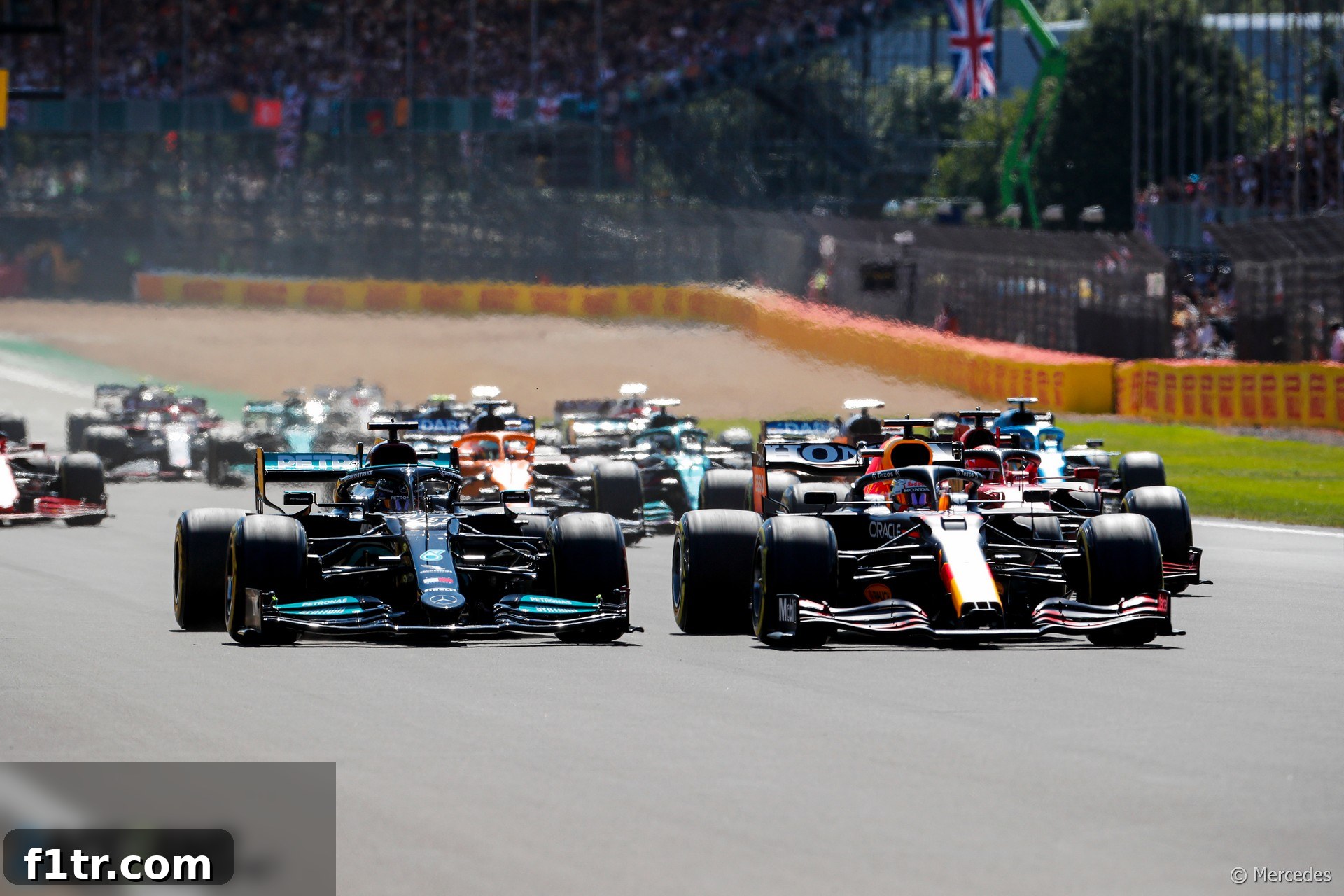
The 2021 Formula 1 season delivered an electrifying championship battle between two titans of the sport: Lewis Hamilton and Max Verstappen. Their rivalry reached a dramatic peak at the British Grand Prix, where a high-speed collision on the opening lap sent Verstappen crashing out and reignited intense debate across the paddock. Amidst the swirling opinions, McLaren driver Daniel Ricciardo offered his measured perspective, suggesting that while Lewis Hamilton was ultimately responsible for the contact, the incident was far from an intentional act.
The incident at Silverstone’s iconic Copse Corner was one of the most talked-about moments of the season. Max Verstappen, leading the championship, started from pole position, with Lewis Hamilton right alongside him on the front row. As the cars hurtled through the incredibly fast right-hander, the two title rivals made contact, sending Verstappen’s Red Bull careening into the tyre barrier at an astonishing speed. The force of the impact was later recorded at a staggering 51G, a testament to the sheer violence of the crash.
Ricciardo, who has shared the track with both drivers extensively and was a former teammate of Verstappen at Red Bull Racing, provided a nuanced analysis after reviewing replays of the dramatic collision. Speaking to reporters, including RaceFans, Ricciardo acknowledged the severity of the outcome, stating, “It was certainly a nasty outcome. It’s obviously at high speed, it doesn’t take much to have a big one like that.” The sight of a driver hitting the barriers at such velocity is always a cause for concern, and the immediate focus was on Verstappen’s well-being.
Delving deeper into his technical assessment, Ricciardo explained the dynamics at play in such a high-speed corner. “When you’re in such a high-speed corner and just side-by-side, you’re both going to lose aero, particularly Lewis there with Max kind of in a little bit of dirty air,” he observed. This loss of aerodynamic grip, a common challenge in wheel-to-wheel combat, makes holding a precise line even more difficult. Ricciardo posited that both drivers approached the corner aggressively, but Hamilton’s entry carried slightly more risk. “But I think they were both going in hot. Ultimately Lewis went in too hot for the given level of grip and that’s where you see [he] just drifted up into Max,” Ricciardo elaborated.
Crucially, Ricciardo was keen to emphasize the unintentional nature of Hamilton’s action. He stressed that he did not believe Hamilton deliberately sought to collide with his rival. “Completely unintentional, but just the nature of the aero on these cars and [you] just have to allow a little more,” he added, highlighting the fine margins and unforgiving physics that govern Formula 1 racing. This perspective underscores a key aspect of racing incidents: while one driver might be deemed primarily responsible for a sequence of events, intent is a separate and often misunderstood factor. Ricciardo’s refusal to “judge and say he should have done that or that” reflects the complex, split-second decisions drivers must make at over 300 km/h.
Following the harrowing impact, Verstappen was initially taken to the circuit’s medical centre for immediate assessment before being transferred to a local hospital for further precautionary checks. FIA Formula 1 medical rescue co-ordinator Dr. Ian Roberts confirmed that Verstappen was “a little bit winded, to say the least,” a testament to the immense forces his body endured. Ricciardo expressed relief that Verstappen was able to walk away from the wreckage, but remained concerned about the extent of the subsequent medical evaluations. “I saw him walk out, but I heard he’s in the medical centre getting some checks, so I hope he’s alright,” Ricciardo stated, echoing the sentiments of many within the F1 community.
Ricciardo’s own history with high-speed collisions, including one with Verstappen during their Red Bull days, lent further weight to his commentary. He understood the intensity of such battles and the unfortunate reality that sometimes, contact is an unavoidable consequence of hard racing. “They’ve just been racing hard all year and it’s unfortunate they come together, obviously unfortunate for it to be such a big one,” he reflected, acknowledging the relentless nature of the championship fight. This personal experience likely provided a unique lens through which to view the Silverstone incident, moving beyond simple blame to a deeper understanding of the pressures involved.
He also drew parallels between the Verstappen-Hamilton clash and other opening lap skirmishes, such as the contact between George Russell and Carlos Sainz Jnr that occurred during the same Grand Prix weekend. “But the thing is Max is okay. And to be honest, it’s a bit like yesterday with George [Russell] and Carlos [Sainz Jnr] – it’s the first lap, we’ve got still a bit cold tyres, high fuel, things happen and it is racing. But yes, certainly I feel for Max.” This insight highlights the unique challenges of the opening lap, where colder tyres offer less grip and a full fuel tank makes cars heavier and less agile, increasing the propensity for incidents.
The choice of Copse Corner for such an aggressive manoeuvre was particularly alarming. Renowned for its breathtaking speed and minimal run-off areas, Copse is considered one of the most challenging and unforgiving corners on the Formula 1 calendar. Drivers take it flat-out or very close to it, relying heavily on aerodynamic grip. An incident at such a critical juncture carries exponentially higher risks than contact on a slower section of the track. “Copse is the last corner you want to have an incident on,” Ricciardo affirmed, underscoring the severe consequences that can arise from even minor misjudgments in such a demanding part of the circuit.
Ultimately, Daniel Ricciardo’s assessment provided a valuable, driver-centric viewpoint on a crash that defined a pivotal moment in the 2021 F1 season. His analysis, while attributing responsibility to Hamilton for entering the corner “too hot” for the prevailing conditions, carefully distinguished this from any malicious intent. It served as a reminder of the fine line between aggressive racing and an avoidable accident, influenced by the complex interplay of car aerodynamics, driver judgment, and the inherent risks of Formula 1 at its absolute limit. While the incident remains a contentious topic, Ricciardo’s comments offered a grounded perspective from inside the cockpit, focusing on the mechanics of the event rather than succumbing to the emotional fervor surrounding the title fight.
Related Coverage: 2021 British Grand Prix
- Verstappen reveals “vision problems” since 2021 Silverstone crash with Hamilton
- Who was to blame for Verstappen and Hamilton’s collision at Silverstone?
- Hamilton penalty “harsh” for move within FIA’s overtaking guidance – Allison
- Why Hamilton “wasn’t seen as wholly to blame” for the Verstappen crash
- Sainz convinced he had pace to challenge for podium without British GP setbacks
Browse all 2021 British Grand Prix articles