The Unforeseen Ripple: How Lewis Hamilton’s Un-lapping Maneuver Impacted Oscar Piastri’s Brazilian Grand Prix
The high-octane world of Formula 1 often delivers unexpected twists, and the Brazilian Grand Prix was no exception. Amidst the drama of thrilling overtakes and strategic pit stops, a seemingly minor incident involving two of the grid’s most prominent figures – seven-time world champion Lewis Hamilton and rising star Oscar Piastri – created a significant ripple effect, particularly for the McLaren driver. What began as a challenging day for Piastri became further complicated when Hamilton, against team advice, un-lapped himself, costing the young Australian valuable race time and potentially altering his strategic trajectory.
The incident unfolded during a critical phase of the race, adding another layer of complexity to an already demanding event for both drivers. Hamilton was battling significant performance issues, stemming from floor damage sustained early in the Grand Prix, severely compromising his Mercedes’ handling and pace. Conversely, Piastri was diligently managing his race, aiming to optimize his strategy and secure crucial championship points. The confluence of these circumstances led to a contentious moment that highlighted the intricate dynamics and often razor-thin margins of Formula 1 racing.
Hamilton’s Struggle and a Controversial Un-Lapping
Lewis Hamilton’s Brazilian Grand Prix was plagued from the outset. Early in the race, his Mercedes W14 suffered floor damage, a critical aerodynamic component that underpins much of an F1 car’s performance. This damage led to a dramatic loss of downforce, making the car incredibly difficult to drive and significantly slower than its usual competitive pace. The team radio messages from Hamilton painted a clear picture of his escalating frustration and the car’s deteriorating condition.
On lap 32, after switching to a fresh set of medium compound tyres, Hamilton briefly found a burst of pace, making him faster than Piastri, who was still on his original set of mediums. It was around this time, as Hamilton emerged behind Piastri after his second pit stop, that the Mercedes pit wall issued a clear instruction: do not pass the McLaren. This instruction was likely a strategic decision by Mercedes, perhaps anticipating Hamilton’s impending retirement due to the irreparable damage and not wanting to interfere with other drivers’ races unnecessarily.
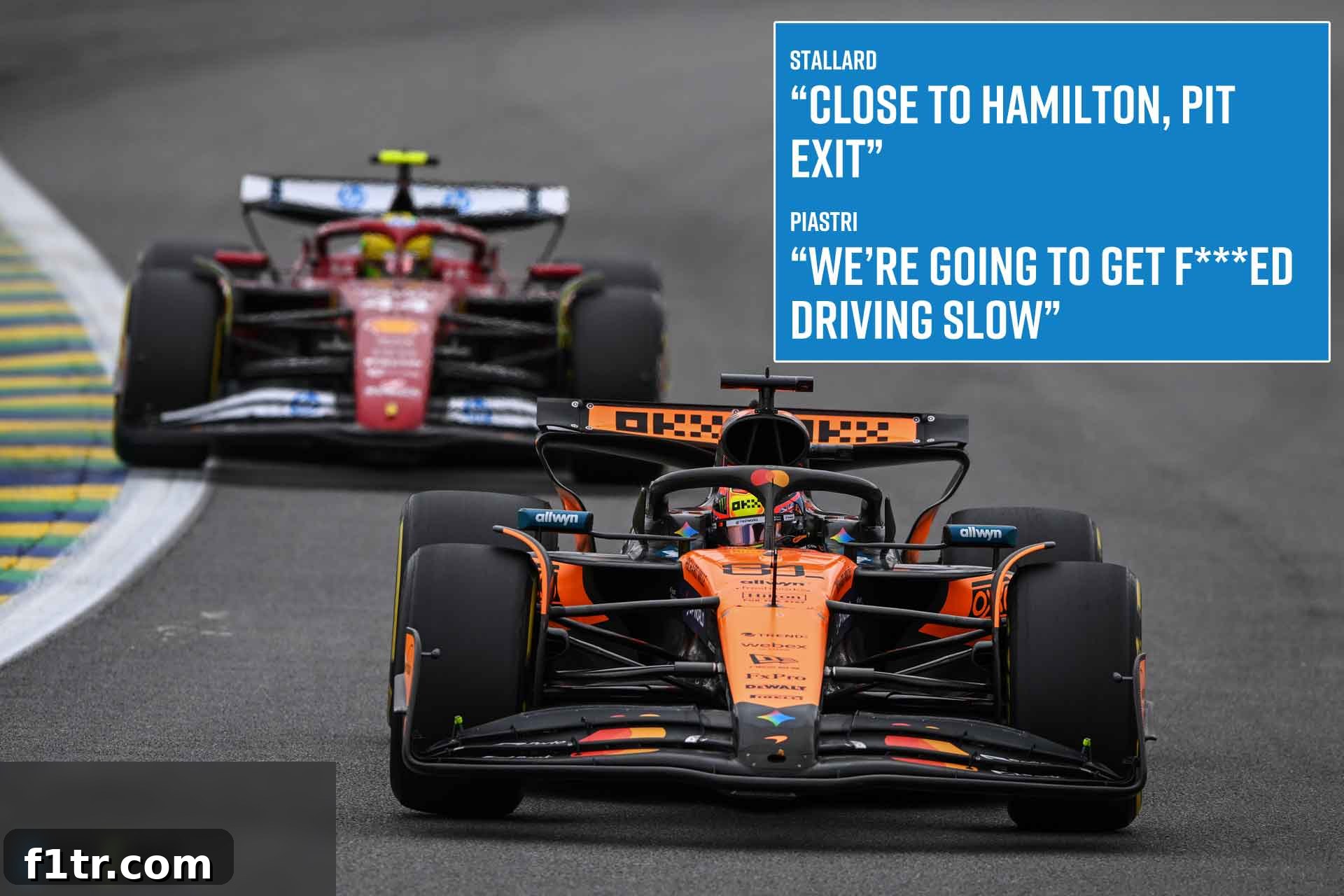
However, Lewis Hamilton, a driver known for his relentless pursuit of every tenth, chose to disregard this instruction. He proceeded to un-lap himself from Piastri, much to the dismay of the McLaren driver. From Piastri’s perspective, this was an unwelcome distraction, forcing him to lose precious time and compromising his rhythm, especially when he realized the significant performance disparity between the two cars would soon re-emerge.
The following radio communications highlight Hamilton’s struggles and the team’s attempts to manage the situation, ultimately leading to his early retirement from the race.
| Lap: 19/71 HAM: 1’15.240 | |||||||||||||||||||||||||||||||||||||||||||||||||||
| Hamilton | Losing my rears already. | ||||||||||||||||||||||||||||||||||||||||||||||||||
| Lap: 21/71 HAM: 1’15.452 | |||||||||||||||||||||||||||||||||||||||||||||||||||
| Adami | Understood. | ||||||||||||||||||||||||||||||||||||||||||||||||||
| Hamilton | I can’t keep up mate. | ||||||||||||||||||||||||||||||||||||||||||||||||||
| Adami | Understood. I’ll look into it. | ||||||||||||||||||||||||||||||||||||||||||||||||||
| Lap: 22/71 HAM: 1’15.409 | |||||||||||||||||||||||||||||||||||||||||||||||||||
| Adami | Suggest the left toggle, turn six to turn 10. | ||||||||||||||||||||||||||||||||||||||||||||||||||
| Lap: 23/71 HAM: 1’16.476 | |||||||||||||||||||||||||||||||||||||||||||||||||||
| Hamilton | Yeah, rear’s gone off. | ||||||||||||||||||||||||||||||||||||||||||||||||||
| Adami | Copy that. | ||||||||||||||||||||||||||||||||||||||||||||||||||
| Lap: 24/71 HAM: 1’15.721 | |||||||||||||||||||||||||||||||||||||||||||||||||||
| Hamilton | Yeah, just pulling away mate. | ||||||||||||||||||||||||||||||||||||||||||||||||||
| Adami | Suggest diff mid four. | ||||||||||||||||||||||||||||||||||||||||||||||||||
| Lap: 25/71 HAM: 1’16.093 | |||||||||||||||||||||||||||||||||||||||||||||||||||
| Adami | Suggest five metres earlier braking to four. | ||||||||||||||||||||||||||||||||||||||||||||||||||
| Lap: 26/71 HAM: 1’15.650 | |||||||||||||||||||||||||||||||||||||||||||||||||||
| Adami | It was a better turn four and 10,11 as well. Ocon lap time, ahead 15.5 | ||||||||||||||||||||||||||||||||||||||||||||||||||
| Lap: 27/71 HAM: 1’15.978 | |||||||||||||||||||||||||||||||||||||||||||||||||||
| Hamilton | I can’t match that mate. I have no rear end right now. | ||||||||||||||||||||||||||||||||||||||||||||||||||
| Adami | Understood. | ||||||||||||||||||||||||||||||||||||||||||||||||||
| Hamilton | Feels like the suspension’s broken or something. Cross-weight. | ||||||||||||||||||||||||||||||||||||||||||||||||||
| Adami | Copy. Taking a look. | ||||||||||||||||||||||||||||||||||||||||||||||||||
| Lap: 28/71 HAM: 1’15.612 | |||||||||||||||||||||||||||||||||||||||||||||||||||
| Adami | Red FM7, multi red FM7. You’re doing a good job, considering the damage. | ||||||||||||||||||||||||||||||||||||||||||||||||||
| Lap: 29/71 HAM: 1’15.580 | |||||||||||||||||||||||||||||||||||||||||||||||||||
| Hamilton | I’m pushing mate, I just don’t have any grip. | ||||||||||||||||||||||||||||||||||||||||||||||||||
| Adami | And we have a five-second time penalty for collision. Push on. We are P14. | ||||||||||||||||||||||||||||||||||||||||||||||||||
| Lap: 30/71 HAM: 1’15.685 | |||||||||||||||||||||||||||||||||||||||||||||||||||
| Hamilton | These guys are a joke. Complete joke. The car moved over on me, so I clipped my wing. | ||||||||||||||||||||||||||||||||||||||||||||||||||
| Hamilton | I’m sliding, I’m going to end up in the barriers, the rear’s dropping off in 10. | ||||||||||||||||||||||||||||||||||||||||||||||||||
| Adami | Understood. | ||||||||||||||||||||||||||||||||||||||||||||||||||
| Lap: 31/71 HAM: 1’15.546 | |||||||||||||||||||||||||||||||||||||||||||||||||||
| Hamilton | Doing my best to keep on it. | ||||||||||||||||||||||||||||||||||||||||||||||||||
| Lap: 32/71 HAM: 1’20.294 | |||||||||||||||||||||||||||||||||||||||||||||||||||
| Adami | And box, Lewis, box for medium. And some lift-and-coast now for the pack. | ||||||||||||||||||||||||||||||||||||||||||||||||||
Hamilton’s team, Mercedes, likely advised against passing Piastri because they had already decided to retire his car. His performance was severely compromised by the damage, and he was making no significant progress up the order. Furthermore, his third pit stop was strategically used to serve a five-second time penalty incurred for an earlier collision with Franco Colapinto. Race control had confirmed the successful serving of this penalty, ensuring it would not carry over to the next race. With the penalty dealt with and the car damaged beyond competitive repair, there was little to gain from pushing Hamilton to un-lap himself, especially at the expense of another competitor.
Piastri’s Strategic Conundrum and the Cost of Lost Time
For Oscar Piastri, the incident with Hamilton presented a fresh challenge in an already demanding race. His race engineer, Tom Stallard, initially tried to reassure him, telling him not to worry about Hamilton as he wasn’t directly in their race. However, Stallard also acknowledged Piastri’s valid concern about the time he was losing in traffic.
Piastri was given the option to pit for fresh tyres, which might have helped him escape the temporary disruption caused by Hamilton. Yet, the young Australian wisely assessed the risks. He did not want to pit and potentially emerge behind a DRS train of cars, specifically mentioning the Racing Bulls (referred to by their former name, AlphaTauris) and Pierre Gasly’s Alpine. Such a situation would have negated any potential benefit of fresh tyres, as he would have been stuck in traffic, losing even more time.
The immediate consequence of Hamilton’s un-lapping for Piastri was clear and tangible: he lost almost a full second on his first lap spent in Hamilton’s slipstream and then having to navigate around the slower Mercedes. In Formula 1, where races are often decided by fractions of a second, a one-second loss is significant and can have a cascading effect on a driver’s strategy and ultimate finishing position.
F1’s blue flag rules are designed to assist leading drivers in lapping slower cars, ensuring they don’t lose undue time. However, even with these rules, drivers can still lose considerable time in traffic, as evidenced by incidents like Max Verstappen being delayed by two Alpine drivers in Baku. Hamilton’s un-lapping, while technically permissible, exacerbated Piastri’s difficulties, turning a potentially clean lap into a compromised one.
After briefly pulling away, Hamilton’s damaged car quickly lost pace again, bringing him back towards Piastri. He was then shown blue flags, signaling him to let the McLaren by once more. However, almost simultaneously, Mercedes called him into the pits to retire the car. As Hamilton made his way down the pit lane, he spotted Piastri following him in. In a display of commendable sportsmanship, the Mercedes driver took the unusual step of pulling over at the pit lane entrance to let Piastri pass, preventing any further obstruction and acknowledging the earlier disruption.
The following table provides a dual perspective, showing both Piastri’s and Hamilton’s radio messages, albeit separated by a lap due to their relative track positions.
| Lap: 33/71 PIA: 1’14.870, HAM: 1’41.262 | |||||||||||||||||||||||||||||||||||||||||||||||||||
| Piastri | Asked about the life of his medium tyres It’s still okay. |
Adami | Hamilton pits We are serving the penalty. |
||||||||||||||||||||||||||||||||||||||||||||||||
| Stallard | Oscar how’s the grip overall? Any evidence the hard may be better than [first practice]? Didn’t look too bad on Aston Martin | Adami | Piastri approaching, race leader. | ||||||||||||||||||||||||||||||||||||||||||||||||
| Lap: 34/71 PIA: 1’15.419, HAM: 1’14.832 | |||||||||||||||||||||||||||||||||||||||||||||||||||
| Piastri | It’s difficult to know, but the medium feels good for now. | Hamilton | Can I unlap myself or not? | ||||||||||||||||||||||||||||||||||||||||||||||||
| Stallard | Be close to Hamilton exit, he’s behind. Hamilton is a lapped car. | Adami | Just wait for Piastri to stop, should stop soon, prefer to stay there. Hamilton passes Piastri approaching turn one |
||||||||||||||||||||||||||||||||||||||||||||||||
| Lap: 35/71 PIA: 1’15.048, HAM: 1’13.844 | |||||||||||||||||||||||||||||||||||||||||||||||||||
| Stallard | Last lap had more tailwind at turn eight entry careful with the braking point there. | Adami | We have solid blues, Piastri behind. | ||||||||||||||||||||||||||||||||||||||||||||||||
| Lap: 36/71 PIA: 1’15.967, HAM: 1’14.279 | |||||||||||||||||||||||||||||||||||||||||||||||||||
| Stallard | Hamilton un-laps himself from Piastri No problem Oscar, he’s not in our race. |
||||||||||||||||||||||||||||||||||||||||||||||||||
| Piastri | Yeah, we’re going to get fucked driving slow. | ||||||||||||||||||||||||||||||||||||||||||||||||||
| Stallard | Oscar if we pit, you’ll be behind three cars in a DRS train, two AlphaTauris [Racing Bulls] and an Alpine. Are you happy with that? | ||||||||||||||||||||||||||||||||||||||||||||||||||
| Piastri | No. | ||||||||||||||||||||||||||||||||||||||||||||||||||
| Lap: 37/71 PIA: 1’15.096, HAM: 1’24.144 | |||||||||||||||||||||||||||||||||||||||||||||||||||
| Adami | Cool the PU down and box, Lewis, box, we are retiring the car. Be careful with Piastri behind, three seconds. | ||||||||||||||||||||||||||||||||||||||||||||||||||
| Adami | Flashing blues to Piastri behind. Hamilton pulls over in pit lane entrance to let Piastri through |
||||||||||||||||||||||||||||||||||||||||||||||||||
| Adami | Thanks, mate, wasn’t our weekend. We’ll come back stronger. | ||||||||||||||||||||||||||||||||||||||||||||||||||
The Domino Effect on Piastri’s Race
One has to wonder if McLaren would have made a different strategic call for Piastri had they been aware of Mercedes’ imminent decision to retire Hamilton’s car. Piastri had just reported that his medium tyres still felt good, suggesting that a longer stint or even a one-stop strategy might have been viable, potentially putting him in a much stronger strategic position later in the race. The disruption caused by Hamilton and the subsequent need to react to a changing race picture certainly complicated McLaren’s strategy.
Piastri eventually made a pit stop to serve his own 10-second time penalty for an unrelated incident. Upon rejoining the race, his concerns about what now looked like an unavoidable two-stop strategy became vocal.
| Lap: 38/71 PIA: 1’20.264 | |||||||||||||||||||||||||||||||||||||||||||||||||||
| Stallard | You’re doing a good job. Tyre update, still OK? | ||||||||||||||||||||||||||||||||||||||||||||||||||
| Piastri | Yeah, it’s still fine. | ||||||||||||||||||||||||||||||||||||||||||||||||||
| Stallard | Oscar, we’re box this lap, box this lap. | ||||||||||||||||||||||||||||||||||||||||||||||||||
| Piastri | Copy, box. | ||||||||||||||||||||||||||||||||||||||||||||||||||
| Stallard | Clinical onto the marks, there will be the 10-second penalty. | ||||||||||||||||||||||||||||||||||||||||||||||||||
| Lap: 39/71 PIA: 1’43.296 | |||||||||||||||||||||||||||||||||||||||||||||||||||
| Piastri | Oscar pit lane. | ||||||||||||||||||||||||||||||||||||||||||||||||||
| Lap: 44/71 PIA: 1’13.218 | |||||||||||||||||||||||||||||||||||||||||||||||||||
| Piastri | I hope you’re a bit more optimistic about this strategy than I am, because I don’t look very pretty from where I’m sat. | ||||||||||||||||||||||||||||||||||||||||||||||||||
| Lap: 45/71 PIA: 1’13.530 | |||||||||||||||||||||||||||||||||||||||||||||||||||
| Stallard | This looks best to us, Oscar, because of the expected deg on the soft. | ||||||||||||||||||||||||||||||||||||||||||||||||||
While his 10-second penalty undoubtedly inflicted the most significant damage to Piastri’s race outcome, the lost time and strategic ripple effect from Hamilton’s un-lapping incident were not insignificant. When Max Verstappen emerged from the pits just three seconds ahead of Piastri on lap 55, and later, when Piastri closed in on George Russell during the final laps, McLaren strategists must have been left to ponder what might have been. Had Hamilton adhered to his race engineer’s instruction not to un-lap himself, Piastri might have had a marginally cleaner race, retained crucial tenths, and perhaps even found himself in a more advantageous track position at those critical junctures.
Conclusion: The Fine Margins of F1 Strategy
The Brazilian Grand Prix incident involving Lewis Hamilton and Oscar Piastri serves as a poignant reminder of the fine margins and intricate strategic dance that define Formula 1. Even seemingly small deviations from team instructions or minor disruptions on track can cascade into significant consequences, impacting a driver’s performance, strategy, and ultimately, their race result. For Piastri, a promising talent, the extra time lost and the strategic complexities added to his race by Hamilton’s un-lapping were unwelcome variables. While Hamilton’s sporting gesture in the pit lane demonstrated his class, the events preceding it underscore how every decision, every instruction, and every action on track can have an unforeseen ripple effect on competitors, highlighting the relentless and often unforgiving nature of top-tier motorsport. The incident remains a talking point, showcasing the ever-present tension between individual driver instinct and overarching team strategy in the quest for championship glory.