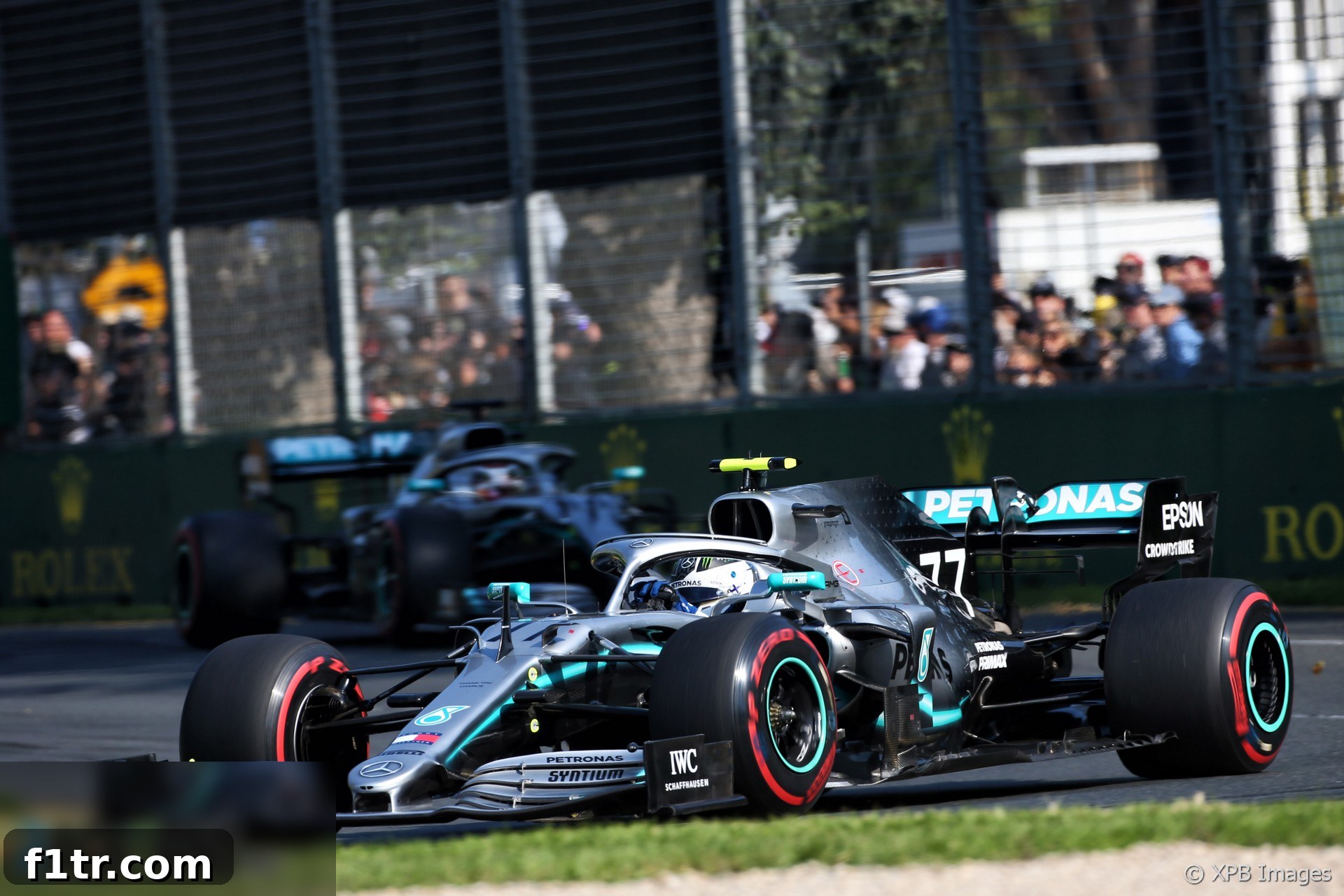
In the high-stakes world of Formula 1, every word uttered by a driver is scrutinized, especially after a challenging race. Following the opening round of the season, a Grand Prix that saw Mercedes AMG Petronas driver Lewis Hamilton finish second behind his teammate Valtteri Bottas, rival Sebastian Vettel made a pointed comment. Vettel suggested that Hamilton had slowed down during the race merely out of “boredom,” a claim that Hamilton swiftly refuted, clarifying that his approach was a deliberate act of managing the gap and preserving his tires. This incident not only highlighted the intense rivalry at the pinnacle of motorsport but also offered a glimpse into the complex strategic decisions and mental fortitude required to compete at the highest level.
The race itself began with an unexpected twist for the reigning world champion. Starting from pole position, Hamilton lost the lead to Valtteri Bottas almost immediately off the grid. Bottas, demonstrating exceptional traction and reaction, got away better, seizing the advantage into the first corner. For Hamilton, this meant an immediate shift in focus from leading the charge to playing a strategic long game, with tire management quickly becoming his paramount priority. This early setback set the tone for a race that would test Hamilton’s adaptability and strategic acumen, rather than his outright pace from the front.
Hamilton elaborated on his strategy, explaining the intricate balance required to navigate a Formula 1 race. “Valtteri had a lot more pace in the car in those initial laps,” Hamilton stated, acknowledging his teammate’s strong start. However, he quickly underscored the strategic reality of the circuit: “But here you need a 1.8-second delta to overtake the car ahead. So, as soon as we got through Turn 1, it was really about managing.” His intent was clear: to maintain a close proximity, within two or three seconds of Bottas, without overstressing his Pirelli tires. This delicate act of managing the gap is a cornerstone of F1 strategy, where a driver must constantly weigh aggressive pursuit against the long-term health of their machinery.
The situation was further complicated by an unforeseen “issue with the car,” which Hamilton mentioned. While he didn’t specify the exact nature of the problem, such an issue in Formula 1 can range from minor handling imbalances to more significant power unit concerns. Whatever it was, this factor contributed to the gap between him and Bottas slowly but steadily increasing, further cementing his decision to shift focus from attacking to defending his position and preserving his equipment. The psychological impact of such a development can be significant; a driver accustomed to leading from the front suddenly finds themselves in a reactive position, forced to adapt their driving style and race plan on the fly.
Adding another layer of complexity to Hamilton’s race was the timing of his pit stop. “I was trying to look after the tyres and then I got [pit] stopped super-early in reaction to the Ferraris,” he revealed. This defensive strategic call, made by the Mercedes pit wall to cover a potential undercut from Ferrari, instantly altered Hamilton’s race trajectory. He understood the implications immediately: “I knew from then on the race was done because I had 47 laps [to go], so I knew immediately I was going to be in trouble on the long run.” This meant a significantly longer stint on the hard compound tires than was ideal, forcing him to adopt an even more conservative approach to preserve tire life until the chequered flag.
The decision to drive “well off the pace” was therefore not a sign of boredom, but a calculated survival mechanism. Hamilton consciously backed off, prioritizing tire longevity over raw speed. This was in stark contrast to what he observed with other competitors. He noted, “I knew on those following laps Max [Verstappen] and Valtteri were still out and they kept going for laps and laps so I knew at the end I would have someone on my back.” This awareness of his rivals’ strategies underscored the immense pressure Hamilton was under. Pushing harder in the middle phase of the race might have offered a temporary gain but would have inevitably led to severe tire degradation, making him vulnerable in the crucial closing laps.
Comparing his approach to others, Hamilton drew a parallel with Sebastian Vettel’s own struggles. Vettel, whose tires were significantly older towards the end of the race, experienced considerable degradation. Hamilton explained his rationale: “But rather than push and keep close, struggle with the tyres and at the end have big degradation, which Vettel had which was understandable because his tyres were so old, I was quite happy with the pace I was able to pull out at the end.” This perspective highlights a fundamental tenet of modern F1: sometimes, the fastest way to the finish line is not to drive flat out, but to drive intelligently and manage resources. His ability to still demonstrate strong pace at the very end of the race, despite the early pit stop and long stint, was a testament to his exemplary tire management skills.
Reflecting on the outcome, Hamilton characterized his second-place finish in the season opener as merely a “light patch of adversity.” This outlook speaks volumes about his mindset as a multiple world champion. Every race, even one where victory eludes him, is seen as an opportunity for learning and growth. His unwavering self-belief was evident in his assessment of his own performance: “I’m generally happy with how I drove today. I did what I needed to do, no more, no less.” This pragmatic evaluation underscores a driver who understands the nuances of race craft and strategic execution, even when the cards don’t fall perfectly into place.
Addressing the widening gap to Bottas, Hamilton clarified, “I don’t focus on the gap because I allowed the gap to be the size that it was. So that’s no real issue for me.” This statement directly counters any suggestion of disengagement or boredom, reinforcing that every decision on track was a conscious choice within the parameters of his given strategy and car performance. He acknowledged that “obviously the strategy was not ideal in the scenario that I had,” but maintained confidence in his personal contribution: “But with what I was given I think I did a relatively decent job it’s just obviously the start I lost out quite a lot.” The start, where he conceded the lead, remained the primary area for self-criticism, a testament to his relentless pursuit of perfection in every aspect of his driving.
Ultimately, this early-season Grand Prix served as a stark reminder of the multifaceted challenges inherent in Formula 1. It showcased that even for a driver of Hamilton’s caliber, success is not solely about raw speed but also about meticulous strategy, expert tire management, effective communication with the pit wall, and the mental fortitude to adapt when circumstances take an unexpected turn. His calm and analytical response to a race where he didn’t secure victory, coupled with his dismissal of external criticisms, solidified his reputation as a master strategist and a formidable competitor, always looking ahead to the next challenge on the calendar.
2019 F1 season: Key Moments and Developments
- Crying in the Melbourne car park at 2019 grand prix was my career low – Ocon
- McLaren Racing reports reduced £71 million loss in 2019
- Kvyat: Hockenheim podium last year was “my biggest achievement” so far
- How the FIA’s new encrypted fuel flow meter targets Ferrari’s suspected ‘aliasing’ trick
- “He smashed my office door”: 23 must-see moments from ‘Drive to Survive’ season two
Browse all 2019 F1 season articles