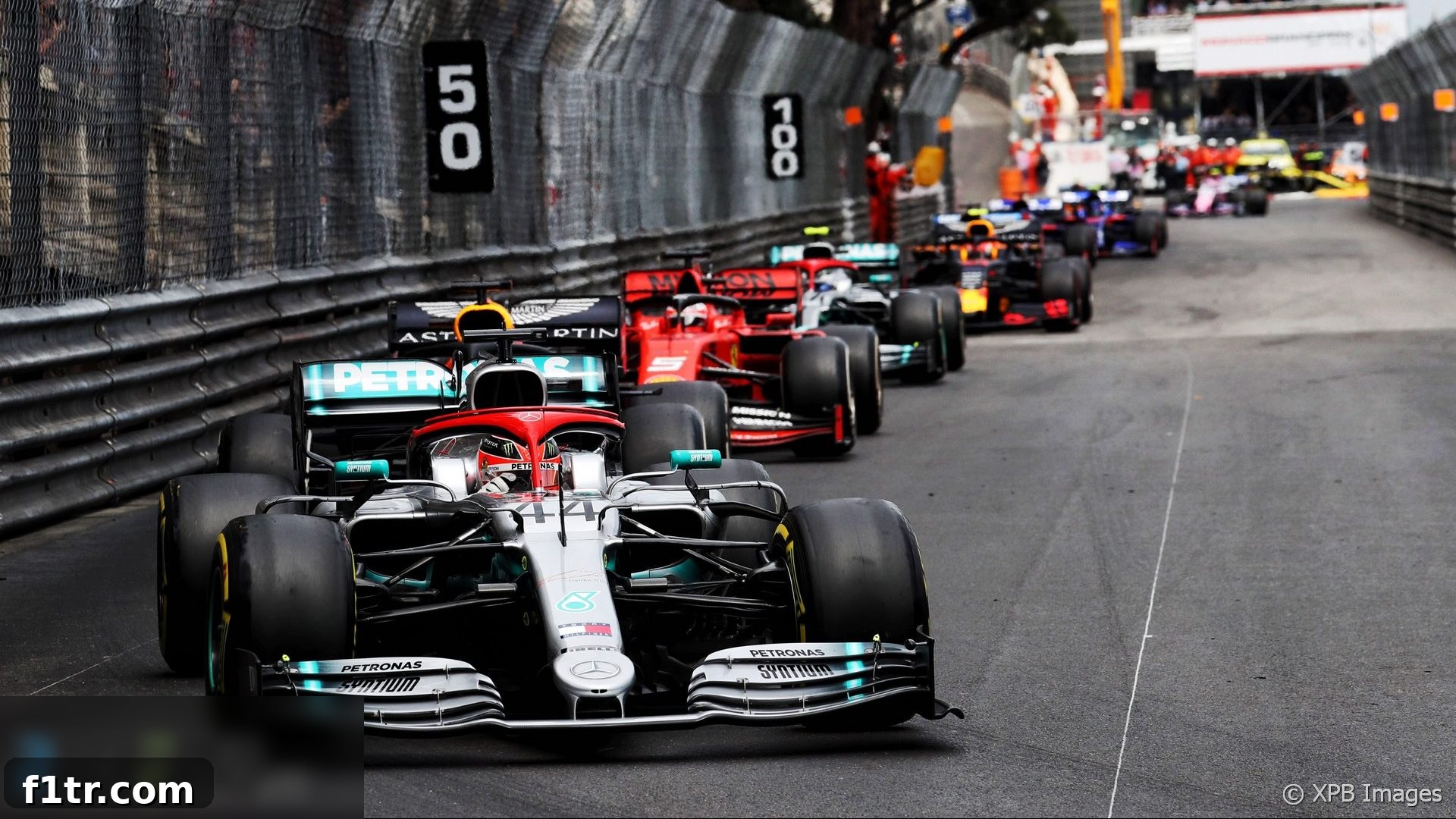
Lewis Hamilton’s “Average” Start to 2019 F1 Season: A Champion’s Relentless Pursuit of Perfection
In the fiercely competitive realm of Formula 1, where the quest for victory is measured in milliseconds, even a dominant lead in the Driver’s Championship can be met with profound self-critique by the sport’s most elite athletes. This unique perspective was notably articulated by Lewis Hamilton during the early phase of the 2019 F1 season. Despite holding a significant 17-point advantage over his closest competitor and Mercedes teammate, Valtteri Bottas, Hamilton unexpectedly labeled his own performances across the initial races as merely “average.” This candid admission, coming from a driver with multiple world titles to his name, offered a rare insight into the champion’s unwavering drive for perfection, regardless of the scoreboard.
The remarks followed his hard-won triumph at the iconic Monaco Grand Prix, a race renowned for its demanding street circuit and historical significance. Hamilton, even in victory, expressed a lingering discomfort within the cockpit of his Mercedes-AMG F1 W10 EQ Power+ and a sense that he was not fully harnessing his unparalleled talent. He felt he wasn’t consistently delivering the absolute peak performance he knew he was capable of. This seemingly contradictory sentiment—leading the championship while feeling personally underwhelmed—highlights the incredibly high internal standards that define a true Formula 1 legend. For Hamilton, success is not just about crossing the finish line first; it’s about extracting every last ounce of potential from himself and his machine.
The Champion’s Mindset: Redefining “Average” at the Pinnacle of Motorsport
“I definitely feel that it’s been quite an average performance from myself,” Hamilton declared with characteristic honesty. He then mused, “Maybe above average but generally quite average for the first six races.” This introspective assessment from a driver who, by any objective measure, was having an exceptional start to the season—securing four victories and two second-place finishes in the opening six rounds—is a testament to his relentless pursuit of excellence. For Hamilton, “average” doesn’t imply a lack of effort or capability; rather, it signifies a deviation from his own formidable benchmark of perfection.
He further elaborated on this internal struggle, explaining, “I feel like I’ve got the best I could get. I’ve arrived prepared – the best prepared I could be – but in terms of extracting the true performance from the car, I feel like I’ve struggled a little bit in these six races.” This distinction is crucial. Hamilton wasn’t questioning his dedication or his meticulous preparation for each Grand Prix. Instead, his focus was on the incredibly nuanced and challenging task of unlocking the full, untapped potential of the Mercedes W10. In Formula 1, the gap between a “good” performance and a “perfect” one can be minuscule, yet it’s this imperceptible margin that champions tirelessly strive to conquer. This candid reflection offered fans a deeper understanding of the mental fortitude and self-analysis required to operate at the absolute zenith of global motorsport.
Dominance Despite Doubts: A Look at the Early 2019 Season
Despite Hamilton’s personal reservations, the early rounds of the 2019 F1 season showcased Mercedes-AMG Petronas Formula One Team’s formidable prowess. The team initiated the season with an unprecedented series of six consecutive one-two finishes, a clear demonstration of the superior engineering of the Mercedes W10 and the formidable pairing of its drivers. Lewis Hamilton’s individual statistics from this period were nothing short of exceptional, featuring triumphs in Bahrain, China, Spain, and the high-pressure environment of Monaco, along with two crucial second-place finishes. This remarkable consistency solidified his position at the apex of the Driver’s Championship standings.
The Mercedes W10, the fruit of relentless innovation and development, was widely regarded as the benchmark car on the grid. It combined cutting-edge aerodynamics, a potent power unit, and exceptional reliability, allowing the team to dictate the pace for much of the season. However, as Hamilton’s commentary revealed, even the most dominant machinery presents its own unique set of challenges. Drivers are constantly battling to adapt their technique, to understand the subtle feedback from the chassis, and crucially, to manage the highly sensitive Pirelli tyres to extract peak performance over an entire race distance. It is within this intricate equilibrium that even a champion can sense a slight misalignment, leading to the self-assessment of “average” despite outwardly stellar results.
The Intricate Dance of Driver and Machine: Mastering the W10 and Tyre Performance
Hamilton’s perceived struggles often centered around his ability to consistently find the optimal operating window for the Mercedes W10 and its tyres. Modern Formula 1 vehicles are incredibly sophisticated and delicate machines, where even the slightest alteration to aerodynamic settings, suspension geometry, or engine mapping can have profound implications for handling and speed. Discovering that perfect setup that allows a driver to push the car to its absolute limits while preserving tyre integrity is an intricate art, one that evolves significantly throughout the course of a championship season. The W10, while a class leader, demanded continuous adaptation and a deep understanding of its character, even from a driver of Hamilton’s immense experience and talent.
A particularly challenging aspect, as highlighted by Hamilton, was the delicate “tyre window.” Pirelli’s Formula 1 tyres are notoriously sensitive, engineered to perform optimally within a very specific temperature range. Deviating from this narrow band, whether the tyres become too hot or too cold, can lead to a drastic reduction in grip and rapid degradation, making the car feel inconsistent, unpredictable, and significantly slower. Hamilton noted that “the window is even smaller this year,” underscoring the heightened difficulty in managing this critical element. This challenge transcends raw speed; it demands an intricate understanding of how the car interacts with its tyres through every corner, under every braking point, and during every acceleration phase. It requires precise driving adjustments, meticulous throttle control, and strategic tyre conservation, all while relentlessly pushing for maximum pace. For a perfectionist like Hamilton, who thrives on absolute control and unwavering precision, any perceived difficulty in this crucial area would inevitably lead to a feeling of unfulfilled potential, irrespective of the victorious outcomes.
The Champion’s Unyielding Resolve: A Quest for Continuous Improvement
What truly distinguishes champions in any sport is not merely their innate talent, but their insatiable desire for continuous improvement, even when they occupy the very pinnacle of their profession. Lewis Hamilton’s reflections serve as a powerful testament to this unique mindset. For him, leading the Driver’s Championship was a significant achievement, but it did not overshadow the internal battle to attain his personal best. This relentless pursuit of perfection has been a defining characteristic of his illustrious career, empowering him to consistently adapt, innovate, and evolve year after year in the ever-changing landscape of Formula 1.
His unwavering expectation to perform better as his familiarity with the W10 deepened was not merely wishful thinking but a deeply held conviction rooted in years of unparalleled experience. “I guess it’s kind of similar to other seasons but without doubt it’s going to improve as the knowledge you gain over the season race by race, particularly with the tyres this year, where the window is even smaller, I do anticipate things will get better. As it will be for all of us,” he affirmed. This perspective underscores a profound understanding of the iterative nature of Formula 1 – the continuous cycle of feedback between driver, engineers, and telemetry data, leading to incremental yet vital gains and a deeper symbiotic understanding of the car’s nuanced capabilities.
Hamilton’s commitment to self-mastery was absolute. “I hope, at some stage, that I’m able to crack the issues that I’ve had and get back to the form that I have within me. Whether that’s the next race or ten races from now, I can’t really say but I am very, very focused on making sure I rectify any of those.” This potent declaration encapsulates the champion’s relentless drive. It is a profound promise to himself, to his dedicated team, and to his legions of fans that he would not rest until he felt he was operating at his absolute zenith. This extraordinary mental resilience, combined with his unmatched driving acumen, solidifies Lewis Hamilton’s legacy as one of the greatest and most compelling figures in the history of Formula 1.
Looking Ahead: The Unfolding Path to a Historic Sixth Title
Ultimately, the 2019 season culminated in Lewis Hamilton securing his sixth World Championship title, a monumental achievement that stands as a testament to his exceptional ability to not only “crack the issues” he identified but to elevate his performance to even greater heights as the season progressed. His initial self-assessment, though seemingly at odds with his commanding lead, proved to be a powerful indicator of his unparalleled internal standards and his methodical, analytical approach to Grand Prix racing. It vividly highlighted that even for the most decorated drivers, the ongoing journey of mastering an F1 car and maximizing its immense potential is an ever-evolving process, replete with subtle complexities and continuous learning.
Throughout 2019, fans and seasoned analysts alike watched with keen interest as Hamilton and the Mercedes team tirelessly refined their formidable package. His early season reflections served as a compelling prelude to a year where he demonstrated breathtaking consistency, strategic brilliance under pressure, and flashes of sheer driving genius that firmly established his dominance. His remarkable capacity to identify areas for improvement, even from a position of overwhelming strength, underscores the relentless drive and mental toughness required to succeed at the highest echelons of motorsport. What he humbly labeled an “average” start was, in reality, merely the foundational launching pad for what would become another legendary and record-breaking championship campaign.
More from the 2019 F1 Season
- Crying in the Melbourne car park at 2019 grand prix was my career low – Ocon
- McLaren Racing reports reduced £71 million loss in 2019
- Kvyat: Hockenheim podium last year was “my biggest achievement” so far
- How the FIA’s new encrypted fuel flow meter targets Ferrari’s suspected ‘aliasing’ trick
- “He smashed my office door”: 23 must-see moments from ‘Drive to Survive’ season two
Browse all 2019 F1 season articles