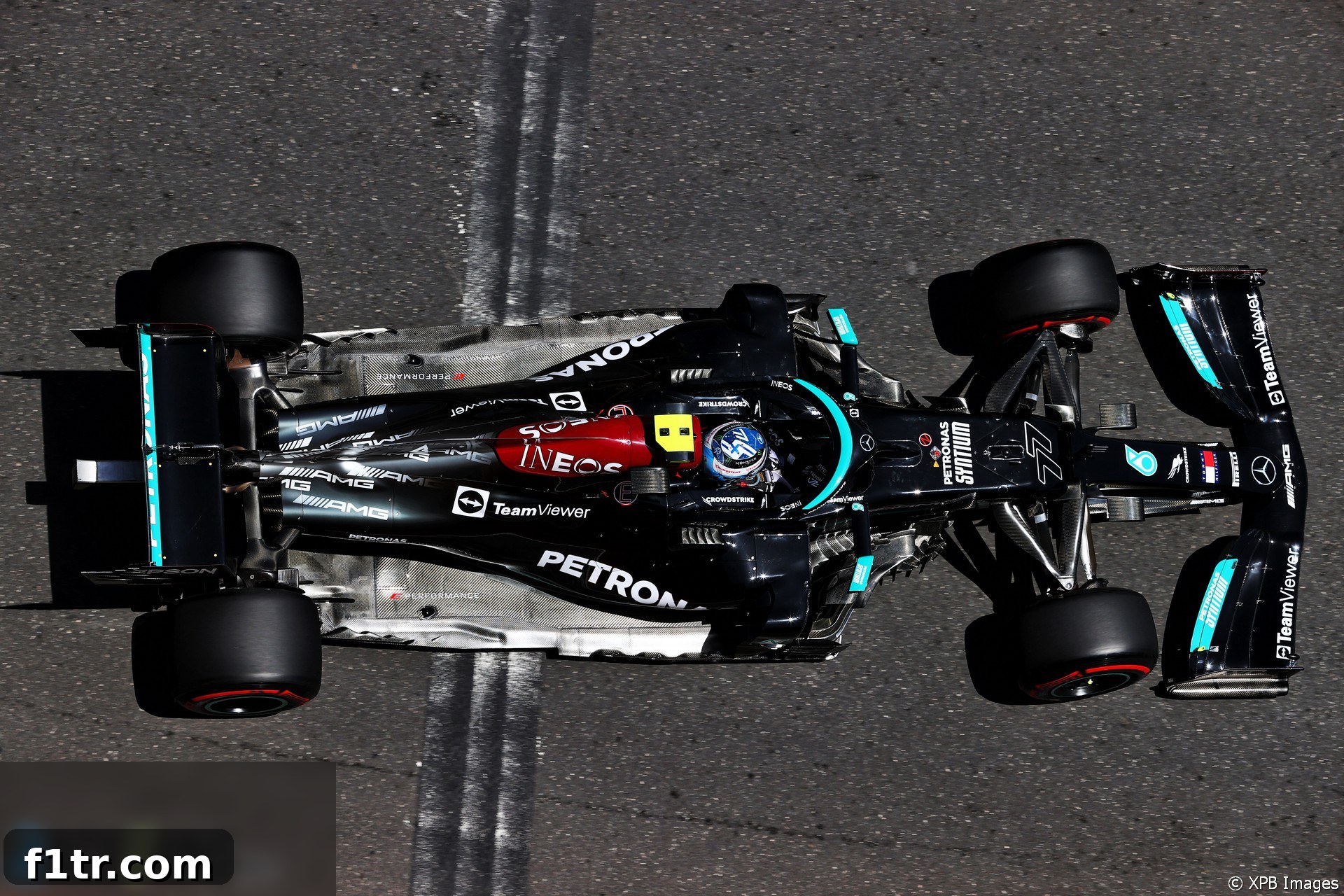
In a strategic move that has motorsport analysts and fans buzzing, the Mercedes-AMG Petronas Formula 1 Team has confirmed a significant change ahead of this weekend’s highly anticipated French Grand Prix. Both of their championship-contending drivers, Valtteri Bottas and Lewis Hamilton, will be utilizing different chassis for the challenging race at Circuit Paul Ricard. This rarely seen dual chassis swap underscores the meticulous approach Mercedes is taking in its ongoing fierce battle for the constructors’ and drivers’ championships.
The news was first acknowledged by Valtteri Bottas, who clarified that this chassis exchange was a pre-planned decision by the team, rather than a direct consequence or reactionary measure to his perplexing lack of pace at the preceding Azerbaijan Grand Prix in Baku. This assertion aims to dispel any speculation that his underperformance in Baku directly necessitated an emergency chassis change, highlighting instead a methodical rotation strategy designed for optimal car management over the demanding Formula 1 season. Such proactive planning is indicative of a top-tier team’s efforts to maintain peak performance across its entire machinery fleet.
Following a frustrating weekend in the streets of Baku, where he struggled to extract performance from his W12, Bottas openly admitted to being “puzzled by his lack of pace.” He speculated that the most “logical explanation” for his difficulties might stem from an issue with his car, rather than his driving or tire management. This candid admission from a seasoned driver like Bottas often signals deeper underlying problems, making the subsequent announcement of a chassis change all the more scrutinized by observers. The hope is that a fresh chassis will eliminate any lingering uncertainties and allow him to compete at the absolute maximum of his capability.
Confirming the details today, Bottas will indeed be driving a different chassis at Paul Ricard, though he emphasized it is not a brand-new unit. “It’s not a new chassis,” Bottas explained during a media session. “It’s different, and it was always planned for me to change to a different chassis at this point in the season.” This distinction is important, as teams typically rotate a limited number of chassis throughout the year to manage component life cycles and optimize resources. The chosen chassis for Bottas is one the team has successfully utilized previously, suggesting a level of confidence in its integrity and performance characteristics, alleviating concerns about potential defects from earlier incidents.
The specifics of the swap involve a direct exchange: Valtteri Bottas will now be campaigning with chassis number six, a unit that his illustrious teammate, Lewis Hamilton, has been using since the very beginning of the 2021 Formula 1 season. Concurrently, Hamilton will transition to chassis number four. This symmetrical swap is intriguing, as it ensures both drivers experience a different piece of core equipment, theoretically leveling the playing field in terms of hardware freshness and performance characteristics over time. It demonstrates a commitment from Mercedes to provide both drivers with competitive and reliable machinery, essential for a championship assault.
A spokesperson for the Mercedes-AMG Petronas F1 Team further elaborated on the rationale behind this significant chassis reshuffle, confirming that the change was primarily executed to ensure that their available chassis complete similar mileages over the course of the Formula 1 calendar. This strategy is vital for several reasons: it helps in distributing wear and tear evenly, allows for more comprehensive data collection across different units, and potentially extends the operational life of each chassis. Managing mileage is a critical aspect of F1 logistics, impacting everything from structural integrity to potential performance degradation over multiple race weekends. This meticulous approach is characteristic of Mercedes’ engineering excellence.
It’s worth noting that Bottas’s last chassis change occurred earlier in the season, following the Emilia-Romagna Grand Prix at Imola. That particular swap was necessitated by a dramatic high-speed collision with Williams driver George Russell, which resulted in significant and irreparable damage to his previous car. While the current change is described as “planned” and not a direct consequence of a recent crash, the memory of his Imola incident underscores the vulnerability of these complex machines and the importance of having robust backup plans and a rotation strategy. The team’s capacity to manage such incidents and component lifecycles speaks volumes about their operational depth.
Looking ahead to the French Grand Prix at Paul Ricard, Bottas expressed palpable optimism that the Mercedes W12 package will perform more favorably for both himself and Lewis Hamilton compared to its struggles in the tightly winding streets of Baku and Monaco. He posited that his challenging weekend in Azerbaijan was likely attributable to “a combination of many things,” rather than a single overarching fault. This multi-faceted explanation points to the intricate interplay of setup, tire compounds, track characteristics, and driver confidence, all of which contribute to a Formula 1 car’s ultimate performance potential on any given Sunday.
Reflecting on the nuances of performance variations between teammates, Bottas drew a clear parallel: “We saw that in Monaco, for me, I managed to find the set-up and the confidence and get the tyres to work and Lewis didn’t,” Bottas explained. “It almost felt like vice-versa in Baku. There was quite a big difference towards the end of the weekend with the set-up.” This highlights the incredibly fine margins that differentiate success from struggle in Formula 1, even between drivers within the same team. Minor adjustments to car setup can have profound effects on how a driver perceives and extracts performance, especially on circuits that push the limits of aerodynamic and mechanical grip.
Bottas further acknowledged that the setup direction taken by the team, particularly for his car, during the Baku weekend “wasn’t ideal,” exacerbated by “some other small things combined.” This critical self-assessment and team introspection are vital for continuous improvement in Formula 1. It suggests that while the chassis change is planned, it also serves as an opportune moment to reset and re-evaluate the baseline setup, ensuring both drivers have the best possible foundation for success at Paul Ricard. The quest for the perfect balance and optimal tire window is a constant, demanding challenge for every F1 team.
The Finnish driver also shed light on the inherent characteristics of the Mercedes W12, describing it as “quite on a knife-edge on those kind of tracks.” This refers specifically to the unique demands of street circuits like Monaco and Baku, which feature low-speed corners, tight chicanes, and unpredictable grip levels. On such circuits, the car’s aerodynamic efficiency and mechanical balance must be absolutely precise, leaving very little room for error in setup or driving style. A car that is “on a knife-edge” can be incredibly fast when dialed in perfectly, but equally unforgiving when the setup is slightly off, leading to a dramatic drop in performance and driver confidence.
However, Bottas expressed relief and anticipation for the upcoming races on more conventional circuits. “But I think at least the next few tracks it’s a bit more normal and hopefully we can get a reasonable set-up and that it’s not that easy to go into the wrong direction,” he commented. Paul Ricard, with its smooth tarmac, wide run-off areas, and a mix of high-speed curves and technical sections, offers a stark contrast to the unforgiving nature of street circuits. It provides a more stable environment for teams to fine-tune their cars and extract consistent performance, which Mercedes will be banking on to regain their competitive edge against a resurgent Red Bull Racing.
2021 French Grand Prix Outlook
The 2021 French Grand Prix marks a critical juncture in the Formula 1 season, particularly for the Mercedes-AMG Petronas F1 Team. After two challenging street circuits, the return to a more traditional racing venue like Circuit Paul Ricard offers a fresh opportunity to capitalize on their car’s strengths and address any lingering weaknesses. The circuit’s long straights and various corner profiles will test the W12’s all-around performance, making aerodynamic efficiency and tire management paramount. With the championship battle heating up, every point scored, and every strategic decision made, carries immense weight. The chassis swap could be a masterstroke or a mere footnote, but its intention is clear: Mercedes is leaving no stone unturned in their pursuit of ultimate performance and championship glory.