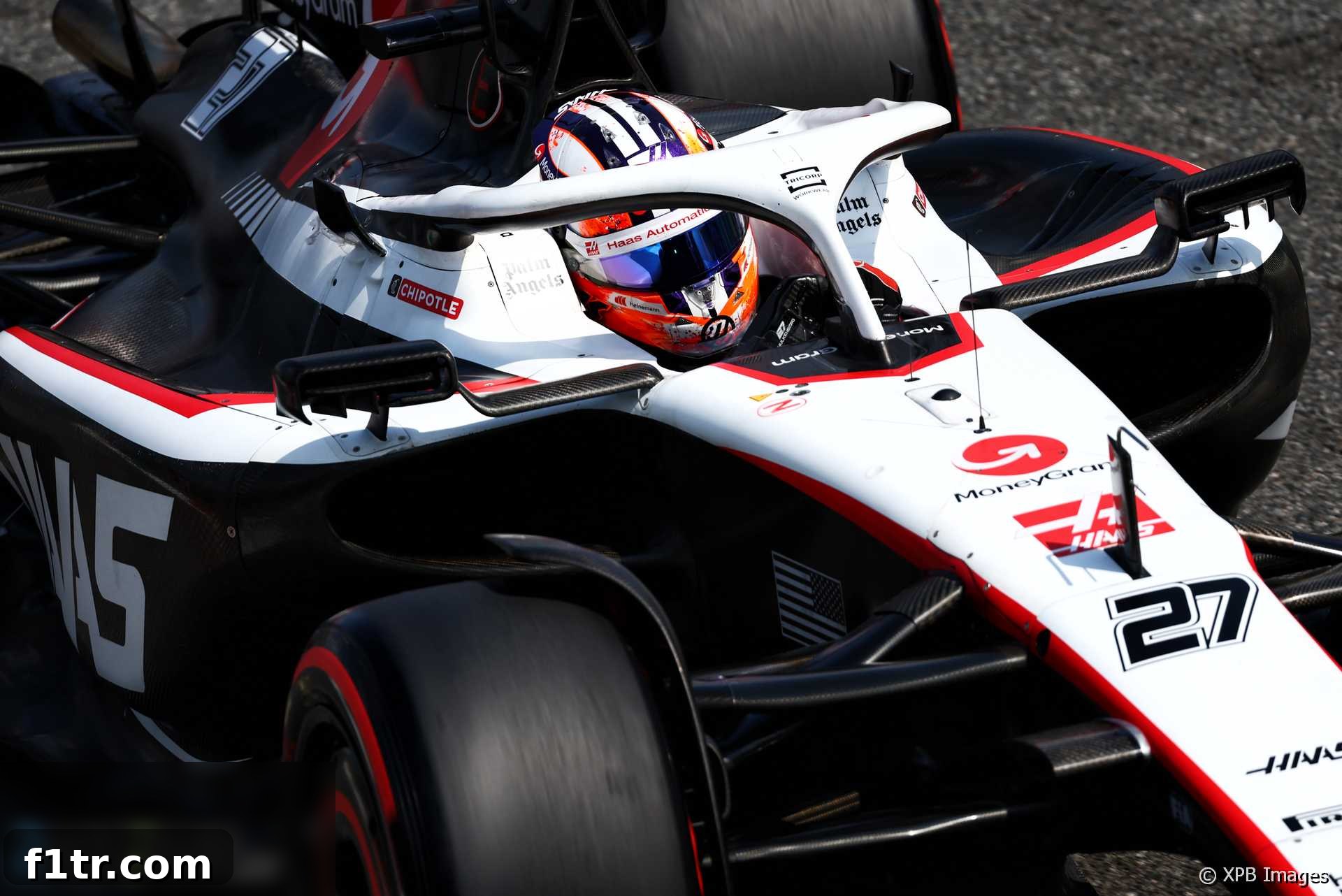
The Italian Grand Prix at Monza often serves as a barometer for Formula 1 teams, and for Haas F1, it marked a stark realization of their current performance struggles. At the iconic ‘Temple of Speed,’ drivers Nico Hulkenberg and Kevin Magnussen finished as the last running cars, the only competitors not on the lead lap when the checkered flag waved. This disheartening performance wasn’t just a blip; it underscored a persistent challenge that had plagued the team throughout the season: a significant lack of race pace and severe tire degradation, which consistently undermined strong qualifying efforts.
However, amidst the Monza gloom, a beacon of hope already flickered for the American outfit. Months prior to the Italian GP, Haas had initiated an ambitious project: their most extensive in-season upgrade package to date. This transformative development is slated for a crucial introduction at the team’s next home race, the United States Grand Prix in Austin, Texas, a highly anticipated event now just weeks away. Team principal Guenther Steiner openly described this as the biggest mid-season overhaul in the team’s history, signaling a profound shift in their technical approach.
Nico Hulkenberg, reflecting on the Monza weekend, acknowledged its gravity. “Monza was definitely the worst moment of the season in terms of performance,” he confided, highlighting the urgency behind the impending changes. Yet, he quickly added, “But even before Monza, this plan was in motion,” indicating that the team’s struggles had been recognized well in advance, prompting this proactive and radical engineering response. The German driver expressed cautious optimism, stating, “I hope obviously it will give us a big step forward, but I can only speculate now. I know what’s going on, and there’s a big push for that.” He jokingly referred to the upgrade as “an early Christmas present that gives us some performance,” a sentiment that speaks volumes about the team’s desperation for a competitive edge.
The need for such a drastic intervention became undeniable as the season progressed. Since scoring points at their previous home race in Miami back in May, Haas had endured a dry spell, failing to add to their championship tally. While both Hulkenberg and Magnussen have occasionally demonstrated impressive one-lap pace, securing strong grid positions, their race performance consistently suffered. The VF-23 car has shown a critical weakness in tire management, leading to rapid degradation that forces drivers into defensive strategies and compromises their ability to sustain competitive lap times over a full race distance. This chronic issue has been a source of frustration for the drivers and a significant headache for the engineering team.
Advert | Become a RaceFans supporter andgo ad-free
The Performance Conundrum: Why Haas Needed a Radical Change
Guenther Steiner elaborated on the critical juncture the team faced several months ago. He explained that Haas had reached a development dead-end with its existing car design. “We couldn’t find any performance anymore,” Steiner revealed. “We developed the whole year and there was nothing there anymore. At some stage, you need to decide we need to do something different here. We cannot keep on banging our head against a wall, trying.” This frank admission underscores the profound technical challenges of modern Formula 1 and the immense pressure teams face to constantly innovate and find performance gains.
The current technical regulations, introduced at the start of the 2022 season, brought about a significant aerodynamic paradigm shift. Many teams, including Haas, initially pursued various interpretations of these rules. However, one specific aerodynamic concept, pioneered and perfected by Red Bull Racing – the “downwash” sidepod configuration – quickly proved to be dominant. This design involves shaping the sidepods to direct airflow downwards towards the floor and diffuser, maximizing downforce and improving overall aerodynamic efficiency. Its success has been so profound that several other teams, recognizing its undeniable advantage, have progressively abandoned their original designs and moved towards this Red Bull-inspired philosophy. McLaren, for example, made a notable in-season concept change earlier in the year that yielded significant performance improvements, serving as a clear testament to the efficacy of such a strategic pivot.
A Radical Shift: Embracing the Red Bull-Inspired Downwash Concept
Steiner confirmed that Haas is now following suit. “You look at the other cars and you see they keep on finding [gains]. McLaren changed their system like this, they find something. At some stage, you need to see, hey, we need to change concept, we need to face reality.” This realization led Haas down a path of wholesale redesign, focusing on integrating the downwash sidepod architecture into their VF-23 chassis. This isn’t merely an incremental upgrade; it represents a fundamental reinterpretation of their car’s aerodynamic philosophy, aiming to unlock performance that their current design simply couldn’t provide.
However, implementing such a radical design change mid-season, particularly for a team like Haas, presents its own set of unique challenges and limitations. As a customer team, Haas obtains a significant portion of its parts, including the chassis and engine, from Ferrari. This arrangement, while cost-effective, inherently restricts the degree to which Haas can independently modify certain fundamental elements of its car. The chassis regulations themselves also dictate specific dimensions and structures that must be adhered to, limiting the freedom of aerodynamicists to fully adopt the downwash configuration in the exact manner that a constructor like Red Bull or McLaren might. Steiner acknowledged these constraints: “The concept of the car will change. Going in that direction, you’re limited with your chassis and a few other things as you all well know. But we are trying to go to that downwash shape now like everybody else has got.” Despite these inherent limitations, the team is committed to extracting as much performance as possible from this new direction.
Strategic Investment: Why Now Matters for Next Season
The decision to commit significant resources to this major upgrade for Austin also had an impact on the team’s development trajectory throughout the earlier part of the season. Haas had brought very few minor upgrades to its cars in recent months, consciously diverting its engineering and financial efforts towards this singular, transformative package. Steiner explained the strategic reasoning behind this: “The plan was to have more upgrades with the concept we have got now. But because we didn’t find performance, we did not introduce upgrades this year because we didn’t want to make them, there was no performance. There’s no point to make car parts if the car doesn’t go faster. So because we haven’t spent that money, we can now spend it on this big upgrade.” This pragmatic approach ensured that resources weren’t wasted on incremental improvements that would ultimately lead nowhere, instead being channeled into a project with the potential for a genuine step change.
While introducing such a drastic change late in the season carries inherent risks – particularly concerning integration and understanding the new aerodynamic characteristics – Steiner emphasized the long-term strategic benefits. The lessons learned from this major upgrade are intended to be invaluable for the development of next year’s chassis, the VF-24. “We had to say let’s do something this year so at least we’ve learned as much as possible for next year on that concept and maybe learn something which we can then integrate next year’s car as well,” he stated. This upgrade is not just about salvaging the remaining races of the 2023 season; it’s a crucial testbed for Haas’s future direction in Formula 1. Understanding how this new concept behaves, how it interacts with the tires, and how it can be optimized will provide a significant head start for the 2024 design cycle, potentially laying the foundation for a more competitive future.
Advert | Become a RaceFans supporter andgo ad-free
The Road Ahead: Hopes for Austin and Beyond
The United States Grand Prix at Austin now carries immense significance for the Haas F1 Team. It represents not just another race, but a pivotal moment that could redefine their season and provide critical insights for their future. The entire team, from engineers to drivers, is eagerly anticipating the opportunity to evaluate the new package on track. For Nico Hulkenberg and Kevin Magnussen, the prospect of a car that better manages its tires and offers more consistent race pace is undoubtedly a welcome one, potentially allowing them to translate their qualifying prowess into tangible race results and, critically, championship points.
The F1 paddock and fan base will be watching closely to see if Haas’s bold gamble pays off. A successful introduction in Austin could ignite a late-season resurgence, boost team morale, and, most importantly, provide concrete data and a clear developmental pathway for the 2024 challenger. Conversely, if the upgrade fails to deliver the expected performance gains, it could signal further challenges and a more difficult road ahead. However, the commitment shown by Guenther Steiner and the Haas F1 team to make such a fundamental change, even under tight constraints and late in the season, highlights their unwavering ambition to climb the competitive ladder in Formula 1 and escape the development cul-de-sac they found themselves in.
Bringing the F1 news from the source
RaceFans strives to bring its readers news directly from the key players in Formula 1. We are able to do this thanks in part to the generous backing of our RaceFans Supporters.
By contributing £1 per month or £12 per year (or the equivalent in other currencies) you can help cover the costs involved in producing original journalism: Travelling, writing, creating, hosting, contacting and developing.
We have been proudly supported by our readers for over 10 years. If you enjoy our independent coverage, please consider becoming a RaceFans Supporter today. As a bonus, all our Supporters can also browse the site ad-free. Sign up or find out more via the links below:
- Become a RaceFans Supporter
- RaceFans Supporter FAQ
Recent Formula 1 Articles
- Sainz’s Singapore win made Leclerc focus on improving his race pace – Clear
- Singapore and Austin retirements cost me top 10 championship place – Ocon
- How Ocon’s “extreme” height for an F1 driver is helping other tall racers
- Steward’s admission Verstappen should have had penalty frustrates his rivals
- Drivers back Singapore qualifying tweak as rule changes again for Japanese GP
Browse all Formula 1 Grand Prix articles