Alpine’s Monza Meltdown: Gasly and Ocon Reflect on Shock Q1 Elimination
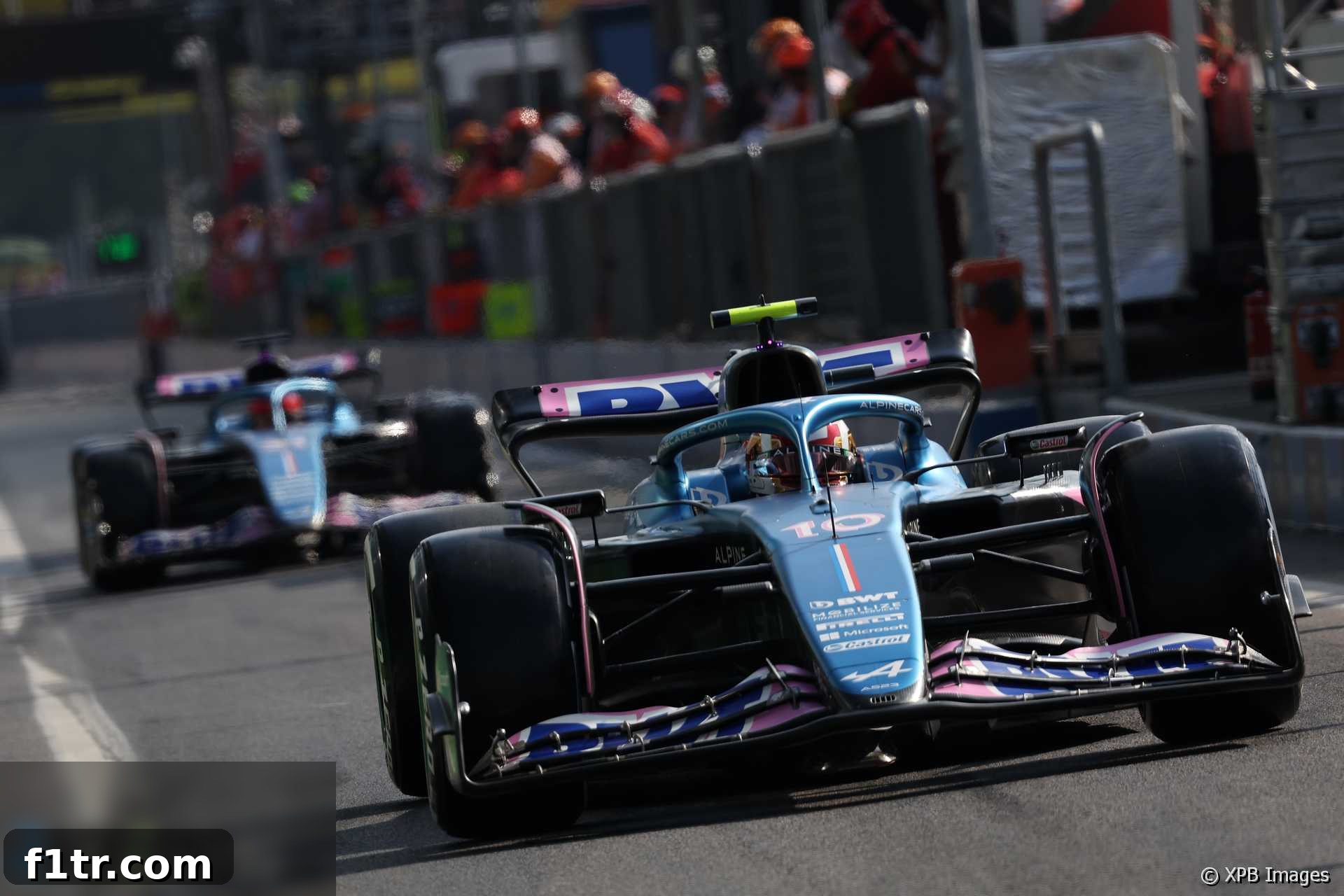
The iconic Monza circuit, often hailed as the ‘Temple of Speed,’ delivered a harsh reality check for the Alpine Formula 1 team at the recent Italian Grand Prix qualifying session. Both Alpine drivers, Pierre Gasly and Esteban Ocon, found themselves eliminated in the first phase (Q1), a significant setback and their first double Q1 exit of the 2023 season. Their candid remarks following the session painted a clear picture: the car’s performance level was simply not up to the task on Monza’s ultra-fast straights, a stark contrast to their recent podium success.
A Disappointing Qualifying Session for Alpine
The sight of both blue Alpine cars failing to progress beyond Q1 was a sobering moment for the French outfit. Gasly, who had celebrated a hard-fought podium just a week prior at Zandvoort, qualified 17th, with his teammate Ocon following closely in 18th. The margin between the two drivers was incredibly tight, a mere three-thousandths of a second separating them, underscoring that both had extracted the absolute maximum from their struggling machinery. This marked Ocon’s second consecutive Q1 elimination, highlighting a recent trend of difficulty for the French driver.
Throughout all three practice sessions leading up to qualifying, neither Gasly nor Ocon managed to break into the top ten positions, signaling persistent underlying issues. This consistent lack of pace suggested that their Q1 elimination was less of an anomaly and more of a predictable outcome given the car’s inherent characteristics and Monza’s unique demands.
Gasly’s Candid Assessment: “Two Seconds Off the Pace”
Pierre Gasly, known for his straightforward analysis, did not mince words when discussing Alpine’s performance. Despite feeling content with the car’s balance, he revealed a fundamental problem that plagued them throughout the weekend. “Unfortunately, all weekend, I was quite happy with the car balance but we’ve just been two seconds off the pace the whole time,” Gasly stated, emphasizing the sheer deficit in raw speed compared to their competitors. This substantial gap made any aspirations of progressing through qualifying phases exceedingly difficult.
Gasly further elaborated on the team’s pre-race expectations, acknowledging that Monza’s high-speed layout inherently posed a challenge for the A523. “We knew coming here in Monza it will be the toughest weekend of the year with all these long straights, and it’s clearly been the case,” he explained. The Autodromo Nazionale Monza is famously a low-downforce circuit, prioritizing straight-line speed over aerodynamic grip in corners. This characteristic often exposes cars that carry too much drag or lack outright engine power, aspects that appeared to be critical weaknesses for Alpine in Italy.
The Frenchman admitted that a Q1 exit was largely anticipated, despite holding onto a glimmer of hope. “We expected to be out in Q1, but you always have optimism that maybe with the hard tyre or something, you could get through,” he added, referring to the mandated tyre compounds. This sentiment perfectly encapsulates the blend of realistic expectation and the perpetual optimism that drives every Formula 1 driver. “But that’s all we had unfortunately, and it’s been a difficult weekend so far.”
Alternative Tyre Allocation Not the Culprit
Amidst discussions surrounding performance, Gasly was keen to clarify that the new Alternative Tyre Allocation (ATA) format, which dictates specific tyre compounds for each qualifying phase, was not the root cause of Alpine’s woes. “Ultimately this weekend, this wasn’t the issue,” he insisted. The ATA typically requires drivers to use hard tyres in Q1, mediums in Q2, and softs in Q3, a departure from the usual free choice of softs throughout. However, for Alpine, the problem transcended tyre strategy. “The problem has just been the speed and that’s what we lacked and that’s just a fair conclusion,” Gasly concluded, putting to rest any speculation about external factors impacting their performance beyond the car’s fundamental pace.
Ocon’s Perspective: Pushing to the Limit, Facing Reality
Esteban Ocon echoed his teammate’s sentiments, acknowledging the harsh reality of their situation. “Today was not good enough,” he candidly remarked. He described his efforts to push the car to its absolute limits during his qualifying runs, a testament to the drivers’ commitment despite the evident performance deficit. In his eagerness to extract every millisecond, Ocon even picked up some minor floor damage during his first run, which wasn’t ideal for his subsequent attempts.
However, the proximity of their lap times highlighted a crucial point: both drivers had likely maximized the car’s potential. “But all-in-all, we are three-thousandths apart from one car to another. So I think we pretty much maximised the potential today, and it is unfortunate that we are not quick enough,” Ocon reflected. This narrow gap suggests that the A523, in its current guise for Monza, simply lacked the inherent speed to compete higher up the grid, regardless of driver effort. The combined skill of Gasly and Ocon had pushed the car to its absolute boundary, and that boundary was simply not high enough.
Alpine’s A523: A Tale of Two Circuits
The contrast between Alpine’s performance at Zandvoort and Monza speaks volumes about the A523’s characteristics and the specific demands of different circuits. Just a week before Monza, Gasly secured a remarkable third-place finish at the Dutch Grand Prix in Zandvoort. That circuit, with its tight, twisty layout and banked corners, places a premium on high-downforce aerodynamics and mechanical grip – areas where the Alpine car demonstrably performed well, especially in mixed conditions which often level the playing field. Gasly’s skill in navigating the challenging, rain-affected race further amplified their strong showing.
Monza, on the other hand, is the polar opposite. It demands minimal drag, immense straight-line speed, and the ability to carry high speeds through its iconic corners like the Curva Grande and Parabolica, often with very low wing settings. This configuration ruthlessly exposes any deficiencies in engine power or aerodynamic efficiency, particularly drag. Alpine’s struggles at Monza suggest that while their car can perform admirably on high-downforce, technical tracks, it fundamentally lacks the raw power and aerodynamic efficiency required for the “Temple of Speed.” This highlights a significant design challenge for the team: optimizing the car across such diverse circuit types throughout a demanding Formula 1 season.
Looking Ahead: A Race of Strategic Gambles
With both cars starting towards the back of the grid, Gasly acknowledged that Sunday’s race would not be an easy affair. The pure pace deficit would remain, meaning a straightforward charge through the field based solely on speed was unlikely. “Pure pace is not going to change tomorrow, but we’ll give our best chances and anything can happen until the last lap,” he stated, hinting at the need for a more opportunistic approach.
From their grid positions, Alpine will have to “gamble a bit on something happening,” as Gasly put it. This could involve an aggressive strategy, hoping for safety car periods, red flags, or unexpected weather changes to create opportunities for advancement. Overtaking at Monza, while possible due to the long straights and powerful DRS zones, is still challenging when starting from the back against faster cars. The key for Alpine will be to remain clean, manage tyres effectively, and capitalize on any chaos or strategic missteps from their rivals. The feeling of anticipation heading into race day was notably different from the elation experienced a week prior in Zandvoort, underscoring the rollercoaster nature of Formula 1.
Conclusion: A Learning Curve for Alpine
The Italian Grand Prix qualifying served as a stark reminder of the competitive and often unforgiving nature of Formula 1. Alpine’s double Q1 elimination at Monza, despite their recent success, underscores the constant challenge of optimizing a car for a wide range of circuit characteristics. Both Pierre Gasly and Esteban Ocon delivered their maximum, yet the inherent performance limitations of the A523 on a low-downforce track proved insurmountable. The team now faces an uphill battle in the race, where strategic gambles and capitalizing on external factors will be their primary avenues for recovering positions and salvaging any points. This difficult weekend will undoubtedly provide valuable data for Alpine as they continue their development push, striving for a more consistently competitive package across all types of circuits.