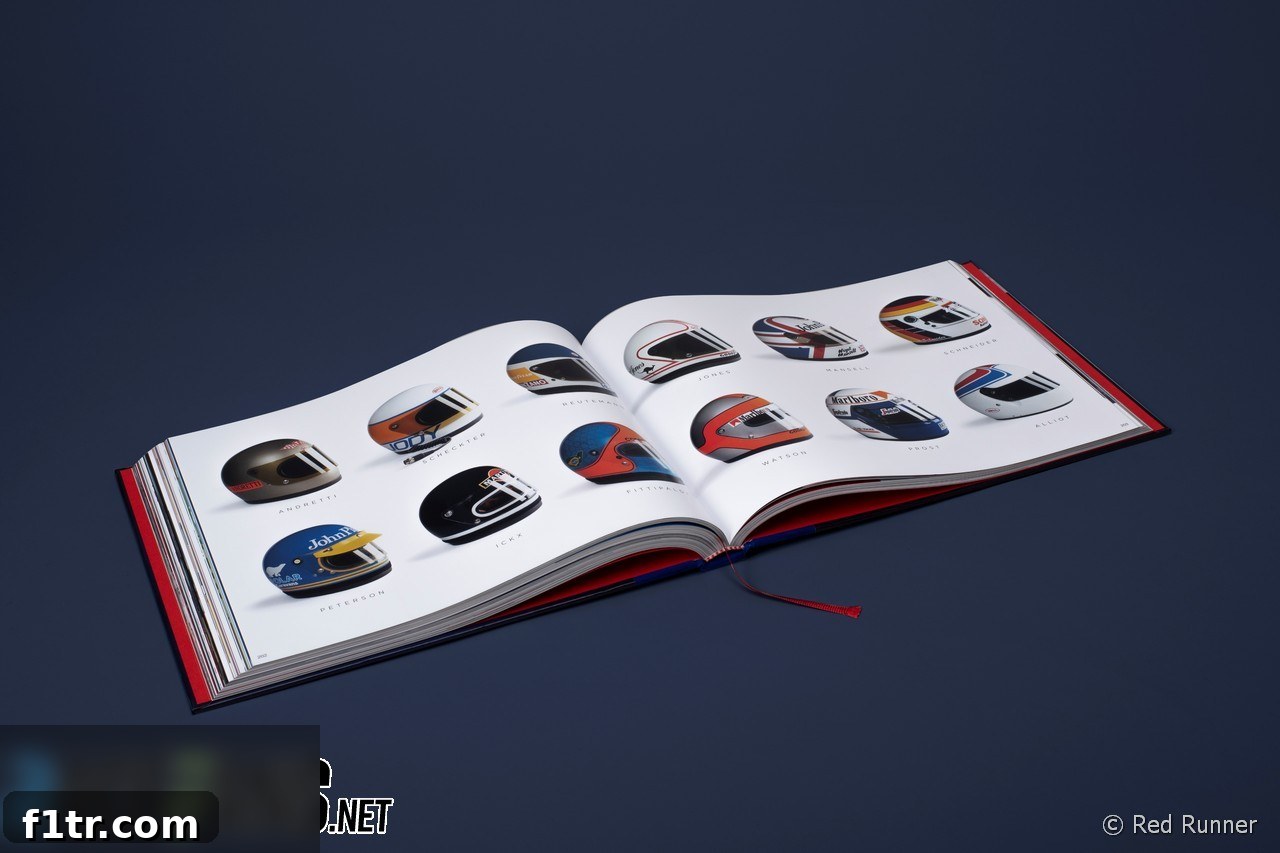
Formula Helmet: A Visual Journey Through F1’s Golden Era of Helmet Design (1969-1999) – An In-Depth Review
The allure of Formula 1 helmets is undeniable. More than mere safety equipment, they are vibrant canvases that encapsulate a driver’s personality, era, and often, iconic moments in motorsport history. It is this captivating blend of art and identity that makes a book dedicated to their study an exciting prospect for any motorsport enthusiast. “Formula Helmet,” a new limited edition coffee table book, aims to chronicle the fascinating world of F1 helmet designs worn by 18 legendary drivers between 1969 and 1999. It promises to delve into the facts, anecdotes, and profound background stories behind these unique designs and the remarkable individuals who wore them.
For many fans, myself included, the vibrant aesthetics of a racing helmet were the initial spark that ignited a lifelong passion for motorsport. My earliest F1 memorabilia often featured intricate helmet designs, celebrating the artistry and individuality they represented on track. Like numerous aficionados, I’ve observed with a touch of nostalgia the shift in recent years towards increasingly complex and “busy” designs, often finding myself longing for the elegant simplicity and clear iconography that characterized the helmets of yesteryear. Therefore, unwrapping “Formula Helmet” was an experience filled with genuine anticipation – a rare excitement for a book in recent memory.
The Enduring Allure of F1 Helmet Designs: More Than Just Protection
In the high-stakes world of Formula 1, helmets transcend their primary function of protection to become powerful symbols of identity, branding, and historical markers. Each design tells a story, a vibrant tapestry of personal preference, national pride, and sponsorship demands, all distilled onto a spherical canvas. The period between 1969 and 1999 is particularly rich in iconic helmet designs, a time when simplicity often reigned supreme, allowing the individual flair of drivers like James Hunt, Ayrton Senna, Graham Hill, or Niki Lauda to shine through with unmistakable clarity. These designs were not just decorative; they were an extension of the driver’s persona, instantly recognizable on track, often becoming as famous as the drivers themselves.
The evolution of F1 helmet design reflects the sport’s own progression. Early designs were often basic, but as technology advanced and personal expression became more prevalent, helmets transformed into unique pieces of art. The contrast between the bold, clean lines of vintage helmets and the often intricate, multi-layered graphics seen today highlights a significant shift in aesthetic philosophy. Many fans, myself among them, hold a deep appreciation for the designs of the past, where a distinct colour scheme or a simple logo could immediately identify a driver, fostering an instant connection and enhancing the spectacle of racing. This historical significance and visual impact are precisely why a dedicated exploration of these designs holds such immense appeal for motorsport enthusiasts.
Unveiling the Visual Splendor: What “Formula Helmet” Gets Right
Upon opening “Formula Helmet,” one is immediately struck by its undeniable visual appeal. The book is generously adorned with countless gratuitous, yet utterly luscious, shots of Formula 1 driver helmets spanning the vibrant decades from the 1970s through the 1990s. Each page turned offers a fresh feast for the eyes, presenting these miniature works of art in exquisite detail. The photography is undoubtedly a highlight, capturing the gloss, the wear, and the intricate details that made each helmet unique. For anyone who appreciates the aesthetic dimension of motorsport, particularly the iconic designs from this golden era, there is an abundance of visual enjoyment to be found.
Beyond the stunning imagery, the book offers valuable insights derived from interviews with key figures within the motorsport world. Conversations with helmet manufacturers, the talented livery designers responsible for bringing these visions to life, and the drivers themselves, provide intriguing glimpses into the creative process, the technical challenges, and the personal significance behind these protective shells. These firsthand accounts have the potential to reveal fascinating details about how certain iconic designs came to be, the evolution of safety standards, and the psychological impact of wearing such a distinctive piece of equipment. Such direct engagement with the creators and wearers adds a layer of authenticity and depth that is genuinely appreciated by those keen to understand the deeper narratives behind the visual spectacle.
Indeed, if your primary interest lies in the sheer visual appreciation of historic Formula 1 helmets – and not, perhaps, in the minutiae of lawn bowls – then “Formula Helmet” delivers on its promise of eye-catching content. The quality of the reproductions and the sheer volume of high-resolution images make it a compelling browse. It serves as a fantastic visual archive, allowing fans to pore over the details of their favorite driver’s lid, or discover new appreciation for lesser-known designs from a bygone era. The potential for visual storytelling through these images alone is immense, celebrating the vibrant palette and bold graphics that defined an unforgettable period in Formula 1 history. The tactile experience of a high-quality coffee table book showcasing such stunning visuals is itself a pleasure, making the initial unboxing a moment of true excitement for any collector or F1 design aficionado.
The Unfulfilled Promise: Where “Formula Helmet” Falls Short of Expectation
Despite its undeniable visual strengths and the rich potential of its subject matter, “Formula Helmet” ultimately struggles to cohere as a unified and satisfying whole. This is perhaps its most significant drawback. The book frustratingly teases several compelling directions, any one of which, if pursued comprehensively, could have elevated it to an indispensable piece of motorsport literature. Instead, it offers a fragmented experience, leaving the reader wanting significantly more depth and a clearer structural narrative, a sentiment that lingered long after the final page was turned.
Missed Opportunities for Comprehensive Structure and Narrative
One glaring missed opportunity lies in the absence of a truly encyclopaedic approach. Imagine, for instance, a meticulously organized compendium of driver helmets from this era, structured either chronologically by year, allowing for a clear appreciation of design trends and technological advancements over time, or systematically by manufacturer, offering insights into the signature styles and innovations of brands like Bell, Arai, Shoei, or Simpson. Such a definitive encyclopaedia would not only serve as an invaluable reference tool but also provide a powerful historical narrative, illustrating the evolution of F1 helmet design with unparalleled clarity. The current format touches upon these ideas but fails to commit to them, leaving gaps that a dedicated fan would long to fill. A structured catalogue would have enabled readers to track the visual language of F1 across different epochs and technologies, making for a truly educational and comprehensive resource.
Similarly, the book could have adopted a structure akin to John Devlin’s “International Football Kits,” a hypnotic work that meticulously tracks the evolution of national team kits year on year. Applying such a model to Formula 1 helmets, showcasing the year-by-year transformation of main drivers’ designs, would have been profoundly enjoyable and incredibly informative. This approach would reveal subtle shifts in sponsorship, personal branding, and even the emotional journey of a driver through their helmet’s visual identity. Consider the evolution of Ayrton Senna’s iconic yellow, green, and blue design, or the subtle changes in Michael Schumacher’s red helmet across his early career – a detailed timeline would provide invaluable context. While “Formula Helmet” attempts this for a handful of drivers, it does so inconsistently and without the sustained rigour required to make it a truly comprehensive and compelling study. The partial execution only highlights what could have been, underscoring the book’s reluctance to fully commit to an overarching, systematic methodology.
A Fragmented Narrative and Vague Historical Context
Instead of a focused narrative or a clear organizational framework, “Formula Helmet” presents a somewhat disparate collection of content. It incorporates elements like decade summary pages, brief nods to different helmet manufacturers, and highlights of key rivalries. While these individual components are interesting in themselves, none are explored with the exhaustive detail necessary to provide a truly deep understanding. This “a bit of everything thrown in” approach results in a reading experience that feels broad but shallow, touching upon many fascinating aspects without fully immersing the reader in any single one. The lack of a unifying thread makes it difficult to follow a consistent story or trace the thematic evolution of helmet design throughout the featured period.
Perhaps the most critical flaw in the book’s narrative lies in its text, which is presented in both English and French. While the bilingual format is an admirable feature, the text itself is, at times, frustratingly vague. For example, a photograph of François Cevert’s helmet is captioned ‘Watkins Glen 1973’. For any seasoned F1 follower, this immediately evokes a profound and deeply poignant context – the tragic circumstances surrounding Cevert’s final race weekend, a moment forever etched in the annals of motorsport history. Yet, nowhere in the accompanying text is this crucial history definitively explained or even adequately alluded to. This omission is a significant disservice, as it robs the image of its powerful emotional and historical weight. The helmets themselves are artifacts steeped in stories, and by failing to provide the full, definitive context, the book diminishes their significance, transforming what could be moving historical documents into mere aesthetic objects devoid of their true meaning.
Such instances of vague or incomplete context are not isolated. They appear throughout the book, hindering what could have been a truly immersive journey through motorsport history. The opportunity to weave together the visual splendor of the helmets with the dramatic narratives of the drivers and their eras is frequently missed. This lack of rigorous historical and contextual explanation means that much of the book’s potential impact remains untapped, leaving readers who crave a deeper understanding feeling underserved. Without the narrative depth to complement the visual feast, the book feels more like a beautifully curated album than a comprehensive historical account.
The Verdict: A Glimmer of Greatness, But Not the Definitive Volume
In conclusion, my profound desire was to wholeheartedly adore “Formula Helmet.” It presents an undoubtedly captivating subject matter, boasting numerous elements that ignite the passion of any Formula 1 enthusiast. The sheer visual quality and the abundance of stunning photography of iconic helmets from a revered era are certainly a joy to behold. The inclusion of interviews from industry insiders adds a valuable dimension, hinting at the rich stories waiting to be told. However, the book’s inability to comprehensively execute any of its many presented ideas, coupled with its fragmented structure and at times vague narrative, left me with a pervasive sense of unfulfilled potential and a longing for much more. It’s a book that offers tantalizing glimpses of greatness but never quite grasps it fully.
There remains a genuine demand for a truly comprehensive, meticulously researched, and beautifully presented coffee table book dedicated to the captivating world of Formula 1 helmets. A volume that not only showcases their aesthetic brilliance but also meticulously chronicles their evolution, contextualizes their historical significance, and deeply explores the human stories behind the designs – from the drawing board to the podium. Sadly, while “Formula Helmet” provides a visually pleasing appetizer, it isn’t quite the definitive main course that the subject so richly deserves. It serves as a reminder of the magnificent material available, yet simultaneously highlights the arduous task of bringing it together in a coherent, exhaustive, and ultimately, profoundly satisfying manner. For those primarily seeking a visual compendium of F1 helmets, this book offers plenty to admire. But for readers yearning for a deeper, more structured narrative alongside the stunning imagery, the search for the ultimate F1 helmet book continues.
RaceFans Rating
For more insights into the world of motorsport literature, explore all our RaceFans book reviews.
Book Details
Author: Bruno Bayol
Publisher: Red Runner
Published: 2022
Pages: 288
Price: £115.00
Related Reviews
- Next new F1 game to arrive in 2027, EA to offer 2026 season as paid DLC
- “F1 Insider: Notes from the Pit Lane” – Ted Kravitz’s new F1 book reviewed
- “Rennsport”: The RaceFans review
- “Grid to Glory: 75 Milestone F1 Moments” – Alex Jacques’ new book reviewed
- “Formula 3000: Where Legends Earned Their Stripes” reviewed
Browse all Reviews