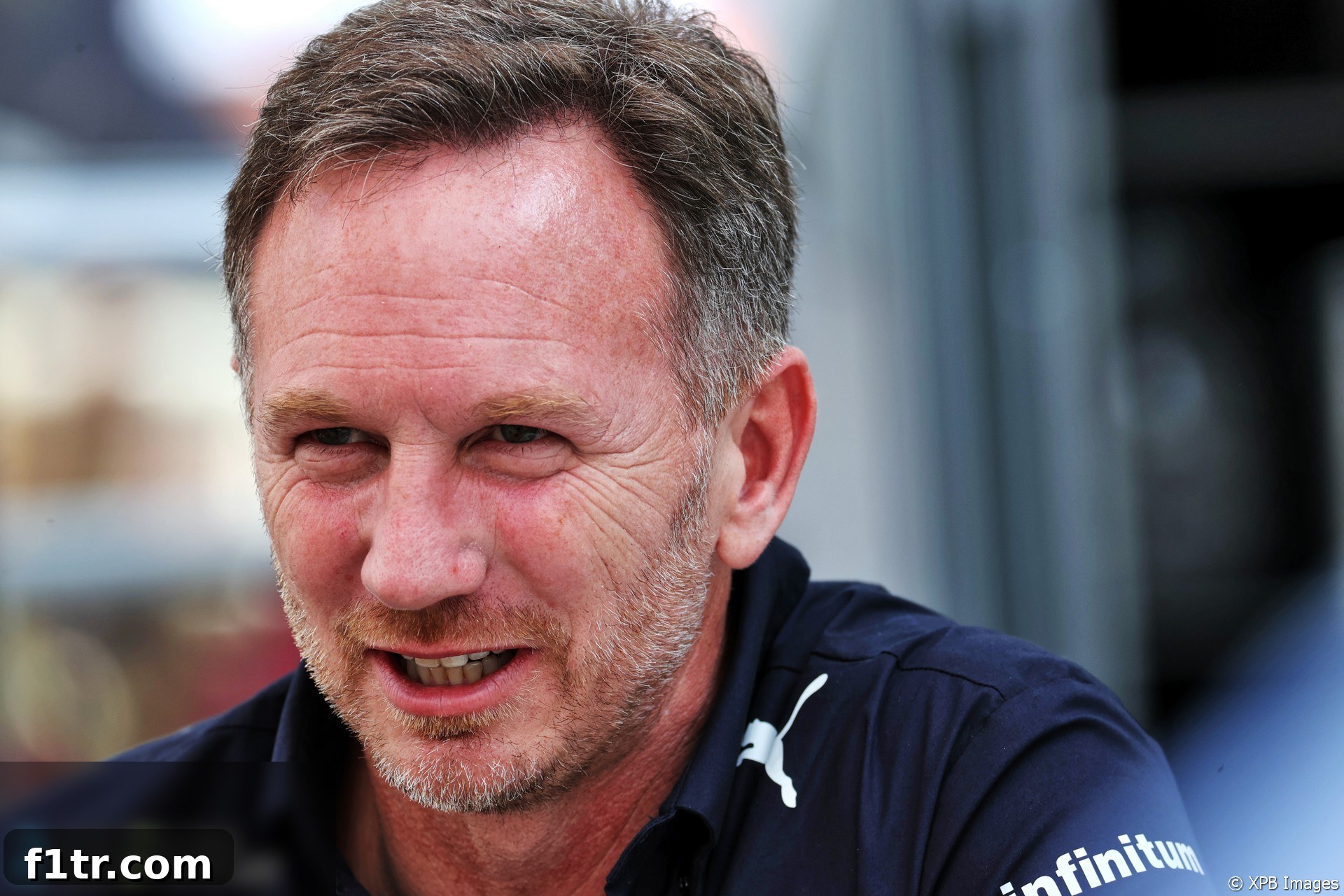
Red Bull Racing team principal Christian Horner found himself under intense scrutiny at the 2021 Qatar Grand Prix, summoned to speak with the FIA stewards regarding alleged breaches of the International Sporting Code (ISC). The high-stakes nature of the Formula 1 championship battle between Max Verstappen and Lewis Hamilton had already amplified tensions, and Horner’s outspoken criticism following a crucial penalty for his driver quickly drew the attention of motorsport’s governing body.
This summon signaled a significant escalation in the ongoing dialogue – and sometimes friction – between teams and the FIA, highlighting the fine line team principals must tread between passionate advocacy for their squad and respecting the integrity of the sport’s officials.
Horner Under Investigation: Alleged Breaches of International Sporting Code
The investigation centered on two specific articles of the International Sporting Code, fundamental regulations that govern conduct within motorsport. These articles are designed to uphold the reputation of the sport and ensure respectful interactions between all participants.
Article 12.2.1 (f): Protecting the Sport’s Integrity
The first article cited was 12.2.1 (f), which explicitly forbids “any words, deeds or writings that have caused moral injury or loss to the FIA, its bodies, its members or its executive officers, and more generally on the interest of motor sport and on the values defended by the FIA.” This broad clause is designed to protect the governing body, its officials, and the overall image of Formula 1 from undue criticism that could undermine its authority or public perception.
In the context of Horner’s comments, the FIA likely viewed his statements as potentially damaging to the moral standing and credibility of the organization and its personnel. Publicly questioning the competence or fairness of officials, particularly during a globally broadcast event, carries significant weight and could be interpreted as causing “moral injury.” The FIA, as the custodian of motorsport, takes such allegations seriously to maintain an environment of respect and adherence to regulations.
Article 12.2.1 (k): Misconduct Towards Officials
The second article, 12.2.1 (k), focuses more specifically on interpersonal conduct: “any Misconduct towards licence-holders, officials, officers or member of the staff of the FIA, members of the staff of the Organiser or promoter, members of the staff of the competitors, doping control officials or any other person involved in a doping control carried out in accordance with Appendix A.” This article directly addresses the imperative for all license holders, including team principals, to treat officials and other personnel with appropriate conduct.
Horner’s remarks, particularly those directed at marshals and implying a lack of control by the race director, could easily fall under the umbrella of “misconduct.” Marshals are volunteers critical to the safe and orderly running of races, and any public denigration of their actions or perceived competence could be seen as a direct breach of this article.
The Catalyst: Max Verstappen’s Grid Penalty at Qatar
While the FIA did not officially specify the exact nature of Horner’s alleged infringement at the time of the summon, the timing and public discourse left little doubt about the catalyst: his vociferous reaction to Max Verstappen’s five-place grid penalty for failing to slow sufficiently under double waved yellow flags during qualifying for the Qatar Grand Prix.
The incident occurred during the final moments of Q3. AlphaTauri driver Pierre Gasly had stopped on the main straight, triggering yellow flags. While some electronic yellow flag signals were subsequently withdrawn, a marshal at Turn 16 continued to display double waved yellow flags. Verstappen, on his final flying lap, passed this point without significantly reducing speed, ultimately setting a lap time that would have placed him on the front row. However, stewards later reviewed the incident and imposed the penalty, dropping him from second to seventh on the grid, a significant blow in his championship fight against Lewis Hamilton.
Horner did not mince words in his criticism of the decision and the circumstances surrounding it. His frustration stemmed from the belief that the yellow flag deployment was inconsistent and that Verstappen had been unfairly penalized due to a situation beyond his control.
Horner’s Incendiary Comments: “Rogue Marshal” and “Grown-Up Decisions”
Post-qualifying, Horner articulated his displeasure in no uncertain terms, making several statements that likely directly led to the FIA summon. His comments revealed a deep sense of injustice and perhaps a tactical attempt to influence future decisions or rally support for his team.
“I think the race director should have control of the circuit,” Horner stated, emphasizing the ultimate authority of Race Control. “He’s the referee at the end of the day and otherwise anybody, you get a marshal that decides to stick a yellow flag out, how does that work?” This implied a perceived lack of centralized control and questioned the validity of a marshal’s individual action.
He continued, doubling down on his critique: “There needs to be some grown-ups making grown-up decisions.” This particular phrase was widely interpreted as a direct jab at the competence of the officials responsible for the penalty decision, suggesting an amateurish approach to critical sporting judgments.
Perhaps most pointedly, Horner placed blame squarely on a specific individual within the race operations: “I think it’s just a rogue marshal that’s stuck a flag out and he’s not been instructed to by the FIA. They’ve got to have control of their marshals, it’s as simple as that because that’s a crucial blow in this world championship for us.” The term “rogue marshal” implied a spontaneous, unauthorized action by an individual, undermining the collective professionalism and coordination of race marshals, who operate under strict guidelines. This direct accusation of an official acting independently and incorrectly without instruction clearly touched a nerve with the governing body.
The Intensified 2021 Championship Context
The 2021 Formula 1 season was arguably one of the most thrilling and contentious in modern history. The titanic struggle between seven-time world champion Lewis Hamilton and emerging superstar Max Verstappen saw both drivers and their respective teams, Mercedes and Red Bull, push the boundaries on and off the track. Every point, every penalty, every strategic decision was magnified under the intense pressure of a championship battle that went down to the very last race.
In such a heated environment, emotions ran high. Team principals, particularly Horner and Mercedes’ Toto Wolff, became key figures in a war of words, often engaging in psychological battles through media comments. This context is crucial to understanding the severity of Horner’s reaction and the FIA’s subsequent decision to summon him. A five-place grid penalty, while seemingly minor, could have significant implications for the championship outcome, making the stakes incredibly high for Red Bull and Verstappen.
The Role and Respect for Marshals and Officials
Horner’s “rogue marshal” comments ignited a wider debate within the F1 community about the critical role of marshals and the respect they deserve. Marshals are the backbone of motorsport safety, often volunteers who dedicate their time and expertise to ensure the smooth and safe running of events. Their role in deploying flags, responding to incidents, and generally managing track safety is paramount.
The FIA and its affiliated national sporting authorities place immense importance on maintaining respect for these officials. Any public statement that undermines their professionalism, questions their authority, or implies malicious intent can be seen as highly detrimental to the sport and could discourage future volunteers. The stewards’ summon was not just about Christian Horner’s specific words but also about sending a clear message regarding the expected conduct towards all personnel involved in Formula 1 events.
Potential Outcomes and Broader Implications
Following the summon, Christian Horner was due to meet the stewards at 7:15 pm local time in Qatar. The range of potential penalties for such breaches can vary significantly, from a formal reprimand or a substantial fine to, in more extreme cases, points deductions for the team (though this is highly unlikely for a team principal’s comments alone). The stewards would weigh the nature of the comments, their impact, and any mitigating factors.
Beyond any immediate penalty, the incident underscored the ongoing tension between teams, particularly during a fierce championship, and the FIA. It brought into sharp focus the need for clear communication, consistent application of rules, and a mutual understanding of roles and responsibilities. While team principals are expected to fiercely defend their teams, there is an equally strong expectation to uphold the values and integrity of the sport itself. This incident served as a reminder that even the most powerful figures in the paddock are ultimately accountable to the sport’s governing body.
The resolution of this specific incident would not only impact Christian Horner but also set a precedent for how critical comments are handled in the future, potentially influencing the tone of communication between teams and the FIA in subsequent seasons.
Advert | Become a RaceFans supporter andgo ad-free
2021 Qatar Grand Prix
- Pirelli’s investigation into Qatar tyre failures indicates kerbs caused punctures
- Horner rejects talk of title fight pressure after criticism over marshal comment
- “I don’t know how much slower I can go”: Inside Ricciardo’s unnecessary economy run
- ‘No regulator in the world will be popular’ with a title fight this intense – Masi
- Why drivers backed Hamilton’s call for clarity after meeting over Verstappen incident
Browse all 2021 Qatar Grand Prix articles