Lance Stroll Under FIA Scrutiny After Tumultuous Qatar Grand Prix Weekend
The spotlight has intensely focused on Lance Stroll following a series of contentious events during the recent Qatar Grand Prix weekend, prompting an official investigation by the sport’s governing body, the FIA. The FIA’s compliance officer is actively engaging in discussions with the Aston Martin driver to ascertain whether any regulations, particularly those concerning the FIA’s stringent Code of Ethics, were breached.
While the FIA has, as yet, refrained from specifying the exact nature of the alleged infractions that caught their attention, the controversy surrounding Stroll’s actions has been a significant talking point within the Formula 1 community. This high-profile investigation underscores the FIA’s commitment to upholding standards of conduct and professionalism within the pinnacle of motorsport, ensuring that all competitors adhere to the ethical guidelines designed to preserve the sport’s integrity and image.
The Pushing Incident: A Moment of Frustration Under the Global Gaze
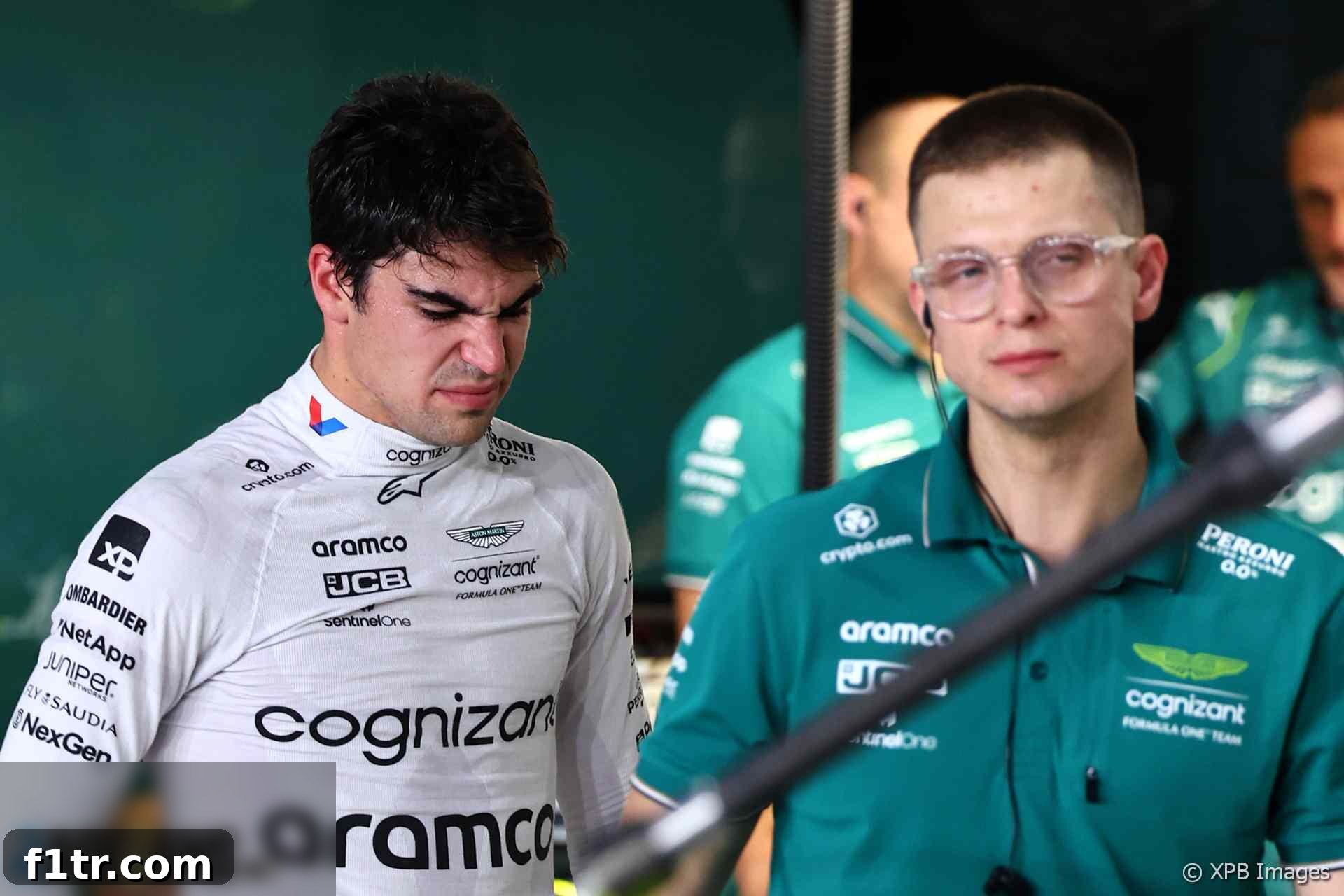
Central to the discussions and widespread criticism directed at Stroll was an incident captured and broadcast on the Formula 1 world television feed. At the conclusion of the challenging first qualifying session for the Qatar Grand Prix, Stroll was seen apparently pushing his trainer, Henry Howe, in the Aston Martin garage. This footage quickly circulated, sparking a wave of reactions across social media platforms and within the racing media, raising questions about driver conduct under pressure.
The incident occurred at a moment of palpable frustration for Stroll, who had just been eliminated in Q1, a significant setback for a driver aiming to perform at the highest level. The intense pressure inherent in Formula 1, where every tenth of a second and every qualifying position can have immense implications for a team and driver’s season, often brings emotions to the surface. However, the public nature of the interaction, broadcast globally, elevated the discussion beyond typical garage frustrations, placing it firmly in the public domain and under the scrutiny of the FIA.
Stroll’s Response and Team Dynamics
Addressing the media on Saturday, Lance Stroll sought to de-escalate the situation, insisting there was no lingering animosity between him and Henry Howe. “He’s a bro,” Stroll stated emphatically, conveying a sense of camaraderie and shared experience. “We go through the frustrations together and we ride together, so we’re cool.” This explanation aimed to frame the incident as an outburst between close colleagues who understand the unique pressures of their environment, rather than a malicious act.
However, the nature of the relationship between a driver and their trainer, which often involves a strict professional dynamic alongside personal trust, means that such physical interactions, even if perceived as minor by those involved, can be viewed differently by external observers and regulatory bodies. Moreover, Stroll’s position as the son of Aston Martin’s owner, Lawrence Stroll, adds another layer of complexity to any internal or external review of his conduct. It places an even greater onus on the team and the driver to demonstrate professionalism and adherence to regulations, avoiding any perception of preferential treatment.
The intense world of Formula 1 demands not only peak physical and mental performance but also a high degree of emotional regulation. Drivers are constantly under immense pressure from their teams, sponsors, and millions of fans worldwide. While moments of frustration are understandable, the expectation is that these emotions are managed in a manner consistent with the sport’s professional ethos. The incident with Howe ignited a broader conversation about how drivers cope with setbacks and the importance of maintaining composure, even in the most demanding circumstances.
Aston Martin’s Internal Handling and Managerial Perspective
Following Sunday’s arduous Grand Prix, Aston Martin team principal Mike Krack confirmed that the incident involving Stroll and his trainer would be addressed internally. Krack stated that discussions with the driver would take place “at the right time,” indicating a measured approach to a sensitive matter. This internal review is crucial for the team to reaffirm its values, manage its public image, and ensure that all team members adhere to professional standards. The outcome of such internal discussions could range from a verbal warning to more formal measures, depending on the team’s assessment of the situation’s severity and Stroll’s adherence to team guidelines.
The unique relationship within Aston Martin, where Lance Stroll is the son of the team’s owner, Lawrence Stroll, invariably impacts how such situations are perceived and handled. While Krack’s public statements maintain an air of professional detachment and due process, the dynamics of family ownership within a high-stakes professional sport always add a layer of scrutiny. The team’s response will not only reflect on Lance but also on the overall culture and professionalism of Aston Martin as an F1 contender. It is essential for the team to demonstrate that rules and standards apply equally to everyone, regardless of their connection to the team’s ownership, to maintain credibility both internally and externally.
The Gruelling Qatar Grand Prix: “Passing Out in the Car”
Further compounding the dramatic Qatar Grand Prix weekend was Lance Stroll’s startling revelation on Sunday night that he had been “passing out in the car” at times during the race. This comment immediately highlighted the brutal conditions drivers faced, as several competitors described the Grand Prix as an unexpectedly hot and humid ordeal. The Losail International Circuit, coupled with the prevailing weather, created an environment that pushed the physical limits of even the fittest athletes in motorsport.
The Qatar Grand Prix of 2023 will be remembered as one of the most physically demanding races in recent memory. Drivers reported extreme dehydration, blurred vision, and nausea, with some experiencing heat stroke-like symptoms during and after the race. The intense G-forces, combined with cockpit temperatures soaring to uncomfortable levels and the stifling humidity, turned the race into a test of endurance and survival. Stroll’s comment, while shocking, resonated with the experiences of many others on the grid, painting a vivid picture of the sheer physical torture endured by the drivers.
These conditions raise serious questions about driver safety and welfare in extreme climates, prompting the FIA to review future event scheduling and potential mitigation strategies. The physical toll was so severe that some drivers required medical attention after the race, underscoring the urgent need for a comprehensive assessment of the environmental factors at play and their impact on human performance and safety in Formula 1.
Krack’s Clarification on Stroll’s Condition and Driver Well-being
Reacting to Stroll’s “passing out” comment, Mike Krack offered a cautious clarification, suggesting that the driver might not have meant he literally lost consciousness. “We need to be careful with saying that because I don’t think you can drive a car like that being passed out,” Krack explained. He emphasized his intention to speak directly with Stroll to understand the true extent and meaning behind his remarks. Krack’s pragmatic response underscores the critical difference between feeling faint or severely unwell and completely losing consciousness, the latter of which would be an unimaginable and highly dangerous state for an F1 driver operating a high-speed vehicle.
This nuanced interpretation highlights the broader discussion around driver well-being and safety, especially in light of the increasingly extreme conditions experienced in certain races. The FIA has a paramount responsibility to ensure that races are conducted in conditions that do not pose undue risk to drivers’ health and safety. Stroll’s comment, regardless of its literal interpretation, serves as a stark reminder of the immense physical demands placed on drivers and the fine line between pushing limits and jeopardizing well-being. It will undoubtedly contribute to ongoing dialogues within the FIA about medical standards, race environmental conditions, and the protocols for ensuring driver fitness and resilience throughout a Grand Prix weekend.
Broader Implications and The Path Forward
The Qatar Grand Prix weekend for Lance Stroll was undeniably a period of intense scrutiny, marked by both a controversial garage incident and alarming revelations about his physical state during the race. These events collectively underscore the multifaceted pressures faced by Formula 1 drivers, extending beyond mere on-track performance to encompass conduct, emotional management, and physical endurance. The FIA’s investigation into Stroll’s actions reflects the governing body’s unwavering commitment to maintaining the highest standards of sportsmanship and ethical behavior across all aspects of the sport.
For Aston Martin, navigating these controversies effectively is crucial for preserving team morale and public image. How they internally address the incident with the trainer, and how they support Stroll in managing the extreme physical demands of racing, will be key indicators of their operational maturity. For Lance Stroll himself, this period offers a critical opportunity for reflection on his conduct and communication. The experiences in Qatar serve as a powerful reminder that every action and word from a Formula 1 driver is under constant global observation, influencing perceptions of both the individual and the sport as a whole. Ultimately, these incidents contribute to the ongoing evolution of F1’s standards, ensuring that while the pursuit of speed and victory remains paramount, so too does the commitment to professionalism, safety, and integrity.
Further Insights from the 2023 Qatar Grand Prix
- Albon fears Qatar GP conditions risked creating dangerous “wet bulb effect”
- Alonso: New-spec fireproofs and pre-race anthem timing made Qatar heat worse
- Magnussen admits he took “too long to learn” Losail circuit
- Analysis: Sargeant’s Qatar radio reveals his painful struggle to end point-less run
- Alfa Romeo ‘finally understand their upgrade’ Bottas believes as team target Williams
Browse all 2023 Qatar Grand Prix articles