In a proactive move to enhance fairness and optimize competition within its evolving race formats, the FIA has implemented a crucial adjustment to the regulations governing Formula 1’s Saturday morning sprint qualifying session. This change directly addresses a significant issue that emerged during the inaugural application of the revised sprint format earlier in the 2023 season, ensuring a more equitable playing field for all participants.
Advert | Become a Supporter & go ad-free
The Austrian Grand Prix weekend marks the second sprint event of the 2023 Formula 1 calendar, and it arrives with this vital clarification to the rules. This follows the introduction of a significantly revised sprint format that made its debut at the Azerbaijan Grand Prix in Baku just two months prior. The new format was designed to inject more excitement into the race weekend, offering fans competitive action across all three days and creating a distinct identity for the sprint race itself, separate from the main Grand Prix.
Understanding the Evolution of the F1 Sprint Format
Formula 1’s journey with the sprint race format began in 2021, aiming to experiment with new ways to engage audiences and add layers of strategic intrigue. Initially, the sprint race, held on Saturday, determined the starting grid for Sunday’s Grand Prix. However, feedback and continuous evaluation led to a significant overhaul for the 2023 season, seeking to make the sprint a standalone spectacle rather than merely a precursor to the main event.
The 2023 revised sprint race format brought about a fundamental shift in the weekend structure. Under this new configuration:
- Friday’s Qualifying Session: This traditional one-hour qualifying session now exclusively sets the starting grid for Sunday’s prestigious Grand Prix. This ensures that the pinnacle of the weekend, the Grand Prix, maintains its long-standing qualifying process, often considered a pure test of speed.
- Saturday’s Sprint Shootout: The sprint race on Saturday is given its own dedicated grid. This is decided by a separate, condensed three-stage qualifying session, now officially known as the “Sprint Shootout,” which takes place on Saturday morning. This innovative approach ensures that the sprint race is an independent entity, with its own intense qualifying battle.
- Saturday’s Sprint Race: A shorter, action-packed race providing additional championship points, but crucially, its outcome no longer dictates the grid for the main Grand Prix.
While the intent behind the Sprint Shootout was to provide a quick, exhilarating qualifying battle, the initial implementation of its tyre regulations led to an unforeseen challenge that required immediate attention from the sport’s governing body.
The Baku Blunder: Lando Norris and the Tyre Conundrum
The core of the issue lay within the specific tyre allocation rules mandated for the three phases of the Sprint Shootout. Unlike a typical Grand Prix qualifying session, where teams have more strategic flexibility with tyre compounds, the rules introduced for the first time in Baku were very prescriptive:
- SQ1 (Sprint Qualifying 1): All drivers were required to use a new set of medium compound tyres.
- SQ2 (Sprint Qualifying 2): Similarly, all drivers were mandated to use a new set of medium compound tyres.
- SQ3 (Sprint Qualifying 3): Crucially, drivers reaching the final phase were only permitted to run a new set of soft compound tyres.
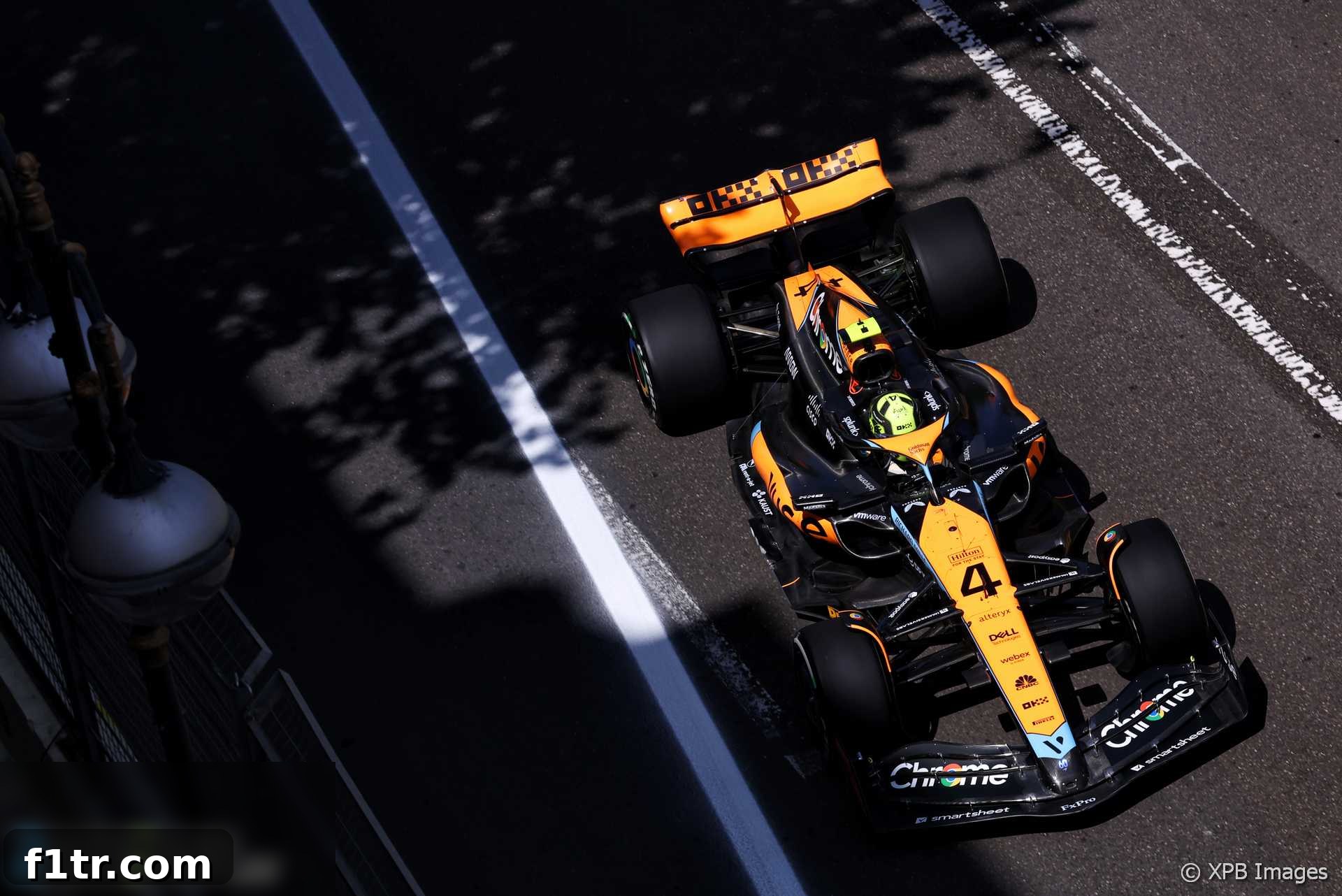
This stringent tyre mandate, particularly for SQ3, inadvertently created a problematic scenario during the season’s first sprint round at the Azerbaijan Grand Prix. McLaren driver Lando Norris found himself in an unenviable position. Despite showcasing impressive pace and skill to comfortably reach SQ3, the final and most critical phase of the Sprint Shootout, he was regrettably unable to participate. The reason was simple yet devastating: his team did not have an unused set of soft tyres available for him to run, having strategically used them earlier in the weekend, potentially during Friday’s qualifying for the Grand Prix or practice sessions, which is a common practice.
This incident highlighted a significant flaw in the initial regulations. A driver who had legitimately earned their spot in the final shootout, and therefore had the potential to fight for a top starting position for the sprint race, was effectively sidelined due to a technicality regarding tyre availability. This not only denied Norris the opportunity to compete but also deprived fans of seeing a full complement of the fastest drivers battling for pole position in the sprint, undermining the very essence of competitive sport. It was a moment that underscored the need for immediate revision to maintain the integrity and excitement of the new format.
The FIA’s Swift Response: A Rule Refinement for Fairness
Recognizing the unintended consequences of the initial tyre rules, particularly the situation faced by Lando Norris, the FIA, in collaboration with Formula 1 and the participating teams, acted swiftly to rectify the issue. Ahead of the Austrian Grand Prix weekend, Niels Wittich, the esteemed FIA race director, confirmed that the rules had been officially modified. This decisive action demonstrates Formula 1’s commitment to continuous improvement and responsiveness to issues that impact sporting fairness.
The updated regulation for SQ3 now provides a crucial element of flexibility that was previously missing. Drivers who successfully advance to the final phase of the Sprint Shootout are now permitted to participate using either a new set or a previously used set of soft compound tyres, should they wish. This vital amendment ensures that no driver will be unfairly excluded from competing in SQ3 simply because they lack a brand-new set of soft tyres. It allows teams more strategic leeway and prevents a repeat of the Baku scenario, thereby promoting genuine competition among all qualifiers.
However, it is important to note that a key strategic constraint remains in place. The rules still permit drivers to run with only a single set of tyres during each specific session of the Sprint Shootout (SQ1, SQ2, and SQ3). This means that while a driver can now choose between a new or old soft tyre for SQ3, they will not be able to use an old set for an initial run and then switch to a new set for a subsequent attempt within the same SQ3 session. This maintains a level of strategic decision-making and ensures that tyre allocation remains a critical factor, preventing an ‘unlimited’ soft tyre approach within the final shootout phase.
This significant rule change was not a unilateral decision but rather the result of a collaborative consensus. It was formally agreed upon by the FIA, Formula 1 management, and notably, nine out of the ten Formula 1 teams. Such widespread agreement underscores the collective desire within the sport to uphold fairness, enhance the spectacle, and continuously refine the sprint weekend format to its optimal state. This collaborative spirit is essential for the long-term success and credibility of innovative sporting regulations.
Comparing Formats: The 2022 Austrian Grand Prix Sprint Weekend
To fully appreciate the adjustments made for 2023, it’s beneficial to recall the previous iteration of the sprint format, which was notably in use at last year’s Austrian Grand Prix. The 2022 event provided a stark contrast to the current setup, highlighting the evolution of Formula 1’s thinking regarding its sprint weekends.
In the 2022 format, Saturday’s sprint race held a much more direct influence on the main event. The grid for the Saturday sprint race was determined by Friday’s traditional qualifying session. Crucially, the finishing positions of the sprint race then directly set the starting order for Sunday’s Grand Prix. This meant that any incident or poor performance in the sprint race had a direct and significant impact on a team’s prospects for the main race, potentially leading to more conservative driving in the sprint to avoid jeopardizing the Grand Prix.
During the 2022 Austrian Grand Prix sprint weekend, Max Verstappen, demonstrating his customary dominance, took pole position for the sprint race and subsequently won on Saturday. However, despite Verstappen’s sprint victory, it was Charles Leclerc who ultimately claimed victory in the main Grand Prix on Sunday. This outcome, where a sprint winner didn’t necessarily translate into a Grand Prix winner, added a layer of strategic complexity and narrative, yet the direct link between sprint results and the Grand Prix grid remained a point of debate among teams and fans.
The move to the 2023 format, separating the sprint results from the Grand Prix grid, was a direct response to this. The intention was to encourage drivers to push harder in the sprint race, knowing that a mishap would not entirely ruin their Grand Prix weekend. This recent tyre rule adjustment further refines the 2023 format, ensuring that the Sprint Shootout itself is as competitive and fair as possible, reflecting Formula 1’s ongoing commitment to delivering captivating and uncompromised racing action.
Advert | Become a RaceFans supporter andgo ad-free
2023 Austrian Grand Prix News & Analysis
- Mercedes left scratching heads by lack of performance at Austrian GP
- Verstappen’s determination to grab every point makes him a record-breaker
- Austrian GP track limits farce was avoidable like ‘IndyGate’ and Spa 2021 – Brown
- Alpine now “definitely beatable” for McLaren after upgrade – Brown
- Paddock Diary: 2023 Austrian Grand Prix
Browse all 2023 Austrian Grand Prix articles