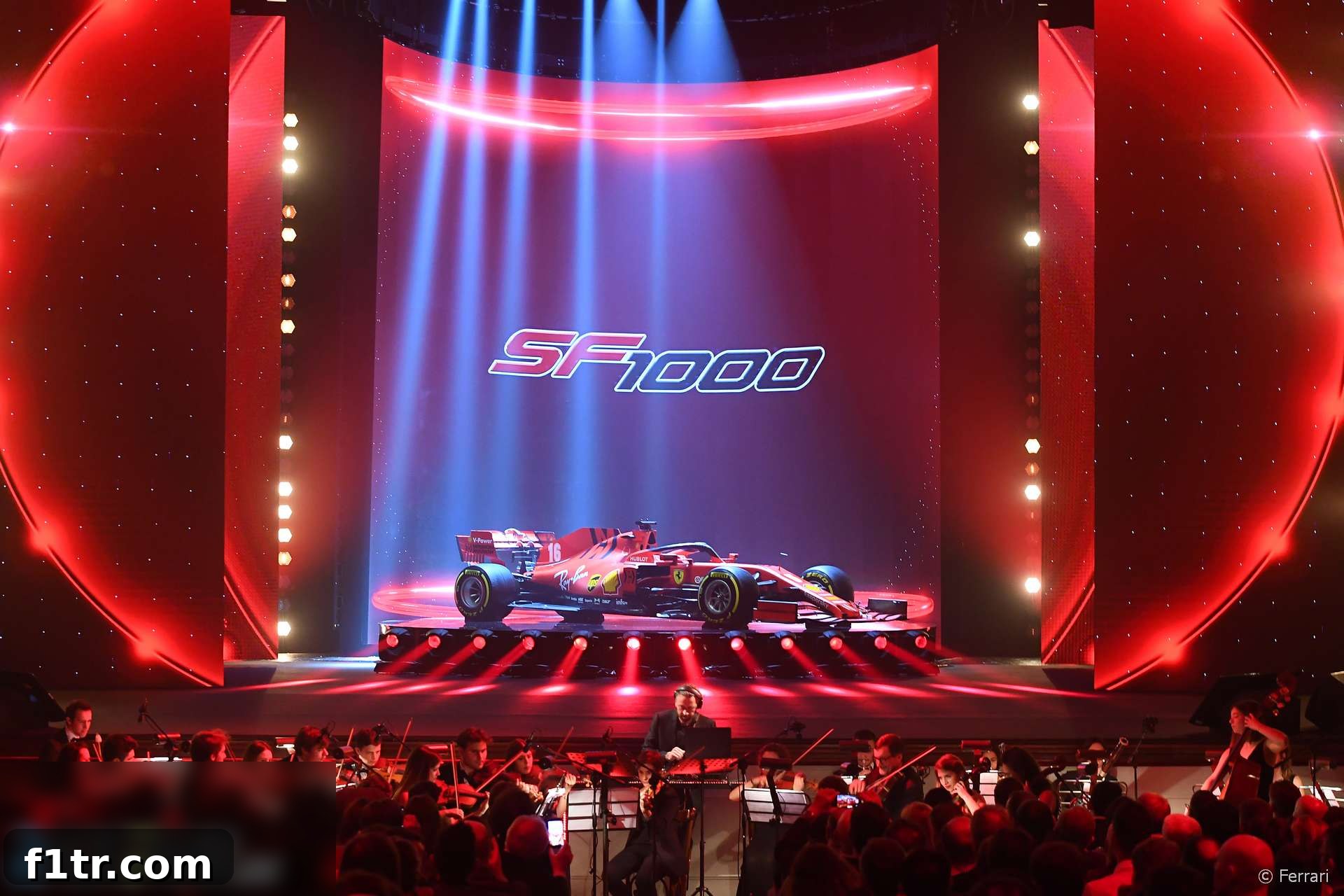
Ferrari’s SF1000 Sparks Controversy: Legal Battle Brews Over Alleged Tobacco Promotion
In a significant development that has sent ripples through the world of Formula 1, a prominent Italian consumer rights organization, Codacons, has initiated serious legal proceedings against luxury automotive giant Ferrari. The dispute centers on Ferrari’s newly unveiled Formula 1 car, the SF1000, and specifically targets the “Mission Winnow” logos prominently displayed on its livery. Codacons alleges that this branding constitutes an unlawful promotion of tobacco products, effectively circumventing stringent advertising bans prevalent across Europe and numerous other global markets.
The Genesis of the Controversy: Mission Winnow and Philip Morris International’s Vision
At the very core of this escalating legal and ethical debate lies Mission Winnow, an initiative spearheaded by Philip Morris International (PMI), one of the world’s largest tobacco manufacturers. While PMI has consistently and vehemently refuted claims that the Mission Winnow branding is designed to promote its tobacco products, Codacons, a non-profit entity dedicated to safeguarding consumer rights, holds a starkly contrasting view. The organization firmly contends that these logos, conspicuously featured on Ferrari’s SF1000 during its high-profile launch in Reggio Emilia, serve as an indirect yet potent marketing channel for the tobacco manufacturer, ingeniously sidestepping established advertising prohibitions in Europe and beyond.
Mission Winnow was introduced by Philip Morris International as a comprehensive global initiative, purportedly aimed at fostering change, innovation, and encouraging open dialogue. According to PMI’s official stance, the campaign underscores the company’s profound commitment to achieving a “smoke-free future” and highlights its substantial scientific and technological investments in developing less harmful alternatives to traditional combustible cigarettes. They argue that the branding challenges consumers to “winnow” – a term suggesting the critical process of separating truth from misinformation – regarding their products, scientific research, and corporate evolution. However, critics, including the assertive Codacons, perceive this elaborate explanation as a thinly veiled attempt to maintain brand visibility and association within a high-profile, globally televised sport, thereby keeping the company’s corporate identity and messaging in the public consciousness, even in the absence of overt product logos.
The inherent complexity in such cases often revolves around the formidable challenge of definitively proving both intent and actual effect. PMI steadfastly maintains that Mission Winnow primarily promotes a broader corporate vision and a commitment to innovation, rather than directly advertising specific tobacco products. Nevertheless, the deeply entrenched historical ties between Philip Morris (notably through its iconic Marlboro brand) and Ferrari, spanning many decades of highly visible and successful sponsorship, render it exceptionally difficult for many observers and regulatory bodies to entirely disassociate the new branding from its historical tobacco roots. The subtle visual cues, familiar color schemes, and the very act of associating with a racing team historically synonymous with a dominant tobacco brand are central tenets of Codacons’ argument that this branding unequivocally represents an “indirect” form of promotion, violating the spirit and letter of advertising bans.
Codacons’ Legal Offensive Intensifies with Ministry of Health’s Endorsement
Codacons’ unwavering resolve in pursuing this high-stakes legal battle has received a significant boost from the explicit endorsement of Italy’s Ministry of Health. A compelling statement issued by Codacons prominently featured the Ministry’s definitive opinion, which unequivocally asserts: “The Mission Winnow brand used on the occasion of Formula 1 sporting events allows, through the links on the site of the same name, a promotion, albeit indirectly, to an important manufacturer of cigarettes and new tobacco products.” This crucial governmental backing lends substantial credibility and weight to Codacons’ allegations, effectively elevating what might otherwise be perceived as a private consumer complaint into a pressing matter of national public health concern, thereby demanding a rigorous and official response.
Carlo Rienzi, the vocal president of Codacons, articulated the organization’s planned escalation without any ambiguity. He publicly declared their firm intention to formally approach the Nuclei Antisofisticazione e Sanita (NAS), a highly specialized branch of the Italian police force specifically mandated to oversee health matters, with an official request to seize the SF1000. Rienzi emphatically stated, “Strengthened by the decision of the Ministry, we will start a legal battle against Ferrari, presenting a new complaint to the Antitrust and Ministry of Health, and we will ask the NAS to seize the new SF1000 single-seater presented in Reggio Emilia.” This strikingly aggressive stance underscores the profound gravity with which Codacons perceives the alleged infraction and their unyielding determination to rigorously enforce existing tobacco advertising prohibitions.
The unprecedented demand for the physical seizure of a Formula 1 car is a particularly dramatic and rarely witnessed measure in the realm of corporate sponsorship disputes. It powerfully signifies Codacons’ conviction that the car itself, adorned with the controversial branding, is not merely a vehicle but an active instrument of illegal promotional activity. Should the NAS accede to this extraordinary request, it would undoubtedly transmit a potent message regarding the enforcement of public health regulations, potentially causing severe disruptions to Ferrari’s intricate F1 operations and casting a substantial shadow over its meticulously planned 2020 season preparations. The additional involvement of the Antitrust authority further suggests broader concerns pertaining to unfair competition practices or potentially deceptive advertising strategies that could mislead consumers.
Ferrari’s Prior Encounters with Mission Winnow Scrutiny and Strategic Withdrawals
This is far from Ferrari’s inaugural encounter with intense scrutiny concerning its Mission Winnow partnership. The controversial logos made their initial appearance on Ferrari’s F1 cars at the 2018 Japanese Grand Prix, immediately capturing widespread attention and igniting fervent debate among motorsport enthusiasts, regulatory bodies, and public health advocates alike. The partnership’s debut marked a strategic, albeit rebranded, re-entry of Philip Morris International into the prestigious sphere of Formula 1, following a period where overt tobacco sponsorship had largely vanished due to the proliferation of stringent global bans.
The considerable intensity of the public and regulatory pushback compelled Ferrari to make significant tactical concessions during the preceding 2019 season. Notably, the team opted to remove the Mission Winnow logos and even temporarily dropped the “Scuderia Ferrari Mission Winnow” team name at a substantial 11 of the 21 races conducted that year. This strategic withdrawal encompassed highly prominent events such as the season-opening Australian Grand Prix, where local authorities initiated a formal investigation into the branding, and crucially, the Italian Grand Prix – Ferrari’s revered home race. These instances of temporary removal unequivocally indicate Ferrari’s acute awareness of the intricate legal and sensitive public relations ramifications surrounding the sponsorship, strongly suggesting a pre-emptive measure taken to mitigate further legal entanglement in specific jurisdictions characterized by more rigorous advertising legislations.
The subsequent decision to boldly reintroduce the full Mission Winnow branding for the 2020 season’s car launch, despite the previous year’s well-documented controversies and strategic withdrawals, signals either a newfound confidence in the inherent legality of the branding or an uncompromising commitment to upholding their substantial sponsorship agreement. The financial backing generously provided by Philip Morris International to Ferrari is undeniably colossal, playing an absolutely critical role in augmenting the team’s formidable budget, particularly in an era defined by escalating research and development costs and the relentless pursuit of championship glory. This profound financial imperative may largely explain Ferrari’s persistent willingness to navigate the notoriously treacherous waters of public and legal scrutiny, balancing commercial needs with brand image.
Broader Implications for Formula 1 and the Future of Sports Sponsorship Ethics
The eventual outcome of Codacons’ aggressive legal action against Ferrari carries profound and far-reaching implications, extending far beyond the iconic Italian racing team to encompass the entire intricate ecosystem of Formula 1 and, indeed, the broader global landscape of international sports sponsorship. For decades, Formula 1 was inextricably linked with prominent tobacco advertising, famously exemplified by iconic brands such as Marlboro and John Player Special. The eventual imposition of a global ban on tobacco promotion necessitated a radical and transformative shift in the sport’s commercial model, compelling teams and organizers to diligently seek innovative and alternative revenue streams. The ongoing Mission Winnow controversy disturbingly reopens old wounds and vividly highlights the persistent, complex challenge of meticulously distinguishing legitimate corporate branding from sophisticated indirect product promotion, especially when the corporate entity in question is so historically and deeply tied to a notoriously controversial product.
Should Codacons ultimately prevail in its legal endeavors, it possesses the potential to establish a powerful and defining precedent for how “indirect” advertising is interpreted, regulated, and rigorously enforced across an extensive array of industries and sporting disciplines. Such a victory could compel other major sports organizations and teams worldwide to fundamentally reassess their existing sponsorship portfolios, particularly those involving companies operating in highly regulated sectors such as alcohol, gambling, or even high-sugar food products, where analogous debates concerning ethical advertising practices and public health concerns frequently arise. The unequivocal stance adopted by the Italian Ministry of Health could significantly encourage similar governmental bodies in other European nations to initiate comprehensive investigations into the Mission Winnow branding, potentially leading to wider bans or triggering further legal challenges across the entire Formula 1 calendar.
For Ferrari, an organization recognized globally as one of the most iconic, revered, and beloved brands in the world, the ongoing controversy poses a substantial and undeniable reputational risk. While their unparalleled racing prowess and engineering excellence often tend to overshadow off-track controversies, being embroiled in a high-profile dispute over alleged tobacco promotion could undoubtedly alienate significant segments of their dedicated global fan base and potentially tarnish their meticulously cultivated image as a premium, technologically advanced, and ethically responsible brand. The paramount challenge for Ferrari will be to meticulously balance their considerable commercial agreements with their inherent ethical responsibilities and public perception, all while scrupulously adhering to an intricate web of complex and continuously evolving international advertising laws. The definitive resolution of this groundbreaking case will undoubtedly be closely monitored by legal experts, astute marketing professionals, and passionate sports enthusiasts alike, with its outcome poised to profoundly shape the future trajectory of sponsorship ethics in the dynamic realm of global sports.
More on the 2020 F1 Season
Stay informed with our comprehensive coverage of the 2020 F1 season and related news:
- Grosjean to make F1 test return tomorrow for first time since Bahrain horror crash
- Pictures: Wrecked chassis from Grosjean’s Bahrain fireball crash to go on display
- Bottas vs Rosberg: Hamilton’s Mercedes team mates compared after 78 races each
- F1 revenues fell by $877 million in Covid-struck 2020 season
- Hamilton and Mercedes finally announce new deal for 2021 season
Browse all 2020 F1 season articles