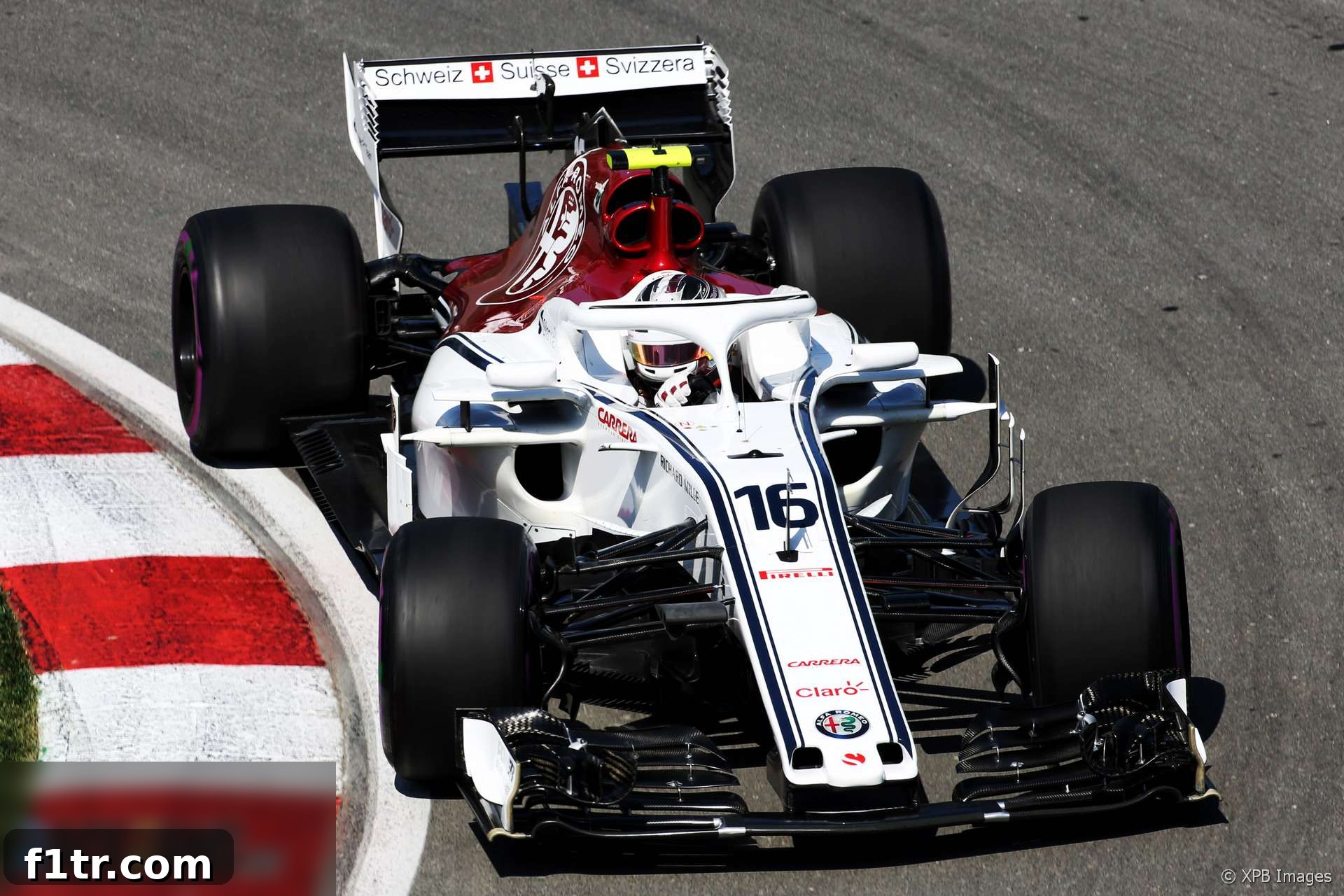
In the high-stakes world of Formula 1, few narratives are as compelling as a team’s dramatic resurgence. For Sauber F1, the 2018 season marked not just an improvement but a profound transformation, elevating them from the back of the grid to a respectable midfield contender. After a challenging 2017 season, where they often found themselves treading water with year-old Ferrari power units, the Swiss team embarked on a journey that saw them climb two places to eighth in the constructors’ championship, clearly demonstrating capabilities that hinted at even greater potential.
This remarkable turnaround was primarily ignited by a renewed and mutually beneficial partnership with Ferrari. This alliance brought several critical advantages: access to up-to-date Ferrari power units, the invaluable services of Ferrari’s highly-touted junior driver, Charles Leclerc, and a significant title sponsorship from Ferrari’s sister brand, Alfa Romeo. As team principal Frederic Vasseur wisely observed, the Alfa Romeo collaboration was a game-changer, making the team “much more attractive for everybody: for the media, for the sponsors also.” This strategic alignment injected both performance and financial stability, creating a ripple effect across all facets of the team’s operations.
Beyond the enhanced resources, the team’s on-track performance itself became a powerful magnet. For seasons, Sauber had struggled to consistently score points, often fading into obscurity. However, by the close of the 2018 campaign, they had become regulars in the critical Q3 qualifying sessions on Saturdays and consistently battled for top-10 finishes on Sundays. This wasn’t merely incremental progress; it was a testament to a deep-seated change within the team, signaling a renewed ambition and capability that had long been dormant.
At the heart of this performance surge was the C37, widely acknowledged as the year’s most improved car. On average, the C37 was a staggering 2.5 seconds quicker per lap than its predecessor, a monumental leap in Formula 1 terms. However, Vasseur emphasized that the gains weren’t solely attributable to outright lap time. “If you are looking at pure performance there are [several] pillars of performance: engine, drivers, aero, exploitation on track. And we now have the resources to work on every single pillar,” he explained. This holistic approach underlined a concerted effort to enhance every aspect of their operation, from the raw power of the engine to the finesse of trackside execution.
Among the crucial areas the team meticulously addressed was their performance in the pits. Acknowledging its vital role in race strategy and overall competitiveness, Vasseur pushed for significant improvements. “They worked a lot,” he stated when detailing the mechanics’ efforts. “Last winter we sent them to physical fitness training for one week, they did special exercise for this. Everybody is focused on his own job, including mechanics, and we improved drastically.” This dedication to marginal gains paid dividends, although the journey was not without its bumps. A notable pit stop error at Silverstone unfortunately derailed Charles Leclerc’s promising pursuit of a ‘best of the rest’ finish, highlighting that even drastic improvements require consistent refinement.

On the circuit, the C37 particularly excelled at power-sensitive tracks, a direct consequence of the potent Ferrari power unit coupled with a cleverly designed, relatively low-downforce aerodynamic setup. This combination allowed the car to stretch its legs where engine performance was paramount. Vasseur’s pivotal decision to abandon a planned engine deal with Honda shortly after taking charge in 2017 now appeared entirely vindicated, as the team decisively overtook Toro Rosso in the championship standings late in the year, securing eighth place—a significant achievement given their prior struggles.
The season’s highlight for Sauber, and arguably for Charles Leclerc, came with a breakthrough performance in Azerbaijan. Following a dominant F2 campaign, expectations for the Ferrari development driver were high, but he initially fell short in the opening rounds, consistently finishing behind his more experienced teammate, Marcus Ericsson. However, a fundamental change to his car’s setup in Baku immediately reversed his fortunes, unlocking the raw speed that had been anticipated. “I struggled in the first three races,” Leclerc candidly admitted, “there was a lot of new things to me. But I probably did not expect things to go well as quickly. From Baku onwards we really did a big step up and we kept that performance. That very sudden step, probably I did not expect.” This moment marked the true beginning of his stellar F1 career.
Leclerc’s exceptional skill in managing Pirelli’s softer tires proved to be a defining characteristic of his season. By the end of the year, he boasted the largest qualifying performance advantage over his teammate of any driver on the grid. This remarkable consistency and raw pace undoubtedly caught the attention of many, most notably his future Ferrari teammate, Sebastian Vettel, hinting at the bright future that lay ahead for the young Monegasque.
While Leclerc’s brilliance often stole the headlines, his performance also subtly underscored a clutch of potential points that Sauber might have missed. Marcus Ericsson, while a competent driver, contributed just nine of the team’s final tally of 48 points. Had the team managed to secure an additional 14 points, they would have climbed two more places in the final standings, highlighting the fine margins that define success in Formula 1.
Sauber team stats 2018
| Best race result (number) | 6 (1) |
| Best grid position (number) | 6 (1) |
| Non-classifications (technical/other) | 9 (5/4) |
| Laps completed (% of total) | 2,149 (84.87%) |
| Laps led (% of total) | 0 (0%) |
| Championship position (2017) | 8 (10) |
| Championship points (2017) | 48 (5) |
| Pit stop performance ranking | 6 |
The significant progress made in 2018 was also strategically geared towards future success. “We started development of next year’s car very early this season,” Leclerc revealed, “A lot earlier than this year’s car. So it should be a positive thing.” This proactive approach to the 2019 challenger, the C38, instilled confidence within the team that the momentum would carry over. Despite facing a potential challenge with the abrupt departure of technical director Jorg Zander in May, Sauber demonstrated resilience, enjoying a strong end to the year, scoring points in each of the last three races, including a commendable double-points finish in Mexico.
However, the remarkable talent of Charles Leclerc, who had become the poster boy for Sauber’s resurgence, would not be driving the C38. His exceptional performances earned him a well-deserved promotion to Ferrari, leaving a significant void. Yet, in a unique twist of fate, Sauber gained the very driver Leclerc was replacing: Kimi Raikkonen. The ‘Iceman’ made a poignant return to the team with whom he made his F1 debut 17 years prior. As the most experienced driver on the grid, Raikkonen brought with him an unparalleled breadth of knowledge, technical feedback, and leadership qualities that Sauber had not seen in years. His arrival promised to be a crucial factor in the intense midfield battle of the upcoming season, offering a blend of stability and world-class expertise.
After his first full year at the helm, Frederic Vasseur had every reason to be profoundly pleased with the team’s achievements. “On the technical and sporting side we did the job,” he affirmed. “If you compare last year or with the first event of [2018] we made a huge step forward. For sure it’s a great feeling for everybody in the team.” The collective effort, strategic vision, and sheer determination had transformed a struggling outfit into a promising contender, laying a robust foundation for what promised to be an exciting future under the Alfa Romeo Racing banner.
The 2018 season for Sauber was more than just an improvement; it was a powerful statement of intent. It showcased the potent combination of strategic partnerships, technical prowess, operational efficiency, and raw driving talent. The team’s ability to identify and nurture talent like Leclerc, coupled with their foresight in securing a driver of Raikkonen’s caliber, positioned them as a compelling force in the midfield. This period of rapid growth and development marked a new era for the historic Swiss team, proving that with the right direction and resources, even the most challenging circumstances can be overcome, paving the way for sustained competitiveness and future success in Formula 1.
2018 F1 season review
- Pass masters: Who made F1’s biggest recovery drives of 2018?
- The complete RaceFans 2018 F1 season review
- Hamilton and Mercedes succeed in their toughest challenge yet
- Vettel’s errors thwart Ferrari title hopes
- Analysis: How F1 teams spent $2.2 billion in 2018
Browse all 2018 F1 season review articles