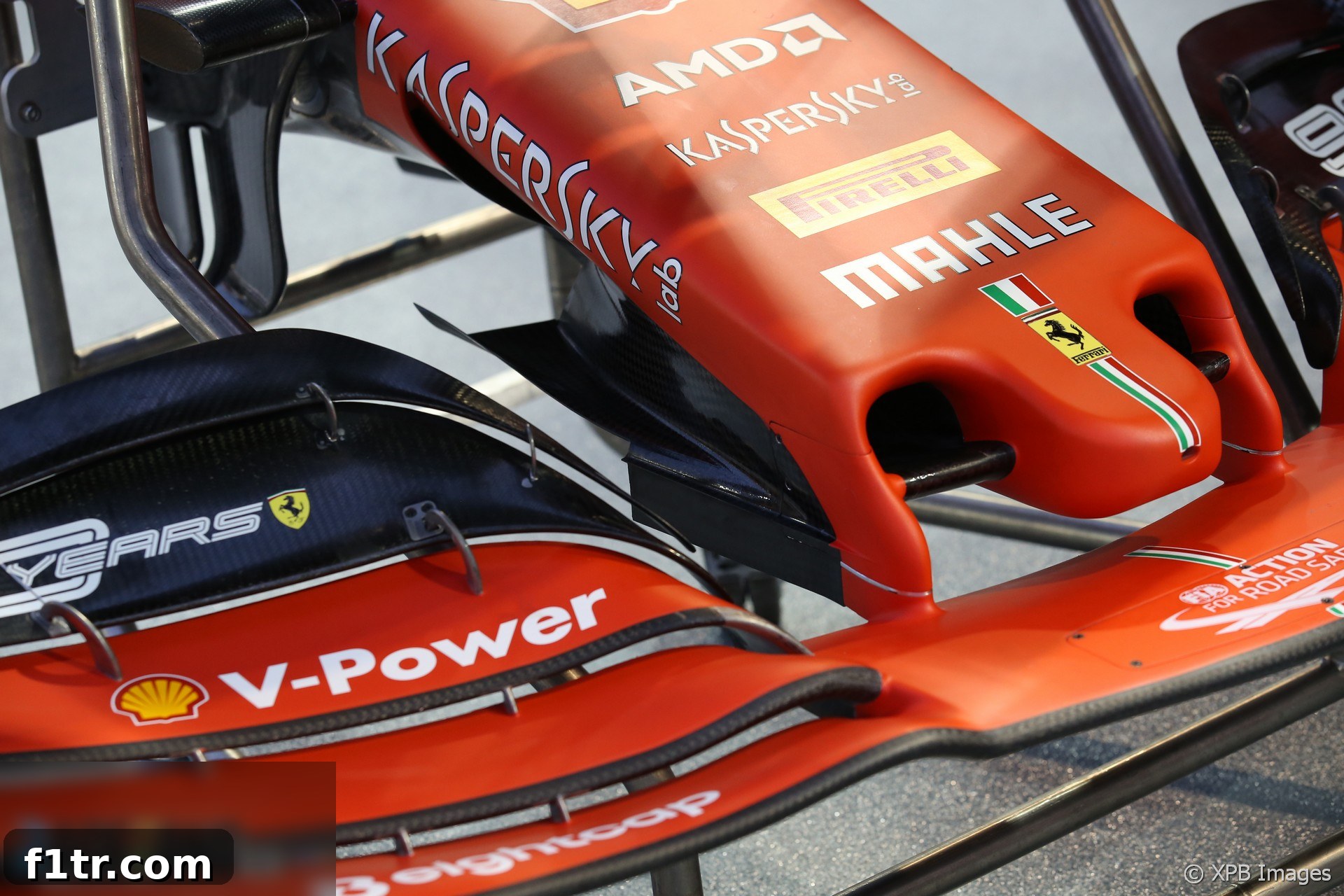
In a strategic move echoing a prominent design trend within Formula 1, Scuderia Ferrari has unveiled a newly designed nose for their SF90 challenger, set to debut at the highly anticipated Singapore Grand Prix. This aerodynamic update, incorporating a sweeping section of bodywork often referred to as a “cape,” comes at a critical juncture for the Italian team, particularly as they anticipate a challenging weekend on the demanding Marina Bay Street Circuit.
Ferrari’s Bold Aerodynamic Shift: Understanding the “Cape” Nose Design
The “cape” nose concept, which Ferrari has now integrated, represents a sophisticated approach to managing airflow around the front of the car. Unlike a traditional nose cone that primarily focuses on directing air under the car, the cape extends backwards from the nose, creating a larger, more sculpted surface. This design acts as a powerful aerodynamic device, skillfully guiding the turbulent air generated by the front wing and tires. By doing so, it helps to create a more consistent and higher-pressure airflow over the car’s upper surfaces, significantly enhancing overall downforce and improving the efficiency of other aerodynamic components further down the car, such as the bargeboards and sidepods.
The primary benefit of this design lies in its ability to effectively channel air towards the crucial underfloor and diffuser, which are paramount for generating ground effect downforce. By creating a cleaner, more organized airflow, the cape helps to reduce drag while simultaneously boosting grip, especially in high-speed corners and through complex esses. This optimization of airflow management is why the cape has become a highly sought-after design feature, offering a tangible performance advantage in a sport where marginal gains dictate success.
A Trend Adopted: Ferrari Follows Leading Rivals
While Ferrari’s adoption of the cape nose is new, the concept itself is not entirely novel to Formula 1. Mercedes-AMG Petronas Motorsport, ever at the forefront of aerodynamic innovation, pioneered and introduced this distinctive design at the 2017 Spanish Grand Prix. Their early success with the concept quickly prompted other teams to explore similar solutions. More recently, teams like Racing Point (now Aston Martin F1 Team) also incorporated the cape into their designs earlier in the 2019 season, demonstrating its proven efficacy across different chassis architectures. Ferrari’s decision to integrate this feature now suggests a concerted effort to catch up to and potentially surpass their rivals in specific aerodynamic areas, leveraging accumulated knowledge and refinement processes to ensure their version is optimally integrated with the SF90’s unique characteristics.
For Ferrari, introducing such a significant aerodynamic update for a challenging race like Singapore indicates both a determination to extract maximum performance from their current package and a potential forward-looking development for future seasons. The Maranello-based squad hopes that their iteration of the cape will yield substantial improvements in downforce and cornering performance, areas where the SF90 has sometimes struggled compared to its main competitors, particularly on tracks demanding high aerodynamic grip.
The Singapore Grand Prix: A High-Stakes Aerodynamic Test
The Singapore Grand Prix, held under the dazzling lights of the Marina Bay Street Circuit, is renowned as one of Formula 1’s most physically demanding and aerodynamically sensitive races. Characterized by its tight corners, numerous braking zones, and relatively low average speeds, it requires a car to generate maximum downforce and exceptional mechanical grip. Unlike high-speed tracks where Ferrari’s SF90 has often excelled due to its powerful engine and low-drag philosophy, Singapore places a premium on cornering agility and traction, areas where the Scuderia has occasionally shown vulnerability throughout the 2019 season.
The unique nature of the street circuit, combined with the hot and humid conditions, puts immense stress on both the cars and the drivers. Teams typically run their highest downforce configurations here, often referred to as ‘Monaco-spec’ aerodynamics, to ensure the cars remain planted through the myriad of turns. Ferrari’s recent struggles on similar high-downforce circuits, such as the Hungarian Grand Prix, where they were notably uncompetitive, fuel the team’s apprehension regarding their performance in Singapore. This makes the debut of the new cape nose a critical test, not just for its immediate impact but also for validating Ferrari’s understanding of intricate aerodynamic interactions on tracks where outright power is less of a differentiating factor.
Sebastian Vettel’s Cautious Optimism: Bridging Simulation and Reality
Four-time world champion Sebastian Vettel expressed a mixture of hope and realism regarding the new nose design. “Obviously, on paper, we know what we expect, and hopefully, we’ll see the same on the track,” he commented, highlighting the common challenge of translating simulator data into real-world performance. Vettel’s desire for the design to be “even more” effective than simulations suggest underscores the high expectations within the team for this significant upgrade. The gap between theoretical gains and actual on-track improvements can often be substantial in Formula 1, making Friday practice sessions crucial for validation.
Vettel emphasized that the true measure of success would be if the team “can feel inside the car that it’s a step forward and allows us to extract more performance, feel more comfortable, et cetera.” For a driver, comfort and confidence in the car’s balance and grip are paramount, directly influencing their ability to push to the limit. A more stable and predictable front end, which the cape design aims to provide, could be instrumental in boosting driver confidence on a track where precision is key. However, Vettel also acknowledged the inherent difficulties: “We know that it will be difficult. It’s a maximum downforce track. Last time we’ve been on a maximum downforce track was in Hungary, and we were not competitive. So let’s see where we are.” This candid assessment reflects Ferrari’s awareness of their past struggles and the considerable challenge ahead in Singapore, despite the promising new hardware.
Charles Leclerc’s Pragmatic Outlook: Verifying New Components
Charles Leclerc, Ferrari’s rising star, echoed his teammate’s cautious sentiments, anticipating that the team “are going to struggle a bit more” in Singapore. His recent back-to-back victories at Spa and Monza demonstrated the SF90’s formidable pace on low-downforce circuits, but he acknowledged the stark difference in aerodynamic requirements for Marina Bay. “The downforce levels are quite different to where we were in Spa,” Leclerc noted, highlighting the critical shift in car setup and performance characteristics required for the street circuit.
Leclerc’s focus immediately turned to the practicalities of validating the new components. “So the most important thing is to see that everything is working properly tomorrow and check that the new parts we fit on the car are working also properly,” he stated. This emphasis on verification during the initial free practice sessions is standard procedure in Formula 1. Teams meticulously monitor data, conduct aero rake runs, and gather driver feedback to ensure that new parts are functioning as intended and delivering the expected performance gains. “We’ve got different procedures to go through that, and that’s what we’ll do,” Leclerc confirmed, indicating a systematic approach to assessing the cape nose’s effectiveness and integration with the car’s overall aerodynamic package. For Leclerc, who has shown remarkable adaptability, a stable and responsive front end provided by the new nose could be a significant advantage in navigating Singapore’s tight corners and maximizing his qualifying and race performance.
Strategic Implications and the Broader 2019 Season Context
Ferrari’s decision to introduce such a significant aerodynamic upgrade late in the season, especially on a track where they expect to struggle, speaks volumes about their long-term development strategy. While the immediate goal is to improve performance in Singapore, this move is likely part of a broader effort to better understand complex aerodynamic interactions and lay crucial groundwork for the 2020 season. Developing and validating such components in race conditions provides invaluable data that simulations alone cannot fully replicate. This commitment to continuous innovation, even when the championship battle is largely decided, is a hallmark of top-tier F1 teams.
The 2019 season for Ferrari has been a rollercoaster of emotions. Starting with high expectations, the SF90 initially struggled against the dominant Mercedes W10. Mid-season saw a dip in form, but a strong resurgence in the latter part, particularly with Leclerc’s two victories, injected new life and optimism into the team. However, the consistent challenge has been the car’s performance on circuits requiring high downforce, where the SF90 has often lacked the agility and grip of its rivals. The new cape nose is a direct response to this known weakness, a targeted attempt to broaden the car’s operating window and make it more competitive across a wider range of track types.
In the highly competitive world of Formula 1, stagnation is not an option. Teams are constantly pushing the boundaries of engineering and aerodynamics. Ferrari’s adoption of the cape nose highlights this relentless pursuit of performance and the dynamic nature of F1 design trends. Whether this upgrade provides the desired step forward in Singapore or merely offers valuable data for the future remains to be seen. The stakes are high, not just for the immediate race result but for Ferrari’s ongoing quest for championship glory.
Conclusion: All Eyes on Marina Bay
As the Formula 1 circus descends upon the illuminated streets of Marina Bay, all eyes will be on Ferrari and their newly minted cape nose. This strategic aerodynamic update represents a calculated gamble, a proactive attempt to address the SF90’s perceived weaknesses on high-downforce circuits. With drivers Sebastian Vettel and Charles Leclerc tempering their optimism with realistic expectations of a challenging weekend, the initial practice sessions will be crucial. The success of this design will not only impact Ferrari’s fortunes in Singapore but also provide vital insights into their development direction for the remainder of the 2019 season and into the critical 2020 campaign. The intricate dance between simulation and track performance will once again play out under the floodlights, as Ferrari strives to turn their “paper” gains into tangible on-track speed and consistency.
For fans and analysts alike, the Singapore Grand Prix promises to be a fascinating chapter in Ferrari’s 2019 story, offering a true test of innovation, adaptability, and resilience.
Further Reading on the 2019 F1 Season
- Crying in the Melbourne car park at 2019 grand prix was my career low – Ocon
- McLaren Racing reports reduced £71 million loss in 2019
- Kvyat: Hockenheim podium last year was “my biggest achievement” so far
- How the FIA’s new encrypted fuel flow meter targets Ferrari’s suspected ‘aliasing’ trick
- “He smashed my office door”: 23 must-see moments from ‘Drive to Survive’ season two
Browse all 2019 F1 season articles