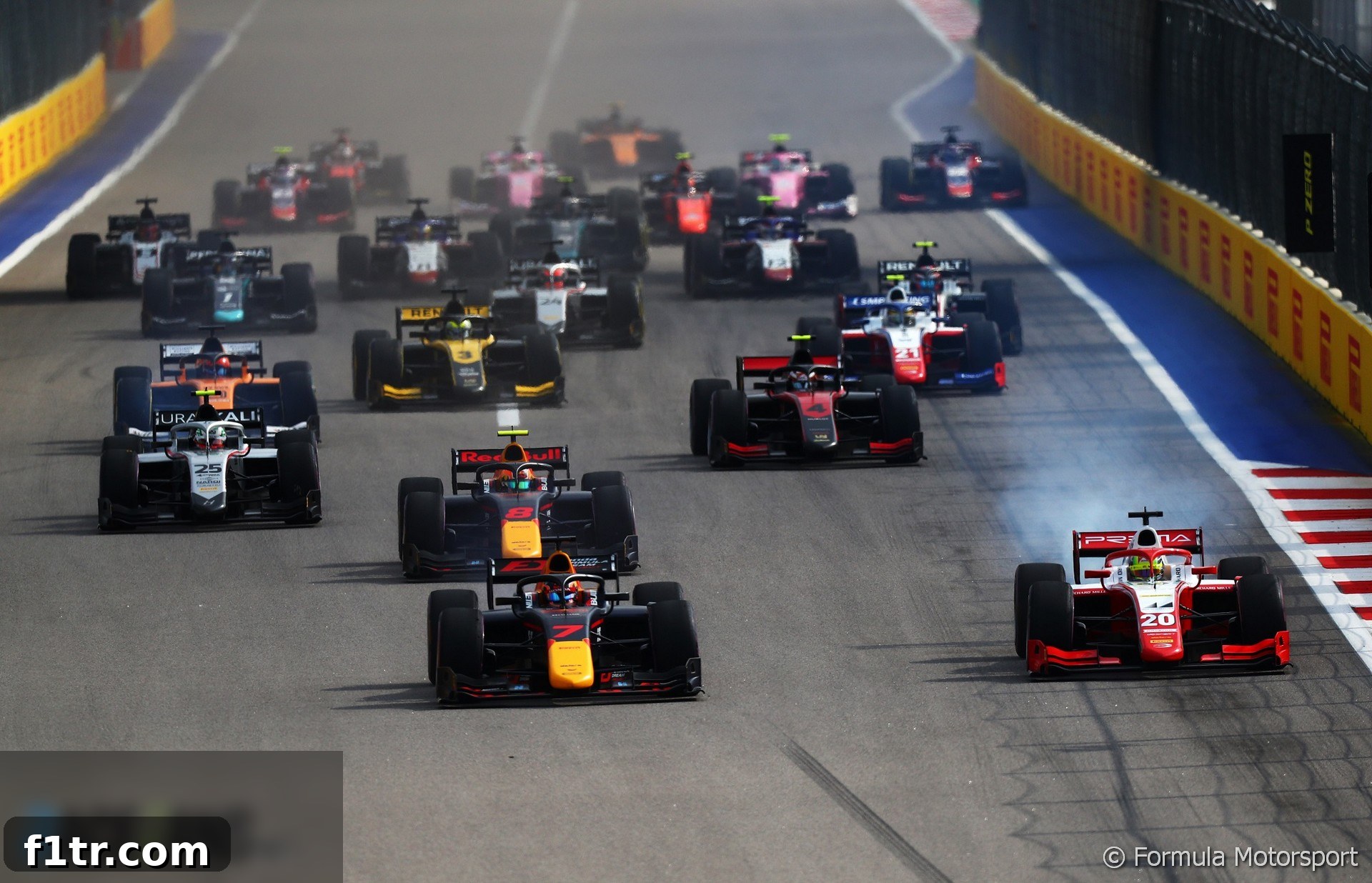
Emerging Talent: Which Young Drivers Are Primed for a Formula 1 Debut in 2021?
The highly competitive world of Formula 1 is always on the lookout for its next superstar. While the 2020 season only saw one new face, Nicholas Latifi, the 2021 grid promises to be a more dynamic landscape, with several teams keenly evaluating the impressive crop of talent rising through the feeder series. As the Formula 3 season concluded and the Formula 2 championship headed for its thrilling finale in Bahrain, the spotlight intensified on these aspiring Grand Prix drivers. But among the many promising youngsters, which ones truly possess the potential, the pace, and the pedigree to earn a coveted spot in the pinnacle of motorsport?
Formula 1 teams are increasingly turning to their junior academies and the highly competitive Formula 2 and Formula 3 championships to scout future prospects. The journey to F1 is arduous, demanding not only raw speed but also consistency, technical understanding, and the ability to perform under immense pressure. The current climate, influenced by the global pandemic, even led to a relaxation of the FIA superlicence points system, making it theoretically easier for some drivers to qualify. However, meeting the superlicence criteria is merely the first step; convincing an F1 team of your readiness is the real challenge.
This article delves into the standout performers from the 2020 F2 and F3 seasons, exploring their strengths, their challenges, and their prospects for a potential Formula 1 seat. We’ll assess who has truly delivered on expectations and who has perhaps exceeded them, making a compelling case for promotion to the elite.
The Road to Grand Prix: Navigating Formula 2 and Formula 3
Formula 2 and Formula 3 serve as the primary proving grounds for drivers aspiring to reach Formula 1. These categories utilize standardized chassis and engines, placing a premium on driver skill and engineering setup within tightly regulated parameters. The intensity of competition, coupled with the pressure of a global audience and the watchful eyes of F1 team principals, makes these series unforgiving yet essential steps in a driver’s career. Drivers like Charles Leclerc and George Russell have recently demonstrated the effectiveness of this pathway, showcasing their exceptional talent in F2 before making an immediate impact in F1.
The FIA superlicence system acts as a gatekeeper, ensuring that only adequately experienced and successful drivers are granted access to Formula 1. Drivers must accumulate a certain number of points over a three-year period, with higher points awarded for success in categories like F2, IndyCar, and even endurance racing. The temporary adjustment to this system for the 2020-2021 period acknowledged the disrupted racing calendars and aimed to prevent deserving talents from being unfairly hindered. Despite this flexibility, a strong performance in F2 or F3 remains paramount for earning the necessary points and, more importantly, the attention of F1 teams.
Formula 2: The Crucible of Talent
The 2020 Formula 2 season was nothing short of captivating. Marked by unpredictable results and an unusually high rate of technical failures across the one-make, single-specification series, no single driver managed to run away with the championship. With four races remaining, an astonishing eight drivers were still mathematically in contention for the title, underscoring the fierce competition and the parity among the top teams and drivers. This intensity, while making for thrilling races, also made it harder for any one driver to truly break clear and emulate the dominant performances seen from previous champions like George Russell or Charles Leclerc.
Key Contenders and Standout Performances:
Mick Schumacher: Son of the legendary Michael Schumacher, Mick had a consistent and well-rounded 2020 season, ultimately claiming the F2 championship. His performances, particularly in the latter half of the year, demonstrated maturity, race craft, and the ability to manage a championship challenge. While some questioned if he possessed the outright explosive pace of past F2 champions, his relentless consistency and strategic thinking were undeniable. Backed by the Ferrari Driver Academy, Schumacher’s name has been consistently linked with a Formula 1 seat, most notably with Haas, signifying the enduring power of his lineage combined with his own demonstrable talent.
Callum Ilott: Another prominent member of the Ferrari Driver Academy, Callum Ilott also had a strong season, finishing as runner-up to Schumacher. Ilott showcased flashes of brilliant speed and aggressive racing, often starting from pole position. His experience in the series allowed him to be a front-runner for much of the year. However, a few missed opportunities and a slight dip in form towards the end meant he couldn’t quite snatch the title. Despite this, Ilott’s raw pace and tenacity make him a compelling prospect for F1, though his path might involve a year as a test or reserve driver before a full-time seat opens up.
Yuki Tsunoda: Perhaps the most surprising and impressive rookie of the F2 season, Yuki Tsunoda consistently outperformed expectations. In only his second year competing predominantly in European racing categories, the Red Bull junior demonstrated incredible adaptability and raw speed. His aggressive driving style, combined with a knack for spectacular overtakes and crucial points finishes, quickly marked him out as a future star. Tsunoda’s rapid ascent and his strong performance in the Red Bull-backed Carlin team made him a prime candidate for a seat at AlphaTauri, proving that sometimes, raw, unrefined talent can be more captivating than steady consistency.
Robert Shwartzman: Beginning the season with formidable pace and several victories, Robert Shwartzman, another Ferrari junior, looked set to dominate. However, his campaign saw a mid-season dip, causing him to lose ground to his championship rivals. Despite this, Shwartzman showcased immense talent, particularly in the early races, demonstrating blistering speed and a natural feel for the car. His rookie year in F2 suggests that with more consistency, he could be an F1 driver of the future, perhaps following a similar trajectory to Ilott through the Ferrari system.
Christian Lundgaard: Representing the Renault Sport Academy, Christian Lundgaard delivered a solid, if not spectacular, rookie season in F2. He consistently scored points and displayed good racecraft, particularly in sprint races. While he didn’t challenge for the championship, his steady progress and ability to learn quickly position him well for future F1 considerations within the Alpine (formerly Renault) framework. Lundgaard represents the type of reliable and developing talent that F1 teams often value.
Formula 3: The Genesis of Future Champions
The 2020 Formula 3 season was largely dominated by the Prema Racing team, a powerhouse in junior categories. Their superior package and strong driver lineup meant that much of the championship battle was fought among their own drivers. This season, like F2, showcased a depth of talent that bodes well for the future of Formula 1, with several young drivers making significant statements.
The Young Guns Who Impressed:
Oscar Piastri: The Australian driver clinched the Formula 3 title in his rookie year, a testament to his exceptional consistency and ability to perform under pressure. Piastri secured two wins and amassed a steady stream of points throughout the season, demonstrating a calm and mature approach to championship management. As a member of the Renault Sport Academy, his championship win immediately elevated his status, making him a strong contender for a future F2 drive and keeping him firmly on the F1 radar.
Theo Pourchaire: Despite only turning 17 in August, Theo Pourchaire marked himself out as arguably the biggest breakout star of the F3 season. The Sauber-backed driver displayed incredible raw speed and aggressive racecraft, securing two wins and an impressive five podium finishes over the final six races. His late-season surge nearly denied Piastri the title, highlighting his extraordinary talent and potential. Pourchaire’s meteoric rise through the junior ranks suggests he is a generational talent, and he is undoubtedly a name to watch very closely for a rapid progression towards Formula 1.
Logan Sargeant: Another Prema driver, Logan Sargeant, had a strong mid-season run, showcasing blistering pace and challenging for the championship. The American driver appeared to be a genuine title contender, but a disastrous run-in during the final rounds, which saw him score only one top-20 finish (a sixth place) in the last four races, ultimately scuppered his championship prospects. Despite this unfortunate ending, Sargeant’s flashes of brilliance and his overall pace throughout the season indicate that he possesses the talent to go far, and he remains a valuable asset for American motorsport’s presence in the European ladder.
Beyond the Main Contenders: A Glimpse at Other Prospects
While Schumacher, Ilott, Tsunoda, Piastri, and Pourchaire hogged most of the headlines, the feeder series are brimming with other talents who may not be immediate F1 candidates but are certainly worth tracking. Drivers like Liam Lawson, Frederik Vesti, and Guanyu Zhou have shown potential, underlining the depth of the talent pool that Formula 1 can draw from in the coming years. Their journey might be longer, but the determination and skill are undeniable.
What F1 Teams Look For: More Than Just Speed
Beyond raw speed and championship titles, Formula 1 teams evaluate a multitude of factors when considering a rookie. Financial backing, particularly from personal sponsors or manufacturer academies, plays a significant role. Marketability, professionalism, and the ability to integrate into a high-pressure corporate environment are also critical. For many teams, especially those on tighter budgets, a driver who brings a strong sponsorship package can often get the edge over a similarly talented but unfunded rival. The connection to a major F1 manufacturer’s junior program, such as Ferrari, Red Bull, or Renault, provides a clear pathway and often a degree of financial security and testing opportunities.
The Verdict: Who Deserves an F1 Seat?
Assessing which feeder series drivers truly deserve a shot at Formula 1 is a complex task, but based on their 2020 performances, a few names undeniably stand out. Mick Schumacher’s championship victory and consistent performance make him an almost certain fixture on the F1 grid. Yuki Tsunoda’s meteoric rise and explosive talent have made him a firm favorite for an AlphaTauri seat, demonstrating that raw, aggressive pace often trumps sheer experience. In Formula 3, Oscar Piastri’s championship was well-deserved, but the sheer potential and jaw-dropping speed of Theo Pourchaire suggest he is a future F1 superstar in the making, even if he requires another year or two in the feeder series.
The 2021 Formula 1 season promises a fresh injection of young talent, driven by the exceptional pool of drivers in Formula 2 and Formula 3. The excitement lies not just in who gets a seat, but in watching these young athletes embark on what they hope will be illustrious F1 careers. The journey from feeder series champion to Formula 1 legend is long and challenging, but the talent is undoubtedly there.
You Say: Community’s Choice for F1 Talent
The RaceFans community also weighed in on which feeder series drivers they believe deserve a spot in Formula 1. Here are the results from the poll, reflecting the collective opinion of passionate F1 enthusiasts:
Which feeder series drivers do you think deserve to race in F1?
- Andreas Estner (0%)
- Sophia Floersch (3%)
- Alessio Deledda (0%)
- Alex Peroni (1%)
- Cameron Das (0%)
- Leonardo Pulcini (0%)
- Ben Barnicoat (0%)
- Enaam Ahmed (0%)
- Clement Novalak (0%)
- Michael Belov (0%)
- David Schumacher (0%)
- Igor Fraga (0%)
- Roman Stanek (0%)
- Matteo Nannini (0%)
- Federico Malvestiti (0%)
- Calan Williams (0%)
- Lukas Dunner (0%)
- Bent Viscaal (1%)
- Richard Verschoor (1%)
- Jack Doohan (0%)
- Enzo Fittipaldi (0%)
- Olli Caldwell (0%)
- David Beckmann (1%)
- Lirim Zendeli (0%)
- Sebastian Fernandez (0%)
- Alexander Smolyar (0%)
- Theo Pourchaire (3%)
- Dennis Hauger (0%)
- Liam Lawson (1%)
- Pierre-Louis Chovet (0%)
- Max Fewtrell (0%)
- Logan Sargeant (2%)
- Frederik Vesti (1%)
- Oscar Piastri (4%)
- Luca Ghiotto (1%)
- Nikita Mazepin (1%)
- Marino Sato (0%)
- Roy Nissany (0%)
- Robert Shwartzman (11%)
- Mick Schumacher (17%)
- Jake Hughes (1%)
- Artem Markelov (1%)
- Felipe Drugovich (1%)
- Giuliano Alesi (0%)
- Nobuharu Matsushita (1%)
- Pedro Piquet (0%)
- Louis Deletraz (1%)
- Guilherme Samaia (0%)
- Jack Aitken (2%)
- Jehan Daruvala (0%)
- Yuki Tsunoda (14%)
- Christian Lundgaard (6%)
- Marcus Armstrong (1%)
- Callum Ilott (13%)
- Guanyu Zhou (6%)
- Dan Ticktum (2%)
- Juri Vips (3%)
- Sean Gelael (0%)
Total Voters: 183
Debates and Polls
- What must Formula 1 fix with its new rules – and what should it leave unchanged?
- ADUO: Do F1 teams who fall behind deserve to get help to catch up?
- F1 is considering doubling its sprint races. Do you want more or fewer?
- Will this be a fight or a rout? 20 questions for the 2026 Formula 1 season
- Which Formula 1 team has the best-looking car – and the worst – for the 2026 season?
Browse all debates and polls