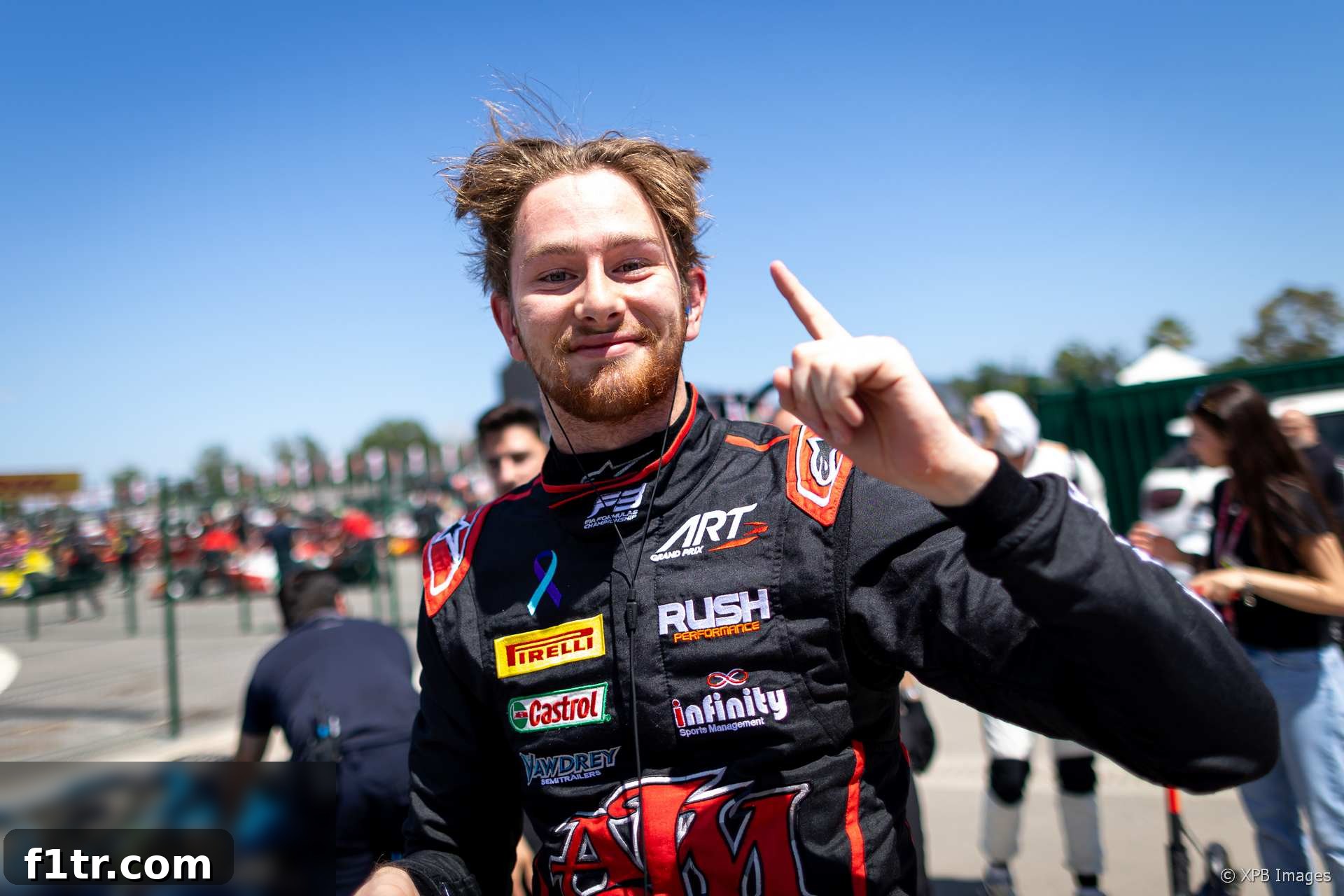
Racing with Resilience: Christian Mansell and Type 1 Diabetes in Elite Motorsport
The exhilarating world of international motorsport, much like any high-octane sporting arena, frequently showcases examples of incredible human resilience. Among these stories are those of competitors who bravely navigate the demanding circuits while living with Type 1 diabetes. This chronic condition, requiring constant management, presents a unique set of challenges that these athletes conquer with remarkable determination and innovation.
Advert | Become a Supporter & go ad-free
Pioneers like IndyCar veteran Charlie Kimball and NASCAR Xfinity Series racer Ryan Reed have not only participated but have achieved significant success at the highest echelons of motorsport despite their diabetic condition. Their careers stand as powerful testaments to the fact that Type 1 diabetes is not an insurmountable barrier to achieving one’s dreams in professional racing. They’ve paved the way, demonstrating that with meticulous planning, advanced technology, and unwavering discipline, athletes can compete at an elite level.
Christian Mansell’s Pioneering Approach to Racing with Type 1 Diabetes
In the fiercely competitive realm of Formula 3, young Australian racer Christian Mansell is another shining example. While Type 1 diabetes is a constant companion in his life, it certainly does not define him as a driver. However, its presence means that his health must be meticulously monitored, especially within the confines of a high-speed racing machine where split-second decisions and peak physical condition are paramount.
The Genesis of a Solution: Real-Time Monitoring in the Cockpit
Mansell’s journey into the spotlight of diabetes management in motorsport began in his rookie F3 season. Recognizing the critical need for real-time health data, his team requested, and the FIA stewards granted, a special dispensation for him to race with a mobile phone in his car. This was not a permanent fixture initially but approved on a round-by-round basis. The groundbreaking allowance enabled his trainer to remotely access vital data regarding Mansell’s blood sugar levels. This real-time oversight provided an unprecedented safety net, allowing for immediate intervention if any medically related safety risk began to develop during a session. This proactive approach underscored the commitment of both Mansell’s team and the governing body to his safety and ability to compete fairly.
While the FIA’s medical delegate formally recognized Mansell as “medically fit to compete notwithstanding his diabetes condition,” the governing body was keen to move beyond temporary dispensations. They sought a more robust, “acceptable solution” that could be applied permanently, eliminating the need for event-by-event approval and establishing a clear protocol for future cases. This forward-thinking stance from the FIA highlights a progressive attitude towards inclusivity and athlete welfare in motorsport.
Adapting Technology: How Mansell Manages His Condition Mid-Race
Speaking to media, including RaceFans, at the iconic Spa-Francorchamps circuit, Mansell provided insights into the refined system his ART team now employs. This updated version of his mobile phone solution from the previous season offers the continuous oversight necessary for him to race with confidence and safety. The evolution of this system is a testament to collaborative innovation between the athlete, his team, and the sport’s governing body.
Precision Management: A Day in the Life of a Diabetic Racer
“It’s actually quite simple once we’ve actually gotten it down to routine,” Mansell explained, demystifying what might seem like a complex setup. He detailed the ingenious method: “I basically have a fibreglass case that my phone gets mounted to the cockpit with – which is pretty ridiculous – and obviously I can’t touch it, I can’t do anything to it.” To ensure impartiality and prevent any competitive advantage, the FIA plays an active role in this process. “The FIA actually lock the phone, they set a password on it. So they’ve been really helpful in the whole process,” he added, emphasizing the meticulous control and transparent protocols in place.
This securely mounted, FIA-locked phone remains in Mansell’s car during every session, from practice to qualifying and the race itself. The 19-year-old emphasizes that beyond the standard of fitness required for any single-seater driver – which is already exceptionally high – he must also dedicate significant effort to ensuring his blood sugar levels remain within an optimal, healthy window throughout the intense pressures of a race weekend. This involves constant monitoring, precise nutritional intake, and strategic hydration, all tailored to the physical and mental demands of racing.
Advert | Become a RaceFans supporter andgo ad-free
Beyond Physicality: The Mental Game of Racing with Diabetes
Managing Type 1 diabetes in daily life is a challenge, but integrating it into the high-stress, high-performance environment of Formula 3 racing amplifies that challenge exponentially. “That’s hard,” Mansell admits, acknowledging the immense effort involved. “But it’s doable, because I do it every day – and it’s what I tell myself.” This internal dialogue highlights the powerful mental resilience required to thrive under such unique circumstances.
The Unseen Battle: Preparation and Resilience
Mansell consciously draws a distinction between “racing diabetes” and “normal diabetes.” “I try and separate ‘racing’ diabetes and ‘normal’ diabetes as best I can because, at the end of the day, there is a difference,” he explains. This differentiation underscores the unique physiological responses and heightened demands placed on his body during racing. Adrenaline, stress, physical exertion, and rapid environmental changes all influence blood glucose levels, requiring a more dynamic and vigilant management strategy. He credits extensive behind-the-scenes preparation as his greatest ally. “But there’s a lot of preparation behind the scenes and I think that’s what helps me most, as far as actually being able to do my job.” This preparation involves a dedicated team, precise dietary plans, tailored exercise regimes, and constant communication with medical professionals.
The sheer achievement of competing at this level while managing a chronic condition is not lost on Mansell. “It’s already such a feat in itself, that I’m already very proud of myself for even being able to sit here in front of you today and sort of discuss such a crazy thing that I live through every day,” he shared. The respect he garners from his peers is evident: “I’ve spoken to a few drivers in the paddock and they’ve come up to me and said ‘I don’t even know how you do it’.” This reaction speaks volumes about the extraordinary discipline and perseverance Mansell demonstrates. His success, including four podium finishes in 2024, is not just about raw talent but also about the relentless trial and error that has allowed him to perfect his diabetes management system to “a tee.”
Inspiring the Next Generation: Mansell’s Advocacy for Young Diabetics
As Mansell heads into the final round of the F3 championship at Monza, sitting sixth in the standings, his focus extends beyond securing more points. It is profoundly important to him that he serves as a visible and accessible example to young people living with diabetes. His message is clear: their condition is not, and should never be, a barrier to pursuing their motorsport dreams, or any dream for that matter.
A Champion Beyond the Chequered Flag
“At the end of the day, it sounds very cliche, but it is true – if you do put your mind towards it, you genuinely can do anything,” he states with conviction. This powerful ethos fuels his advocacy, not just for athletes with diabetes, but for broader mental health awareness. Mansell understands that chronic conditions can often bring mental health challenges, and showing resilience and achievement can be a profound source of encouragement.
“That’s why I’m such a big advocate for mental health, and that’s why I’m such a big advocate for sports people living with diabetes. Because at the end of the day, we can do it.” His growing presence on the world stage allows him to connect with and inspire countless young individuals. “I think the more and more that I put myself on the world stage and show kids… I’ve gotten messages from parents saying that their kids would have never done anything sport related.” The tangible impact of his example is deeply rewarding. “I actually recently had a mother text me on my Instagram saying that their child is now doing karting. So it’s very, very sweet.” These personal stories highlight the profound ripple effect of Mansell’s determination and openness, transforming aspirations into tangible actions for a new generation.
Setting a Precedent: The Future of Medical Accommodations in Motorsport
Christian Mansell’s journey and the FIA’s proactive stance are setting crucial precedents for the future of medical accommodations in motorsport and, potentially, other high-performance sports. The evolution from temporary dispensations to exploring permanent, integrated solutions signifies a shift towards greater inclusivity and safety for athletes with chronic conditions. This isn’t just about Mansell; it’s about establishing clear, medically sound pathways that allow talented individuals to compete fairly, without their health conditions being an insurmountable hurdle.
Technological Advancements and Inclusivity
The innovative use of a mobile phone for real-time monitoring, even with the stringent FIA controls, opens doors for further technological integration. Future solutions might include specialized, medically certified onboard telematics systems, discreet wearable sensors, or advanced data transmission protocols designed specifically for the demanding racing environment. Such developments could standardize the management of various health conditions, ensuring athlete safety while maintaining competitive integrity across a wider spectrum of motorsport. This balance between cutting-edge technology and rigorous safety protocols will be key in shaping a more inclusive and diverse future for the sport.
Advert | Become a RaceFans supporter andgo ad-free
Christian Mansell is more than just a talented F3 driver; he is a beacon of hope and a testament to human spirit. His journey exemplifies how dedication, coupled with adaptive technology and supportive governing bodies, can turn perceived limitations into powerful platforms for inspiration. As he continues to chase his racing dreams, Mansell simultaneously champions the dreams of countless young people, proving that with resilience and resolve, truly anything is possible, even in the fastest lanes of life.
Formula 3
- McLaren drop three drivers from junior roster and hire FREC runner-up De Palo
- Lawson: Tsunoda ‘had his time – I beat him in the junior series’
- F3 driver’s penalty cancelled after FIA asks stewards to review decision
- Antonelli and Bearman’s F1 graduations show the limitations of its feeder series
- Win-less Fornaroli clinches F3 title with last-lap pass in epic Monza finale
Browse all Formula 3 articles