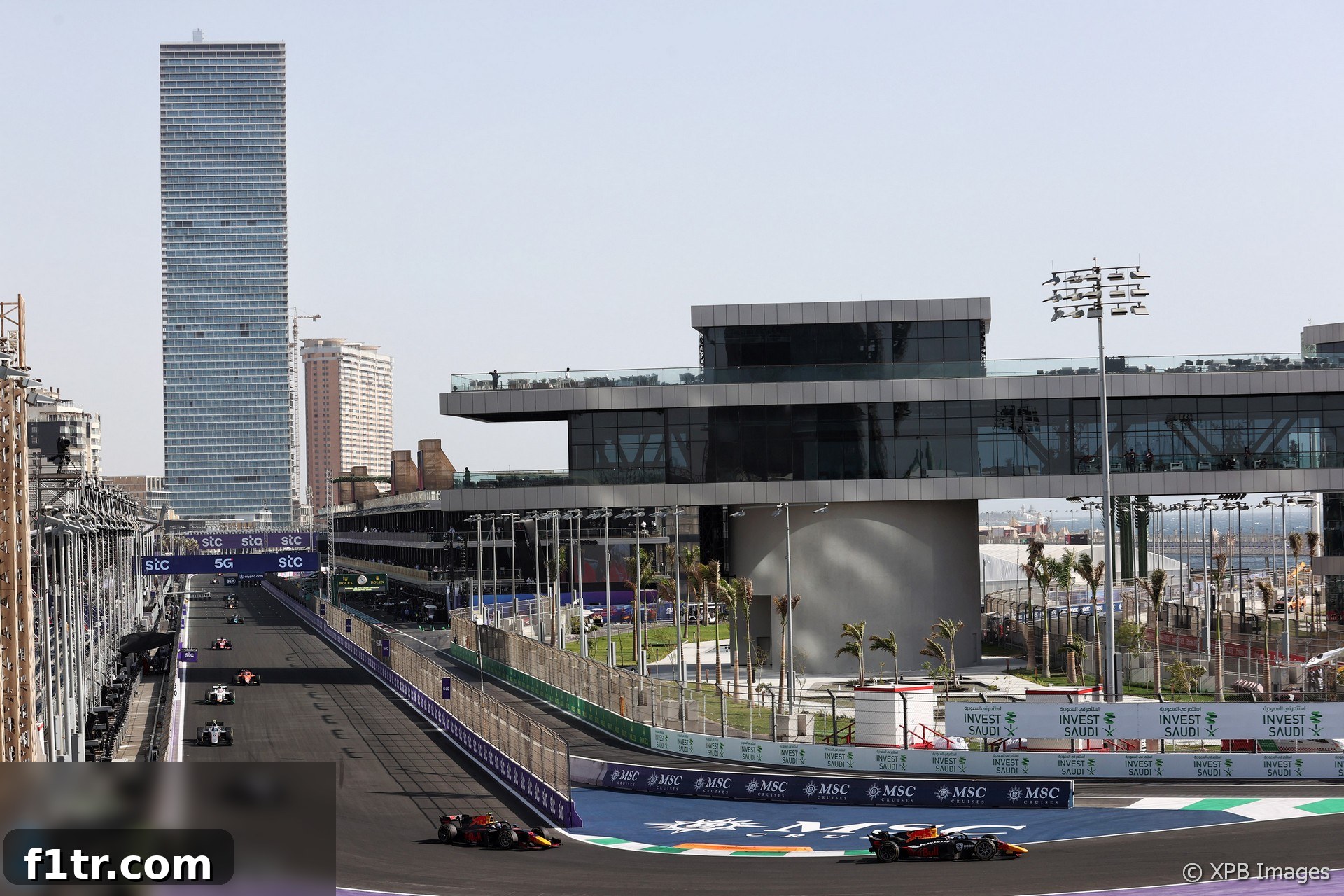
Jeddah Security Assurances: F2 Drivers Confident Amidst Geopolitical Tensions
The highly competitive world of Formula 2 found itself under an unprecedented spotlight during the Saudi Arabian Grand Prix weekend at the Jeddah Corniche Circuit. Following a missile strike on an oil facility just 10 kilometers from the track, the focus shifted from on-track battles to off-track security concerns. Despite the alarming incident, F2 drivers expressed their satisfaction with the extensive security arrangements, accepting the assurances provided by Formula 1 and the FIA, ultimately committing to the continuation of the race weekend.
An Unsettling Incident Rocks the Race Weekend
The tranquil hum of racing engines was momentarily overshadowed by a significant security breach near the Jeddah Corniche Circuit. On Friday, during the qualifying sessions for both Formula 1 and Formula 2, Houthi rebels claimed responsibility for a missile attack targeting an Aramco oil plant. Located approximately 10 kilometers from the circuit, the incident sent plumes of black smoke visible even from the track, casting a somber mood over what was supposed to be a thrilling motorsport spectacle.
Remarkably, many drivers initially remained unaware of the precise nature and proximity of the attack while they were competing. This lack of immediate information highlighted the insulated environment within a race weekend, but once the details emerged, it was, understandably, a source of considerable shock and concern among the paddock members. The incident brought to the forefront the complex geopolitical landscape surrounding the event, raising serious questions about the safety of participants and the feasibility of continuing such a high-profile international sporting event in a region prone to such tensions.
FIA and Formula 1’s Decisive Response
In the immediate aftermath of the missile strike, the FIA and Formula 1 swiftly engaged in urgent consultations with Saudi Arabian authorities and local security forces. These discussions were critical in assessing the threat level and understanding the implications for the event. The governing bodies reported receiving unequivocal assurances from the Saudi authorities that the Jeddah Corniche Circuit and its surrounding areas were not the intended targets of the attack, and that the security of all personnel involved in the Grand Prix remained their utmost priority. This commitment to enhanced security measures and comprehensive protection protocols was a crucial factor in the subsequent decision-making process.
Following a prolonged meeting involving team principals, F1 CEO Stefano Domenicali, and FIA President Mohammed Ben Sulayem, the unanimous decision was made to proceed with the Saudi Arabian Grand Prix weekend. This decision was predicated on the thorough security briefings and the heightened protective measures promised. The message conveyed was clear: while the incident was serious, all necessary steps had been taken to ensure the safety and well-being of everyone present, allowing the sporting program, including the Formula 2 races, to continue as planned.
F2 Drivers Share Their Perspectives on Security and Racing
The unique circumstances led to a palpable tension in the paddock, with drivers openly discussing their feelings. Emerging from the opening sprint race on Saturday afternoon, where Liam Lawson claimed victory ahead of Juri Vips and Jake Hughes, the podium finishers reflected on the situation with candor and measured understanding.
Jake Hughes, who secured a commendable third place, admitted the attack was “obviously quite a shock” for the drivers. He articulated the unusual nature of the event, stating, “It’s something that I don’t think any of us, if not the whole grid, have ever experienced before, obviously, and definitely not nice to see.” Despite the initial unease, Hughes expressed his trust in the information provided: “I think we’ve been given enough assurances now from all the parties involved – F2, the FIA, Formula 1 – that it’s safe to race. Probably this is the safest place to be right now. To put my personal point of view, I’m quite happy to race this weekend.” His sentiments underscored a collective belief that the authorities would not proceed if a significant risk persisted.
Liam Lawson, the victorious Red Bull Junior Team driver, echoed Hughes’s pragmatic approach. “For us, as drivers and as teams, we’ve been assured that in this area we’re completely safe, and I think we trust F1 and the organisers around us that that will be the case,” Lawson stated. He acknowledged the unsettling nature of the event (“it’s disappointing and not nice to see”) but ultimately accepted the decision to continue, emphasizing the trust placed in the professional assessment of safety experts and event organizers.
Fellow Red Bull Junior Team member Juri Vips offered a broader, more philosophical perspective. While acknowledging the current global climate of “sad times” and “a lot of war and negativity,” Vips asserted the importance of not succumbing to such external pressures. “I think as a big sports event, we shouldn’t be bullied into cancelling the events or anything like that,” he remarked. His view highlighted a desire for resilience and a commitment to the sporting integrity of the event, reinforcing the idea that while safety is paramount, major events should strive to continue in the face of adversity, provided adequate security is guaranteed. Vips concluded, “Obviously it’s not great when there is such an explosion near you. But I do trust F1 and the security that they’re providing us.” The collective voice of the drivers, therefore, conveyed a unified message of trust in the security arrangements and a determination to proceed with the races.
Racing On: A Testament to Resilience and Professionalism
The decision to continue racing, backed by the drivers’ confidence in the security protocols, transformed the Saudi Arabian Grand Prix weekend into a powerful display of resilience. Despite the unsettling backdrop, the F2 drivers delivered captivating performances, demonstrating their unwavering focus and professionalism. Liam Lawson’s dominant win in the sprint race, followed by Vips and Hughes, showcased the pure competitive spirit that defines motorsport, even under extraordinary circumstances. The ability of these young athletes to compartmentalize and perform at the highest level, despite the very real and recent threat, was a testament to their mental fortitude and dedication to their craft.
The continuation of the event, therefore, served multiple purposes. It upheld the sporting calendar, provided a platform for fierce competition, and perhaps most significantly, sent a message of steadfastness. It underlined the commitment of Formula 1 and its feeder series to deliver world-class racing while meticulously prioritizing the safety and well-being of all participants, contingent upon rigorous security assessments and direct assurances from host authorities.
Navigating the Geopolitics of Global Sporting Events
The incident in Jeddah inevitably reignited broader discussions regarding the complexities of hosting major international sporting events in regions marked by geopolitical sensitivities. Formula 1, as a global spectacle, frequently finds itself at the intersection of sport, commerce, and politics. The decision to race in countries like Saudi Arabia often draws scrutiny, touching upon human rights concerns, regional stability, and the ethical responsibilities of sporting organizations.
This episode highlighted the delicate balance that F1 and the FIA must strike. While pursuing global expansion and lucrative commercial opportunities, they are also tasked with ensuring the absolute safety of their entire traveling circus – drivers, teams, media, and support staff. The Jeddah incident served as a stark reminder that even with the most advanced security measures, external factors beyond immediate control can pose significant challenges. It necessitates continuous dialogue, robust risk assessment frameworks, and transparent communication not only with authorities but also with all stakeholders, particularly the athletes who bear the most direct personal risk.
The geopolitical dimension adds layers of complexity to event planning, requiring a profound understanding of local and regional dynamics. For the sport to maintain its integrity and appeal, while fostering a truly global presence, it must continuously evaluate how it navigates these challenging terrains, ensuring that decisions prioritize human safety and ethical considerations above all else.
Future Outlook: Enhancing Safety and Communication
Looking ahead, the events in Jeddah will undoubtedly prompt further review and enhancement of security protocols for all future Grands Prix, particularly those held in potentially volatile regions. This includes not only physical security measures around the circuit but also advanced intelligence gathering and more proactive communication strategies with teams and drivers.
Transparency in crisis management is paramount. While drivers ultimately expressed satisfaction with the assurances given, the initial unawareness of the attack among some highlighted areas where communication could be improved. Establishing clearer, more immediate channels for relaying critical safety information to all participants, along with opportunities for drivers to voice concerns collectively, could further strengthen trust and confidence. The FIA and F1’s commitment to continuous improvement in safety, a cornerstone of motorsport, will be tested and reinforced through lessons learned from such challenging experiences, ensuring that the spectacle of racing can continue to thrive safely on the global stage.
Conclusion: Resilience in the Face of Adversity
The 2022 Saudi Arabian Grand Prix weekend will be remembered not only for the thrilling on-track action but also for the extraordinary circumstances surrounding it. The missile strike near the Jeddah Corniche Circuit presented a formidable challenge, testing the resolve of Formula 1, the FIA, and all participants.
Ultimately, the collective decision to proceed, backed by comprehensive security assurances and the expressed confidence of the F2 drivers, underscored a remarkable resilience. Liam Lawson, Juri Vips, and Jake Hughes, among others, demonstrated their unwavering professionalism, focusing on their craft amidst geopolitical complexities. While such incidents serve as potent reminders of the external world’s impact on sports, they also highlight the dedication of motorsport communities to continue their passion safely. The experience in Jeddah reinforced the ongoing need for vigilance, meticulous planning, and clear communication to safeguard the future of global motorsport events, ensuring that the spirit of competition can always overcome adversity.
2022 Saudi Arabian Grand Prix Articles
- Vettel will return to race for Aston Martin at Australian Grand Prix
- Mercedes “a second per lap” off Red Bull’s pace – Russell
- Transcript: How Verstappen fought Leclerc on his radio and on the track in Jeddah
- F1 intends to keep racing in Saudi Arabia despite missile attack
- Paddock Diary: 2022 Saudi Arabian Grand Prix
Browse all 2022 Saudi Arabian Grand Prix articles