Formula 1’s Reckoning: Navigating the COVID-19 Storm and Forging a Stronger Future
The global motorsport community, particularly Formula 1, found itself profoundly shaken following the chaotic Melbourne fiasco, an event that laid bare the unpreparedness for the unfolding COVID-19 pandemic. Since that humbling retreat, Formula 1 and its ten constituent teams have been engaged in an unprecedented series of dialogues, aiming to mitigate the widespread disruption caused by the novel coronavirus. Adversity often serves as a catalyst for growth, and there is a determined effort within the sport to emerge from this enforced period of introspection and challenge not just resilient, but fundamentally stronger.
Advert | Become a Supporter & go ad-free
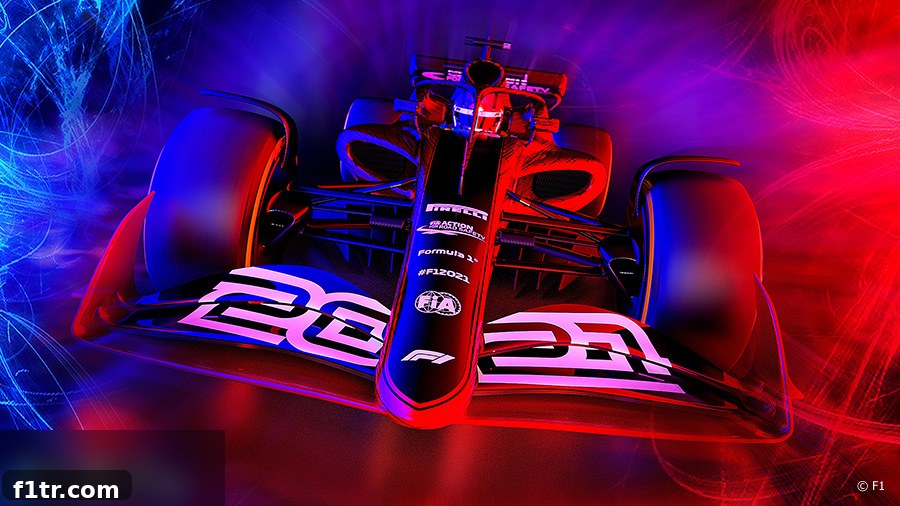
Encouragingly, initial signs suggest that a spirit of collective welfare has superseded individual team agendas during these critical discussions. A pivotal conference call involving all major stakeholders saw unanimous agreement on several crucial fronts. Firstly, participants consented to defer the eagerly anticipated 2021 technical regulation changes—a framework that was the culmination of years of meticulous development and significant investment. This decision alone underscored a shared understanding of the financial and operational impracticalities of introducing radical new car designs amidst a global shutdown. Secondly, all parties empowered F1 to negotiate a revised 2020 race calendar without requiring explicit team approval, a flexibility typically constrained by stringent regulations. This shift represents a significant concession and a testament to the urgency of the situation.
This newly discovered humility appears to have fostered an environment ripe for collaboration and learning. The frequency of inter-team conference calls since the return from Australia serves as a clear indicator of this shift. One anonymous team member, speaking under the veil of an unusually strict silence pact enforced among the FIA, F1, and the teams, remarked, “I’ve not had as many conversations with other teams in a year as I’ve had this week.” This candid observation highlights a refreshing departure from the traditionally competitive and often secretive nature of Formula 1, paving the way for open dialogue and shared problem-solving.
Shattering the Paddock Bubble: F1’s Forced Introspection
During these intensive calls, a multitude of ideas, concepts, and proposals were put forward. The COVID-19 pandemic has arguably inflicted more disruption upon Formula 1 than any other event in its illustrious 70-year history. This unprecedented crisis has forced the sport into a harsh, undeniable realization: it does not, and indeed cannot, exist within its own insular ‘paddock bubble’. The interconnectedness of global events, public health, and societal priorities now demand a far broader perspective than ever before, challenging F1 to acknowledge its place within a larger world.
Some of the proposals emerging from these discussions possess undeniable merit and could be readily implemented, demonstrating F1’s capacity for innovation beyond the racetrack. A prime example is the initiative for F1 teams to apply their advanced engineering expertise and manufacturing capabilities to produce much-needed medical apparatus, a development first revealed here on Wednesday. This proactive contribution to the wider fight against the pandemic not only showcases the sport’s technical prowess but also garners significant public goodwill. However, the inherent complexity of Formula 1 means that some ideas, despite their initial appeal, will ultimately prove unworkable, overly intricate, or carry the risk of introducing “unforeseen consequences”—a persistent bane of regulatory changes in the sport’s history. F1 must therefore carefully tread a difficult line: being agile and reactive to the crisis without succumbing to the kind of destructive, knee-jerk impulses that have, regrettably, characterized some of its past decision-making.
The encouraging takeaway from recent proceedings is the apparent willingness to set aside the habitual selfish horse-trading and constant tabling of individual agendas in the face of this overarching crisis. It is precisely these factors, more than any others, that have historically fostered the regulatory lethargy and stagnation from which F1 currently struggles to break free. A unified front offers the best path forward, allowing the sport to tackle its multifaceted challenges with greater efficacy.
The Intricate Web of Challenges: From Calendar Chaos to Contractual Conundrums
The FIA and commercial rights holder Liberty Media find themselves under immense pressure from a diverse array of stakeholders: teams, race promoters, broadcasters, suppliers, and sponsors. All are desperately seeking urgent answers and a clear roadmap for the future. However, many of the solutions that have been floated publicly possess clear shortcomings and highlight the intricate web of dependencies within Formula 1.
Advert | Become a RaceFans supporter andgo ad-free
Despite the aforementioned “silence” pact, various ideas have inevitably found their way into media reports. Some of these suggestions, upon closer inspection, would clearly not withstand the scrutiny of practical implementation. For instance, while F1 managing director Ross Brawn correctly pointed out that F1 regulations permit events to be run with fewer than a dozen entries—specifically stating “may be run with less than 12 cars”—this overlooks critical commercial realities. Race promoters are contractually guaranteed at least 16 entries, and attempting to deviate from this would invite significant legal and financial repercussions, undermining the vital relationship between F1 and its host venues.
Similarly, much discussion has revolved around the regulation stipulating a minimum of eight events for F1 to qualify as a world championship—a crucial distinction, as Liberty Media’s commercial rights are tied exclusively to the F1 World Championship, not non-championship events. However, this legal minimum for championship status pales in comparison to the requirements embedded within lucrative television broadcast contracts, which are understood to typically contain clauses demanding a minimum of 15 races per season. Falling short of this figure could trigger substantial financial penalties and jeopardize future broadcast deals, posing an existential threat to the sport’s revenue streams.
The Calendar Conundrum: Rescheduling and Its Ripple Effects
Current proposals include delaying the start of the 2021 season beyond its traditional mid-March slot, a move intended to accommodate some of the postponed 2020 events by shifting them into early next year. While seemingly pragmatic, such an approach is only feasible for races held in warmer climates, ruling out many traditional European venues. Furthermore, implementing this would mean certain events being held twice within a single calendar year—an immediate challenge for promoters who have already incurred substantial losses due to the 2020 disruptions. Given that most F1 events receive at least partial underwriting from public funds, the potential reaction from state organs to such plans is a significant concern, especially in light of the enormous financial toll COVID-19 has already exacted globally. It is one thing for F1 to dictate “We’re going to do this or that,” but the reality of such negotiations dictates a two-way street, requiring the consent and financial backing of host governments and local authorities.
The potential impact on teams’ existing contractual obligations also warrants careful consideration. McLaren, for example, has an engine supply agreement with Renault set to expire at the end of 2020, with a planned transition to Mercedes power for 2021. How will McLaren navigate regulations that demand a carry-over of their 2020 chassis into 2021, potentially necessitating significant adjustments to accommodate a new engine supplier within an existing framework? Similarly, Haas’s technology-sharing contract with Ferrari also concludes this year, raising questions about how they will manage the carry-over without undermining their established technical partnerships. Indeed, one insider wryly remarked that Ferrari, who initially opposed a chassis carry-over for 2021 before ultimately voting in favor, must have swiftly identified a solution for the seemingly underperforming chassis they utilized during pre-season testing.
Advert | Become a RaceFans supporter andgo ad-free
It is also crucial to consider the unanimous agreement to delay the introduction of the new 2021 technical regulations by a year due to the prevailing circumstances. While ostensibly a positive and sensible development, these regulations are integral components of a delicately balanced and interdependent ecosystem. Simply postponing one aspect is likely to trigger a cascade of repercussions throughout the sport’s forward-looking programs.
The Regulatory Ecosystem and the Road Ahead
This complex ecosystem encompasses the FIA International Sporting Code, the F1 Technical and Sporting Regulations, the new-for-2021 Financial Regulations, and the crucial, yet-to-be-signed Concorde Agreement. Postponing the introduction of just one of these components inevitably influences the overall regulatory mix and, by extension, all future development programs for every team. As is consistently the case in Formula 1, the “devil will be in the detail,” and historical precedent suggests that intricate details have derailed many a promising concept.
Current speculation suggests that the existing annual budget cap level of $175 million will be retained. However, a critical question remains: if the present inequitable revenue distribution and governance structures are also preserved alongside this cap, will the smaller teams, who have long clamored for fundamental change, be pushed beyond their financial limits? This concern is particularly acute given the already depleted prize money ‘pot’ anticipated for this year due to the reduced number of races and overall economic downturn. The viability of many teams, therefore, largely hinges on the Concorde Agreement being signed as is—a significant and potentially contentious undertaking given the prevailing uncertainties and the financial strain on all parties.
In Melbourne, Formula 1 was caught flat-footed and appeared indecisive in its initial response to the rapidly escalating crisis. However, the events of the past week demonstrate a renewed capacity for swift thought and decisive action. Yet, the sport faces further profound soul-searching over the coming weeks and months. More conference calls are undoubtedly planned, but these are likely to represent only the initial stages of an encouraging and earnestly proactive process, rather than providing a definitive and complete roadmap for F1’s immediate future.
Despite Formula 1’s newfound humility and a genuine willingness to learn and adapt, an extremely challenging period of negotiation lies ahead for all stakeholders. This will require not only goodwill and the best intentions from all participants but also a pragmatic approach to overcoming deep-seated issues and divergent interests. That said, F1 deserves considerable credit and support for the significant strides it has made thus far in navigating this unprecedented global crisis, demonstrating an impressive capacity for unity and responsiveness when faced with monumental challenges. The path forward remains uncertain, but the sport has shown a promising intent to confront its reality and build a more robust future.
Go ad-free for just £1 per month>> Find out more and sign up
2020 F1 season
- Grosjean to make F1 test return tomorrow for first time since Bahrain horror crash
- Pictures: Wrecked chassis from Grosjean’s Bahrain fireball crash to go on display
- Bottas vs Rosberg: Hamilton’s Mercedes team mates compared after 78 races each
- F1 revenues fell by $877 million in Covid-struck 2020 season
- Hamilton and Mercedes finally announce new deal for 2021 season
Browse all 2020 F1 season articles