W Series Joins Formula 1 Weekends: A Landmark Move for Women in Motorsport and Global Diversity
The world of motorsport is on the cusp of a transformative era, heralded by the exciting announcement that the W Series will join the Formula 1 calendar for eight rounds in 2021. This pivotal decision has been met with widespread enthusiasm from Formula 1 drivers and pundits alike, who see it as a monumental step forward for promoting women’s motorsport and enhancing gender diversity across the sport.
For years, the motorsport landscape has been predominantly male-dominated, a reality that has increasingly come under scrutiny. The W Series, an all-female single-seater championship, was established in 2019 with a clear mission: to create a dedicated platform for female talent, nurture their skills, and ultimately help them progress to higher levels of racing. Its integration into the pinnacle of motorsport, Formula 1, is not merely a logistical arrangement; it’s a powerful statement of intent towards a more inclusive and equitable future.
Increased Visibility and Opportunity: The Drivers’ Perspective
Formula 1 stars have been quick to laud the move, emphasizing the profound impact it will have on visibility, funding, and career progression for aspiring female racers. The opportunity to race on the same weekends, at the same iconic venues, and under the intense global spotlight of Formula 1 is unparalleled.
Valtteri Bottas on Underrated Women’s Sports
Valtteri Bottas, known for his advocacy for women’s sports funding, immediately recognized the significance of this development. “I heard about the news today and I think it’s really good,” said Bottas. “They’re obviously going to be more visible, that series, than what it was before, and if you can succeed there, proceed and impress, you might have opportunities to go much further than that.”
Bottas further elaborated on the broader implications, stating his hope that the increased exposure would generate more interest and coverage. “I think this is a positive thing and it’s an interesting series, and I think now more people will know about it and will be able to follow it. It should be followed, like any other women’s sport – it’s many times underrated and it’s actually really interesting to watch, but there’s no coverage, so I think it’s a really, really good thing.” His sentiment highlights a critical challenge many women’s sports face: a lack of media attention, which in turn impacts sponsorship, fan engagement, and professional pathways. By aligning with F1, the W Series directly tackles this issue, bringing its compelling narratives and fierce competition to millions.
Lewis Hamilton: Beyond Colour, Towards Gender Diversity
Seven-time world champion Lewis Hamilton, a prominent voice for diversity and inclusion, passionately articulated the need for visible gender diversity, particularly in junior series. “I’ve grown up and come through the other ranks, so I think it’s great what they have already done. And I think it’s definitely very, very important that they’re here on the global scale,” Hamilton stated.
Hamilton expanded on his definition of diversity, clarifying that it encompasses far more than just racial representation. “When we talk about diversity, people often think that we’re talking about having more people of colour. It’s not just that, it is having more women involved. At the moment it is a male dominated sport and that does need to change.” His words underscore the systemic nature of the issue and call for a holistic approach to fostering inclusivity within motorsport.
Recalling his own journey, Hamilton spoke of the struggles faced by the few female racers he encountered in his karting and lower category days. “I remember racing from karting, all the way up and only seeing less than a handful of young girls coming through and I remember seeing and speaking to a couple of them, just knowing how difficult it was.” He specifically referenced Susie Wolff, the last woman to drive in an official F1 session in 2015. “I raced with Susie [Wolff], who I think was such a great talent and I remember how tough it was for her, just witnessing her being in what was perceived as a man’s sport. The sport does need to do more.”
Hamilton stressed that while the W Series is a significant leap, the effort must extend to the very grassroots of the sport. “I think [W Series] is a good step in the right direction but I think that needs to transcend all the way down to karting. I don’t know what karting is doing but there needs to be more females, more girls in karting with more opportunity to make their way up to that class. There’s plenty of access for young boys and men to come through the karting ranks into single-seaters. They need to do more, we need to do more to make sure that young girls out there know that it is a possible career path. Hopefully, that’s what W Series is doing.” His emphasis on a comprehensive talent pipeline from karting upwards highlights the long-term vision required to achieve true gender parity.
Romain Grosjean: The F1 Spotlight’s Propelling Power
Haas driver Romain Grosjean echoed the sentiment about the crucial role of the F1 spotlight in career development. He drew parallels to his own experiences in junior categories that supported F1 weekends. “I remember when I went into a category that was one of the support races for Formula 1, it was a big deal because you were under the spotlight,” said Grosjean.
“I think for W Series, it’s a great opportunity for all the girls racing there and obviously it’s a big step forward for the series in terms of viewership and image. So I think it’s cool and I’m looking forward to see what it brings and if there’s any chance that we will see a girl Formula 1 racing driver.” Grosjean’s hopeful outlook encapsulates the ultimate aspiration for many: to see a female driver compete at the pinnacle of motorsport once again.
Williams Drivers: Recognition, Growth, and Inclusivity
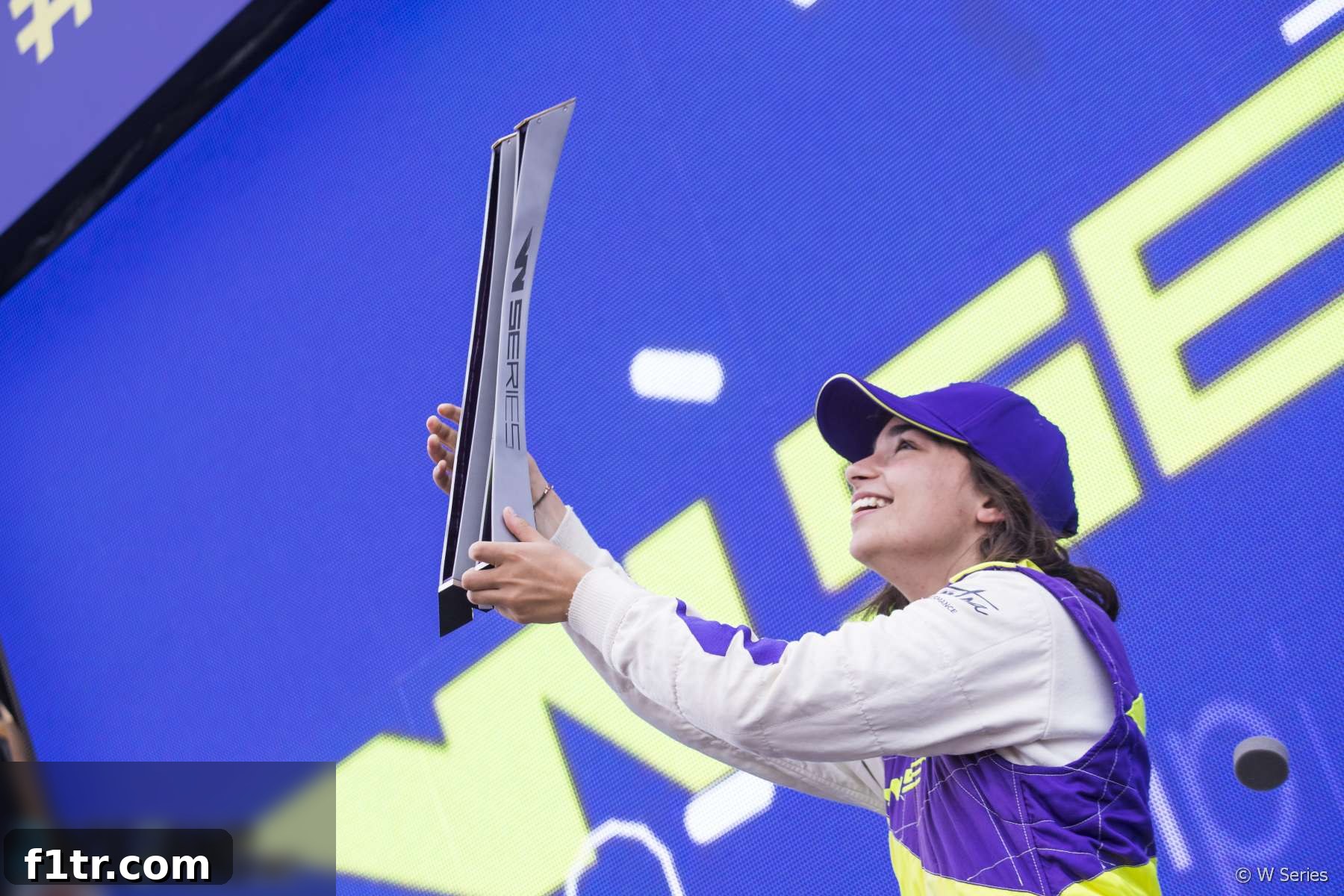
Jamie Chadwick, the reigning W Series champion and a development driver for Williams, represents the talent already emerging from the series. Her team-mates at Williams also voiced strong support for the W Series’ integration with F1.
Nicholas Latifi highlighted the immediate benefits of recognition. “It’s great that they’re going to be racing on the F1 weekend and it’s going to give definitely more recognition to the series itself,” said Latifi. “It’s still, obviously, a relatively new series and it’s only going to be growing.”
He further drew on his own experience, noting the motivational impact of being part of the F1 paddock. “I think the fact that they’re going to be on the stage in F1 is similar to the feeling I got when I first raced GP2, when you’re around the paddock. I’m sure it was the same for GP3 at the time, F3 drivers. I think it’s a good step for them. I think as it’s only going to grow, it’s going to attract more drivers, it’s going to probably push for an inclusion of more women getting into motorsport, from a driving point of view so it can only help the cause.”
George Russell echoed these sentiments, describing the move as an “obvious change for the better” that would also add significant value for fans attending races. “It’s great to see W Series in the Formula 1 circus. It’s obviously adding to inclusion and it’s going to help more women to get into motorsport and to make Formula 1 and motorsport in general a more diverse sport, which is obviously the route we need to take.”
The Path Forward: Inspiring a New Generation
The W Series joining the F1 weekend package is more than just a scheduling alignment; it’s a powerful symbol of progress and an invaluable platform for inspiration. For young girls watching from home or attending races, seeing female drivers compete on motorsport’s biggest stage dismantles stereotypes and normalizes the idea of a career in racing. This visibility is crucial for fostering aspirations and encouraging participation from a young age.
Historically, women in motorsport have faced numerous hurdles, from limited opportunities and lack of sponsorship to societal biases about their capabilities. While talented female drivers have existed throughout history, a clear, well-supported pathway to the top has often been absent. The W Series was designed to bridge this gap, offering fully funded seats and a professional environment that allows drivers to focus solely on their performance. The F1 partnership elevates this mission to an unprecedented level.
Moreover, the increased exposure will not only benefit drivers but also potentially attract more women to other vital roles within motorsport, such as engineering, mechanics, team management, and media. A truly diverse sport is one where representation is strong across all departments, reflecting the broader population.
The integration of W Series into the F1 calendar marks a pivotal moment in the ongoing drive for greater diversity and inclusion in global sport. It’s a testament to the efforts of many who have campaigned for a more equitable playing field and a clear signal from Formula 1 that it is committed to fostering a sport that welcomes and champions talent, regardless of gender. As the 2021 season unfolds, the world will be watching, not just the thrilling competition, but also the unfolding narrative of a sport that is embracing change and building a more inclusive future.