Welcome to our comprehensive motorsport news roundup, where we delve into the most exciting developments across the racing world. From Formula 1’s latest commercial ventures to groundbreaking team reveals in Formula E and critical discussions on track safety, we cover the stories shaping the future of racing. This edition highlights a historic sponsorship deal for F1’s DRS zones, an ambitious new livery in Formula E, and a look back at one of motorsport’s most iconic rivalries, alongside crucial insights into driver development and fan experience.
F1 Commercialization and the Evolution of Overtaking Aids
A New Era for Formula 1’s DRS Zones: Duracell Sponsorship in Las Vegas
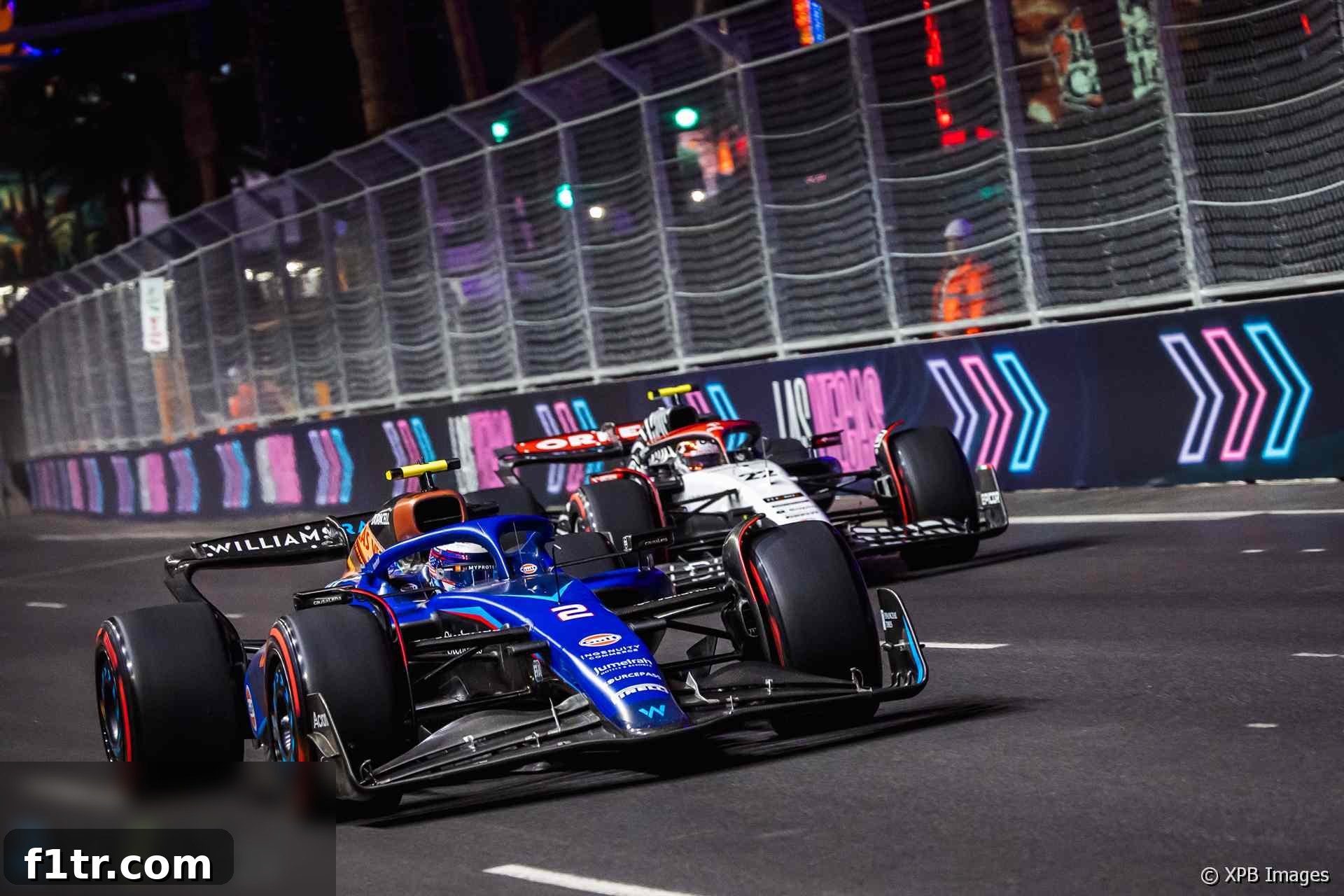
The upcoming Las Vegas Grand Prix is set to witness a significant first in Formula 1’s commercial history: the branding of its Drag Reduction System (DRS) zones. Williams sponsor Duracell will extend its partnership to become the inaugural brand to lend its name to these crucial overtaking areas when the championship returns to the spectacular Las Vegas Strip Circuit next month. This innovative move marks a new chapter in F1’s commercial strategy, leveraging trackside technology and visible circuit features for sponsorship opportunities. Duracell’s logos will be prominently displayed, illuminated using LED boards, integrated into trackside signage, and even featured on a nearby roof, ensuring maximum visibility for fans both at the circuit and watching globally.
Introduced in 2011, DRS was designed to enhance overtaking opportunities and inject more excitement into races by allowing drivers to temporarily reduce drag on their rear wing, granting a speed advantage on designated straights. While it has become an integral part of F1 racing, providing thrilling moments and strategic depth, it has also sparked debate among purists who sometimes view it as an ‘artificial’ aid to overtaking. The decision to brand these zones reflects Formula 1’s continuous pursuit of commercial growth and its ability to offer unique, high-visibility advertising platforms.
The Future of Overtaking: Manual Override Mode
Looking ahead, the current DRS system is scheduled to be phased out at the end of the next season. It will be replaced by a new, highly anticipated system known as Manual Override Mode, as detailed in recent announcements. While specific mechanics are still under wraps, this change signals a potential shift towards a more skill-dependent or strategically nuanced overtaking mechanism, aiming to create even more natural and engaging racing battles. The evolution from DRS to Manual Override Mode is part of Formula 1’s broader commitment to refining its sporting regulations, ensuring the pinnacle of motorsport remains exciting, challenging, and relevant for both drivers and fans.
The branding of DRS zones, particularly at a high-profile event like the Las Vegas Grand Prix, underscores F1’s global appeal and its capacity to attract major brands. This commercial innovation, coupled with the impending technical evolution of overtaking aids, highlights a dynamic period for Formula 1, balancing tradition with progress and spectacle with pure racing essence. The Las Vegas event itself is a testament to F1’s ambition, bringing the sport to iconic cityscapes and creating an unparalleled fan experience.
Formula E’s New Contender: Kiro Reveals Striking Livery
In the electrifying world of Formula E, a new contender has emerged with a bold statement. Kiro, the team that has taken over the entry previously known as ERT, has unveiled a striking bright yellow livery for its inaugural year in the all-electric racing series. This vibrant design is more than just an aesthetic choice; it’s a powerful declaration of identity and ambition as Kiro prepares to make its mark on the competitive grid.
Team principal Alex Hui eloquently articulated the philosophy behind the new look, stating, “It’s more than just aesthetics; this livery is a bold declaration of our identity as daring upstarts, ready to redefine the rules.” This sentiment perfectly encapsulates the spirit of Formula E itself – a series dedicated to innovation, sustainability, and pushing the boundaries of motorsport technology. Hui further emphasized the team’s goals, adding, “We want this design to spark excitement, inspire our fans, and attract partners who share our drive for bold innovation and fearless competition.”
The reveal of Kiro’s livery signifies not just a change in branding but also a renewed commitment to success and a fresh vision for the team. In motorsport, a team’s livery serves as its visual identity, instantly recognizable to fans and a crucial element in building brand loyalty and attracting commercial partners. Kiro’s choice of a bright yellow is designed to stand out, symbolizing energy, optimism, and a fearless approach to racing. As Formula E continues to grow its global footprint and attract significant investment, teams like Kiro are vital in demonstrating the series’ dynamic and forward-thinking nature.
Rising Talent: Tim Tramnitz Returns to Formula 3 with MP Motorsport
The ladder to Formula 1 is fiercely competitive, and the Formula 3 championship plays a pivotal role in identifying and nurturing future stars. Young German driver Tim Tramnitz is set to return to drive for MP Motorsport in Formula 3 next year, building on a promising rookie campaign. This re-signing highlights both Tramnitz’s potential and MP Motorsport’s commitment to developing young talent within the junior categories.
In his debut season, Tramnitz finished an impressive ninth in the championship standings, a commendable achievement for a rookie navigating the complexities of F3 racing. A key highlight of his season was scoring his first win in the partial-reversed-grid race at Monza, a testament to his adaptability and race craft under pressure. Returning for a second season with the same team often provides a significant advantage, allowing drivers to leverage their experience, fine-tune their approach, and push for even stronger results. Tramnitz’s continued presence in F3 ensures that the series remains a hotbed of emerging talent, showcasing the next generation of motorsport heroes.
Motorsport Insights and Perspectives from Around the Globe
Beyond the major headlines, the world of motorsport is rich with compelling stories, analyses, and personal reflections from drivers and teams. Here’s a deeper dive into some notable articles and interviews providing unique perspectives across various racing disciplines:
Coyne Buoyed by ‘Post-Season Podium’ (Racer)
Dale Coyne Racing, a long-standing fixture in the NTT IndyCar Series, finds renewed optimism despite a challenging season, buoyed by strong performances in post-season testing. Team owner Dale Coyne expressed his encouragement: ‘We had Katherine turn the fastest lap of the race at race one in Milwaukee, and Jack turned the fastest lap in race two. And obviously, we all saw what Toby Sowery and Hunter McElrea did in our cars. So we’ve been getting better but just haven’t really shown it.’ This reflects the continuous development cycle in IndyCar, where off-season testing and feeder series performances are crucial indicators of a team’s potential for the upcoming year. For Coyne, these “post-season podiums” signify progress and a tangible boost in morale, essential for a privateer team competing against manufacturer-backed giants.
Johnny Herbert on Schumacher’s Legacy and Keeping Skills Alive (TalkSport)
Former Formula 1 driver Johnny Herbert, a one-time teammate to the legendary Michael Schumacher, shares poignant reflections on the seven-time world champion’s unparalleled skill and his own career trajectory. Herbert’s candid remark, ‘Would I have been world champion without the accident? I believe I could have been… but I’m not!’ offers a glimpse into the ‘what-ifs’ of motorsport careers, where fate can play a decisive role. He also discusses how he endeavours to keep Schumacher’s greatest skills alive, particularly at circuits significant to F1 history and current drivers like Lewis Hamilton. This insight provides a valuable connection between the sport’s past heroes and its present, emphasizing the timeless qualities of driving excellence that transcend generations.
Behind the Visor: Enzo Fittipaldi’s Diverse Interests (Formula 2)
Beyond the high-stakes world of Formula 2, drivers like Enzo Fittipaldi, grandson of two-time F1 world champion Emerson Fittipaldi, find balance and challenge in a surprising array of hobbies. In an insightful “Behind the Visor” feature, Enzo reveals his passions for fishing, tennis, and even storm chasing. ‘I really enjoy tennis, it’s a very competitive sport,’ he explains, drawing a compelling parallel: ‘I think it’s the closest sport to racing in terms of it being a very individual sport.’ This interview sheds light on the mental fortitude and competitive drive that define top-tier athletes, demonstrating how skills and mindset developed in seemingly unrelated activities can enhance performance and well-being in the intense environment of professional motorsport. It offers fans a rare glimpse into the personality and life beyond the cockpit for these future champions.
We always endeavour to credit original sources. Got a tip for a link relating to single-seater motorsport? Please send it to us via the contact form.
Social Media Pulse: Voices from the Motorsport World
Social media platforms continue to be a vital space for real-time updates, expert commentary, and fan interaction within motorsport. Here are some notable recent posts from X (formerly Twitter) providing insights and opinions:
Applies to commentators too. Stops them coming up with silly theories for things which aren’t allowed.
— Bob Constanduros (@BobConstanduros) October 21, 2024
Motorsport commentator Bob Constanduros highlights the importance of clear regulations and communication, noting its benefit not only for teams and officials but also for commentators, preventing speculative and inaccurate theories.
Incredible experience at the @F1 in Austin. It’s always great to return to this wonderful city. The venue @COTA here is top-notch and circuit provides great racing! #F1 #AustinGP #JSC7engineering pic.twitter.com/kiioV9xtLy
— Julien Simon-Chautemps (@julien_sc) October 21, 2024
Julien Simon-Chautemps, a figure in F1 engineering, shares his positive experience at the F1 Austin Grand Prix, praising the Circuit of the Americas (COTA) as a top-notch venue that consistently delivers great racing, reflecting the general sentiment towards the popular US race.
- Find more official F1 accounts to follow in the F1 Twitter Directory
Critical Voices: The Importance of Track Safety and Crowd Management
Fan Safety Concerns Following US Grand Prix Track Invasion
Following the United States Grand Prix, where organizers were fined up to €500,000 for fans entering the circuit confines prematurely, the critical issue of post-race track invasions and crowd safety has once again taken center stage. @RBAlonso, a RaceFans reader, shared a harrowing personal account from the Italian Grand Prix, articulating profound concerns over how these events are currently managed:
I was at the Italian GP, sitting at turn one specifically so that I could be underneath the podium. It was a crush, there was no other word for it.
Thousands of people forced into tiny exits, and once one person is seen on the track the rest follow and the pushing is more intense. I was with my two brothers, sprinting through the woodland to get to the first open gate. Both are fit six-feet men in their twenties. I’m six foot, three inches. It was horrific, particularly in 32-degree heat. There were a number of young women and children who were being crushed and it was difficult to breathe for several minutes.
This is not the way a modern sports facility should be run. There must be a queueing format, there must be rules and they must be followed. Otherwise, it’s going to end up in a serious accident.
@RBAlonso
This powerful testimony underscores the serious risks associated with uncontrolled track entries. The scenario described – thousands of people funneled into insufficient exits, leading to dangerous crushes in extreme heat – highlights a critical failure in event management and crowd control. Such incidents not only compromise the safety of attendees, especially vulnerable individuals like children and the elderly, but also tarnish the overall fan experience. The financial penalty levied against the US Grand Prix organizers serves as a stark reminder of the FIA’s strict stance on safety protocols, yet the human element of these experiences, as detailed by @RBAlonso, resonates far more deeply.
The imperative for modern sports facilities is clear: robust crowd management strategies, well-defined queuing systems, and stringent enforcement of rules are paramount. Circuits, in collaboration with race promoters and the FIA, must prioritize comprehensive safety plans to prevent future occurrences of such dangerous situations. The goal should be to allow fans to celebrate safely and enjoy the post-race atmosphere without fear for their well-being. As motorsport continues to attract massive crowds, ensuring the safety and positive experience of every attendee must remain a non-negotiable priority.
Happy Birthday to Motorsport Enthusiasts!
A special shout-out to our fellow racing fans celebrating their birthdays! Happy birthday to Sasquatch and Porschephile! May your day be filled with speed, excitement, and all things motorsport.
On This Day in Motorsport History: The Iconic Prost-Senna Clash of 1989
- 35 years ago today Alain Prost controversially clinched his third world title by crashing into team mate Ayrton Senna at Suzuka
Motorsport history is punctuated by moments of intense rivalry, daring overtakes, and championship-deciding clashes. Exactly 35 years ago today, one such indelible moment unfolded at the 1989 Japanese Grand Prix at Suzuka, involving two of Formula 1’s most legendary figures: Ayrton Senna and Alain Prost. This race is etched into the annals of F1 not just for its dramatic conclusion, but for the profound impact it had on one of the sport’s most iconic and acrimonious rivalries.
Senna and Prost, both driving for the dominant McLaren team, arrived at Suzuka locked in a fierce battle for the World Championship. Prost held a strong points advantage, and a victory or a finish ahead of Senna would secure him the title. The race came down to a thrilling showdown between the two teammates. On lap 47, as Senna attempted an audacious move to overtake Prost into the chicane, the two cars collided. Prost, seemingly turning in on Senna, effectively ended both their races – or so it appeared initially.
While Prost immediately retired, Senna managed to restart his car with the help of marshals, drove through the escape road, and proceeded to pit for a new front wing. He then embarked on a sensational charge through the field, eventually taking the checkered flag in first place. However, the victory was short-lived. The FIA disqualified Senna for rejoining the track improperly and for cutting the chicane, a decision that controversially handed the 1989 World Championship to Alain Prost. This incident, and the subsequent political fallout, intensified the already bitter rivalry between the two champions, shaping the narrative of Formula 1 for years to come. It remains a deeply debated moment, symbolizing the raw passion, uncompromising ambition, and intricate politics that define the pinnacle of motorsport.